|
Week ending: 18th January: Broadwood Loch, Musselburgh
It was to be a week of changing weather condition so I was ready to dash out of my car whenever
the rain stopped. Thankfully I was quite lucky and managed to accumulate a pleasing set of
sightings.
Tuesday, 13th January: Broadwood Loch
The week started with dull, wet weather but the Sun made a welcome appearance in late morning
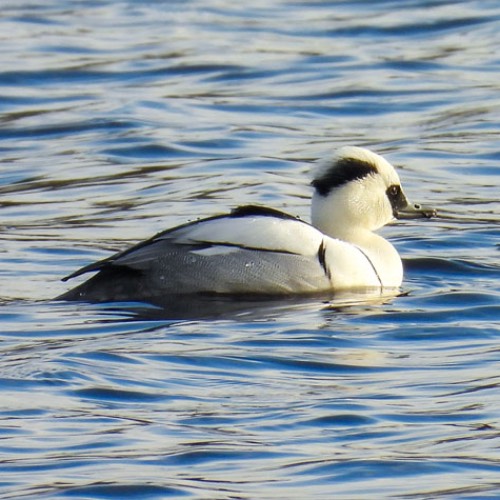
and early afternoon. I headed for Cumbernauld, to Broadwood Loch where a wee Smew was still
frequenting and there also were infrequent reports of a Bittern lurking in the reedbeds.
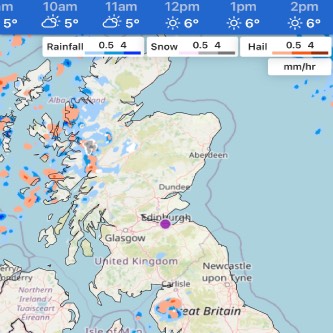
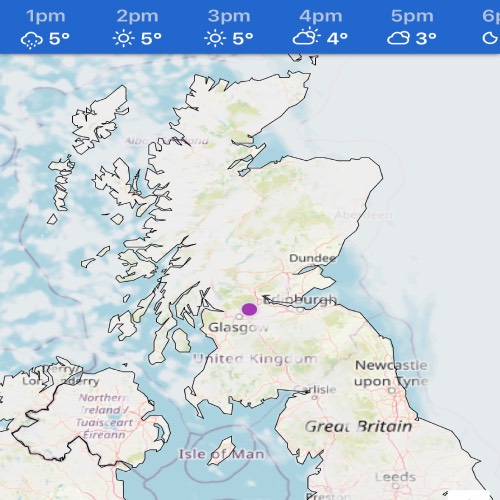
| Cloud |
Rain Prediction |
 |
 |
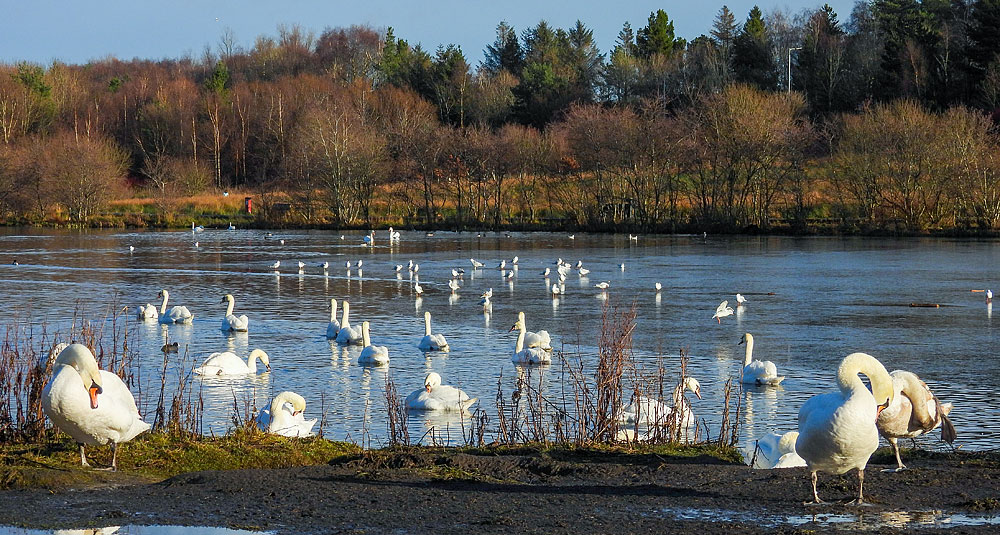
On arrival I found rather a lot of Mute Swans on the water by the car park.
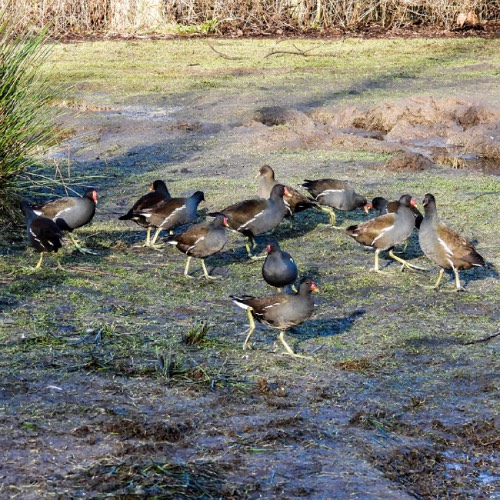
Just in front of my car there was a flock of about 16 Moorhens milling around a patch of grass -
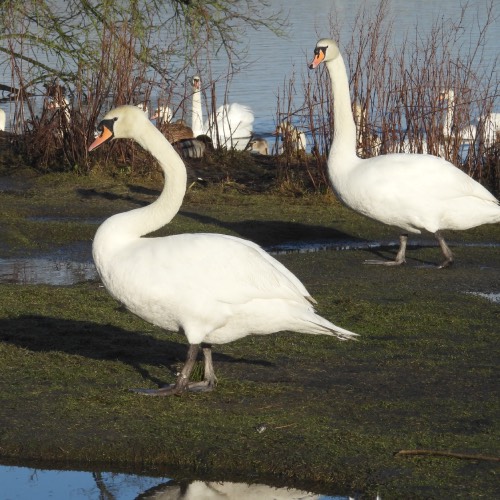
probably where a handful of seed had been tossed. A couple of adult Mute Swans and one
juvenile were in the same vicinity.
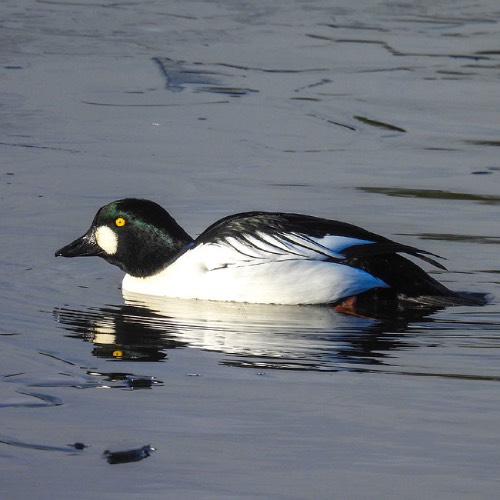
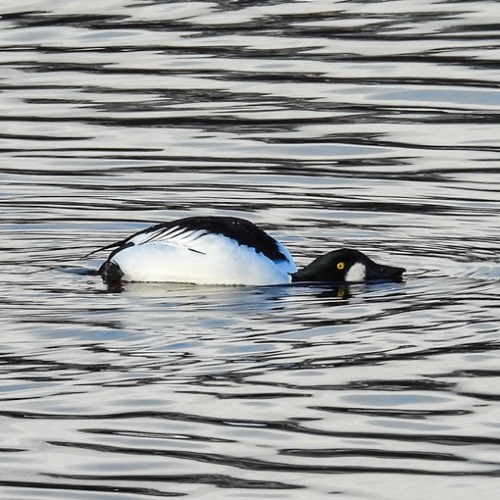
At the start of my circuit of the loch I photographed a drake Goldeneye that was displaying as it
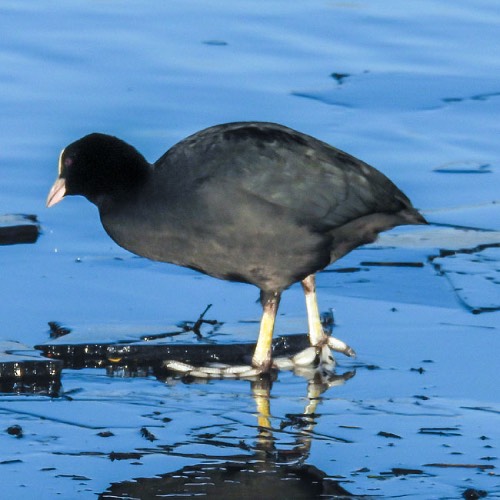
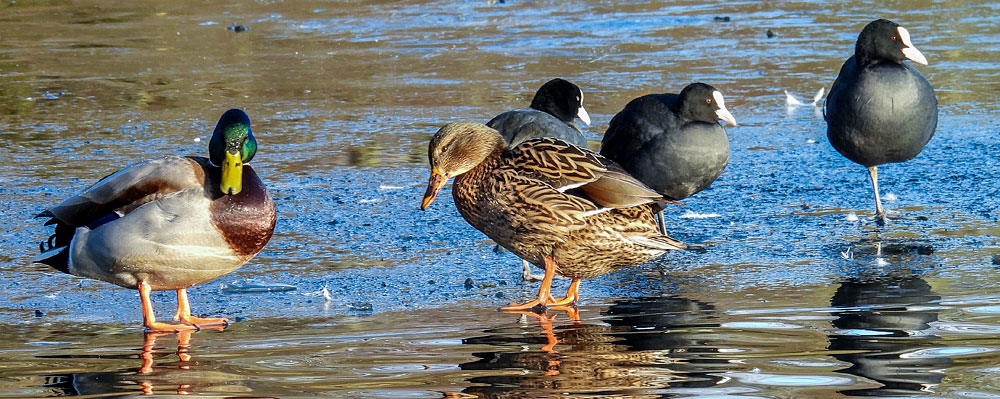
followed a female. There was still some ice around the edges of the loch and Coots were picking
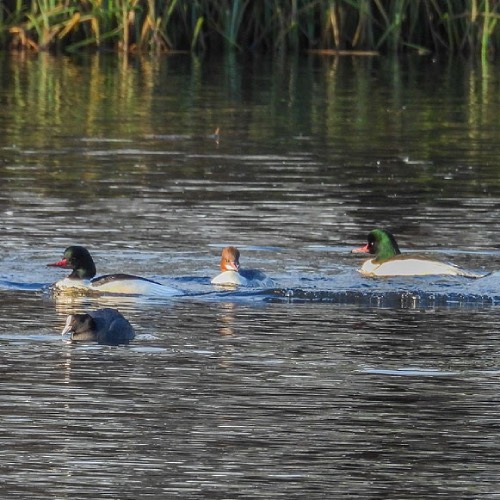
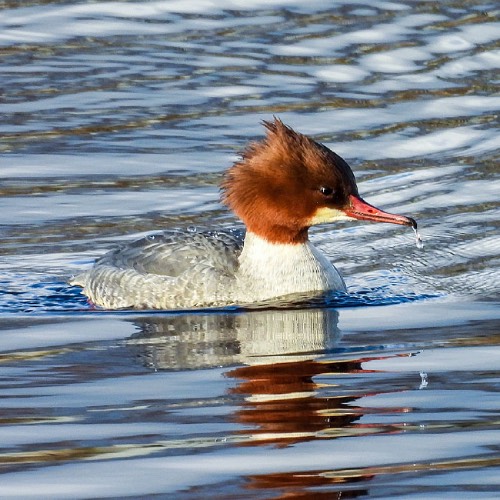
their way across it. Drake Goosanders were courting reluctant females that occasionally snapped
at their suitors. From the east side of the loch I scanned for any sign of the Bittern standing in the
reeds on the opposite side of the loch - but to no avail.
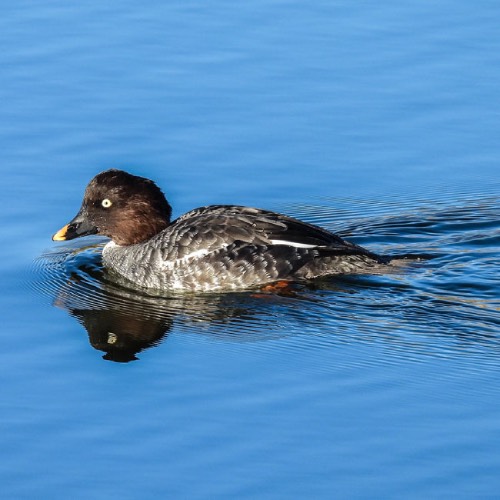
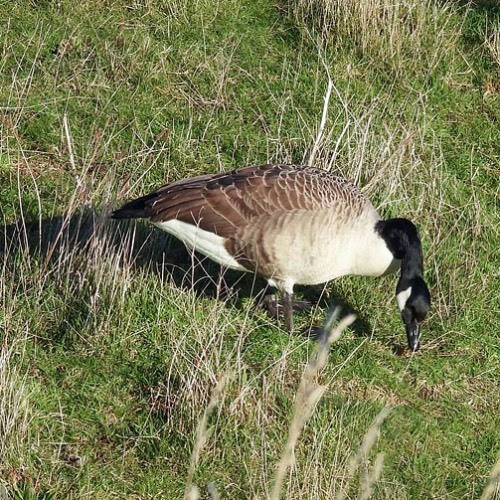
I also searched for the Smew and I found it near a few Canada Geese and Goosanders. I
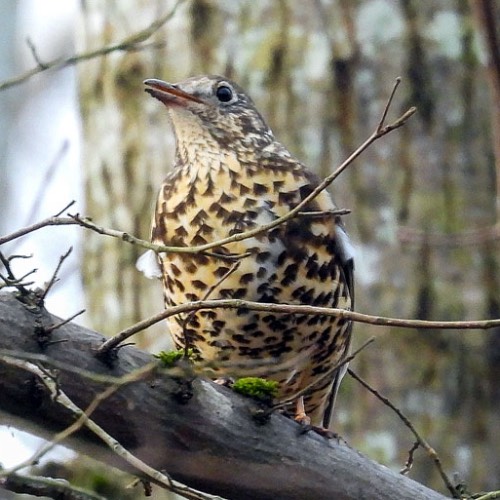
also captured a opportunistic shot of a Mistle Thrush that looked down on me as I passed
along the wooded northwest corner of the loch.
| Canada Goose |
Female Goosander |
 |
 |
| Smew |
Mistle Thrush |
 |
 |
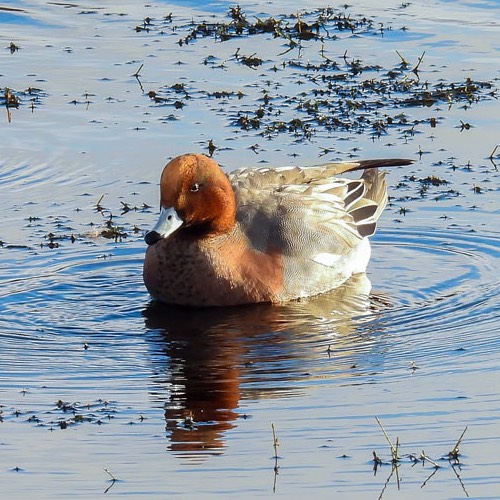
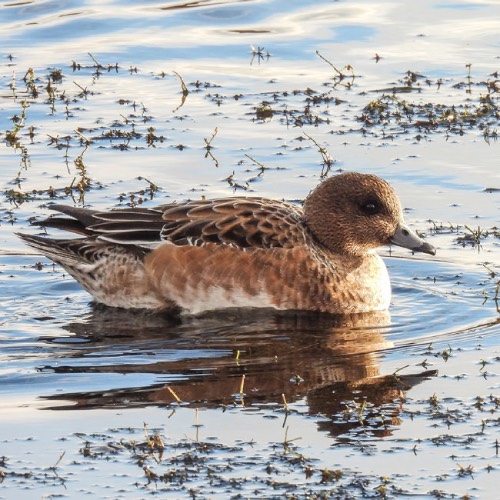
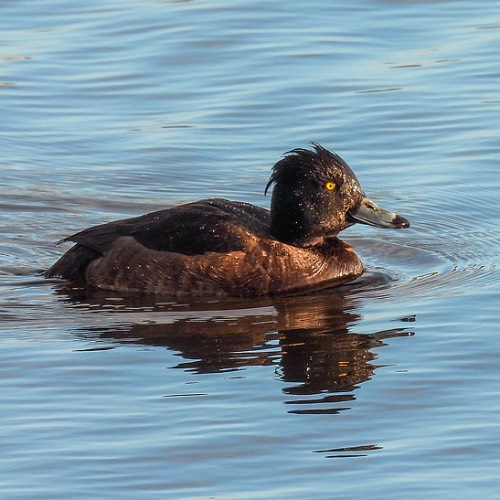
After snapping the Smew I got some nice views of some Wigeon and Tufted Ducks that were very
close to the loch edge.
| Drake Wigeon |
...Female |
 |
 |
| Drake Tufted Duck |
...Female |
 |
 |
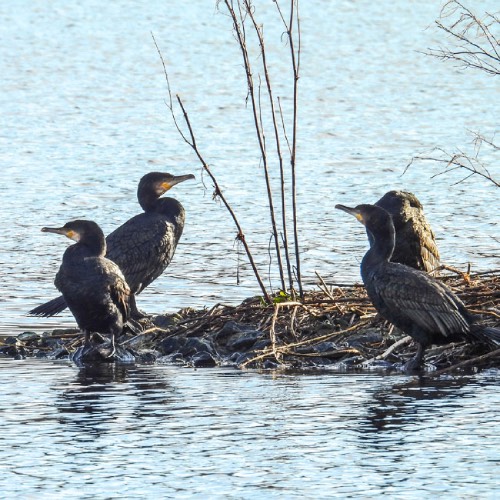
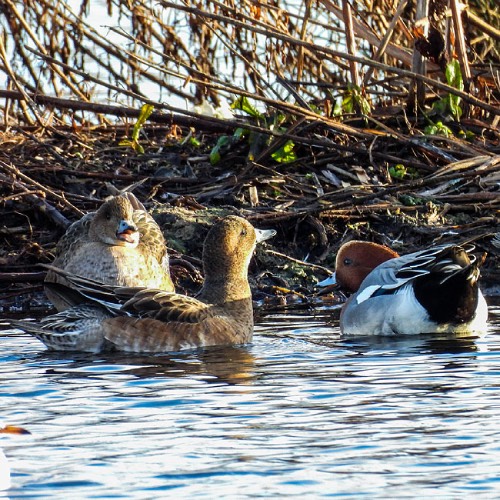
At the wee island just off the west side of the loch there was a trio of Cormorants standing
on its banks. Near them on the water a few Wigeon were quarrelling. Between there and the car
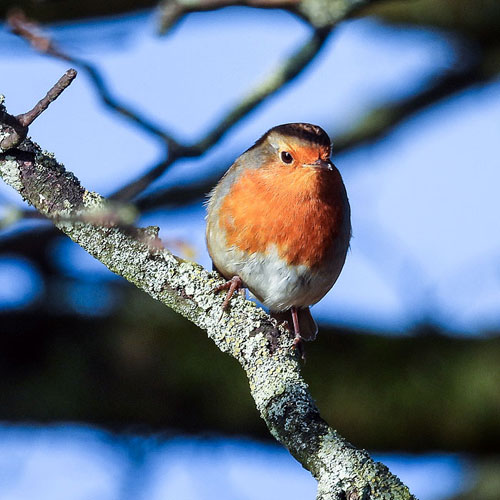
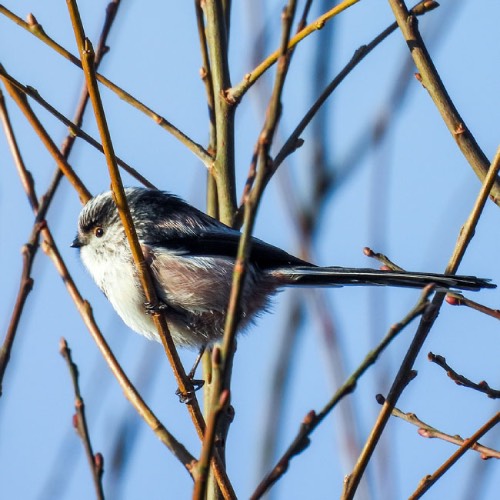
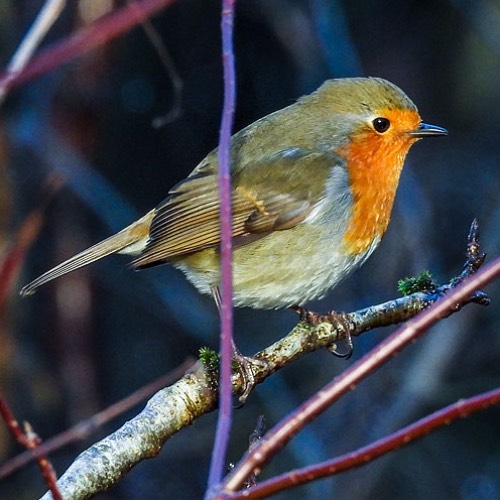
park I managed a couple of decent shots of a Long-tailed Tit and a Robin.
| Cormorant |
Wigeon |
 |
 |
| Long - tailed Tit |
Robin |
 |
 |
Thursday, 15th January: Musselburgh
A couple of days later, after listening to a fairly optimistic weather forecast for the Edinburgh area I
decided to visit Musselburgh
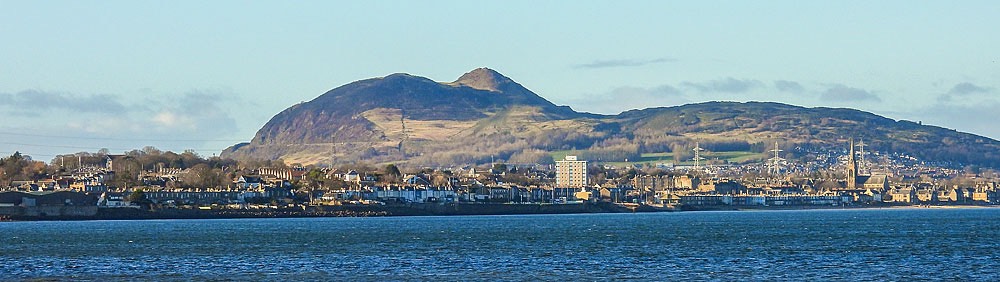
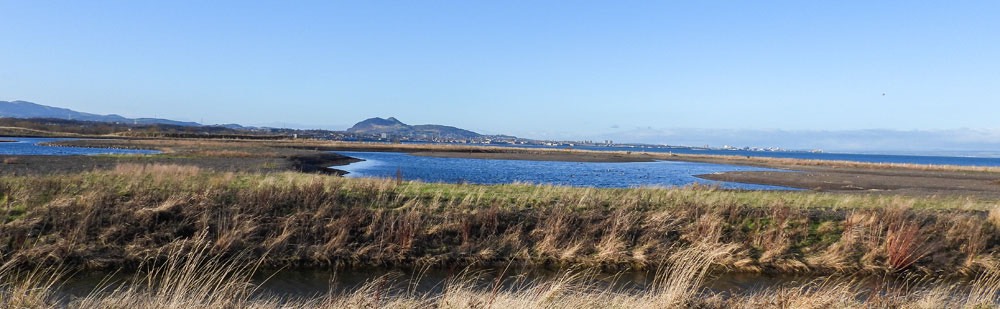
Below is the view of Arthur’s Seat as seen from east side of the mouth of the River Esk at
Musselburgh.
The tide was high but there were birds on the water:
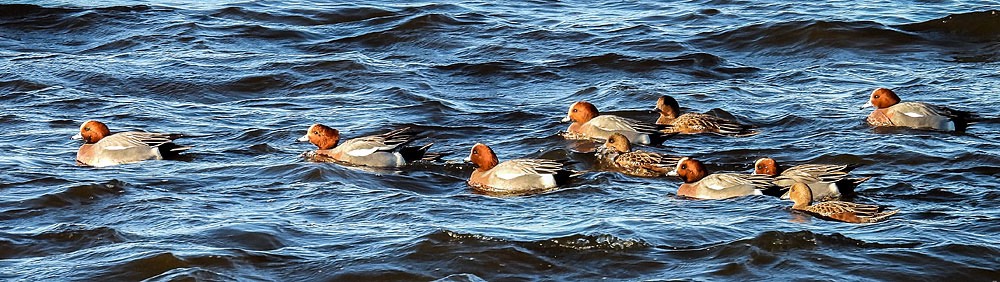
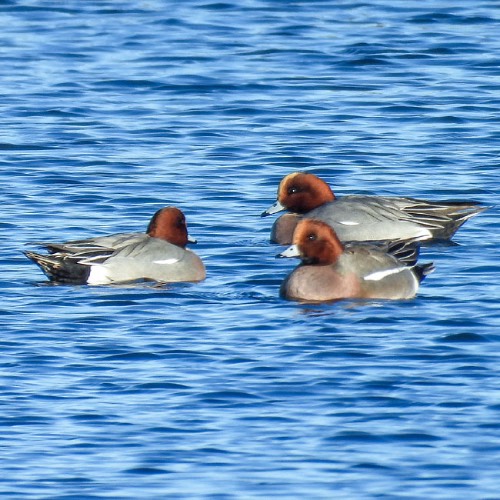
Wigeon paddling upstream.
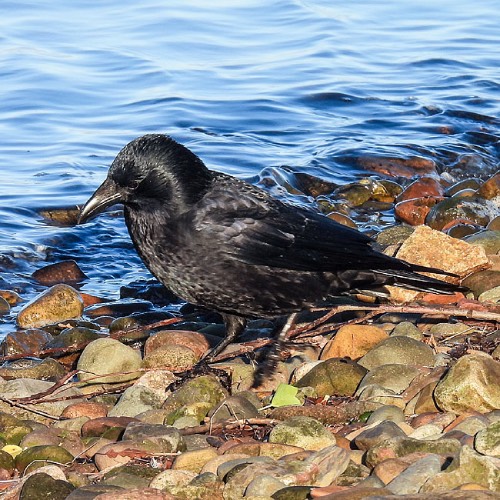
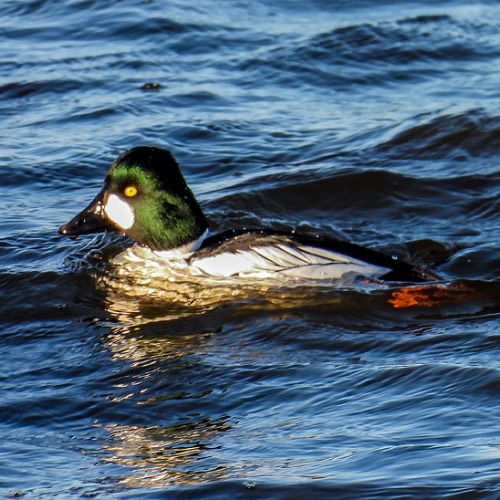
A large Carrion Crow was walking along the stoney shoreline while Goldeneyes passed. I headed
for the West Scrapes (my “preferred” name for the “new” scrapes) via the path and seawall
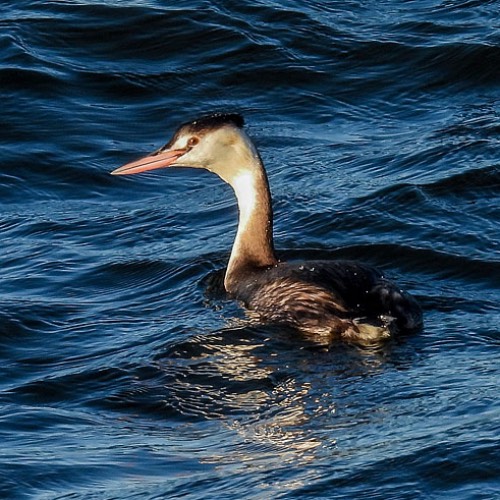
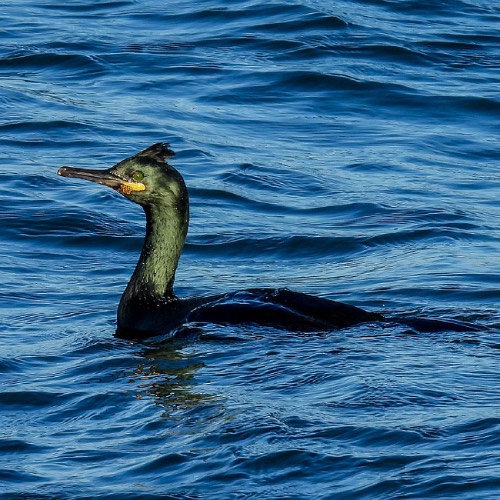
around the shore. Just before the path that leads to the hides I got great views of a winter
plumage Great Crested Grebe and also a Shag.
| Carrion Crow |
Goldeneye |
 |
 |
| Great Crested Grebe |
Shag |
 |
 |
At the first hide I looked back towards Edinburgh.
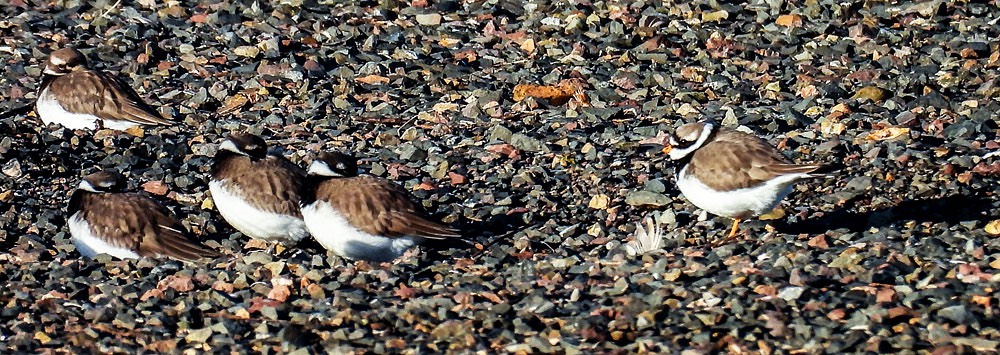
I was relieved to find that there were several species of birds on show on the scrapes. For
example, some snoozing Ringed Plovers on a shingle bank.
Mallards and a few Shelducks were on the water and at the edges of the water I could see
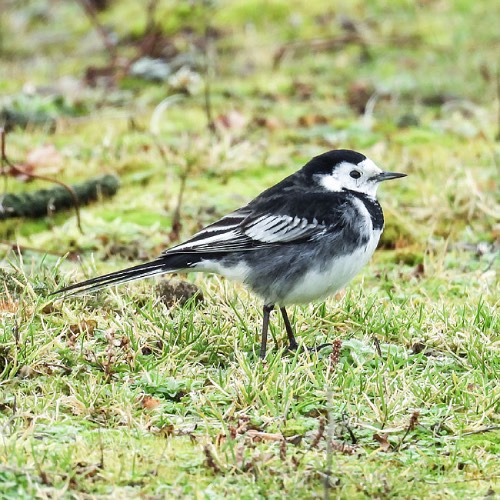
Bar-tailed Godwits . Notice the Knot standing on the left side of the shot below. A
lively Pied Wagtail paused for a second to get its picture taken as I moved between hides.
| Mallard |
Shelduck |
 |
 |
| Bar - tailed Godwit |
Grey Wagtail |
 |
 |
From the third hide I could see a group of resting Redshanks with some teal and Wigeon and an
Oystercatcher.
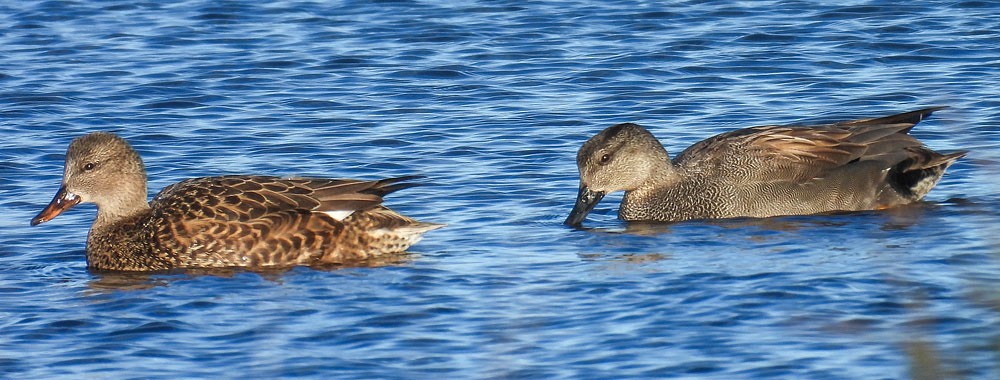
A pair of lovely Gadwalls passed in front of the hide….
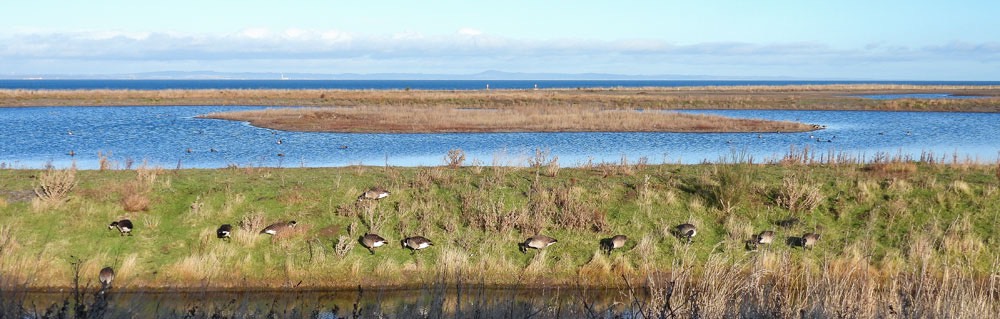
….. joined by a dabbling Shelduck and a few Wigeon. A few Canada Geese grazed on the bank of
the moat…,
….the wide view of the geese shows the scrapes looking east towards Fife on the horizon.
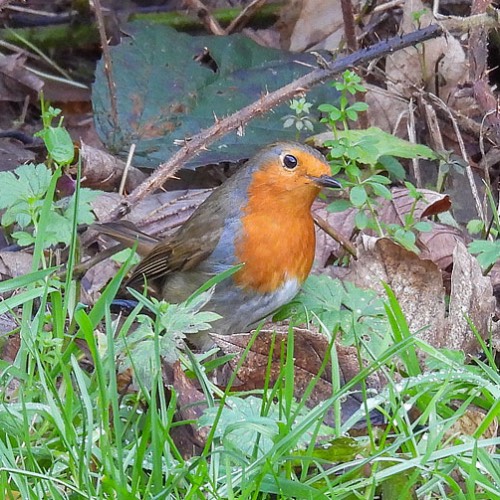
On my way back to the car I snapped a Robin at the Cadet Hall and a couple of Turnstones were
foraging on near side of the river just past the hall.
| Robin |
Turnstone |
 |
 |
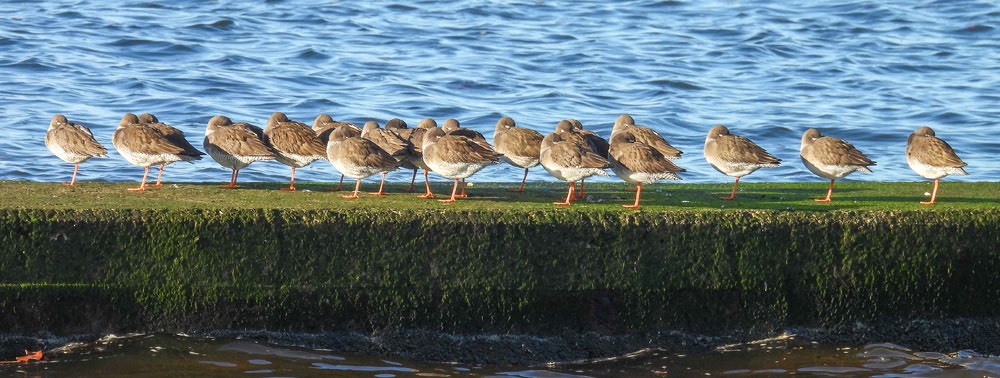
Before driving to the East (“old”) Scrapes I photographed a line of Redshanks dozing on a
concrete breakwater on the opposite side of the river.
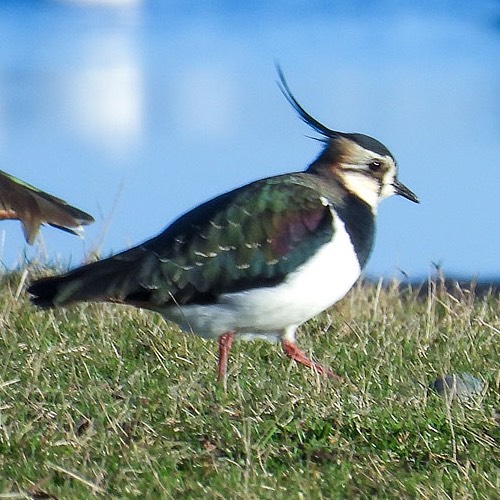
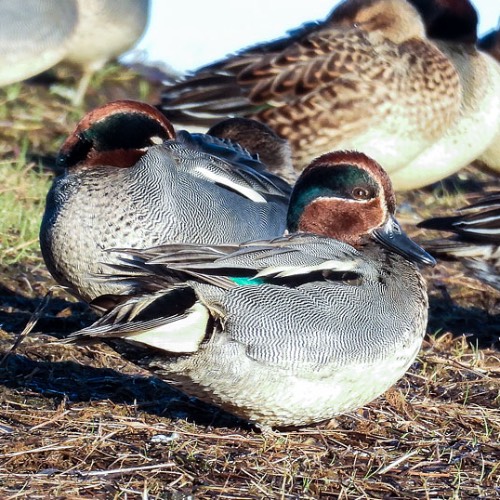
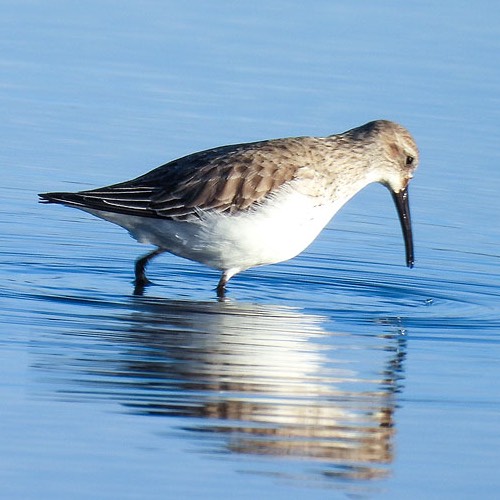
After parking in the Levenhall Links car park I walked to the scrapes and was pleased to get
relatively close views of Lapwings, Teal and a few Dunlin. At the north end of the scrapes a
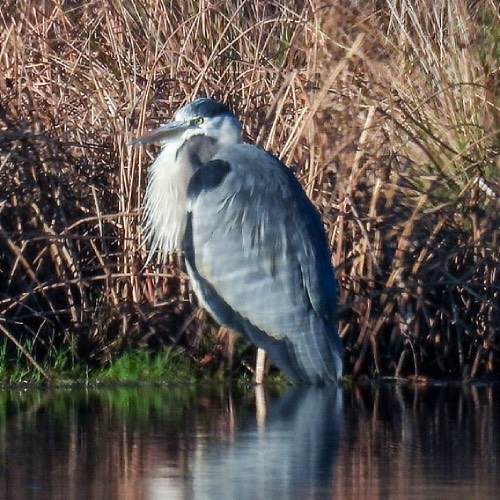
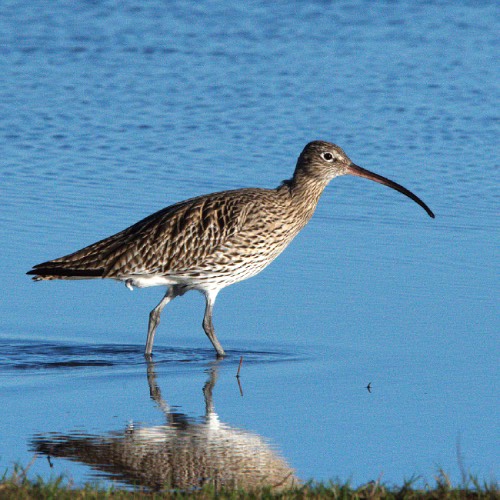
lone Grey Heron was standing motionless, while a Curlew appeared at the near edge of the
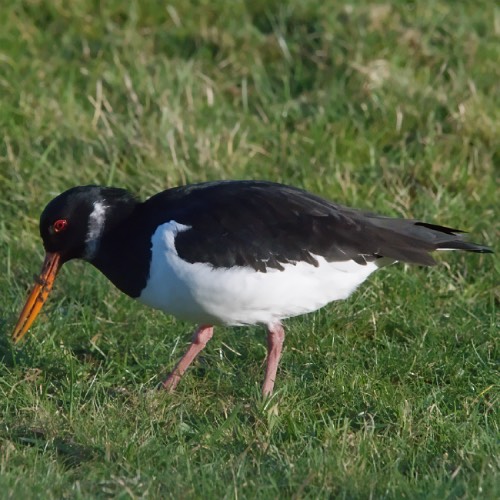
scrapes and trod its way along and onto the grass to search for invertebrates. Right in front of the
hide, a foraging Oystercatcher walked past probing the same damp grass with its long orange
beak.
| Lapwing |
Teal |
 |
 |
| Dunlin |
Grey Heron |
 |
 |
| Curlew |
Oystercatcher |
 |
 |
It was a fairly successful week with 28 bird species during the two outings. My favourite shots
were the Smew, Long-tailed Tit and Robin at Broadwood and the Shag. Shelduck, Gadwalls and
Teal at Musselburgh. Next week is to be dull, wet and windy, and that’s ok - I like a challenge.
Week ending: 11th January: Strathclyde Country Park, Hogganfield Park LNR
With another freezing cold week in prospect I wrapped up well and stayed local.
Monday, 5th January: Strathclyde Country Park
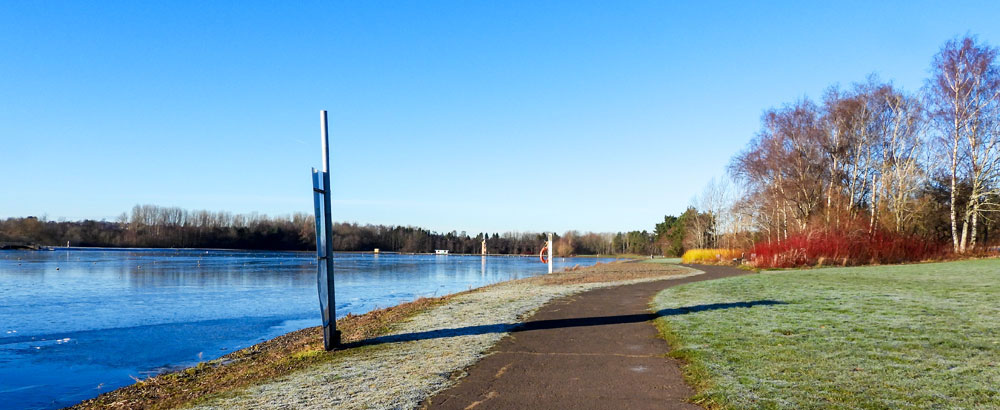
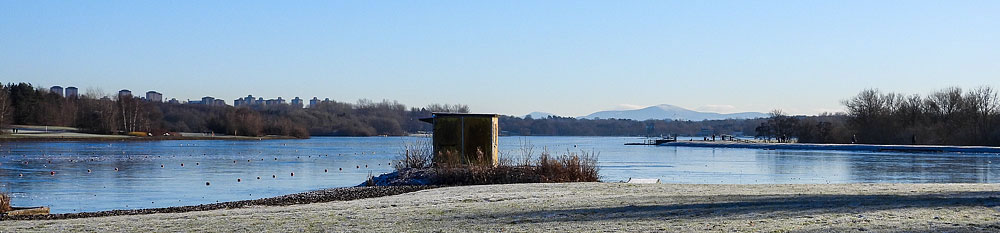
Monday started sunny, but frosty, as can be seen from the following picture looking south down
Strathclyde Loch:
 |
As I crossed Park road there was a Fieldfare surveying the scene from high in a roadside
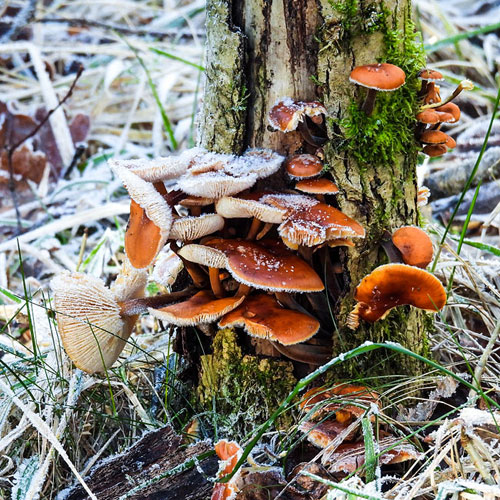
tree. From the path behind the fairgrounds I snapped Velvet Shank fungi that were growing on the
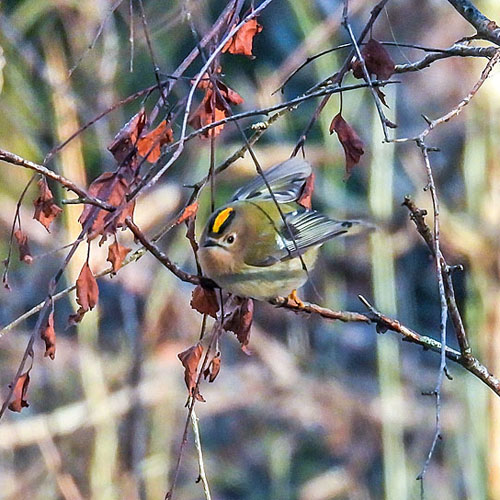
trunk of a Silver Birch tree. Further along the path a wee Goldcrest caught my attention as
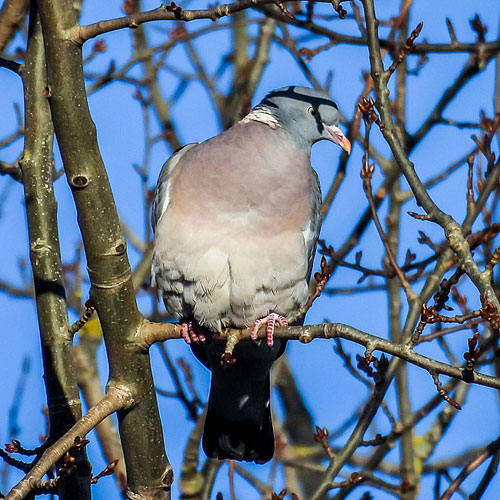
the bird hopped around a leafless bush. A Woodpigeon that was perched high in a tree watched
me as I crossed the road bridge over the South Calder river.
| Fieldfare |
Velvet Shank |
 |
 |
| Goldcrest |
Wood Pigeon |
 |
 |
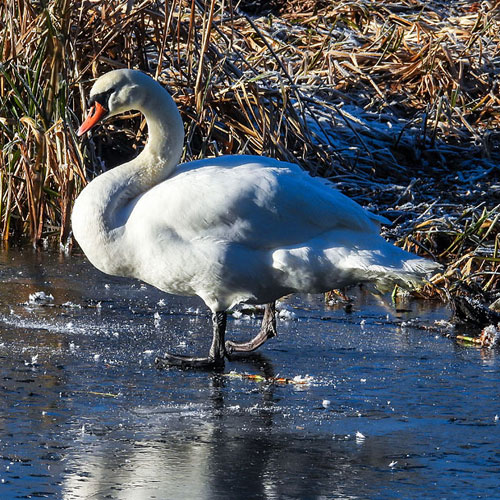
The mouth of the South Calder was iced up and proved a slippy walk for a Mute Swan. Carrion
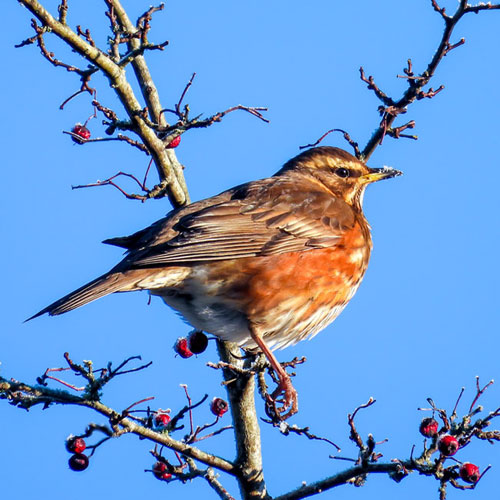
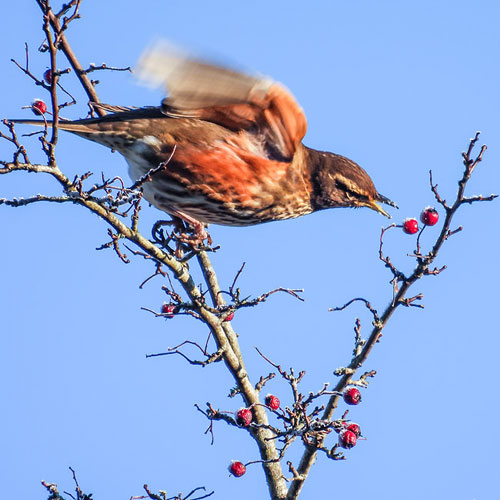
Crows found something to peck at in the icy puddles. Normally flighty Redwings were a bit
more tolerant to risk eating haw berries as people passed the bushes, but they must have been
desperate for food in the cold spell because I was able to send much closer than usual to get the
shots below.
A beautiful scene - but there were no birds to photograph at the north end of the iced-up loch.
Wednesday, 7th January: Hogganfield Park LNR
A couple of days later, I awoke to find the sky was blue, but it was
bitterly cold. I headed for Hogganfield, expecting the loch to be iced
over. However, my past experience was that the area of water next to
the car park was usually not iced over and usually concentrates a fair
number of bird species, making bird photography - a walk in park
(apologies!). The picture below confirms my suspicions.
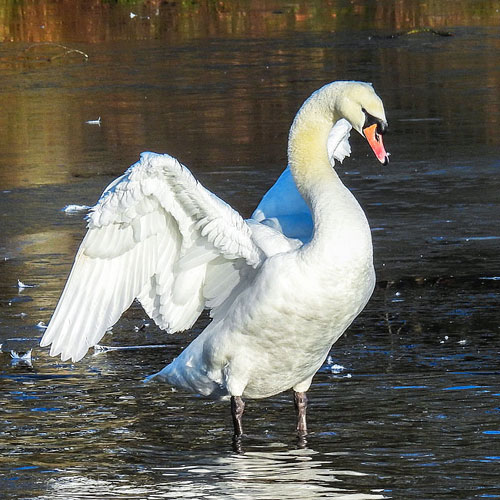
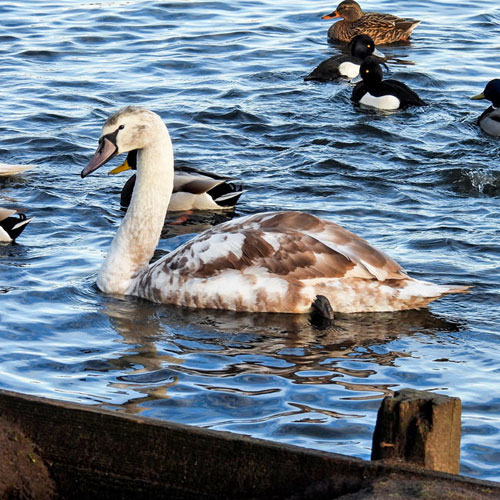
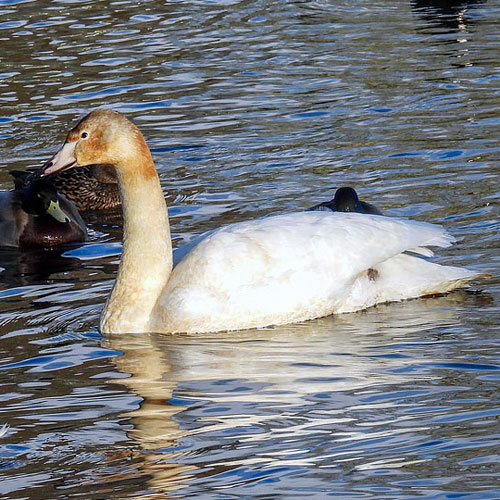
The Mute Swans were gathered in their usual numbers but there were
fewer Whooper Swans.
| Mute Swan |
... Juvenile |
 |
 |
| Whooper Swan |
... Juvenile |
 |
 |
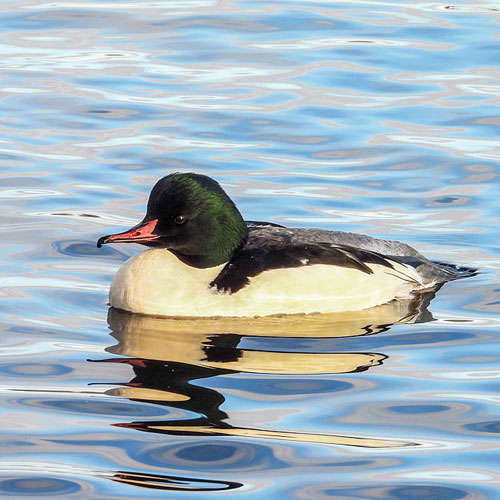
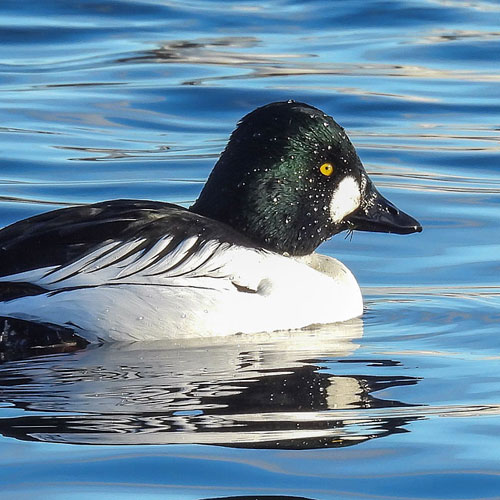
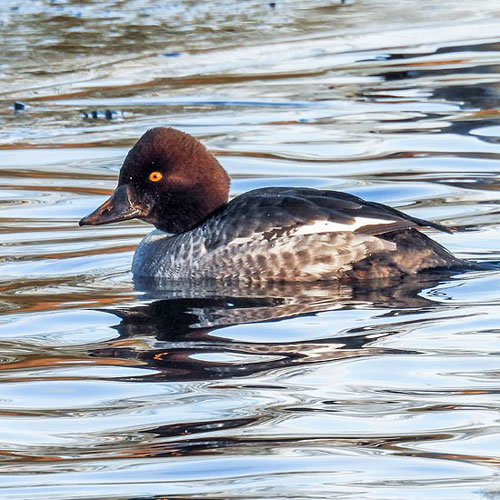
Goosanders and Goldeneyes were also in the mix …
| Drake Goosander |
...Female |
 |
 |
| Drake Goldeneye |
.
..Female |
 |
 |
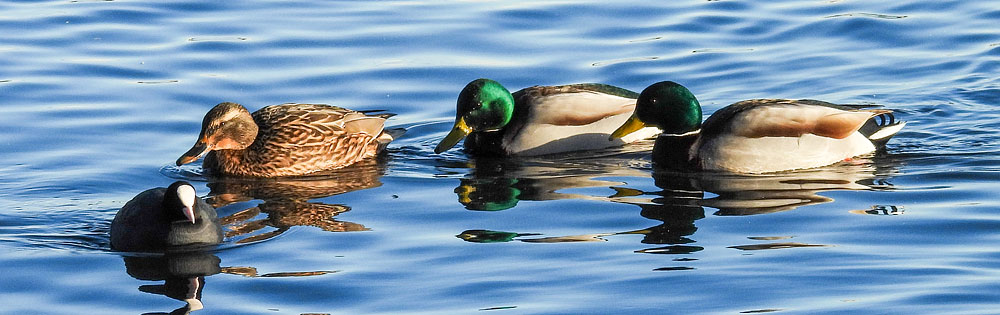
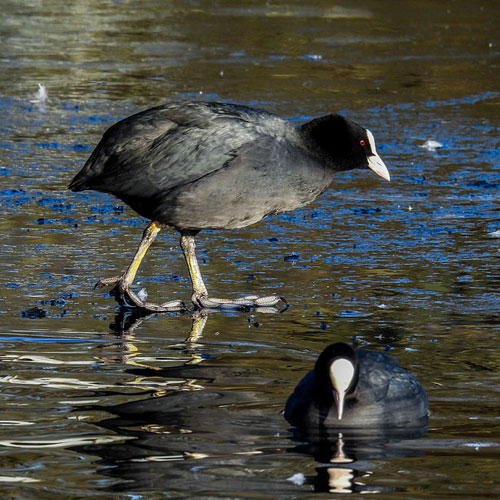
There were plenty of Mallards and Coots, standing at the edge of the
“pool”, ….
and paddling in the “pool”.
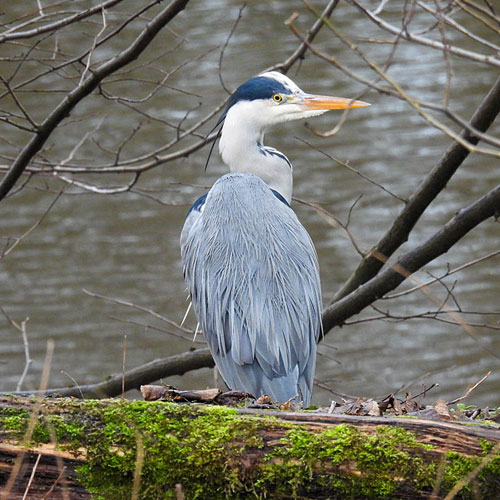
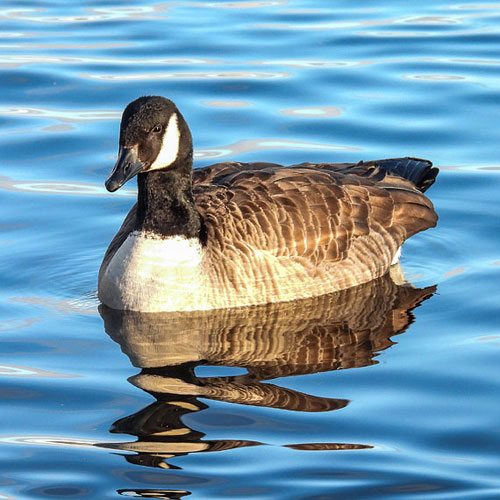
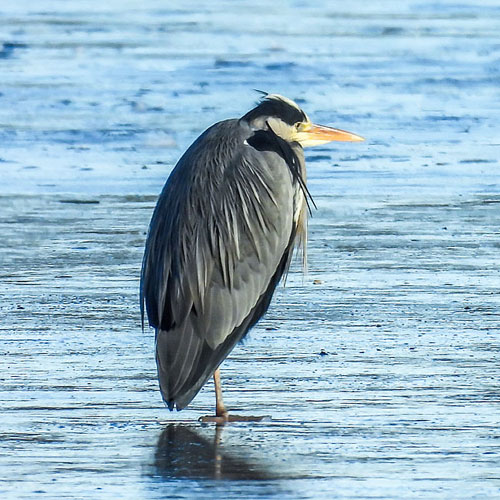
as were some Canada Geese. A Grey Heron was standing
stationary at at the edge of the ice sheet, surrounded by Tufted Ducks
and a few flapping Goldeneyes.
| Canada Goose |
Grey Heron |
 |
 |
| Tufted Duck |
Goldeneye |
 |
 |
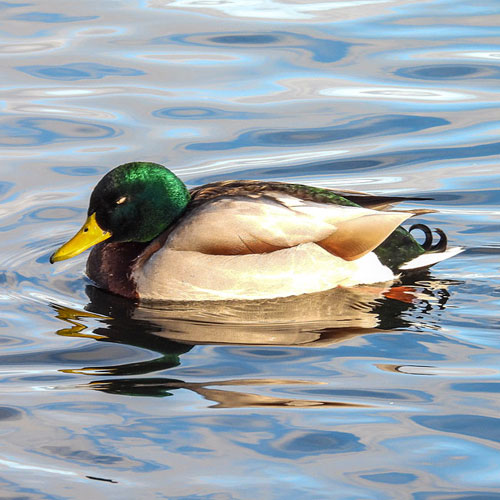
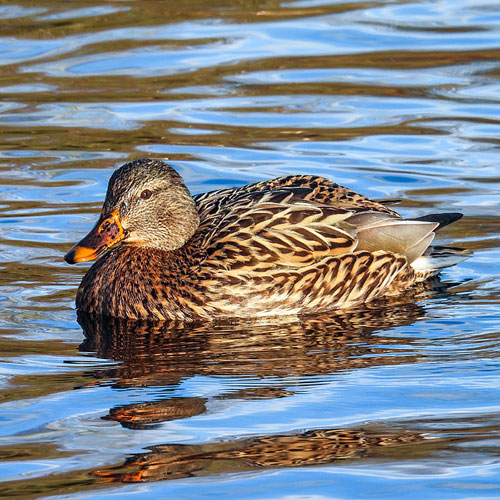
A dozey drake Mallard bobbed in the choppy waters that were disturbed
by all of the bird activity, while the female Mallard was one of the
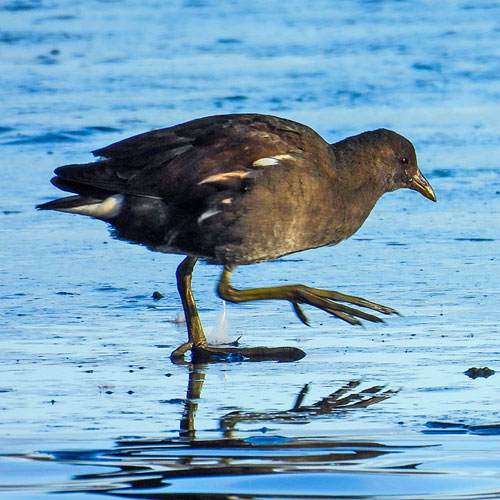
active birds. At the edge of the ice were other res tless birds such as
crabbit Coots and a nervous juvenile Moorhen.
| Drake Mallard |
...Female |
 |
 |
| Coot |
Juvenile Moorhen |
 |
 |
The wee pond at the east side of the park looked beautiful in the low
Winter sunshine - but it was completely iced over - so no birds.
I was a bit disappointed not to have photographed anything at the east
side of the park. However, at the start of the north side of the loch
my mood changed when I noticed a Buzzard perched on a tree by
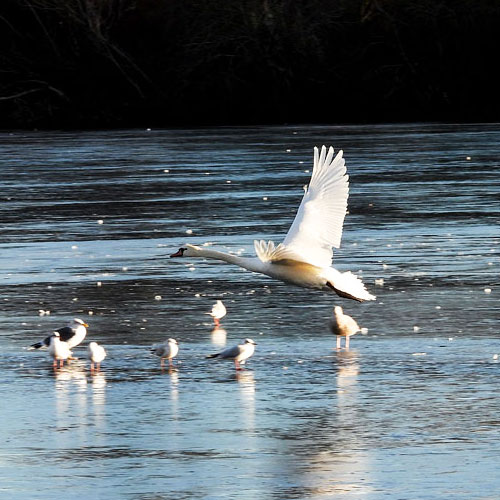
the walled houses. After photographing the Buzzard, I watched a Mute
Swan flying low over the ice, probably seeking a liquid water surface to land
on. A little further along the road a lovely Robin was sitting on a low
bush by the lochside, watching me as I passed.
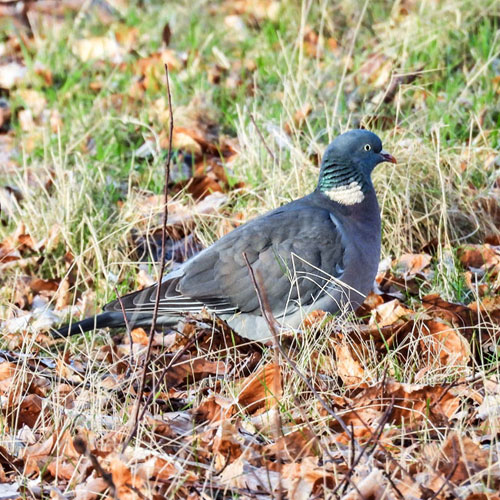
Also watching me were the people-tolerant Feral Pigeons that were
sitting on the railings beside the car park. At my car I noticed there
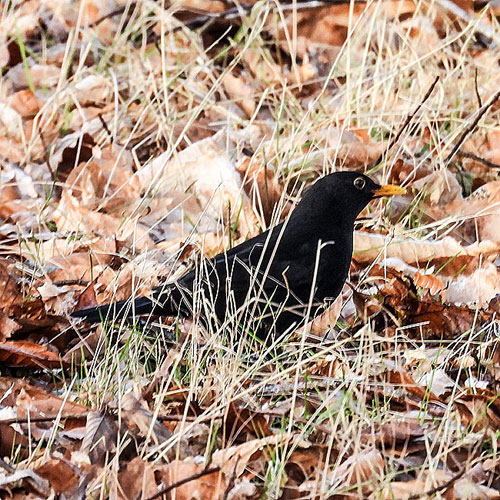
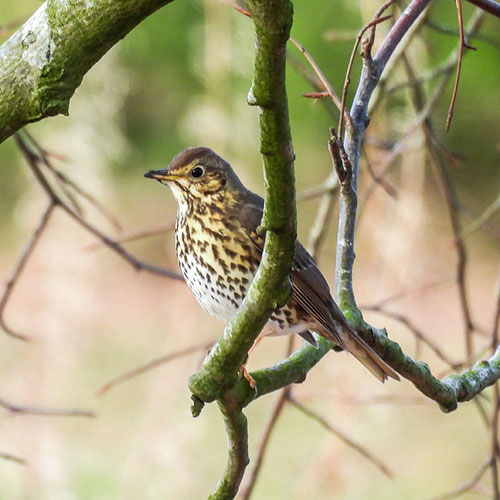
were birds foraging in the grasses below the trees: some Woodpigeons, a
Blackbird and a Song Thrush.
| Feral Pigeon |
Wood Pigeon |
 |
 |
| Blackbird |
Song Thrush |
 |
 |
Thursday, 8th January: Strathclyde Country
Park
On the the next day I went for walk in Strathclyde Park. The weather
was dry but it was still cold and the sky was overcast. and light was
poor, but I took my Coolpix P950 with me anyway, just in case. Straight
away I found a Grey Heron that was hanging about the banks of the River
Clyde. I crossed the footbridge across the river and turned left onto
the footpath on the Hamilton side. I found a couple of fungi:
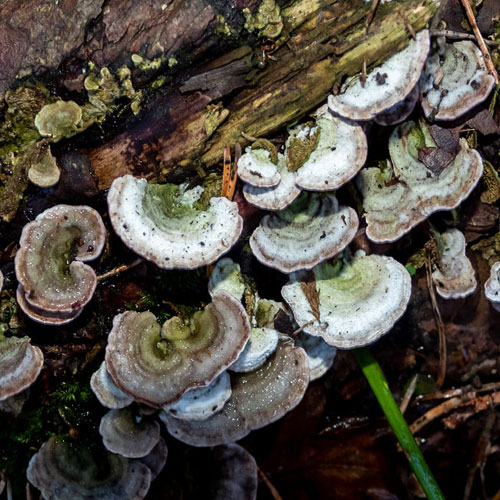
Turkeytail and (possibly) Bitter Bracket . I then had a
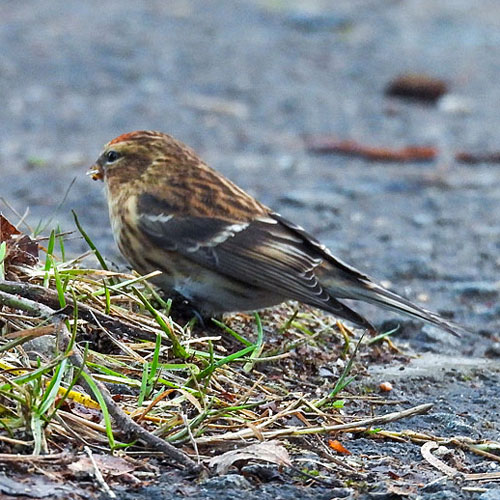
surprising find - a Redpoll that was foraging on the steps that
lead to the Hamilton Road. (NB: Ornithologists once categorised these
birds into into 3 species but since 2024 they are now considered to be
a single species.
But the
best was still to come. After snapping the Redpoll I crossed the Clyde
Bridge to re-enter the Park’s main entrance. On the path that
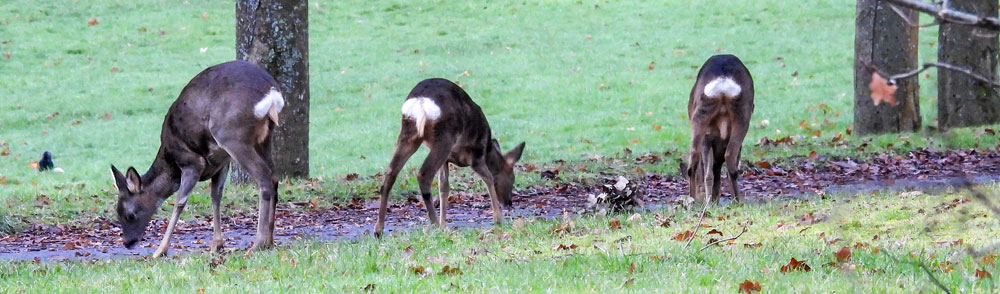
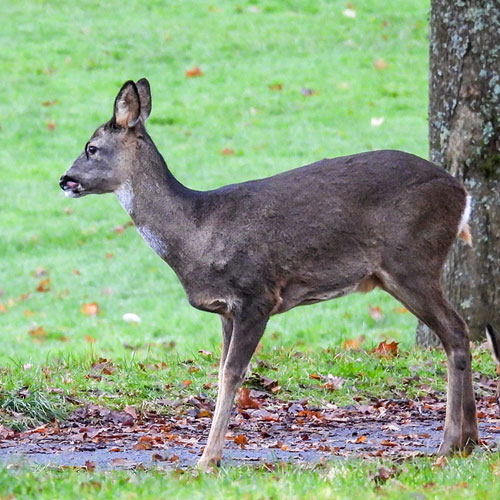
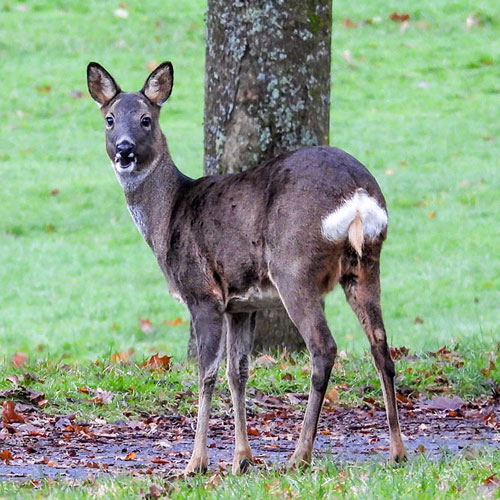
leads to the Watersports Centre there was, most unusually, a Roe Deer . As I was slowly manoeuvred myself behind a tree so as not to
spook the deer, three more Roe Deer joined appeared. Of course I
photographed them…
…. several times, before calmly walking past them. My final
shots of my short but enjoyable trip were of a flock of Greylag Geese
that were grazing on the grassy slopes.
There were around thirty geese in the flock.
I was pleased with my efforts this week - 29 species photographed -
with my favourites being Buzzard, Redpoll, Bitter Bracket fungus and
the Roe Deer. Next week is to be much milder but with lots of rain
possible. I’ll get my brolly out.
Week ending: 4th January: RSPB Baron’s Haugh, Dalzell Estate, Motherwell
With seasonal festivities taking up my time for most of this week, I was pleased that a window of
opportunity appeared on Friday. I was lucky that the weather was bright and rain-free but it was
very cold (with a frosty sub-zero temperature in the morning).
Friday AM, 2nd January: RSPB Baron’s Haugh
I chose to visit RSPB Baron’s Haugh, my local reserve and was soon walking west out of the car
park, following the footpath through the wild fields that would take me down to the hides that
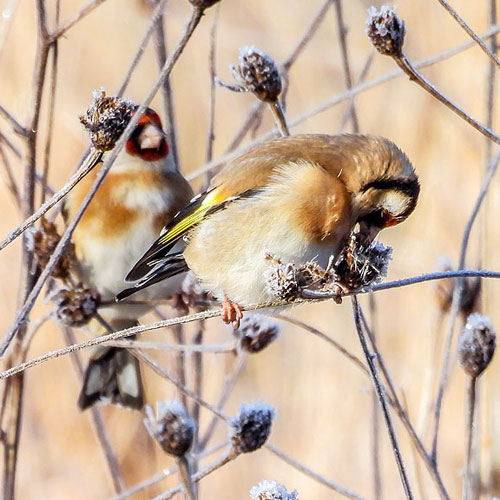
overlook the Haugh. It wasn’t long though before I came upon a group of Goldfinches …….
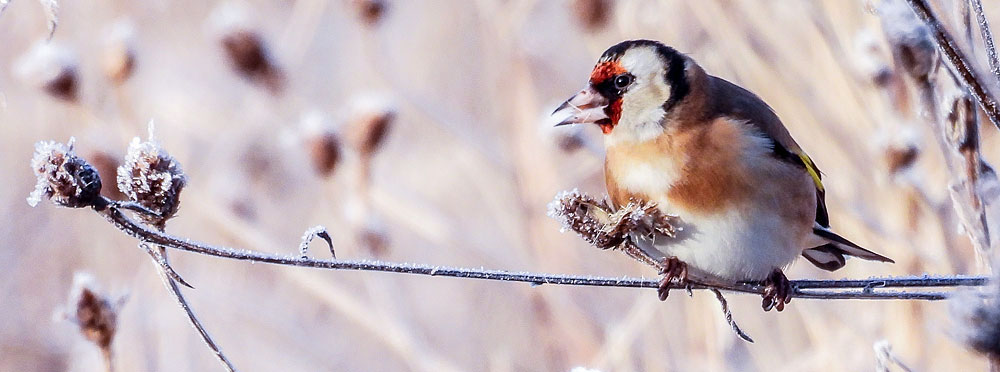 |
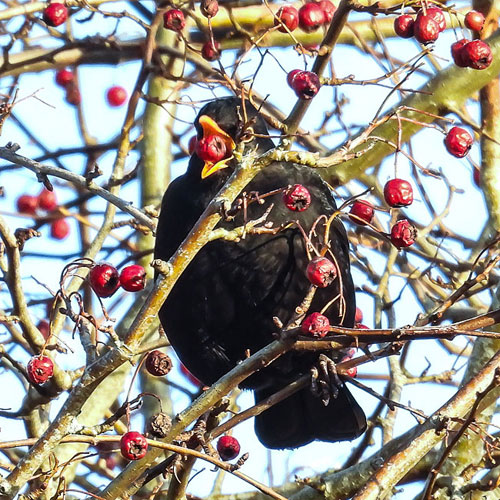
…..that were feeding on tall seed-heads in grassland beside the path. Also seen In the same area
were a very sociable Robin, a Blackbird and some Redwings munching haw berries.
| Goldfinch |
Robin |
 |
 |
| Blackbird |
Redwing |
 |
 |
…. and there were lots of berries.
Below is the view of the Haugh, seen from the path from the car park.
I eventually reached the Marsh hide only to find that the water on the scrapes was largely, but not
entirely frozen.
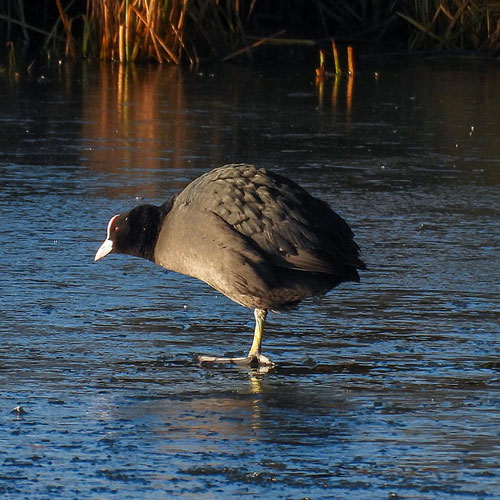
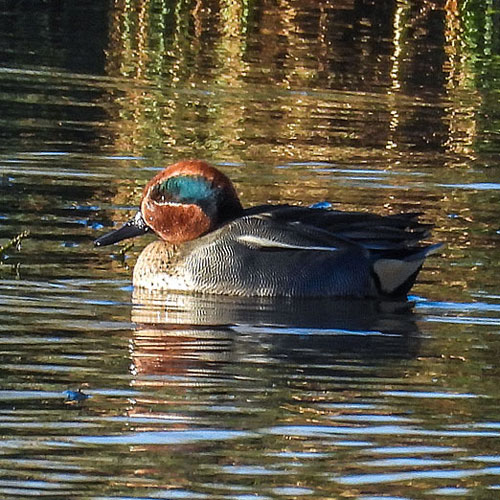
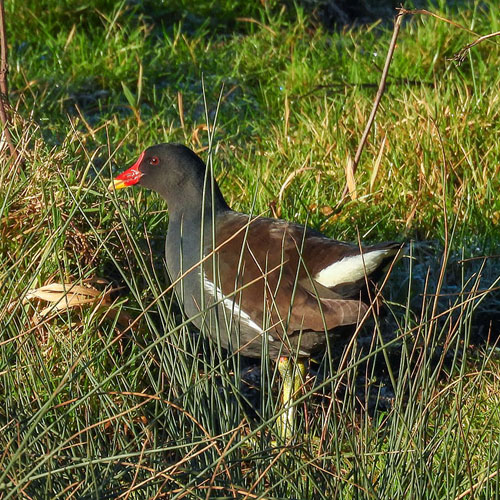
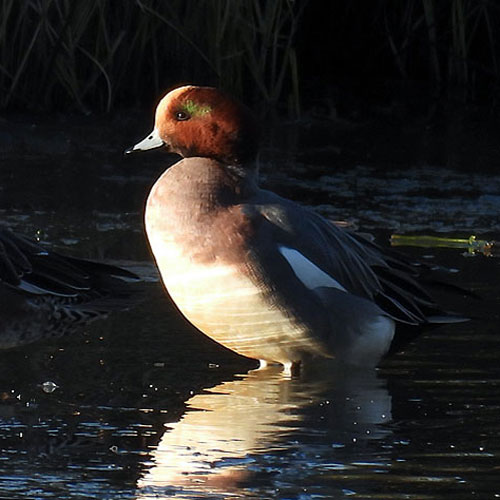
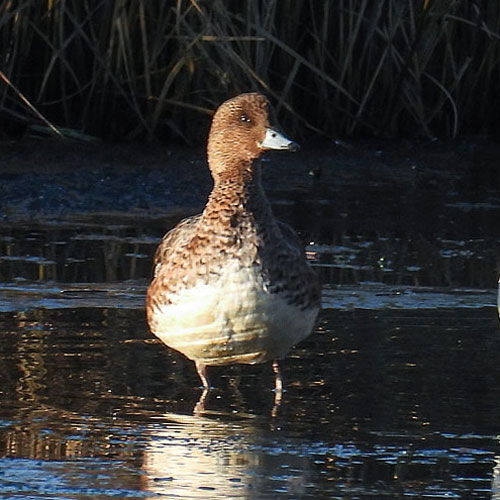
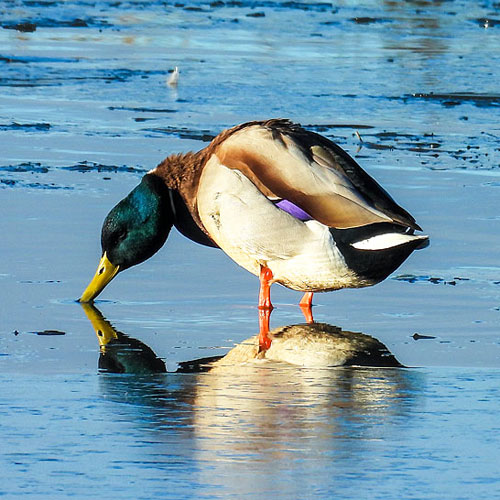
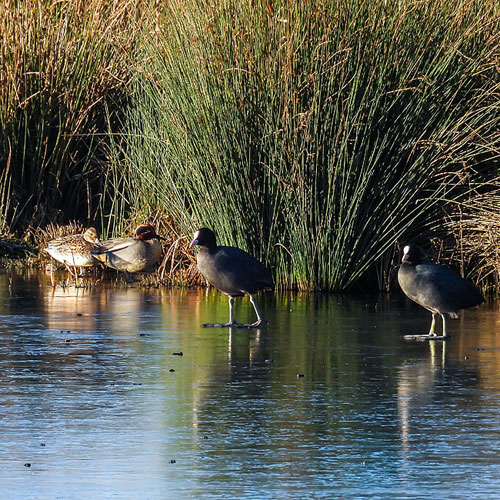
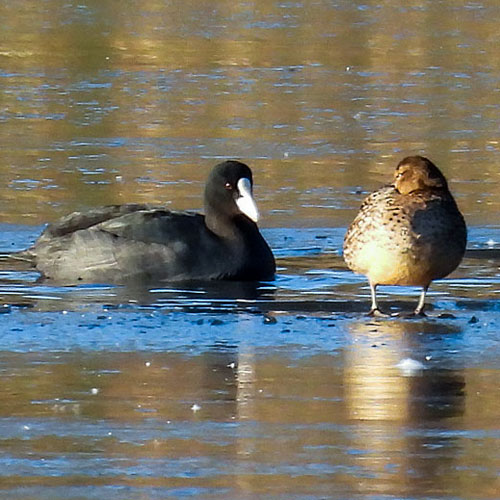
Coots, Mallards and Wigeons were standing on the ice, while Gadwalls and Teal found a
small area of ice-free water. A couple of Moorhens were foraging in the reeds near the hide.
| Coot... |
|
 |
 |
| Drake Gadwall |
Female Gadwall |
 |
 |
| Teal |
Moorhen |
 |
 |
Other ducks on the ice were Wigeons, Mallards and Teals. The Coots were particularly active. A
young Black-headed gull was following its parent - who was checking out the skies.
| Drake Wigeon |
Female Wigeon |
 |
 |
| Drake Mallard |
Teal / Coot |
 |
 |
| Black - headed Gull |
1st Cycle Black - headed Gull |
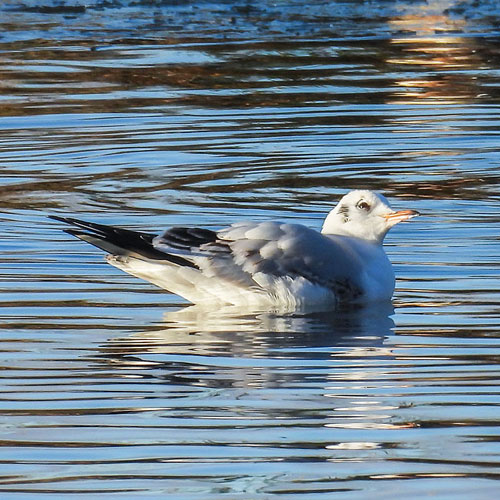 |
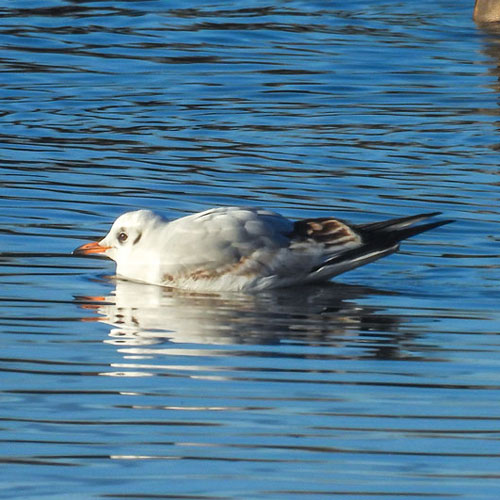 |
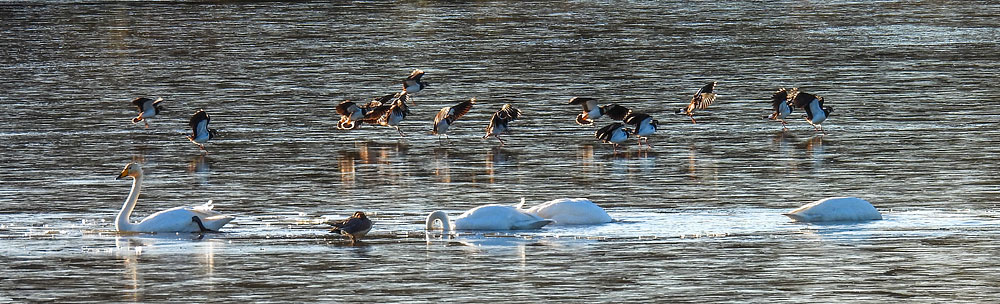
Away to the left of the scrapes, I saw that a line of four Whooper Swans had been able to
penetrate the ice there. Lapwings flew in as I photographed the swans.
The Lapwings settled and began preening.
The Whoopers seemed happy enough dipping in the cold waters. Next I left the Marsh hide and
headed for the Causeway hide. I came across a Dunnock that was on the path. There was
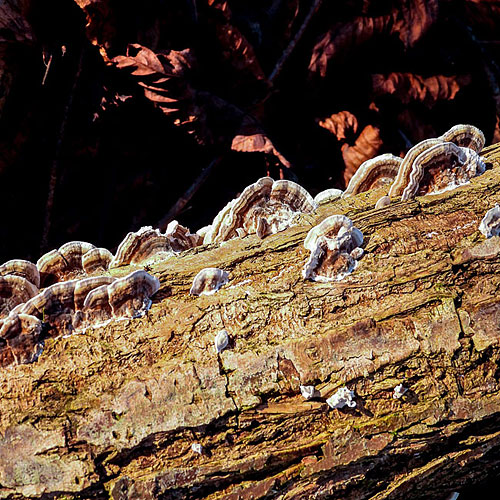
also a couple of fungi, Turkeytail and Blushing Bracket, just of the main path to the
next hide.
| Whooper Swan |
Dunnock |
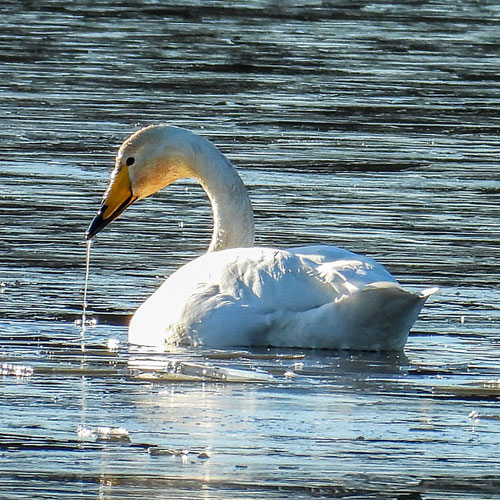 |
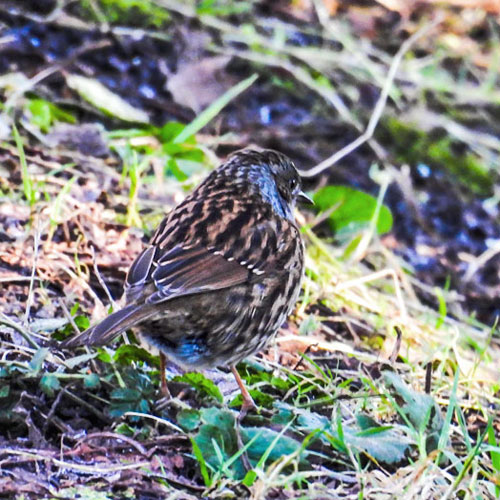 |
| Turkey Tail |
Blushing Bracket |
 |
 |
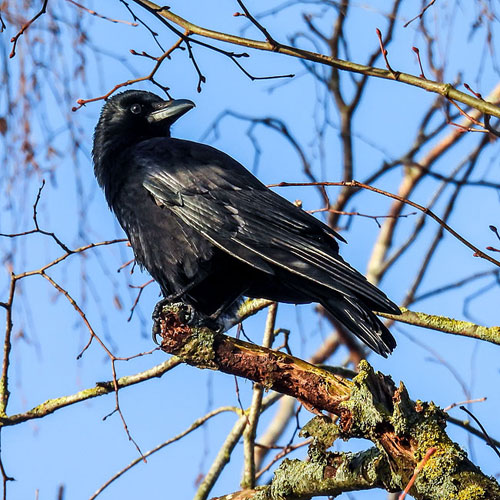
A pair of Carrion Crows were calling to each other from a high branch of a tree near the gate into
Causeway hide. A drowsy-looking Magpie was soaking up the sunshine as it dozed in a Hawthorn
bush. As I neared the hide I also noticed a frozen Gorse bush was still in flower. The low Sun cast
long shadows along the path.
| Carrion Crow |
Magpie |
 |
 |
| Gorse |
Causeway Hide |
 |
 |
Again, unsurprisingly, I found the Haugh waters were mainly iced-over…..
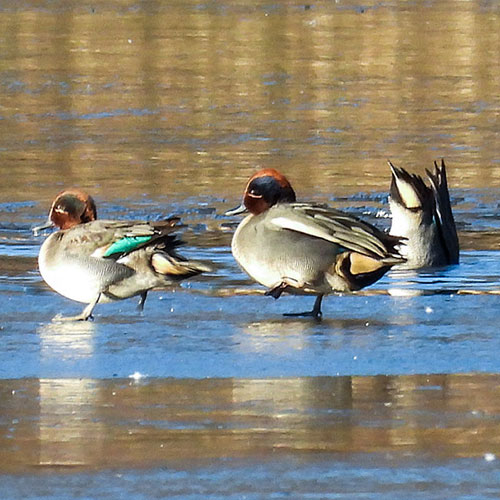
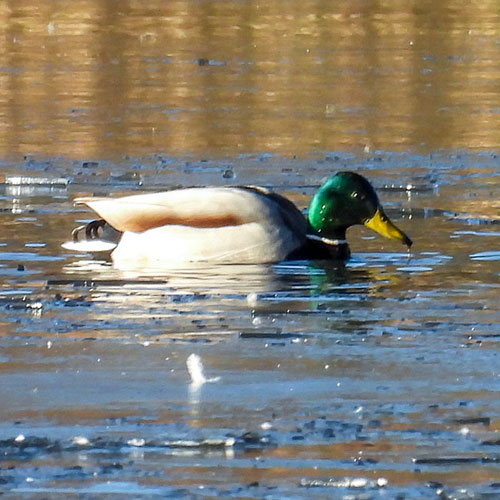
…… but some Teals. Mallards and Coots had discovered some ice-free water far to the right of
the hide. There were many more birds in front of the hide, mainly Lapwings and Teals. They were
back-lit by the low sunshine which made photography problematic.
| Drake Teal |
Drake Mallard |
 |
 |
| Coot |
Lapwing |
 |
 |
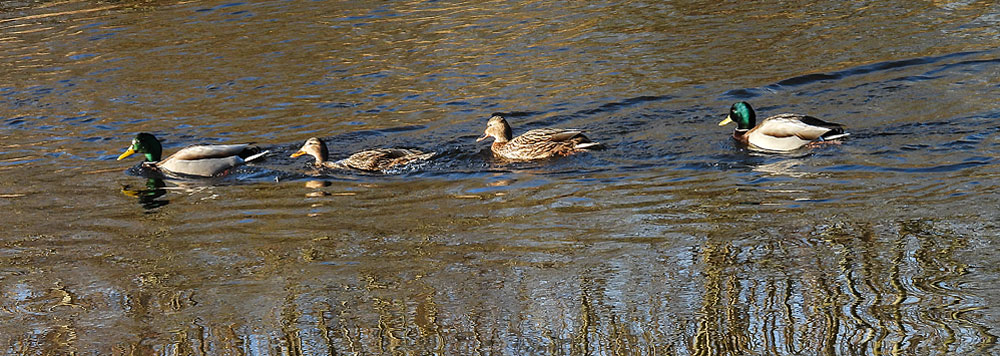
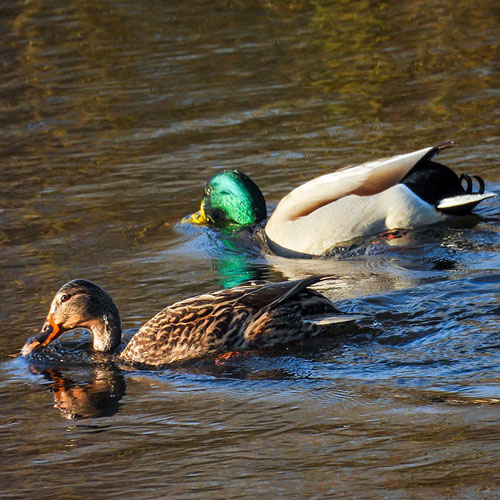
I decided to check the River Clyde to see if there were any birds on what I expected to be water
with little or no ice - and that’s exactly what I found, as the picture below of a line of merry
Mallards shows.
A pair of Mallards were having a great time diving near the breach in the bund that connects the
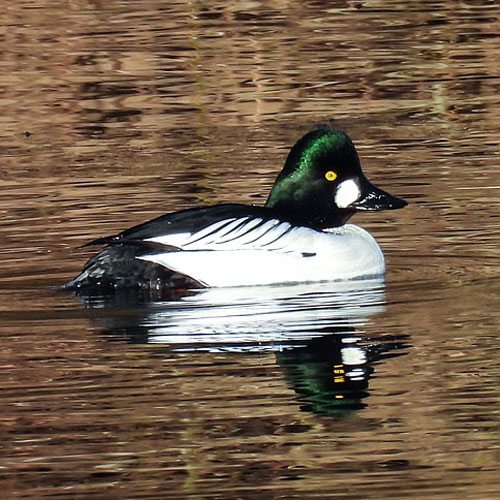
Haugh with the river, when the river is in spate. In the same area a lone drake Goldeneye was
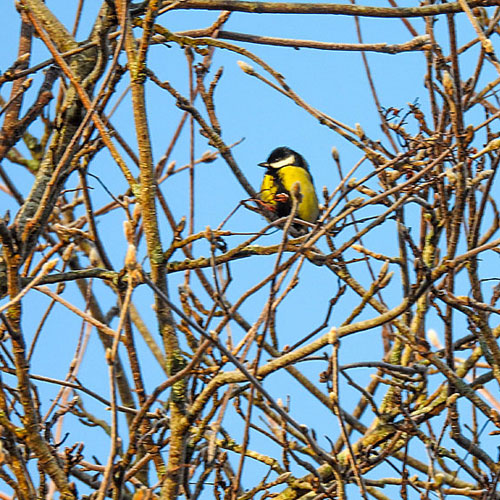
repeatedly diving for food. On my way back up the hill, by the alternative path west of the fields, I
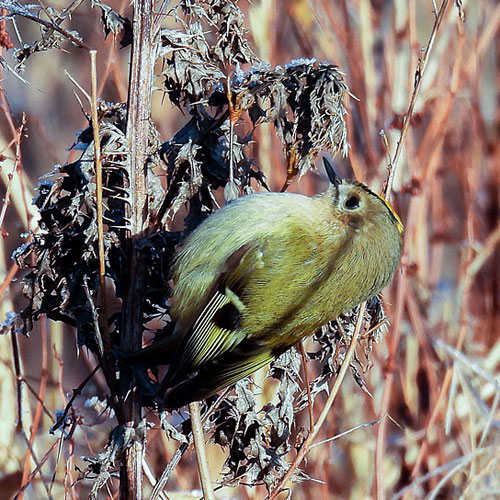
got a distant record shot of a Great Tit. And at the top of the hill I found a wee nippy Goldcrest that was foraging on tall herbs for food. After tracking it for quite a few minutes and after
quite a few failed attempts I managed a few pleasing shots.
| Mallard |
Goldeneye |
 |
 |
| Great Tit |
Goldcrest |
 |
 |
Friday PM, 2nd January: Dalzell Estate, Motherwell
After a short break in the car for tea and biscuits, I decided to make a brief visit to the
neighbouring site, Dalzell Estate, which is literally a stones throw away from Baron’s Haugh
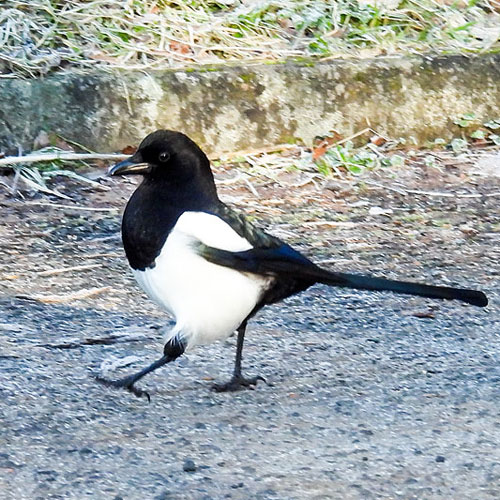
Reserve. As I walked from the car, a cheeky Magpie strode beside me. I, of course, photographed
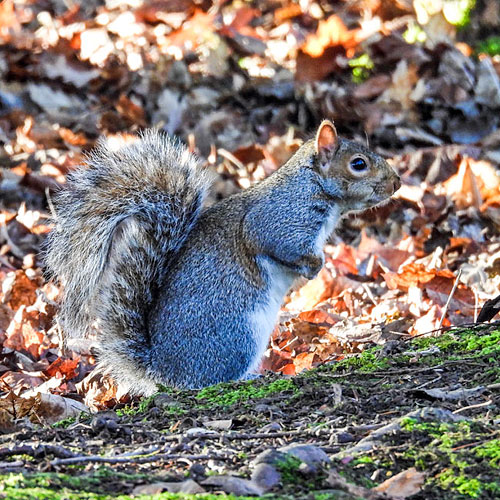
it and continued into the Dalzell Estate. I immediately got a nice shot of a Grey Squirrel. That
wasn’t the last one I saw. Some people believe that Grey Squirrels hibernate, but that’s untrue. As
I walked through the wooded paths of the estate I frequently heard the calls of Nuthatches and it
wasn’t long before a Nuthatch appeared on a tree bough above the path I was on.
Although it was back-lit, I managed (with the assistance of Photoshop) to produce a couple of
reasonable shots of the wee bird.
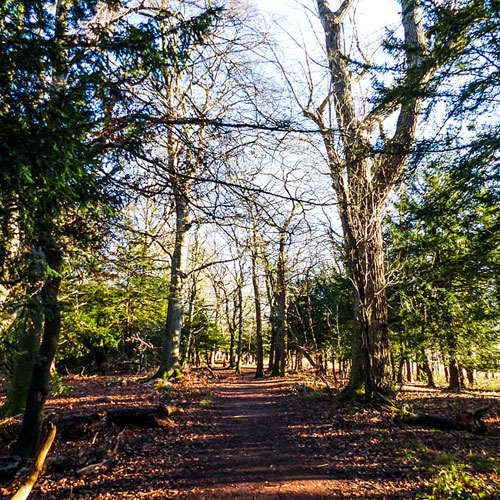
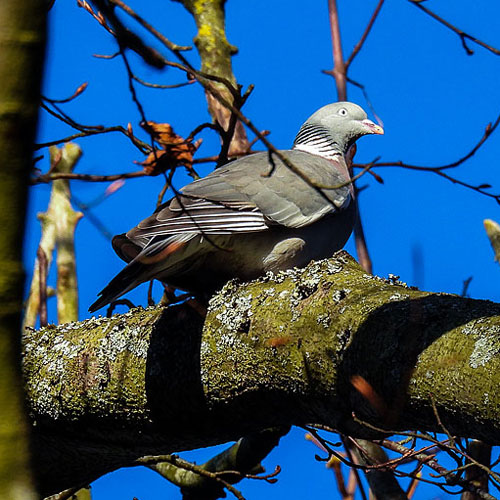
The forest paths of the estate make it a very pleasant place to walk, and a great place for birds -
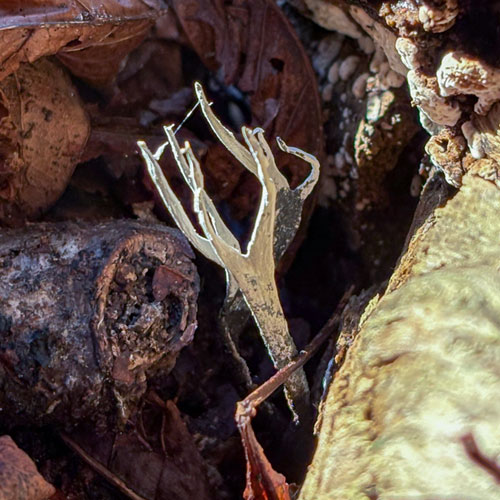
like woodpigeons, to live. I’ve also found lots of fungi there, such as the Candlesnuff fungus
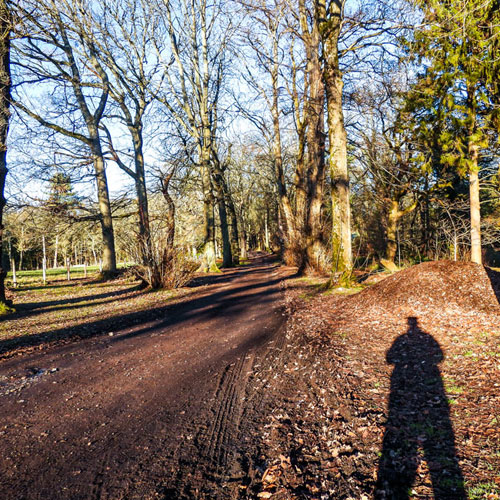
shown below. My final shot shows the view looking north, up Manse Road from the road end.
|
Wood Pigeon |
 |
 |
| Candlesnuff Fungus |
|
 |
 |
With 29 species photographed in a few hours, in fairly cold conditions, I’m satisfied that the trip
was a success. My favourite shots were the Goldfinches, Redwings and Goldcrest in Baron’s
Haugh and the Nuthatch and Grey Squirrel in Dalzell Estate. Cold conditions, and even another
named storm, are expected to continue next week - well, it is Winter
Back To Top
|