|
Week ending: 29th March: Hogganfield Park LNR, Auchenlea Park and Strathclyde Country
Park
The weather this week has been gearing up for traditional April showers next week. The phrase
“frequent showers with sunny intervals” has already been uttered frequently by weather
announcers this week. My strategy has been to try to get out with the camera during the sunny
spells and retreat back to the car when rain is threatened.
Monday, 23rd March: Hogganfield Park LNR
That strategy is easily carried out at the compact little reserve at Hogganfield Park at the east side
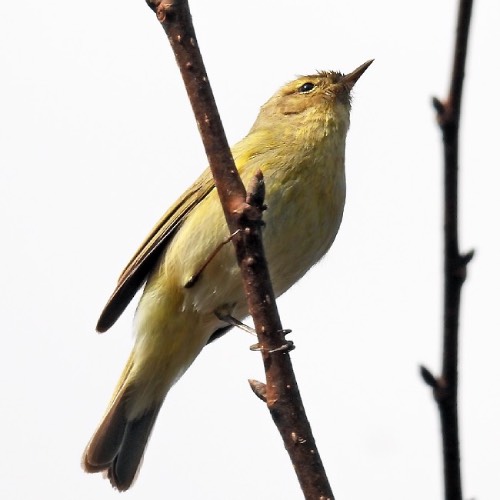
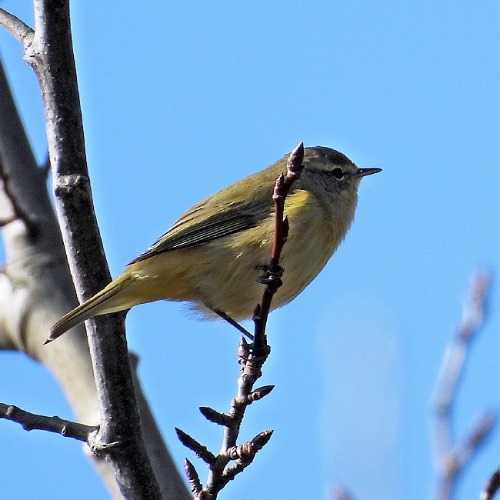
of Glasgow. I started at the east side of the park, at the wee pond, where I managed a pleasing
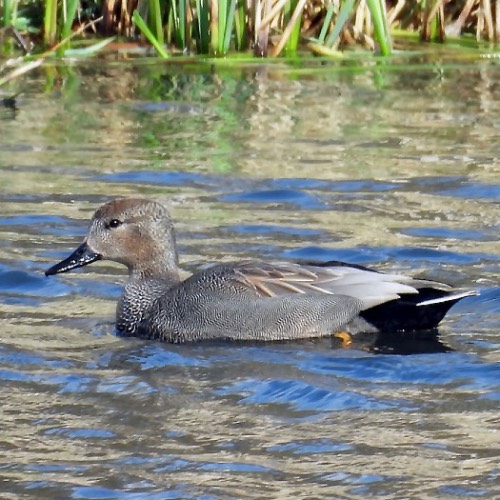
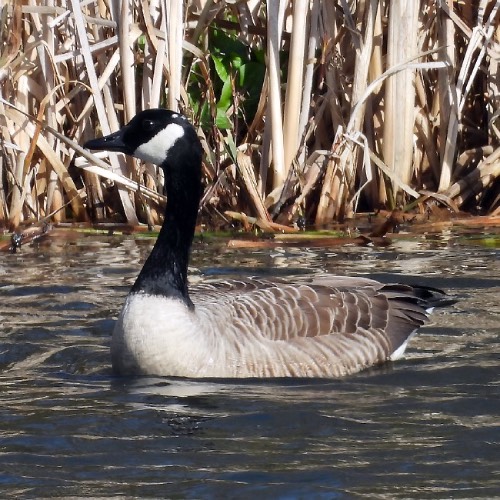
shot of a visiting Chiffchaff ). On the pond were Gadwalls and Canada Geese. At the east
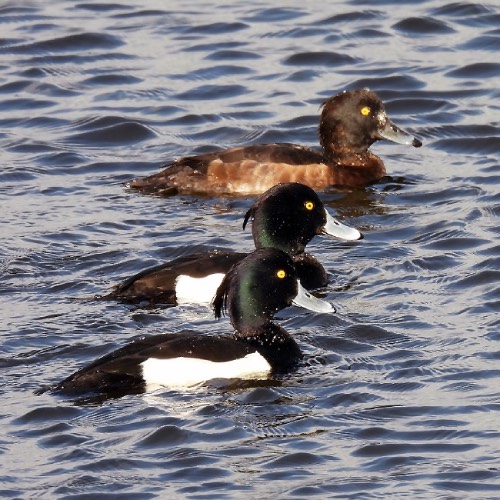
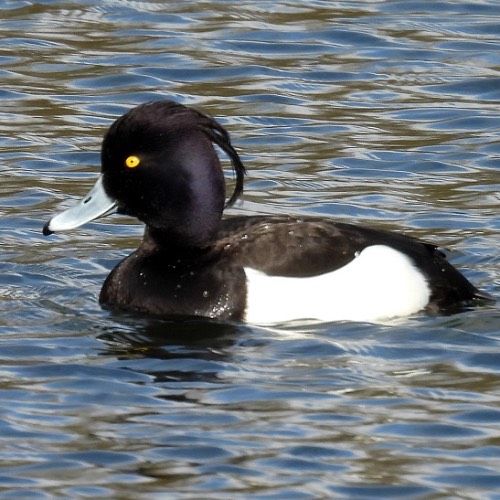
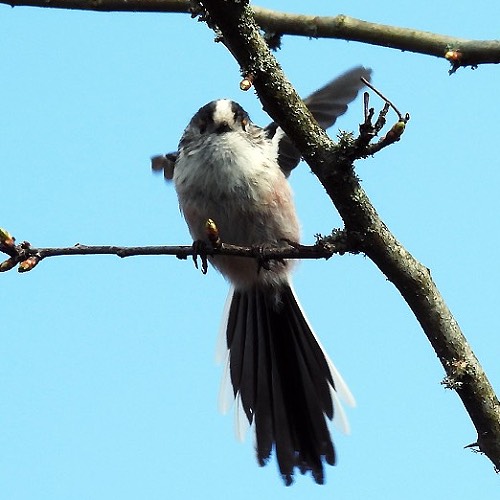
end of the loch there were groups of courting Tufted Ducks and, in the trees, a small flock of
Long-tailed Tits moved quickly through, hopping unpredictably from branch to branch.
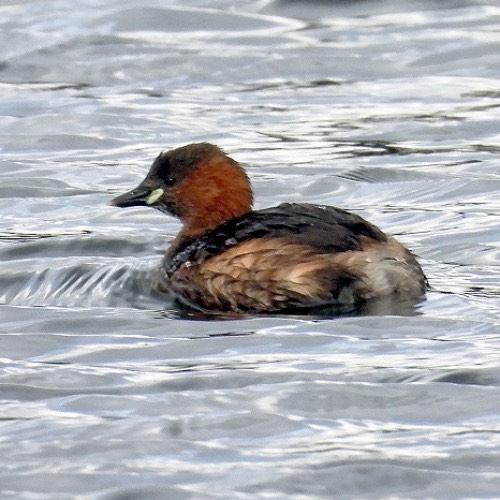
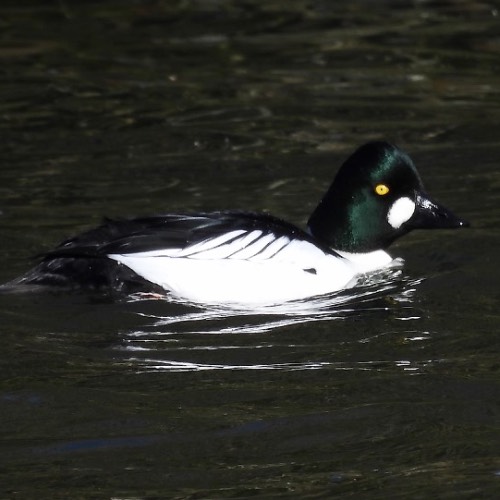
On the channel at the South side of the island I photographed a Little Grebe, a diving Cormorant
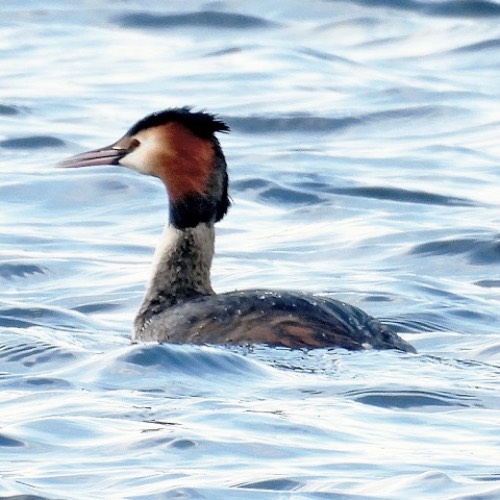
and a lone drake Goldeneye. A Great Crested Grebe also showed up at the west end of the
channel.
| Little Grebe |
Cormorant |
 |
 |
| Goldeneye |
Great Crested Grebe |
 |
 |
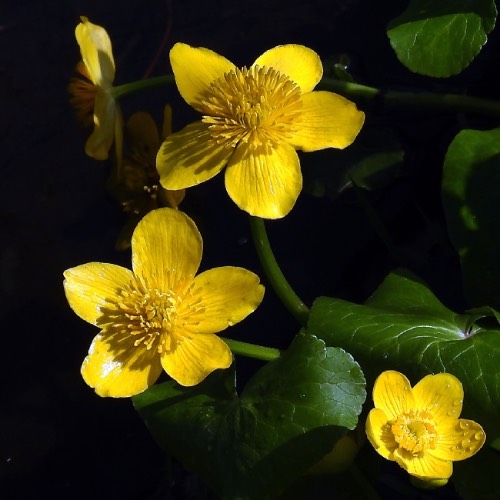
Beautiful golden Marsh Marigolds adorned the banks of the small stream that runs into the loch at
its southern edge. At this point the dark clouds rolled in, pushed by a strengthening wind, and I
walked swiftly back to the car and waited until the flurry of rain subsided and blue sky and
sunshine returned. At the north edge of the loch I found patches of Primroses, Siberian Squill and lots of Coltsfoot blooming. I ended my brief visit with shots of the Whooper Swans and
of a handsome Lesser Black-backed Gull posing at the edge of the loch.
| Marsh Marigold |
Primrose |
 |
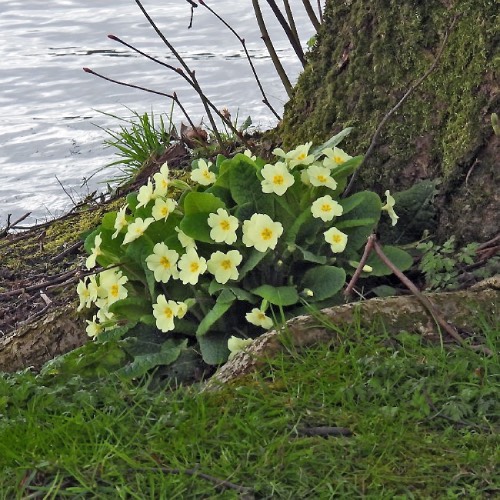 |
| Siberian Squill |
Coltsfoot |
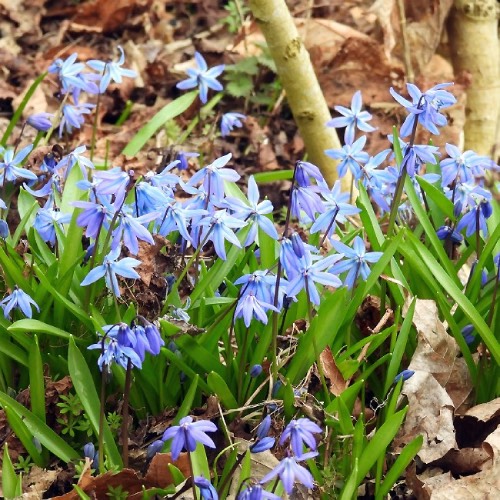 |
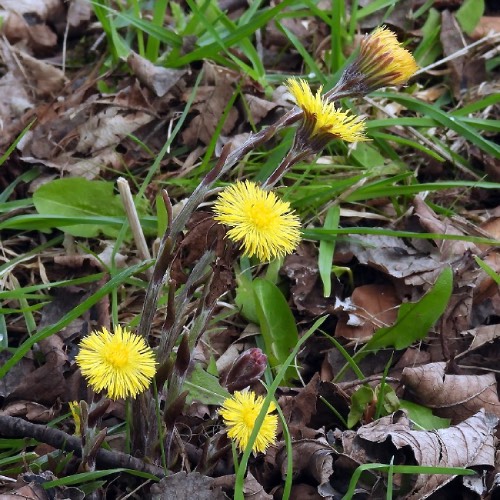 |
| Whooper Swan |
Lesser Black - backed Gull |
 |
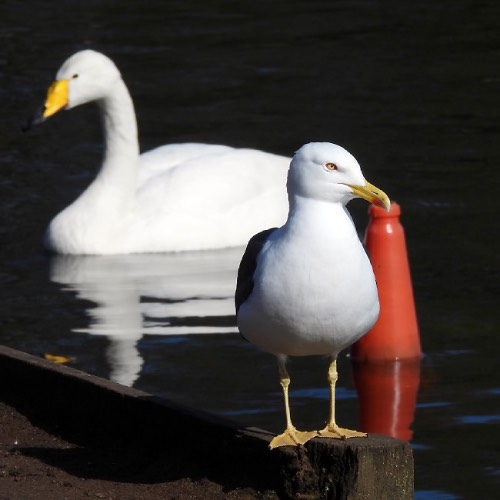 |
Wednesday, 25th March: Auchenlea Park
A couple of miles east of Hogganfield there is a shopping centre called Glasgow Fort, in the
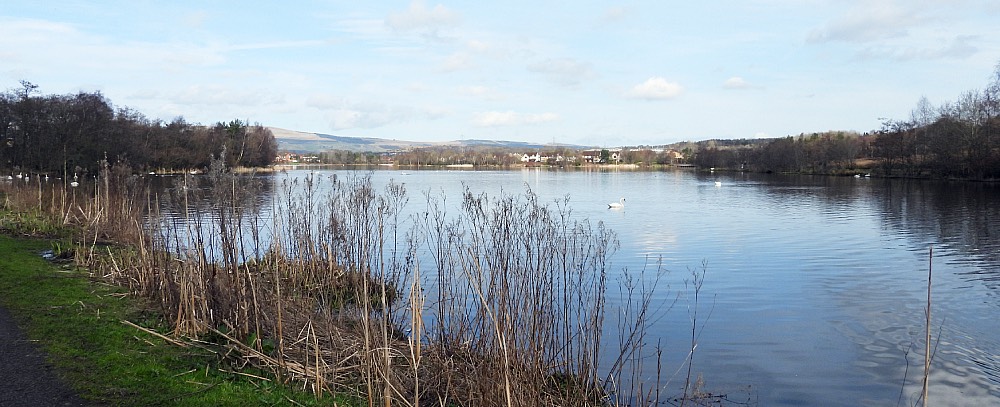
middle of which lies Auchenlea Park. There is a small pond, Auchenlea Pond, in the park and I
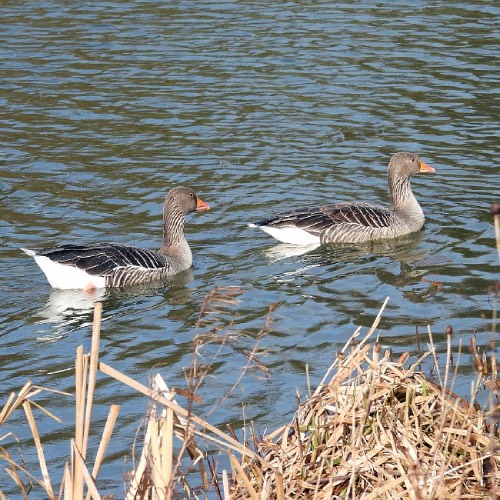
decided to check it out.I was surprised to find that it has a nice group of birds residing there.
There was a wee spell of light rain complete with rainbow as I photographed some of the
residents: Greylag and Canada Geese as well as Mallards and Moorhens
| Greylag Goose |
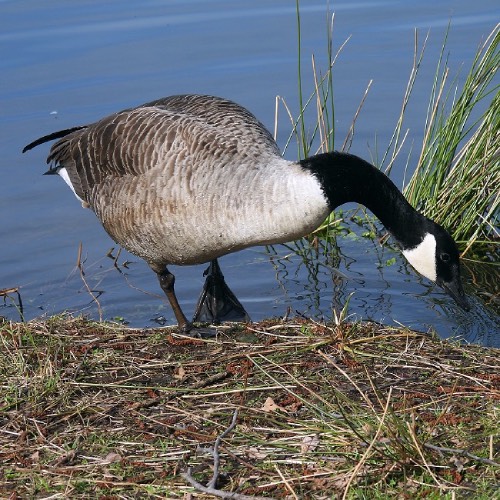
Canada Goose |
 |
 |
|
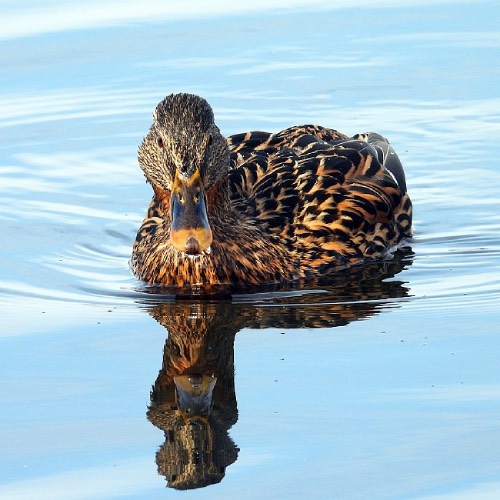
Female Mallard |
 |
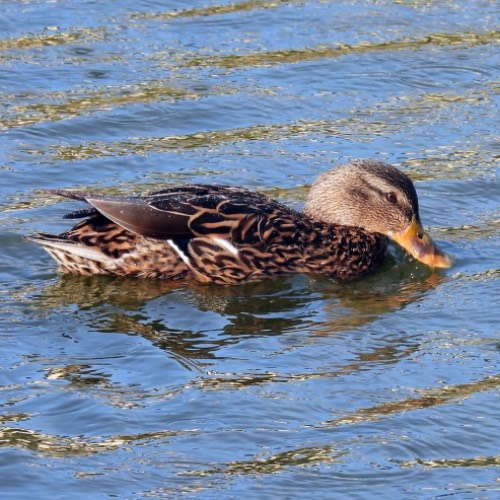 |
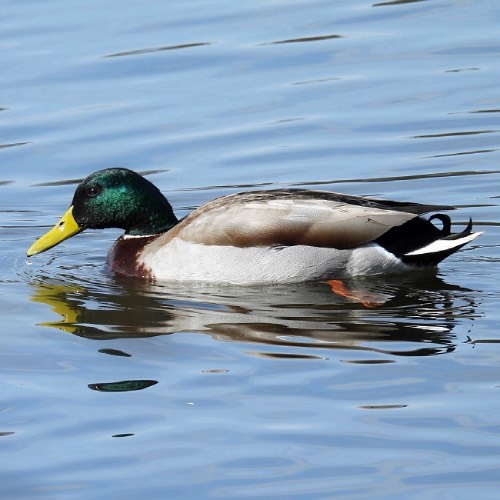
| Drake Mallard |
Moorhen |
 |
 |
Located in Auchenlea Park is Provan Hall , described on its website as “A special house
and garden with 500 years of history and haunts”.
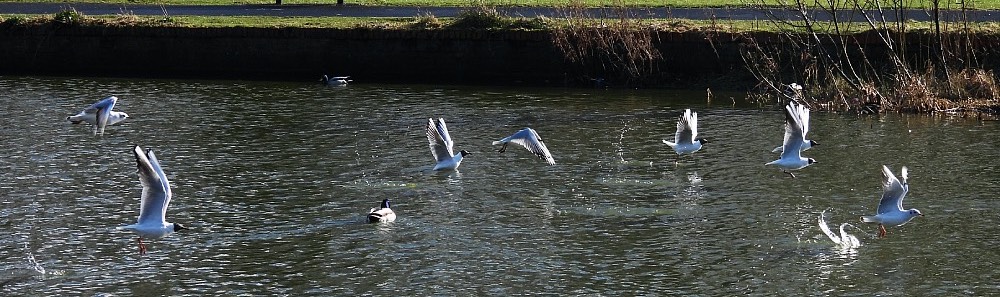
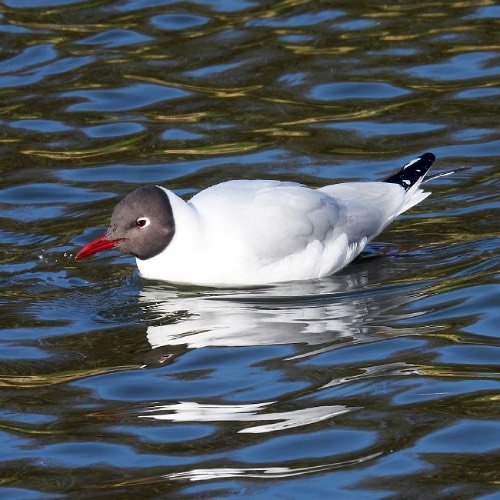
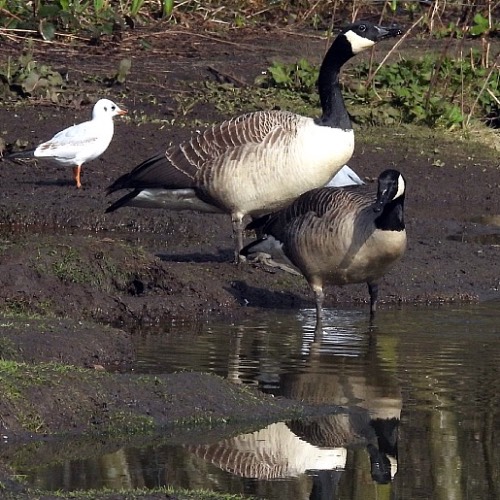
I snapped a small flock of Black-headed Gulls as they flew onto the pond.
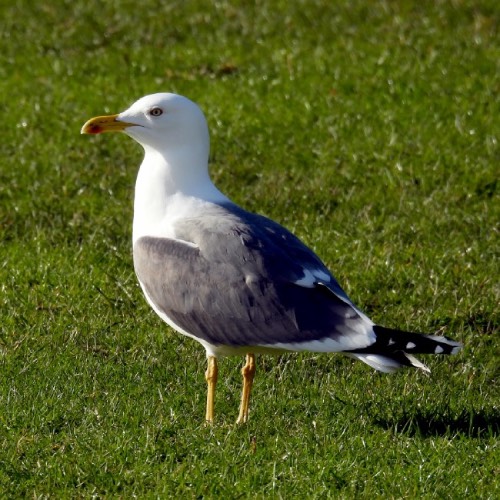
I also photographed a Lesser Black-backed Gull which was scavenging on the grass. Just as
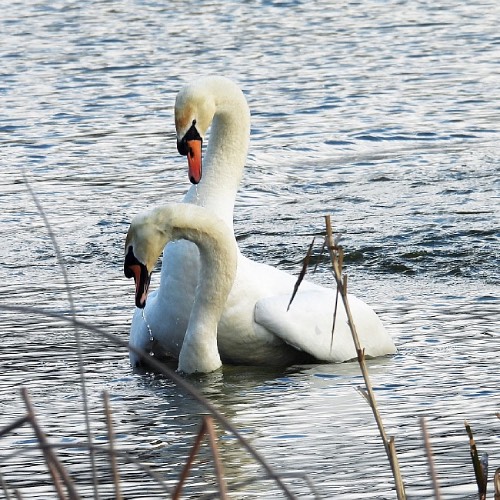
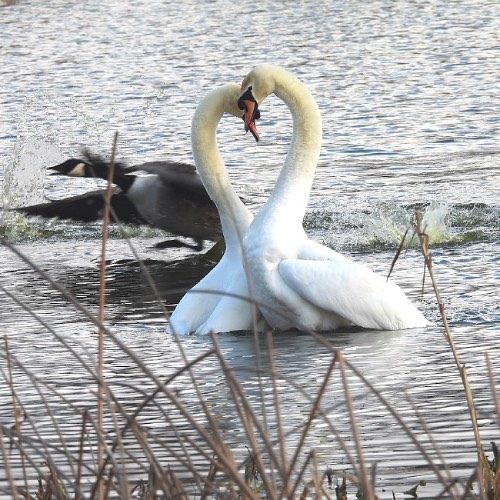
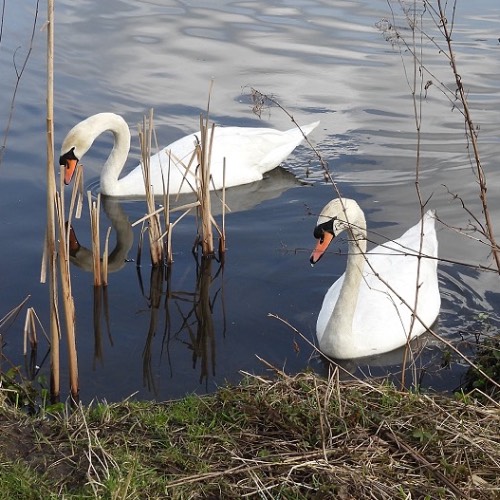
another shower moved in and the sky darkened, I came upon a pair of copulating Mute Swans in
the water, much to the surprise of watching Canada Geese. With great haste I fired off a few shots
and then scampered back to my car for shelter, relatively pleased with the collection of pictures
from the my East End surprise.
Friday, 27th March: Strathclyde Country Park
The showery weather continued on Friday at Strathclyde Park, where I spent two or three hours
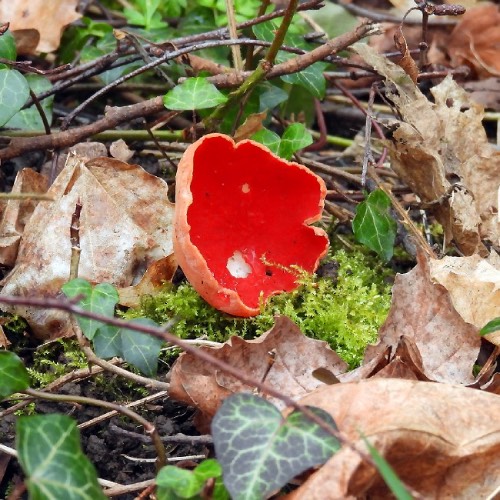
with my camera and managed to accumulate quite a few sightings. My first capture was of a
Scarlet Elfcap fungus that I discovered by the wooded path behind M&Ds. In the same area I
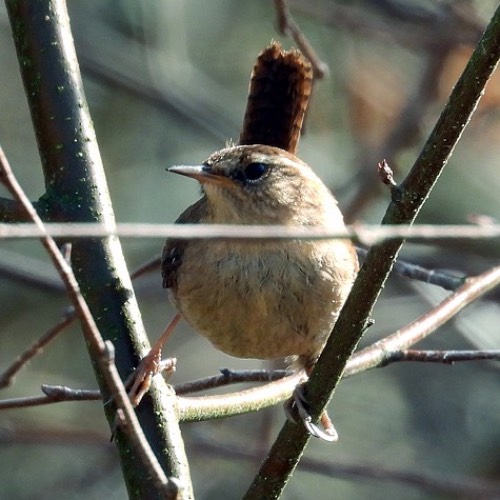
snapped a Wren and then a warbling Robin. Also, at the mouth of the South Calder river, there
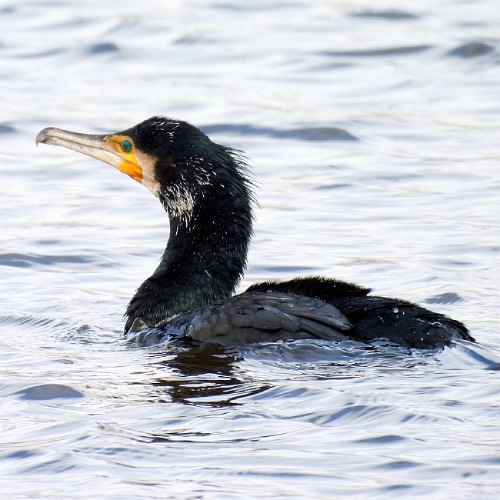
was a Cormorant diving for fish.
| Scarlet Elf Cup |
Wren |
 |
 |
| Robin |
Cormorant |
 |
 |
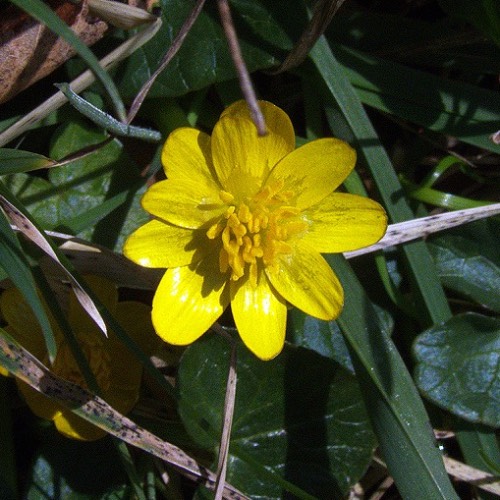
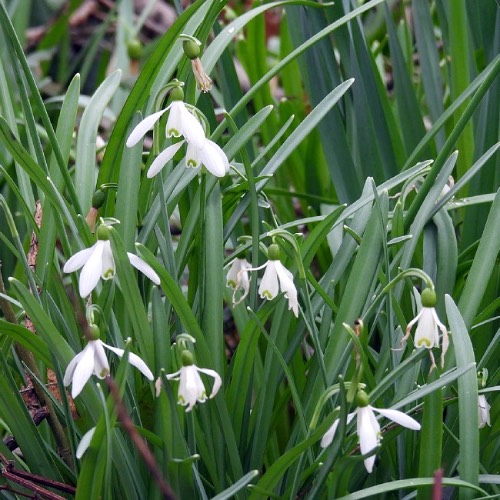
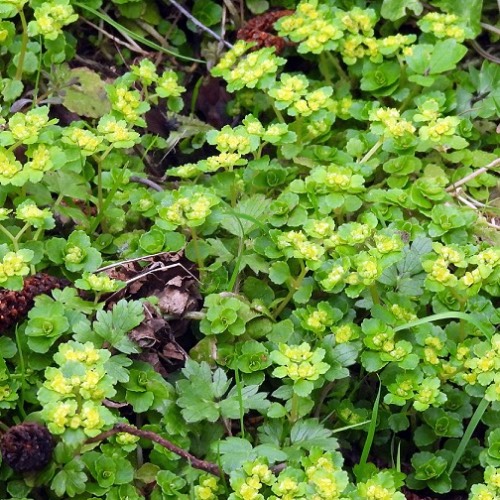
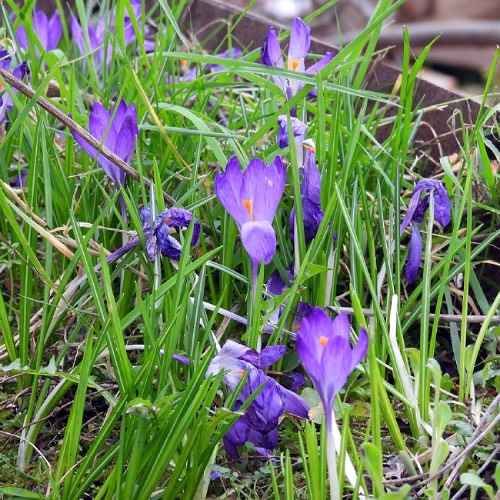
In the area of the all-weather football pitches there were flowers blooming: Lesser Celandine,
Snowdrops, Opposite-leaved Golden Saxifrage and Crocuses.
| Lesser Celandine |
Common Snowdrop |
 |
 |
| Opposite - leaved Golden Saxifrage |
Crocus |
 |
 |
At the opposite end of the park, after walking down from the main Motherwell entrance…
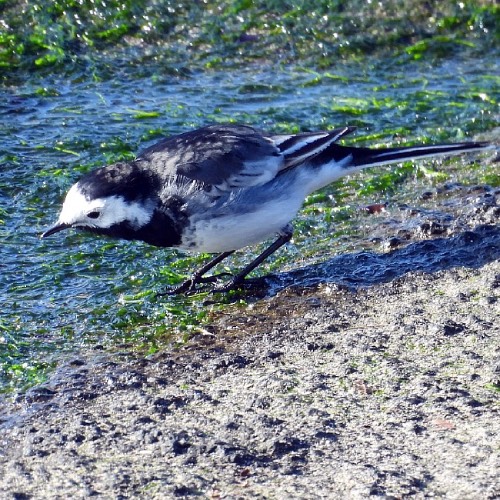
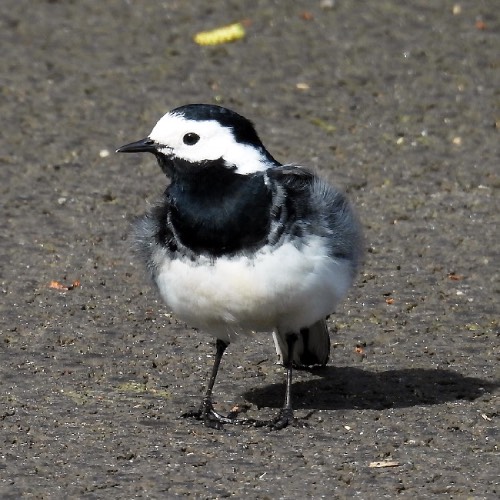
…. to reach the south end of the loch. A Pied Wagtail was on the footpath. When I looked down to
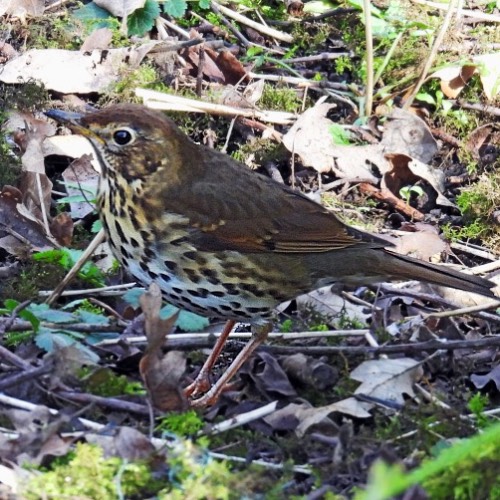
the banks of the River Clyde I spotted a Song Thrush in the undergrowth. When I passed
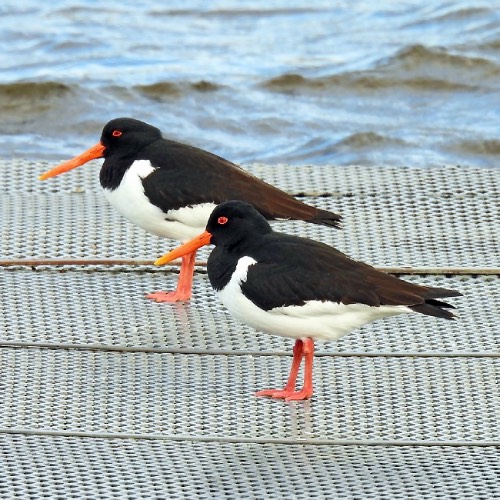
the jetties at the Watersports Centre there was a pair of Oystercatchers standing at the end of one
of the jetties. Those are infrequent visitors so I was pleased to see them. Next I snapped another
bird that is fairly rare at the loch: a Great Crested Grebe which was diving about 30m out from the
loch side.
| Pied Wagtail |
Song Thrush |
 |
 |
| Oystercatcher |
Great Crested Grebe |
 |
 |
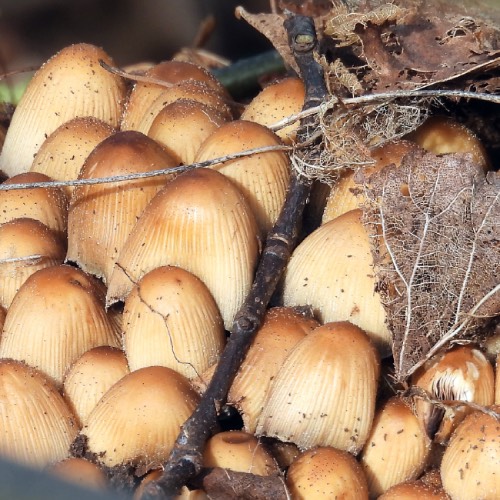
Later I walked the footpaths at the south edge of the park and came across a large cluster of
Glistening Inkcap mushrooms sprouting from some felled trees. I also walked along the pavement
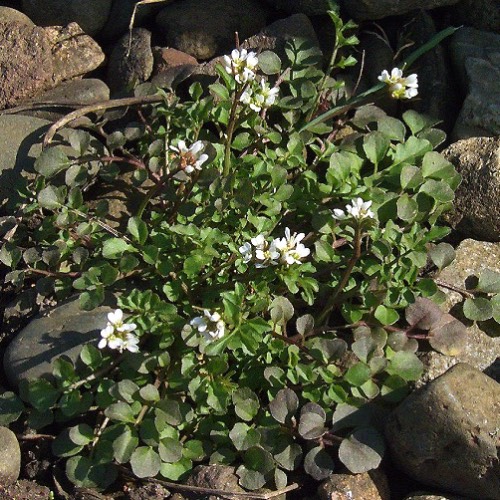
by the Hamilton Road as I looked for wildflowers I’d seen earlier from the car. These turned out to
be Danish Scurvygrass , a plant that grows well in salty habitats (like seaside foreshore).
The roadsides are of course salty due to the road grittier activities. A similar wildflower was
growing in the stairway back into the park: Hairy Bittercress. As I walked the footpaths at
the south end of the park I could see and smell masses of Few-flowered Leeks flowering
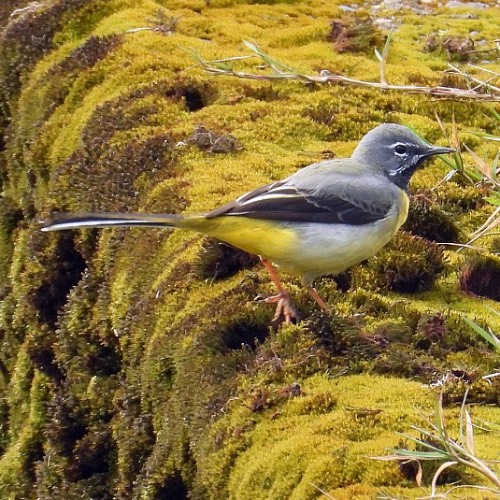
below the trees. My final couple of shots were taken at the north end of the park. The first of these
was taken at the north spillway when a Grey Wagtail flew over my head and landed on one
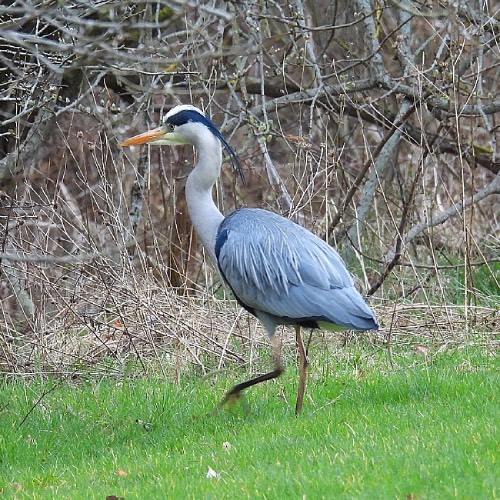
of the walls of the culvert. The next (final) shot was at the Starter’s area at the head of the Loch,
where a Grey Heron descended upon after its flight over the loch.
| Glistening Inkcap |
Danish Scurvygrass |
 |
 |
| Hairy Bittercress |
Few - flowered Leek |
 |
 |
| Grey Wagtail |
Grey Heron |
 |
 |
It turned out to be a very successful trio of outings, with 42 species photographed (not all listed
above due to economy of space). My favourites are the Chiffchaff at Hogganfield Park, copulating
Swans and Moorhen at Auchnlea Park and the Grey Wagtail and flowers at Strathclyde Park. The
weather is to be milder next week, but with more showers - great, warm rain
Week ending: 22nd March : Broadwood Loch, Port Seton and Musselburgh.
Things are starting to look up weather-wise with a few days predicted to be sunny and warm (a
word the weather presenter has not mentioned for a good few months).
Wednesday, 18th March: Broadwood Loch, Cumbernauld
Wednesday was one such day, although only in the morning, because cloud rolled in in the
afternoon. I drove to Cumbernauld mid-morning, to the lovely Broadwood Loch and started my
walk in ideal conditions.
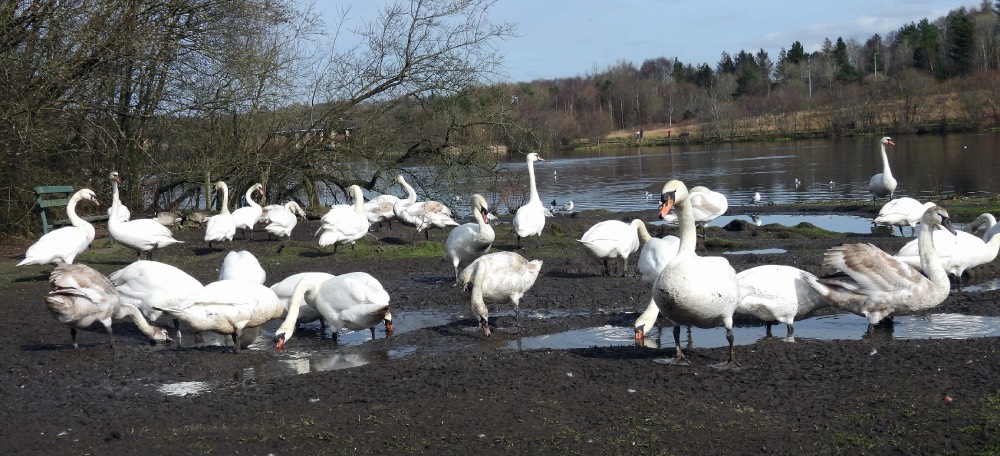
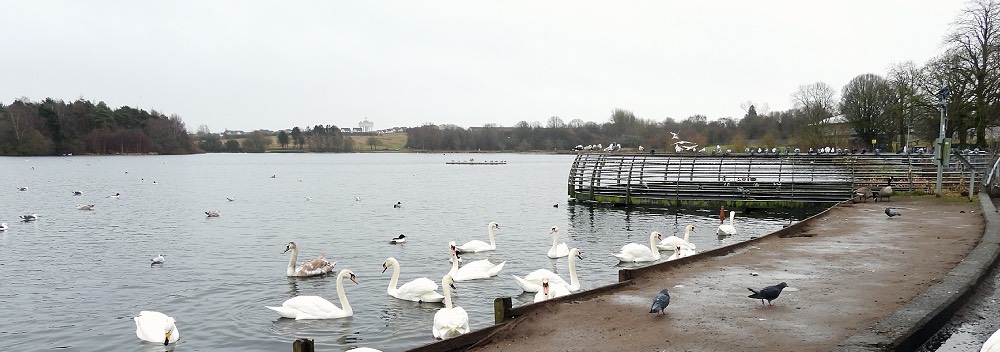
The car park was packed with cars and also Mute Swans. I must have arrived just after someone
had been feeding them.
There were a few Canada Geese in the mix and also even more swans and also Mallards by the
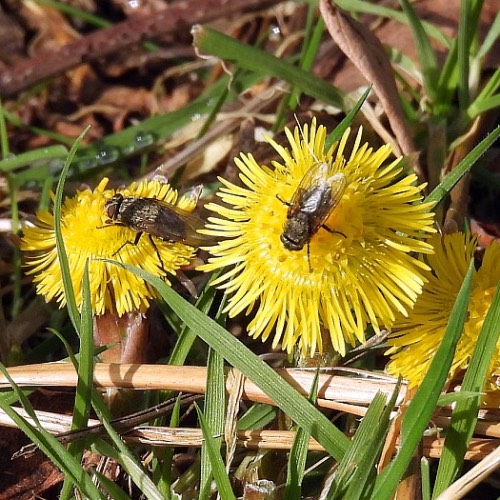
side of the loch. I started my usual circuit of the loch and immediately came upon lots of Coltsfoot
flowers, which are often confused with dandelions. An unexpected fact about Coltsfoot is
that its flowers appear before its leaves - which are shaped like hooves of small horses - hence
the name “colts foot”. Note the insects on the flowers. They are probably Cluster flies. Just before
the boardwalk I encountered a Dunnock calling from a lochside tree.
At the boardwalk I got nice shots of some Mallards, Tufted Ducks and a feeding Canada Goose.
There were also a pair of Mute Swans that acted as if they were nest-building.
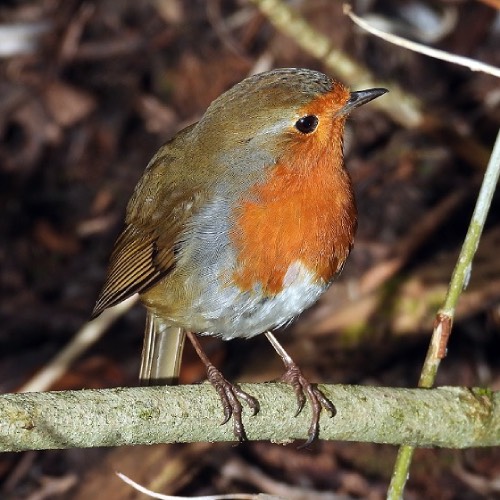
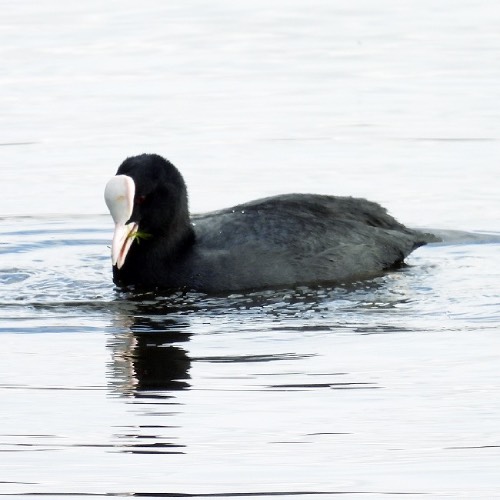
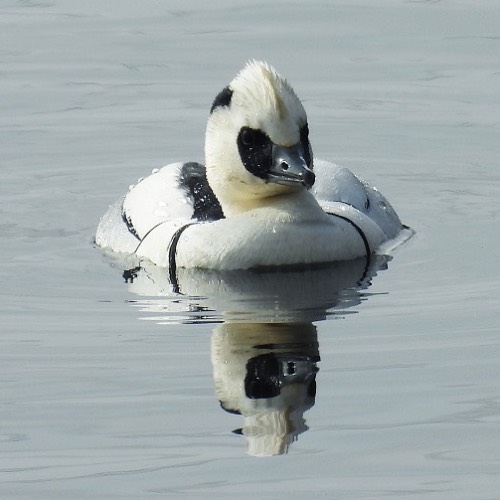
Between the boardwalk and the head of the loch I snapped a Robin singing and at the dam there
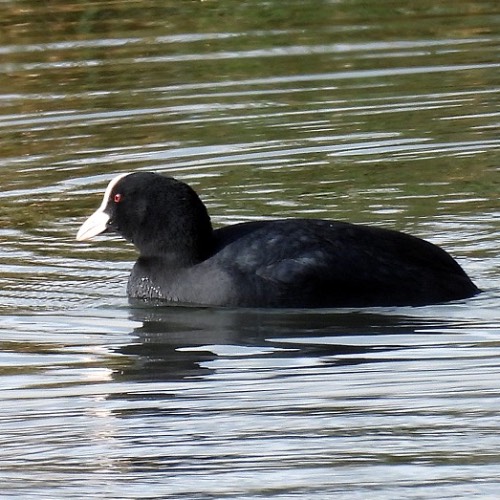
were some Coots diving. Also I was pleased to discover another diver - the beautiful drake Smew. After that I continued along the west side of the loch where I noticed that there were lots of
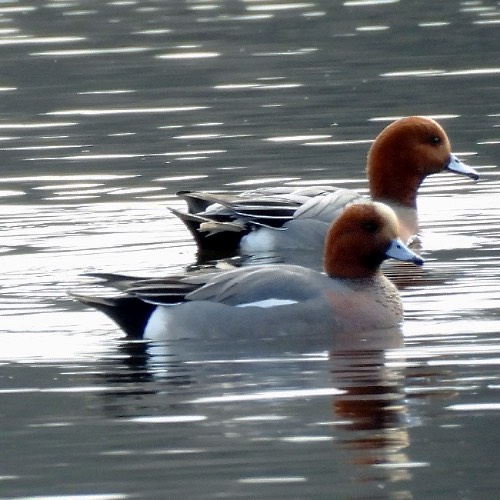
Wigeons calling from the middle of the loch. When I attempted to focus on these I was astonished
to find a Great Crested Grebe paddling amongst them, carrying a big fish in its beak.
| Robin |
Coot |
 |
 |
| Smew... |
|
 |
 |
| Wigeon |
Great Crested Grebe |
 |
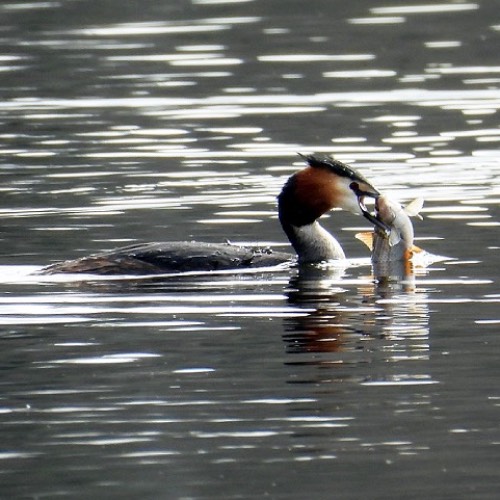 |
It took a wee while but it managed to swallow the fish - and without any harassment from the
gulls.
I thought my picture-taking was finished as I neared the car park I found a couple of flowering
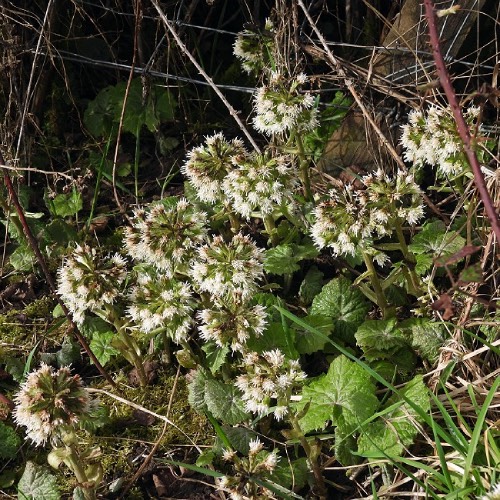
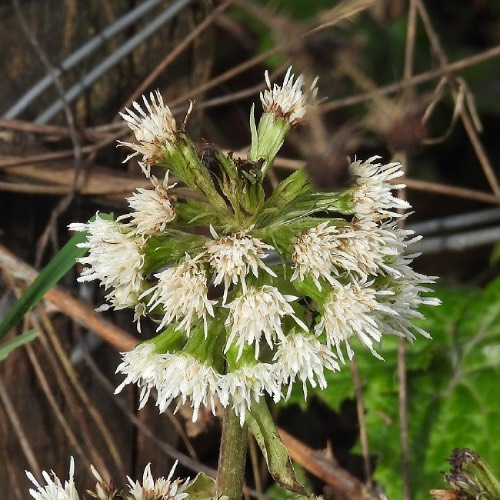
wildflowers by the roadside: a patch of White Butterbur and some lovely Marsh Marigolds .
Friday, 20th March: Port Seton
A couple of days later I headed east to the Lothian coast, where a sunny day was predicted.
The tide was high during my visit but I ended up with some very pleasing sightings. I started at
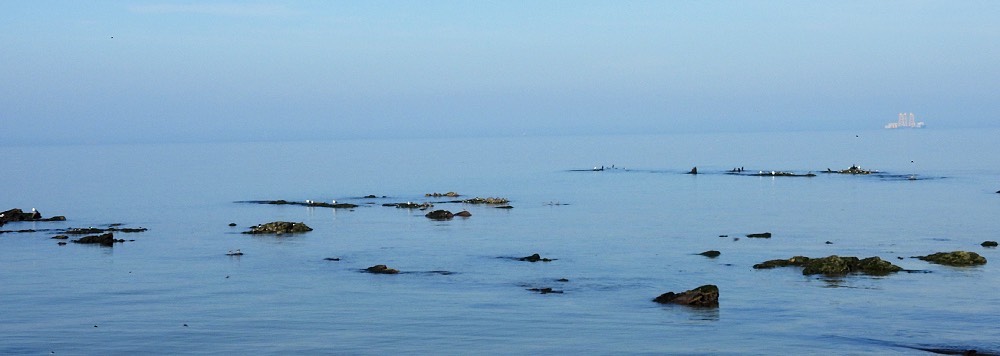
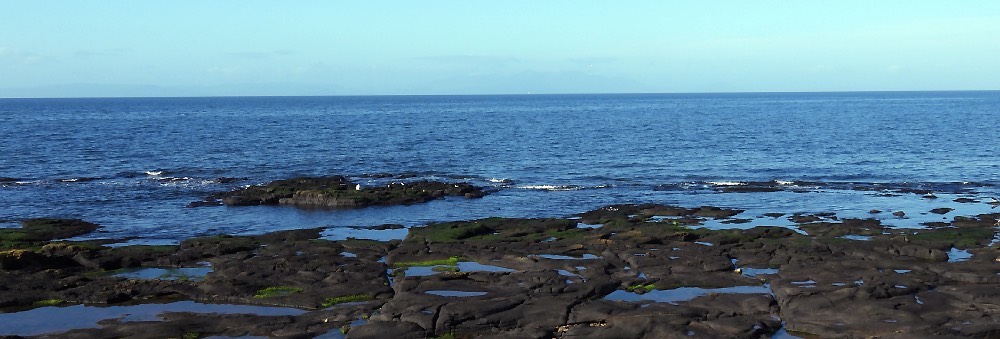
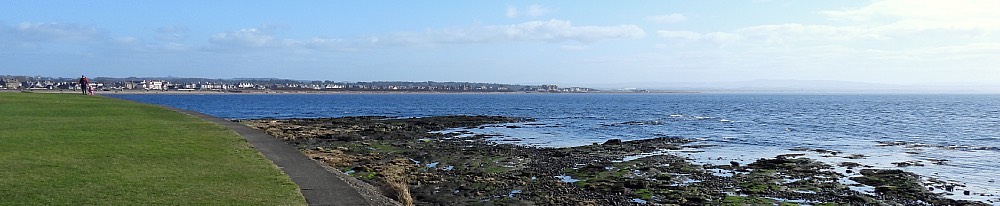
Port Seton. The photo below shows the panorama as seen from the wee car park just east of the
harbour at the Prom. The day must have started misty and had just cleared, since I couldn’t see
Fife across the misted Firth of Forth.
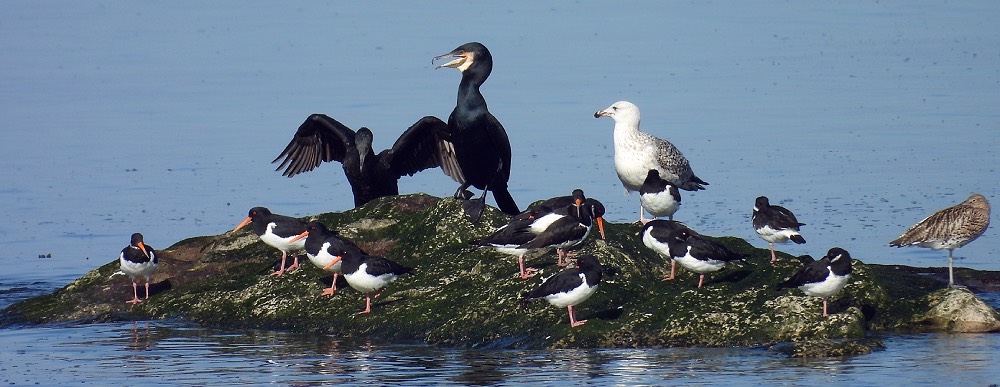
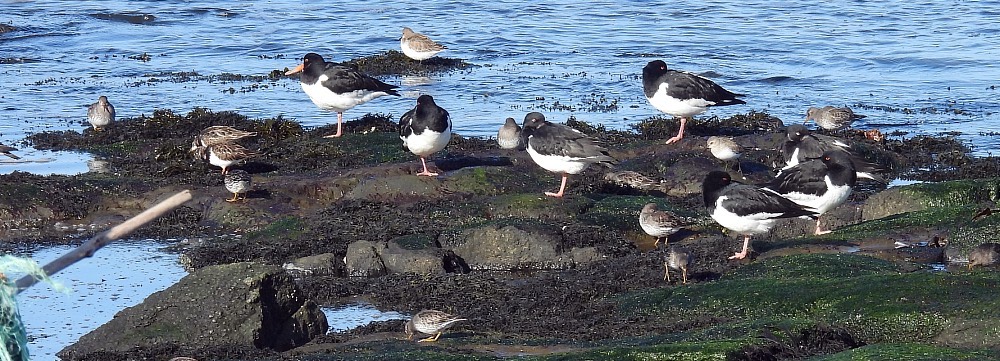
The tide was not high enough to cover all of the “Wragged Rocks” and I photographed a
gathering of Cormorants, Oystercatchers, Herring Gulls and a Curlew on the broadest of the rocky
islands.
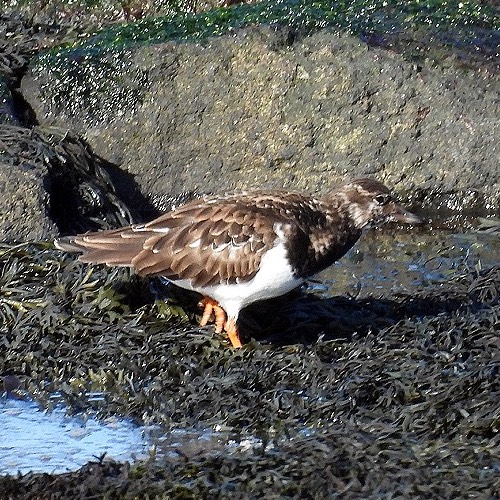
Another such island held Redshanks and some Turnstones.
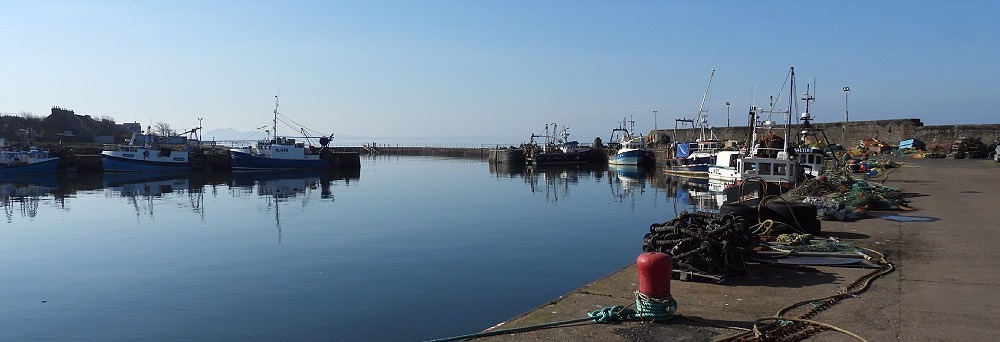
I walked the short distance west to the harbour and was greeted with the view below.
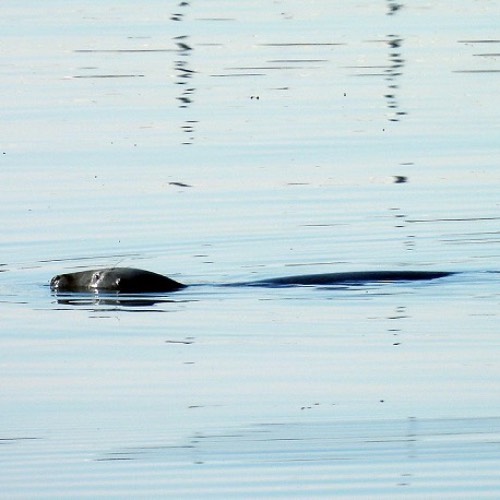
Straightaway I noticed a Grey Seal at the harbour mouth. After that I snapped a couple of
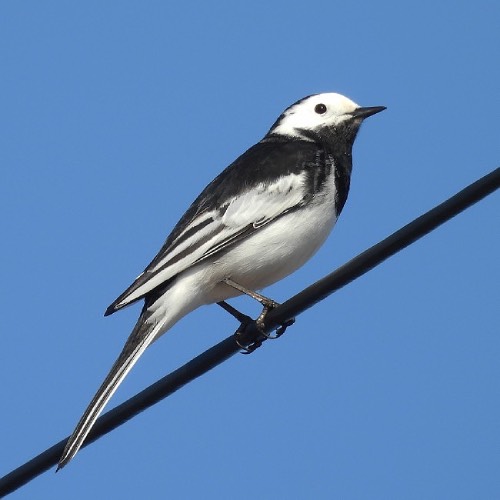
birds perched on high: a Pied Wagtail and a Woodpigeon. I picked my way along the untidy
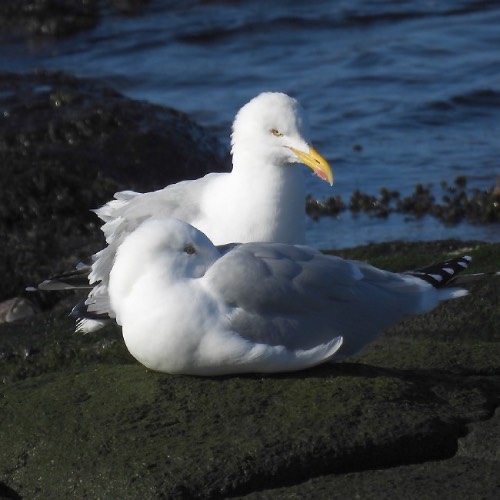
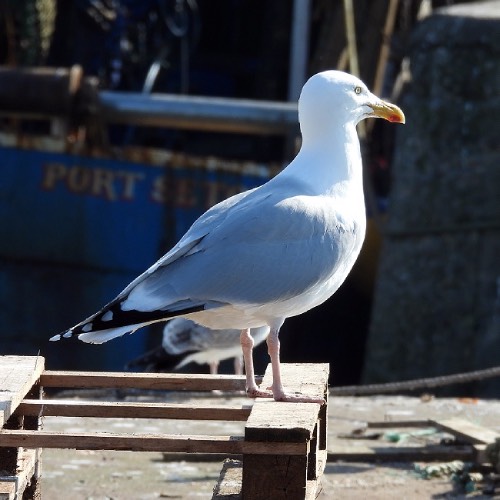
harbour-side to the mouth of the harbour where I photographed some Herring Gulls. I peeked
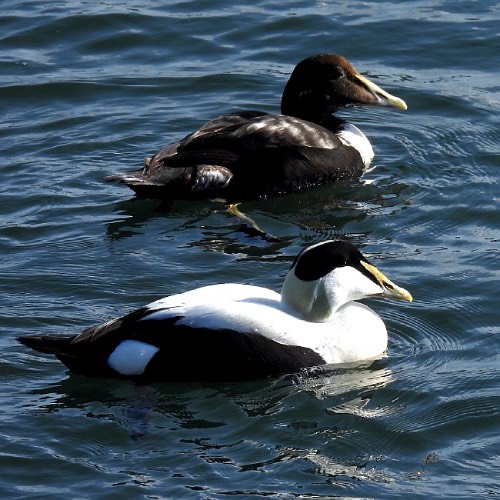
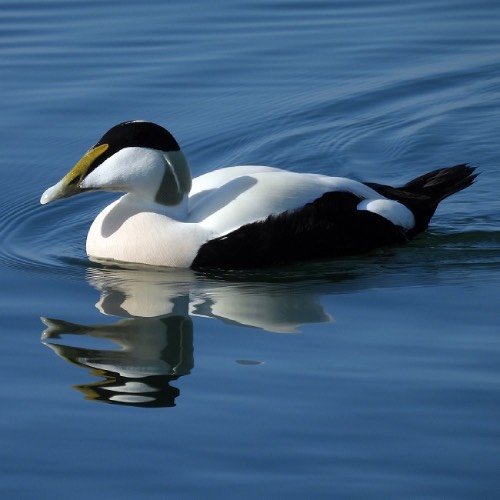
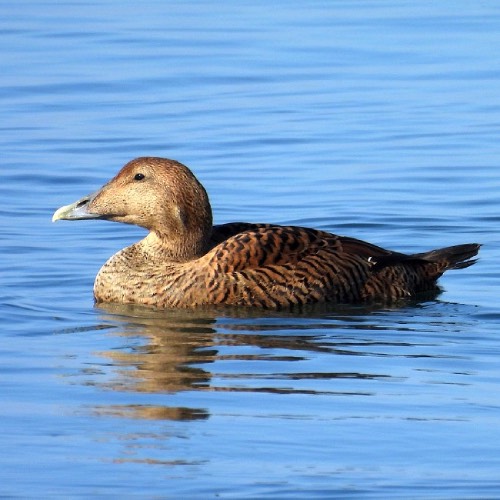
around the harbour wall and was delighted to see a small flock of Eider ducks swimming in
beautiful blue water, under beautiful blue sky.
| Grey Seal |
Pied Wagtail |
 |
 |
| Wood Pigeon |
Herring Gull |
 |
 |
| Drake Eider |
Female Eider |
 |
 |
Friday, 20th March: Musselburgh
Satisfied with my short visit to Port Seton, I drove the few miles west to my usual parking area at
Levenhall Links. My time there was restricted due to some routine domestic circumstances, so my
plan was to make quick visits to each of the Scrapes - East (“Old”) then West (“New”) before
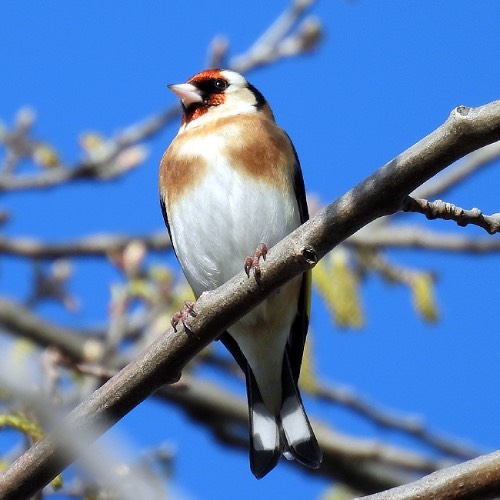
heading home. On my walk along the outer perimeter of the East Scrapes There were Goldfinches twittering high in the trees and I also got a shot of a singing Chiffchaff. Once inside
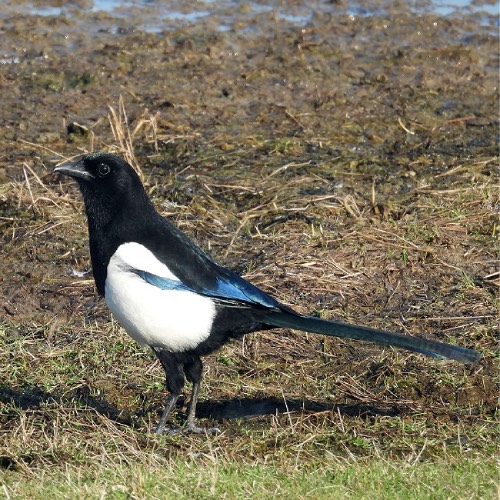
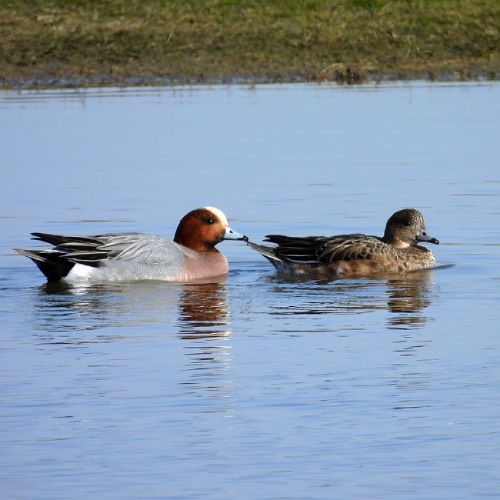
the left-most hide I was relieved to see a fair number of birds gathered on the reserve. I started
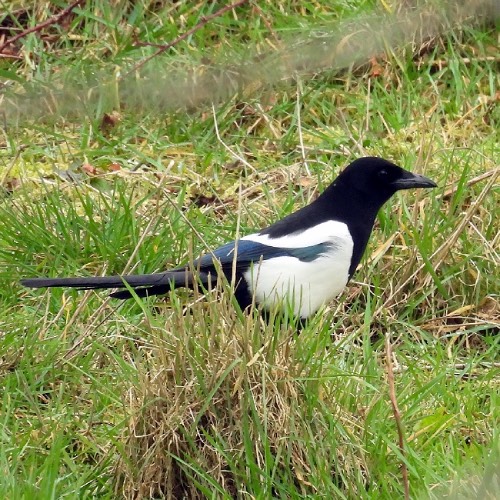
with a close shot of a foraging Magpie and followed that with a pair of Wigeons.
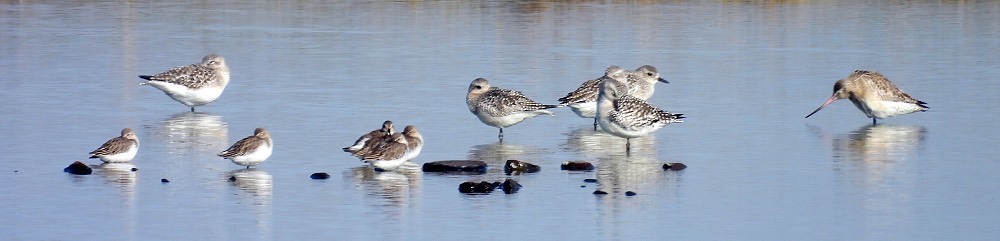
Looking at the most distant middle scrape I photographed a small flock waders that consisted of
mainly Grey Plovers with a few Dunlin in their midst and also a preening Black-tailed Godwit.
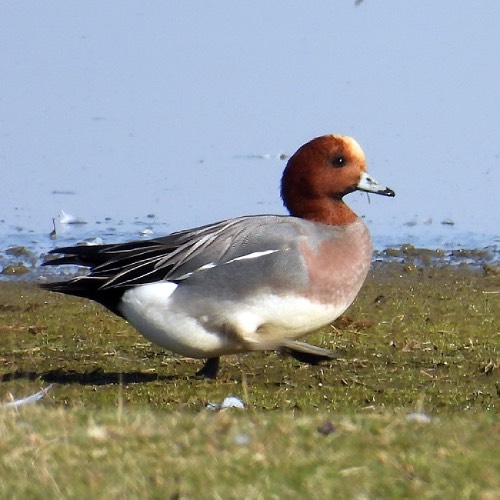
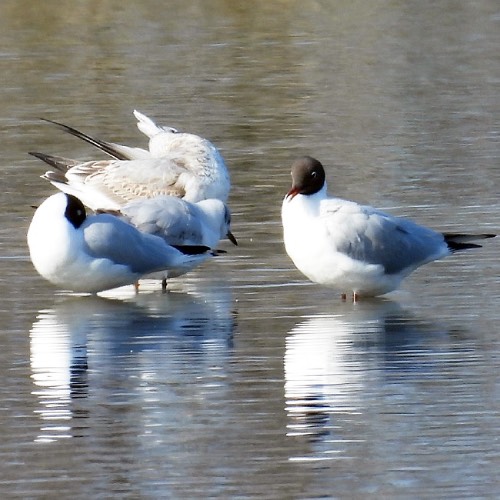
There were plenty of Wigeons snoozing and preening on the grassy areas between the scrapes,
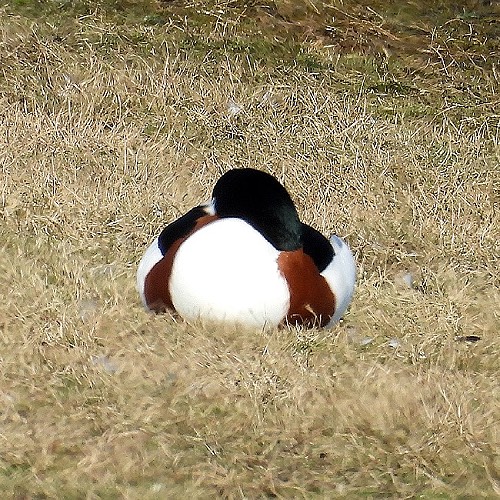
and also healthy of numbers of Black-headed Gulls. I also noticed a single Shelduck
napping on the grass. Another Black-tailed Godwit, but with breeding plumage, was on the back
of the right-most scrape.
| Wigeon |
Black - headed Gull |
 |
 |
| Shelduck |
Black - tailed Godwit |
 |
 |
Satisfied with my pictures at the East Scrapes, I walked by the seawall on my way to the West
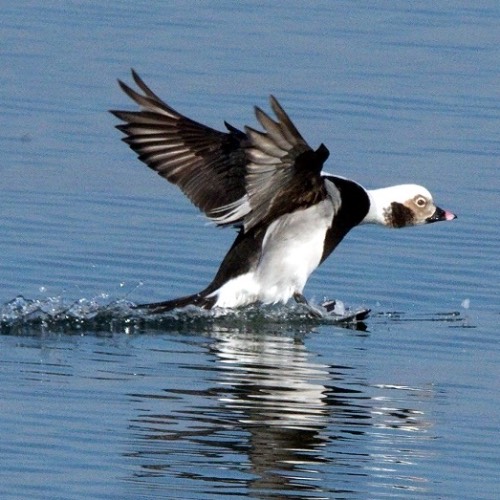
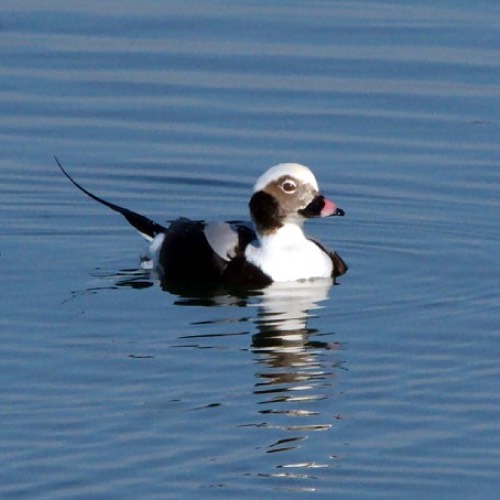
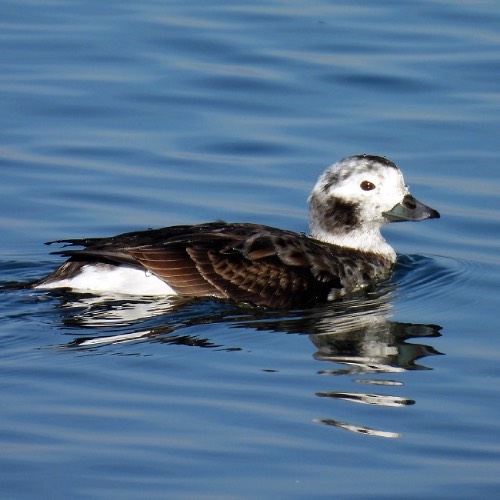
Scrapes and was I lucky enough to witness four Long-tailed Ducks swimming fairly close
to the seawall. This began with a single drake bird flying in from the west…..
….. and landing less than 50 metres from the wall. It was followed by the arrival of an immature
male and a non-breeding female.
 |
 |
| Female Long - tailed Duck |
Juvenile Long - tailed Duck |
 |
 |
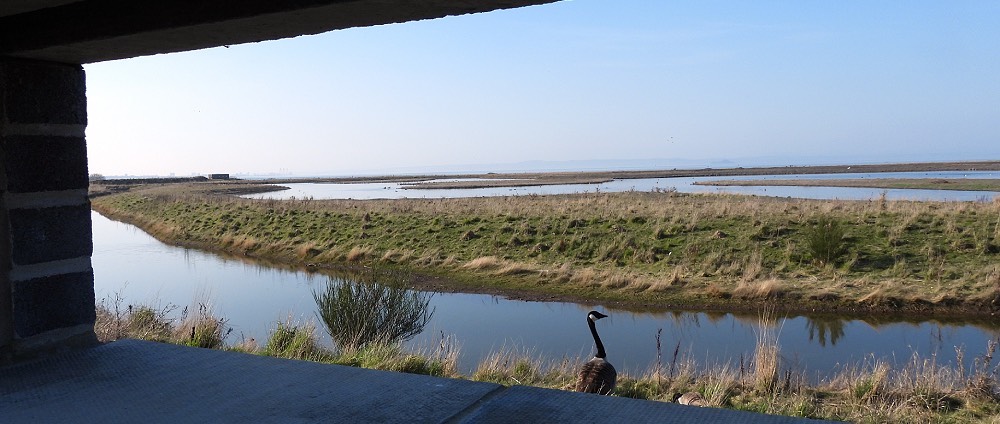
After that show I went to the hides of the West Scrapes. A Canada Goose was standing
immediately in front of the first hide I entered.
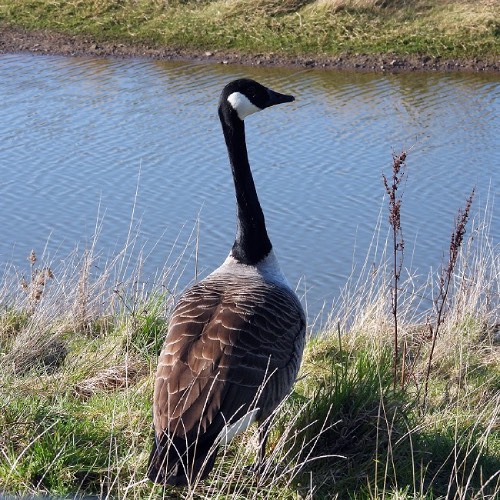
I took three pictures of the Canada Goose - employing the very versatile zoom of the Nikon
Coolpix 950D bridge camera: the shot above and the couple of more magnified shots below.
Most of the other birds were tucked up on the opposite side of the scrapes. I managed shots,
though, of Shelducks and Wigeon, …..
…. as well as a small flock of Curlews preening and snoozing.
 |
With 35 species photographed in the above visits I consider the week to have been a success. It
was certainly a very pleasant week, in three particularly picturesque sites. Next week the weather
is to turn colder. Hopefully it will have lots of sunshine
Week ending: 15th March: James Hamilton Heritage Park, Strathclyde Country Park and
Dalzell Estate
The weather forecast for this week could be summarised as “sunshine and showers”. My strategy
was therefore to get out with the camera in between showers and hope that the Sun would be
shining. Also, I decided to stay inland and fairly local to where I stay.
Monday, 9th March: James Hamilton Heritage Park
My first destination was the James Hamilton Heritage Park in East Kilbride, which is a small, but is
usually a fruitful place to visit. There were reports on social media that there was a drake Scaup on the loch and also a Barnacle Goose with a flock of Pink-footed Geese in
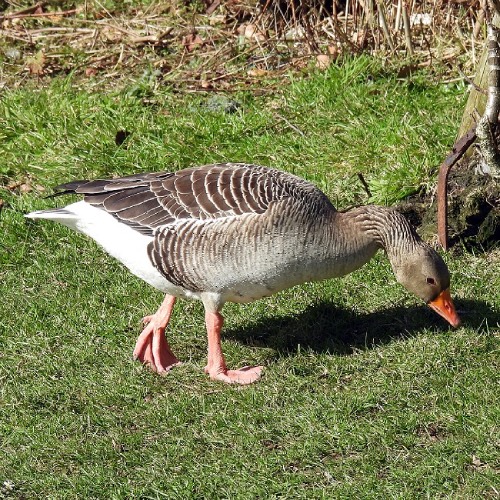
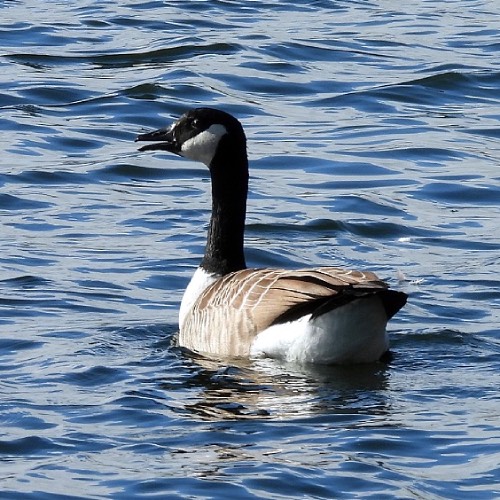
surrounding fields. I started though with shots of Greylag and Canada Geese that were on and
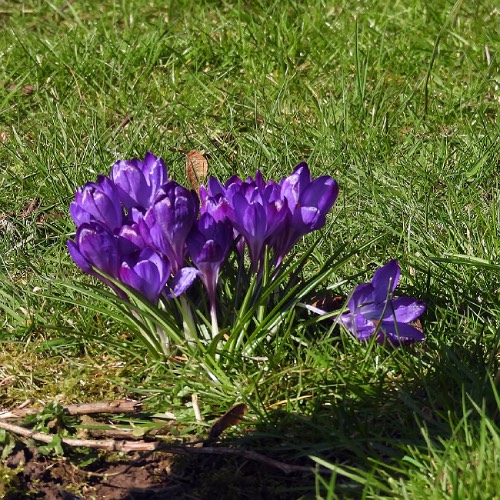
around the small loch. I also snapped a couple of flowers: Grape Hyacinths and Crocuses.
| Greylag Geese |
Canada Goose |
 |
 |
| Grape Hyacinth |
Crocus |
 |
 |
Next I scanned the fields just north of the park for the flock of Pink-footed Geese, but to no avail. I
was later to learn on social media that “farming activities” has spooked them. I did though see
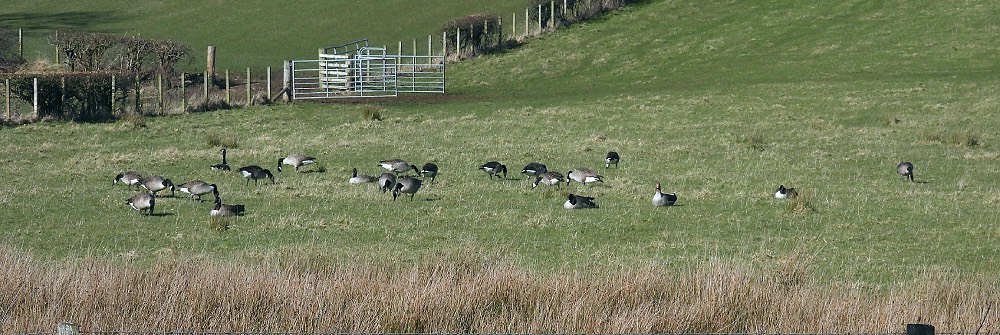
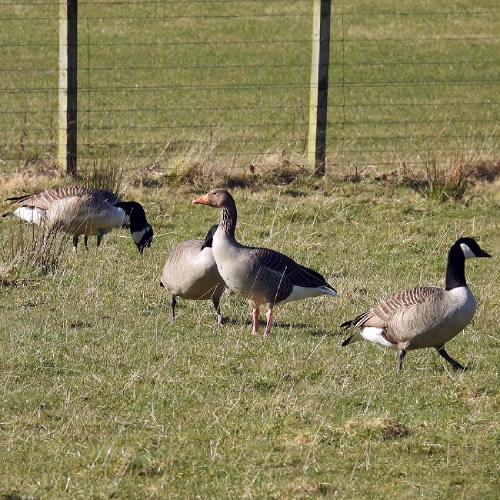
more Greylag and Canada Geese in the fields, ….
…. but definitely no Pinkfeet of Barnacle.
The Greylag and Canada Geese seemed settled and were enjoying the dry and sunny intervals. I
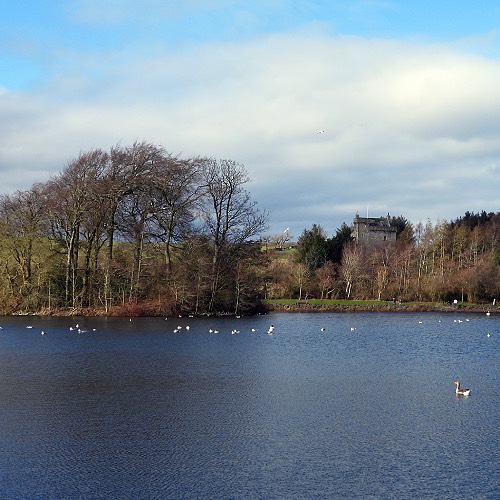
began a walk around the loch. At the Waterfowl Reserve, by the (locked) hide I came across a
Cormorant at relatively close quarters. Further around the loch, as I viewed Mains Castle that lies
across and behind the park, ….
| Greylag Goose |
Canada goose |
 |
 |
| Cormorant |
|
 |
 |
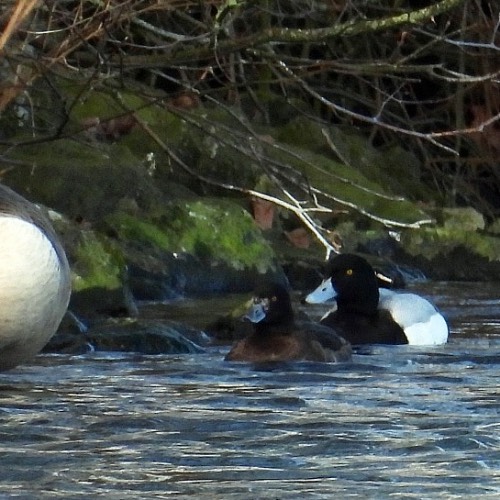
…. and noticed a pair of Cormorants at the edge of the island. The male Cormorant was
bedecked in grey and white breeding plumage. When I zoomed my camera in to get a magnified
shot of the distant Cormorants I found the drake Scaup in the water just a couple of metres from
the Cormorants. It was with a female Tufted Duck. Very pleased with that discovery, I returned to
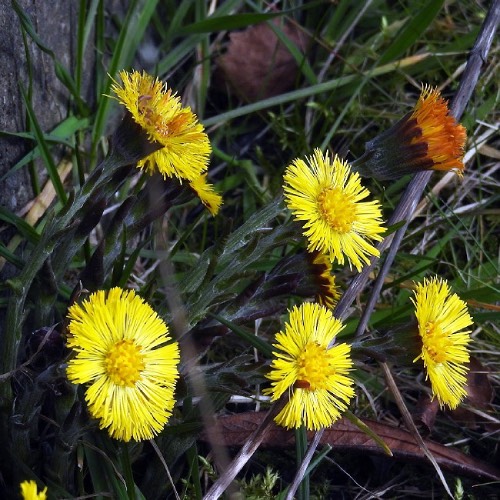
my car for a spot of lunch. On the way I noticed that some Coltsfoot flowers were blooming
by the edge of the pond.
| Cormorant ( Left ) in Breeding Plumage |
Scaup.... |
 |
 |
|
Coltsfoot |
 |
 |
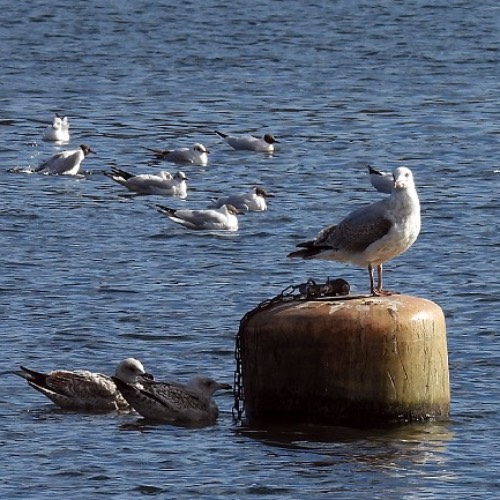
After my snack I had a last wee look at the island and found mainly Herring and Black-headed
Gulls, until I spotted that the drake Scaup had obviously come away from the island to feed in
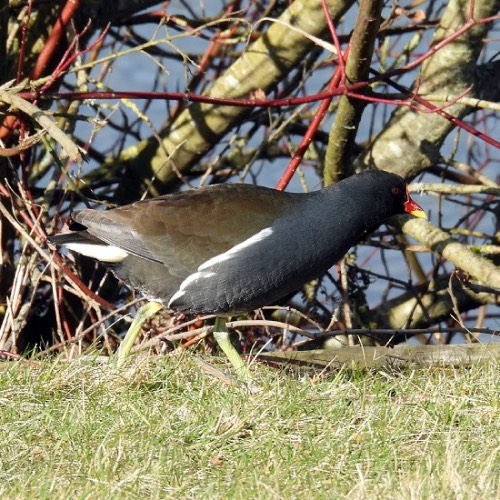
open water. At the south side of the loch I snapped a couple of Black-headed Gulls and a
Moorhen that were feeding on the grassy lochside.
| Herring Gull |
Scaup |
 |
 |
|
Moorhen |
 |
 |
Friday, 13th March: Strathclyde Country Park
It was Friday before I managed out again for a short walk in Strathclyde Park. My first shot was
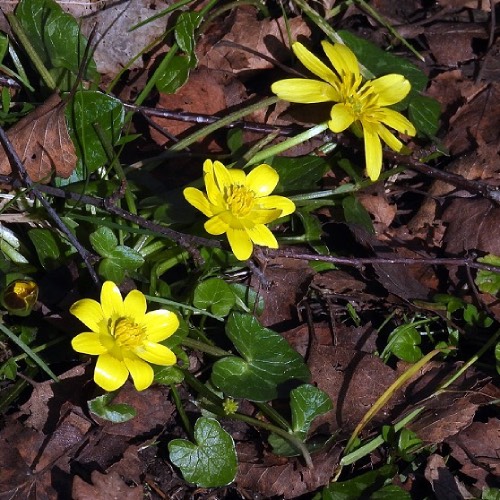
taken at the bottom of Bothwellhaugh Road: a small patch of flowering Lesser Celandine. I
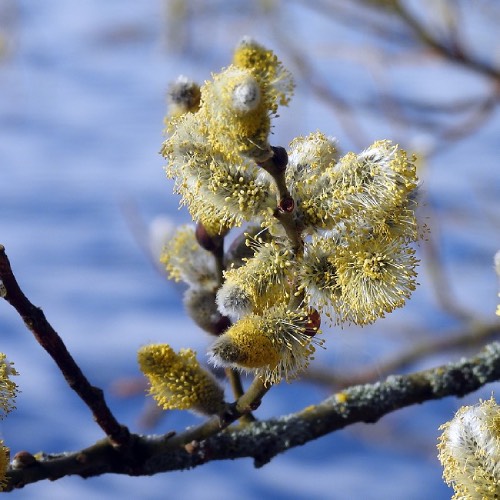
followed this with some pictures of flowering Goat Willow. Some Mallards were out of the water
and feeding in the grass.
| Lesser Celandine |
Goat Willow |
 |
 |
| Drake Mallard |
Female Mallard |
 |
 |
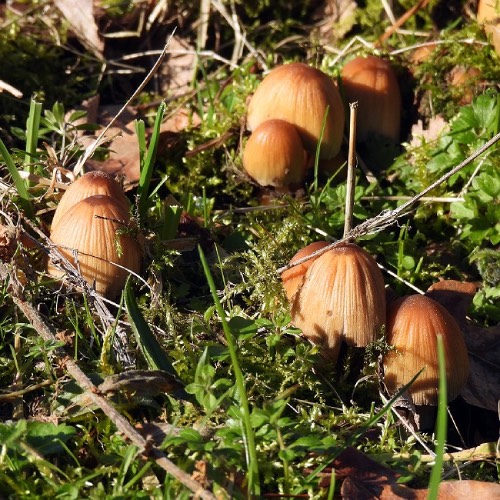
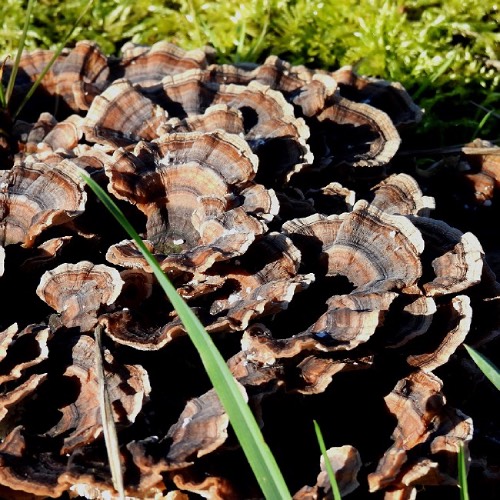
At the northwest edge of the loch some fungi caught my attention: Blushing Bracket ,
Glistening Inkcap and Turkeytail. As I photographed these, a Song Thrush was high
on a branch in a nearby tree, belting out a song - so it wasn’t difficult to locate.
| Blushing Bracket |
Glistening Inkcap |
 |
 |
| Turkeytail |
Song Thrush |
 |
 |
I ended my brief visit with a photo of a gulp of Cormorants hunting fish in Strathclyde Loch. Note
the three silver-feathered male birds at the centre of the shot.
 |
14th March: Dalzell Estate
On the next day I had intended visiting RSPB Baron’s Haugh. However, it was flooded due to all of
the rain of the previous week. I opted instead for the neighbouring Dalzell Estate which is wooded
and is seldom flooded - and it has plenty of flora and fauna to photograph. I began with a shot of
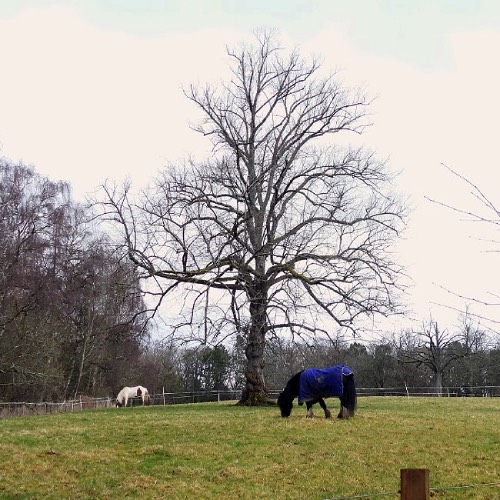
a couple of domestic fauna: horses grazing in a field. A Mistle Thrush dashed from the
path-side bushes and landed on a branch of the tree beside the horses. My camera zoom and
steady hands managed to capture its image. I decided to take a path around the north edge of
the woods, to bushes at the SuDS pond where Heron View meets Lapwing Crescent
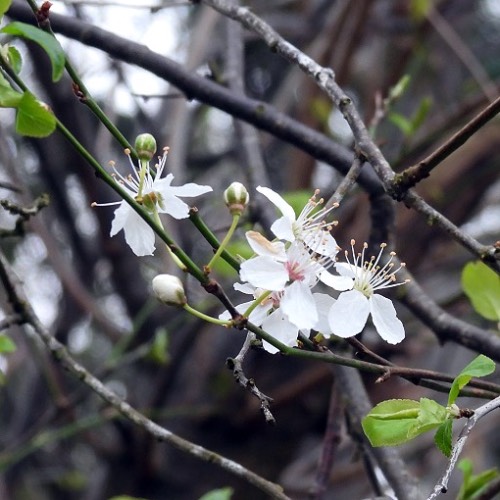
(really!) where some Tree Sparrows were spotted a couple of weeks ago. Unfortunately they were
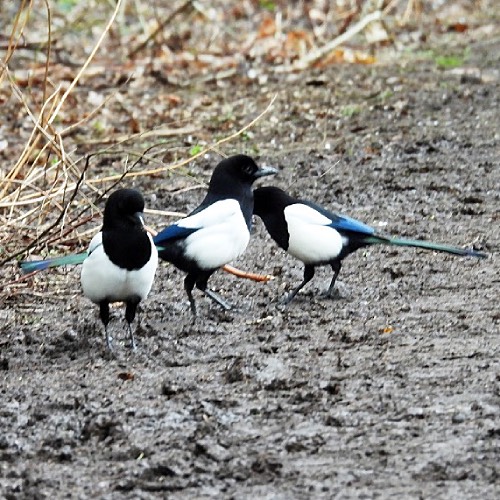
nowhere to be seen, but I did photograph pretty Cherry Plum tree flowers, watched, as I dis
so, by a trio of Magpies.
|
Song Thrush |
 |
 |
| Cherry Plum Tree |
Magpie |
 |
 |
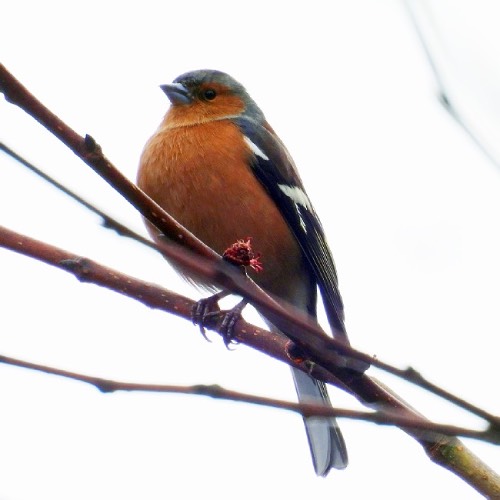
Next, I walked down an access road towards the Japanese Garden where I snapped a male
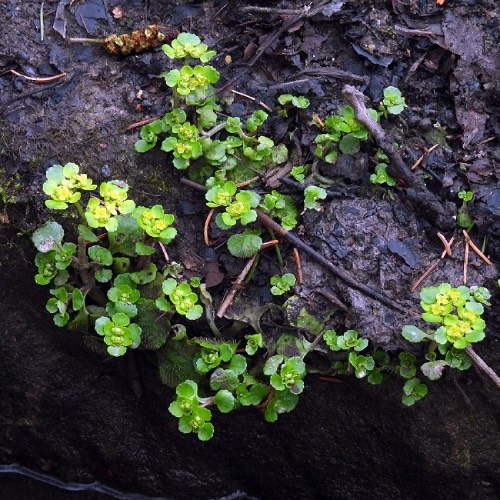
Chaffinch that was quite high in a Silver Birch tree. I then found some Opposite-leaved Golden
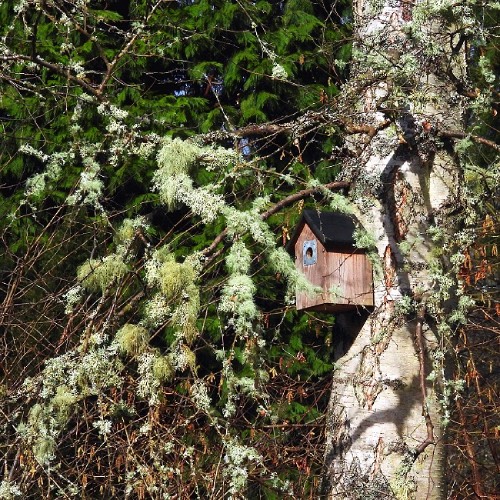
Saxifrage that was growing on garden edging stones. At a neighbouring garden area there
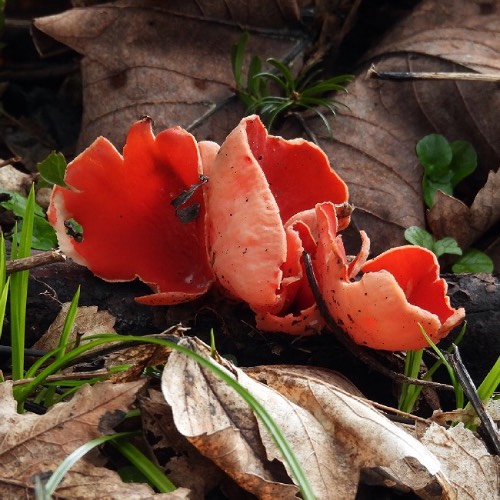
was a bird box surrounded by Oak Moss Lichen hanging from branches of a Rowan Tree. At the
edge of that area I found a patch of Scarlet Elfcup fungi.
 |
 |
|
Opposite - leaved Golden Saxifrage |
 |
 |
| Oak Moss Lichen |
Scarlet Elfcup |
 |
 |
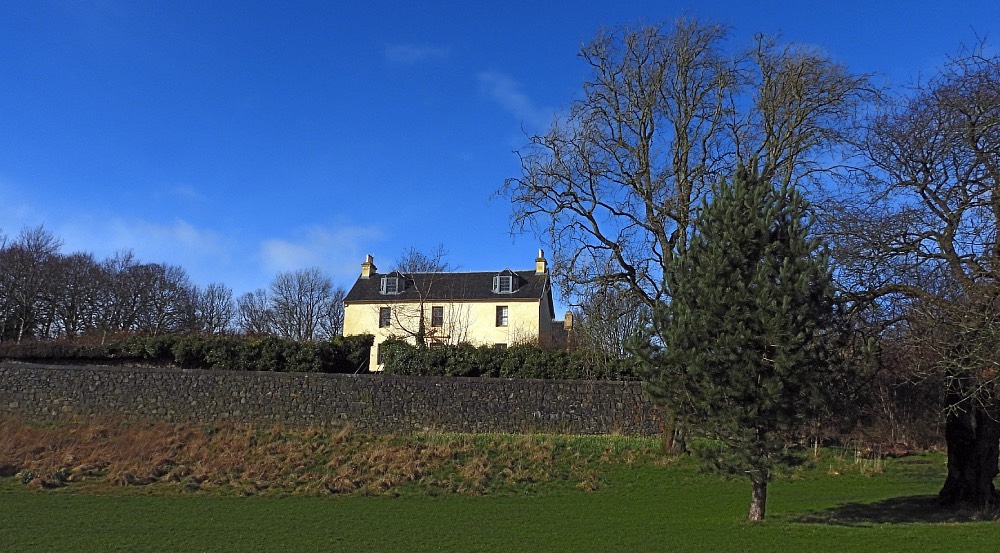
Below is a view of the road that leads up to Dalzell House .
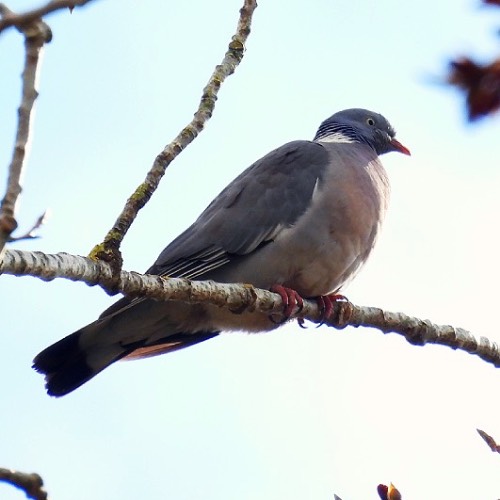
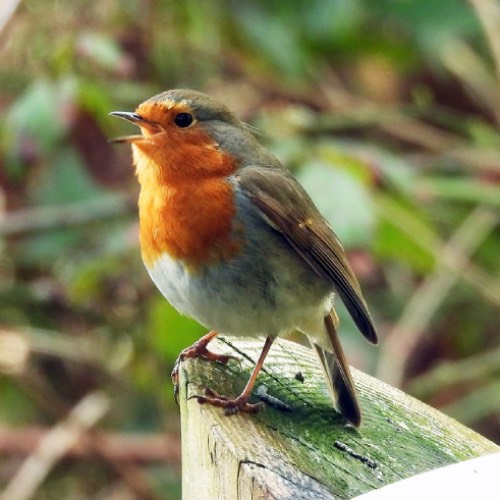
On that road I stopped briefly to photograph a Woodpigeon and was joined by a wee Robin which
landed on a signpost and started singing. I calmly put my camera to my eye and clicked a few
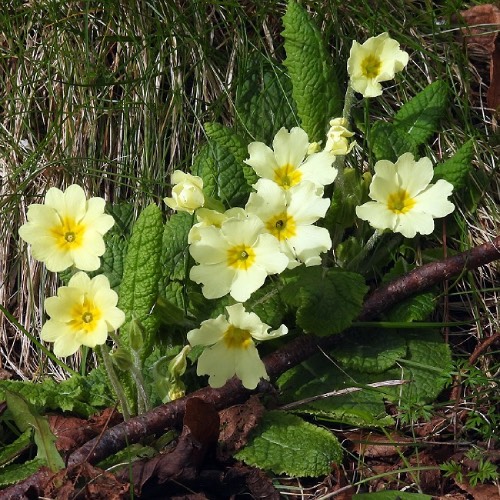
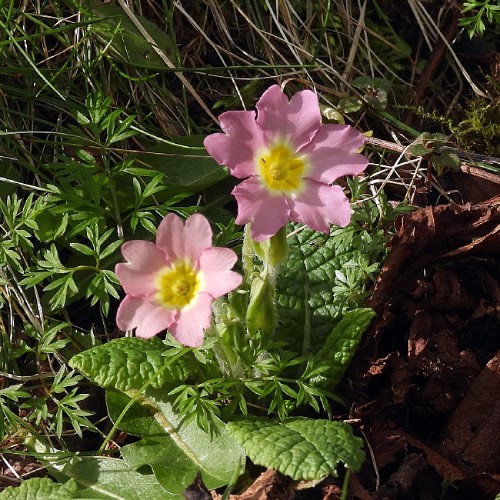
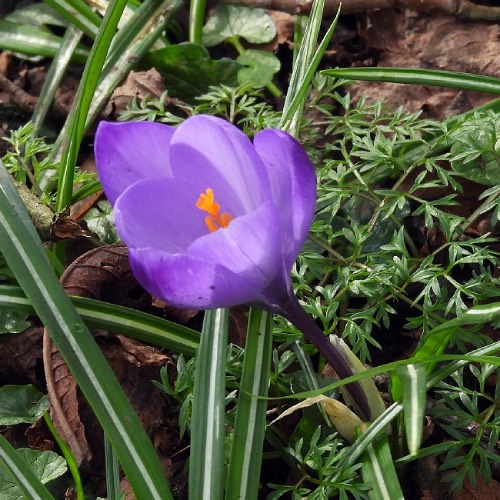
shots. The Robin wasn’t a bit bothered and I thanked it as I walked away. At the top of the slope
there were Spring flowers blooming: Primroses, Daffodils and Crocuses.
| Wood Pigeon |
Robin |
 |
 |
| Primrose... |
...Pink Variation |
 |
 |
| Daffodil |
Crocus |
 |
 |
My walks produced pictures of 29 species, so I’d rate that as a successful outcome. My favourite
sightings were the Cormorants, Scaup and Coltsfoot at East Kilbride, the fungi at Strathclyde Park
and the Scarlet Elfcup fungi, Robin and flowers at Dalzell Estate. Next week is to be mild, but
mainly cloudy. Surely there’ll be one day when the Sun will come out , preferably at the coast -
one can only hope.
Week ending: 8th March : Troon and Irvine Harbour
On watching the BBC Weather forecast for this week on Sunday night, one day stood out that
would be a great day to go out with my camera. In a week of cloud and rain, Tuesday was to be
the exception - it would be sunny.
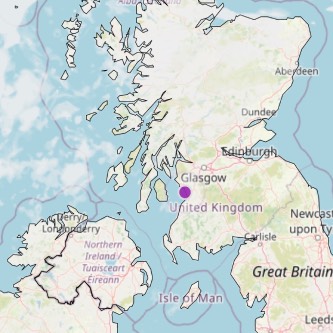
Tuesday, 3rd March: Troon
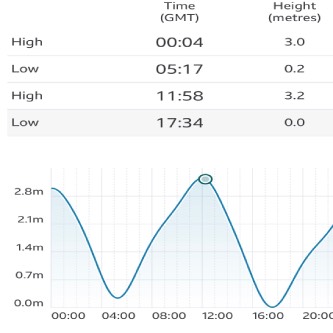
I chose Troon as a good place to visit and on arrival at the harbour car park I’m pleased to report
that the forecast was spot on.
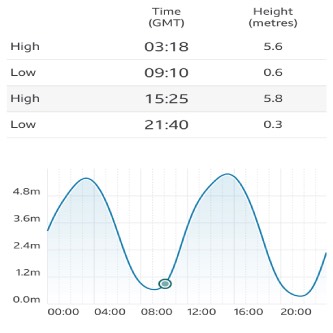
| Clouds |
Rain & Prediction |
Tides |
 |
 |
 |
Looking out over the sun-blessed rocky shore into the blue waters of the Firth of Clyde, under
blue cloudless sky, I knew I could be about to have a good day.
My camera got going straight away because there were quite a few waders on the rocks -
some snoozing while others were combing the rocks and pools for food.
Oystercatchers were stationary with their beaks firmly under their wings, but the Dunlins were
busy, moving restlessly about the rocks. There were a few Turnstones amongst them, and I was
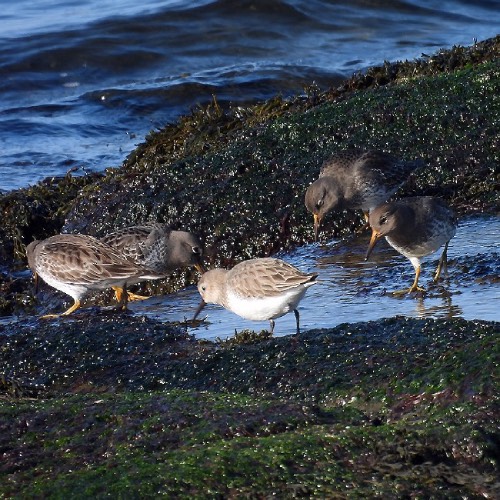
delighted to see that a large number of Purple Sandpipers were also working the rocks.
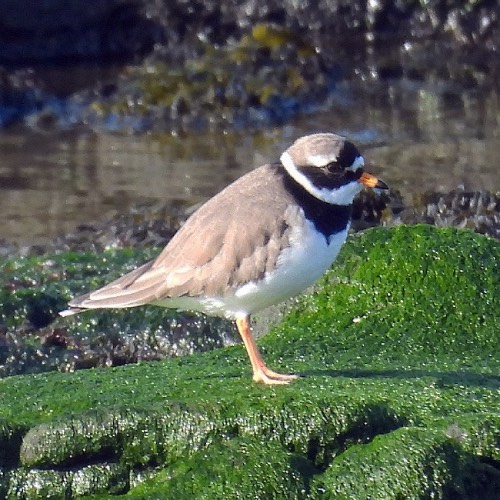
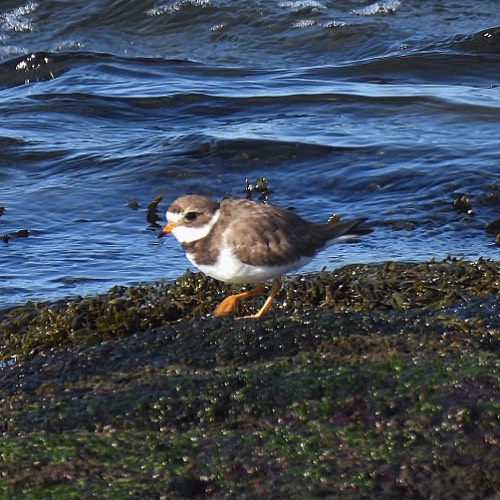
A flock of Ringed Plovers flew in to join the few that were already there. They too mingled with the
Purple Sandpipers and Dunlins.
| Ringed Plover... |
|
 |
 |
| Dunlin / Purple Sandpiper... |
|
 |
 |
Satisfied with by first haul of shots I started on a walk south along the shore path towards and
beyond the Ballast Bank. A pair of Herring Gulls made a pretty picture, but just beyond them was
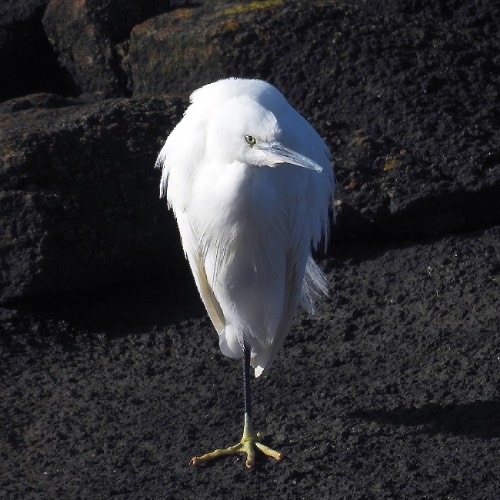
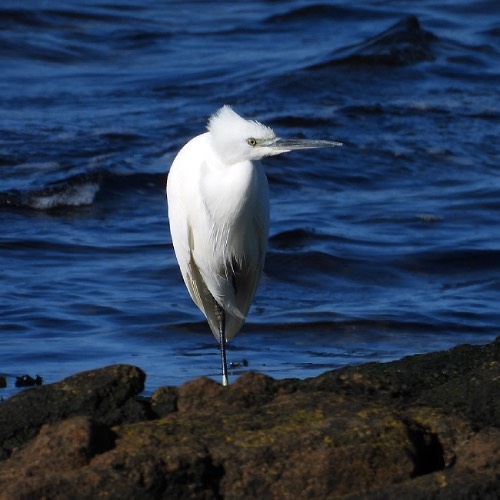
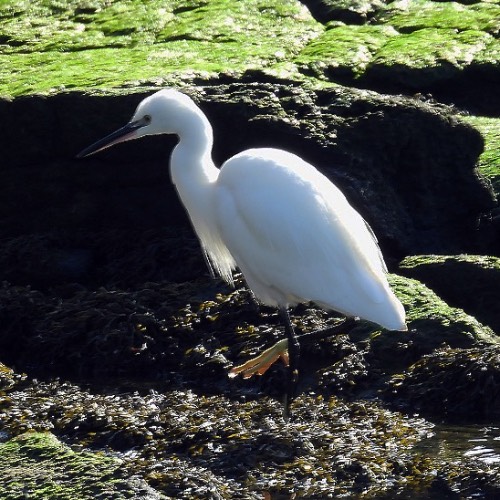
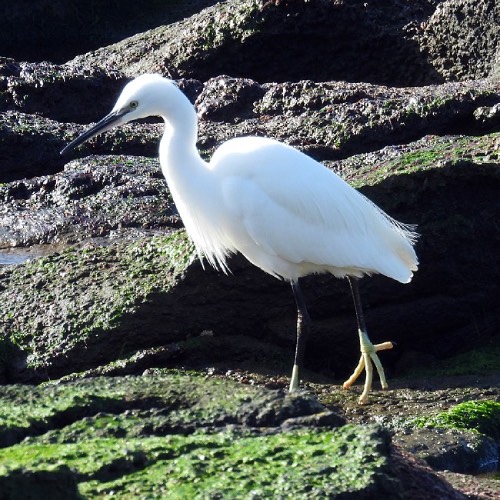
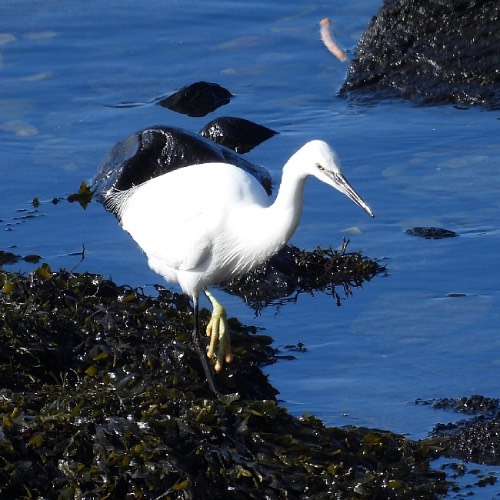
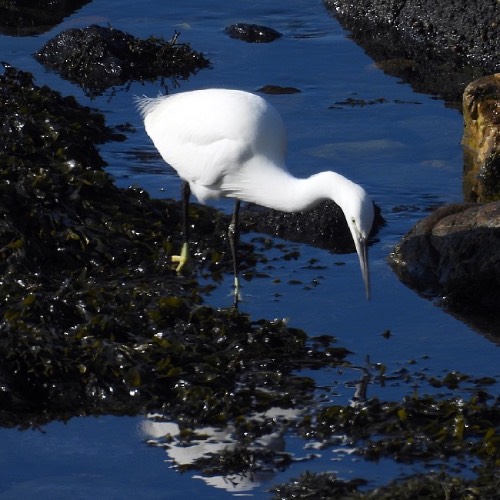
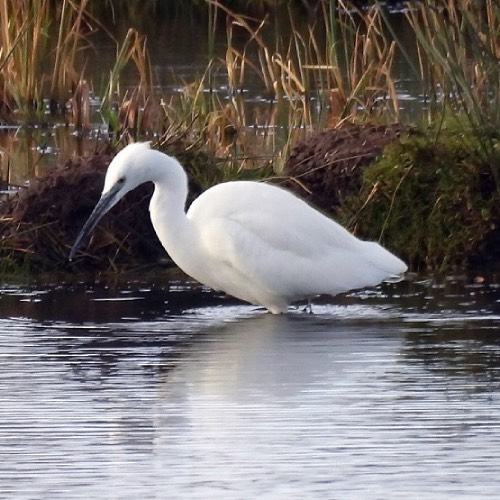
a Little Egret standing on a bare rock. I got a couple of shots before it was put up by a
beach-combing individual. At least I got a nice flight shot.
Below is the view of the car park as seen from the base of the Ballast Bank.
I progressed along the narrow and fairly hazardous footpath along the side of the Ballast Bank
and was surprised to find that the Little Egret had settled on the rocks below the path. I edged my
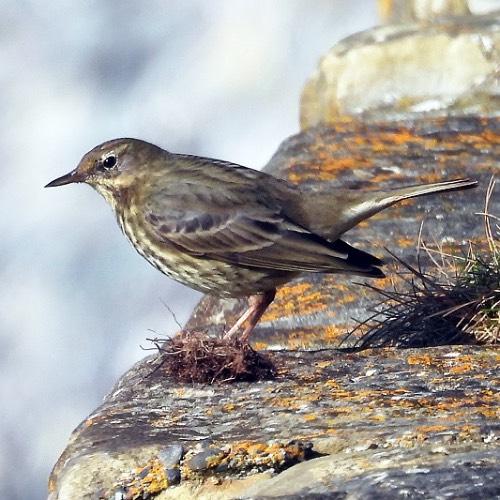
way closer to the Egret, getting a quick snap of a Rock Pipit on the way. However the Egret flew
off once more, disturbed by walkers coming along the path from the opposite direction. I was
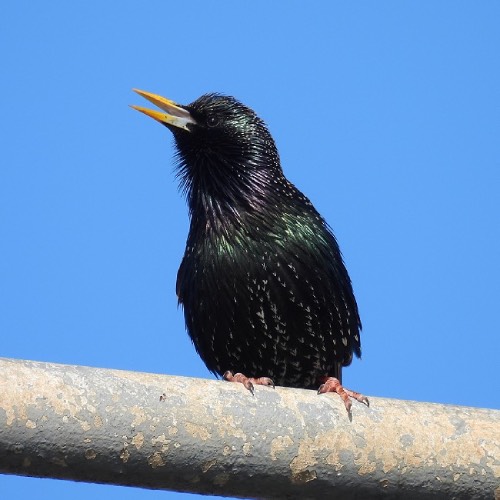
soon beyond the Ballast Bank where I got a lovely shot of a singing, iridescent Starling.
I could see lines of Dunlins sleeping on the rocky shore to my right.
It was now high tide and the low, late winter sun was shining over the birds, making photography
difficult.
However, I did manage some shots of a Carrion Crow on a roof aerial and also one of another
Rock Pipit that was foraging on seaweed. Eventually I reached the Titchwell Street car park
where I took pictures of Daffodils that have recently bloomed in the so-called “sunken gardens”
there (which is the site of a former swimming pool).
I decided to retrace my steps back to the car park, but walk over Ballast Bank instead of going
round it. Below is a picture taken from the top of the Ballast Bank.
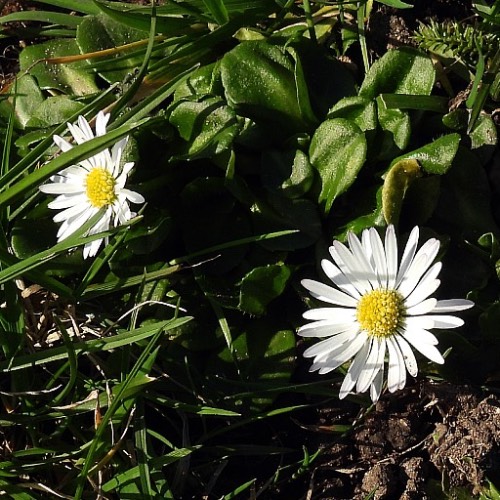
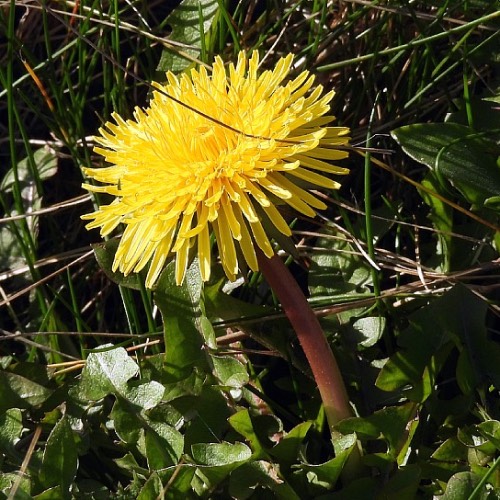
Back at the car park I noticed that some Common Daisies and Dandelions were flowering.
A Pied Wagtail was nipping about the foreshore and Oystercatchers were still snoozing, as was a
lone Curlew. Finally, I discovered that the Little Egret had managed its way back to where I’d first
seen it. I took a couple of quick shots and left it in peace.
Before I left the harbour area I drove the short distance around the harbour to “The Wee Hurrie”, a
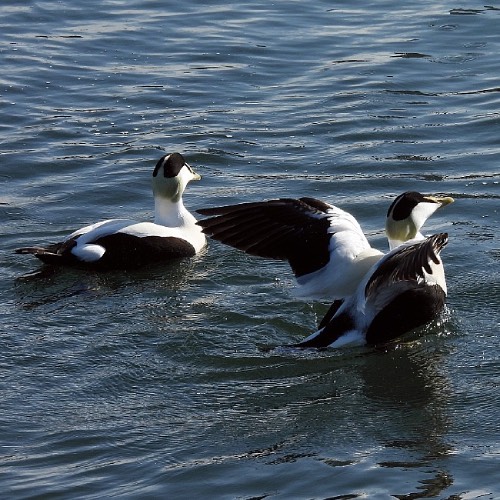
quayside fish and chip shop. As I waited on my mini fish supperl, I photographed some Eiders that were in the harbour waters.
The eiders were very active probably due to their courtship activities. There was much flapping of
wings and female chasing and also a few quarrels. As I took the pictures, I was watched by a
young Herring Gull which was waiting for chips - no chance.
Tuesday, 3rd March: Irvine Harbour
After consuming my mini fish supper I headed to Irvine Harbour for an hour. I especially wanted to
visit the boating pond I’d discovered there on my last visit. I wondered if there’d be birds on the
pond at high tide. The boating pond seems to have a thriving model boat club. I parked in the
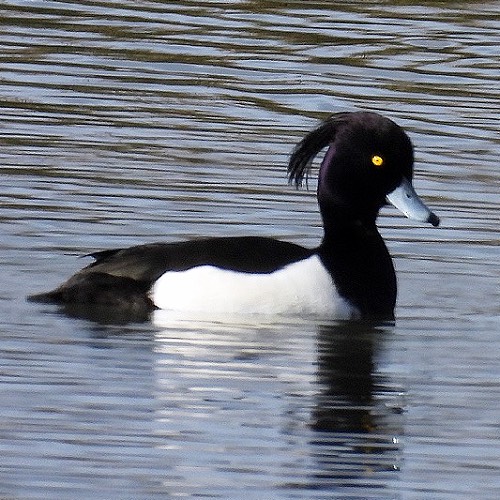
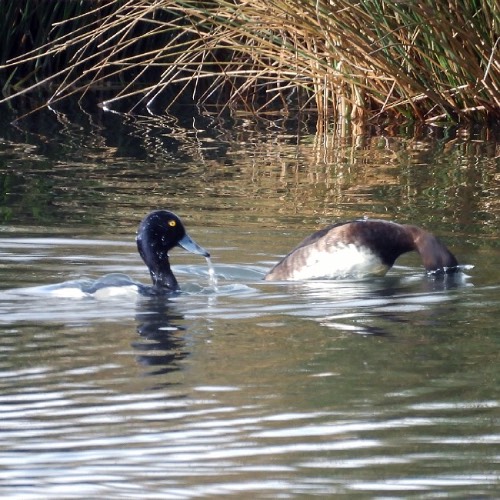
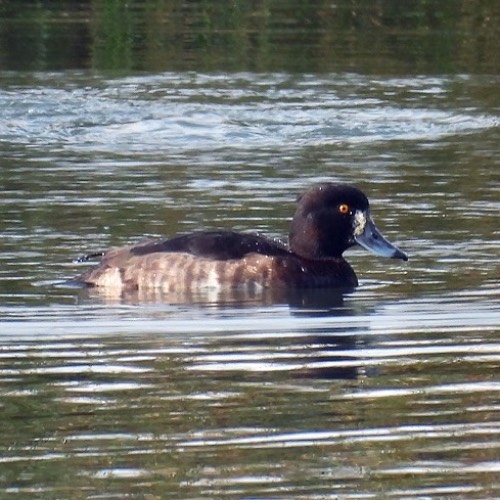
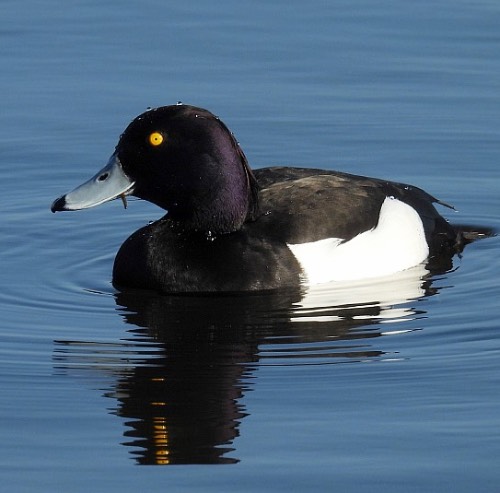
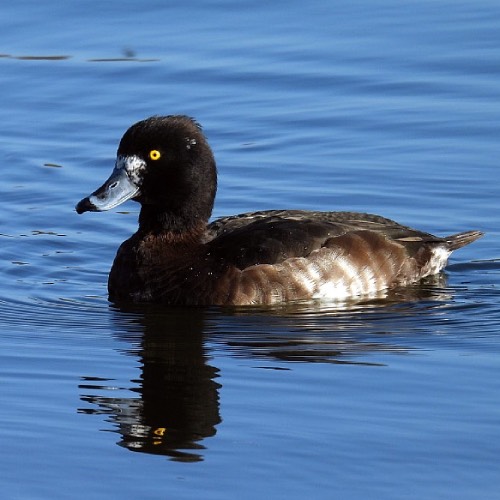
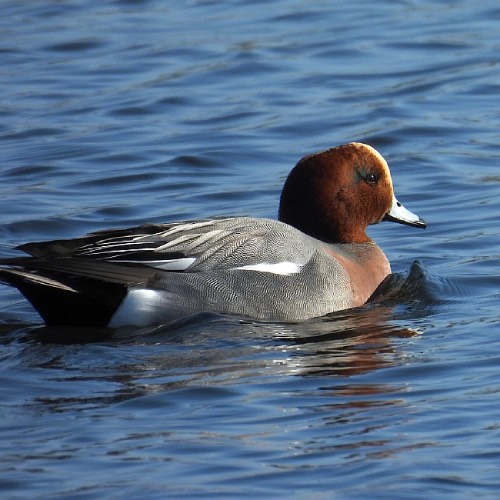
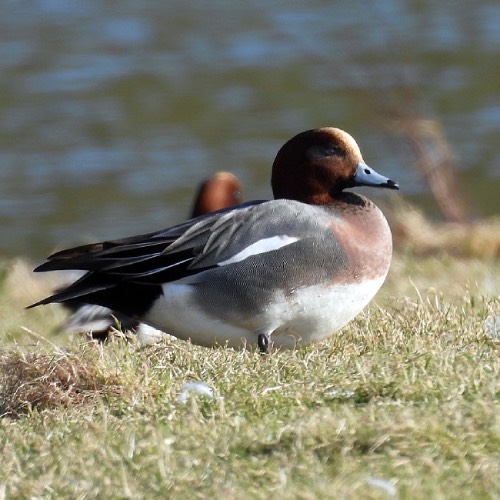
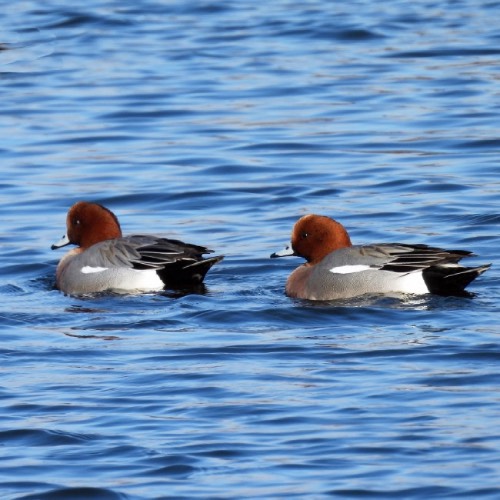
Boating Pond car park next and walked around part of the pond where I saw Tufted Ducks,
Wigeons….
| Drake Tufted Duck |
Female Tufted Duck |
 |
 |
| Wigeon... |
|
 |
 |
 |
 |
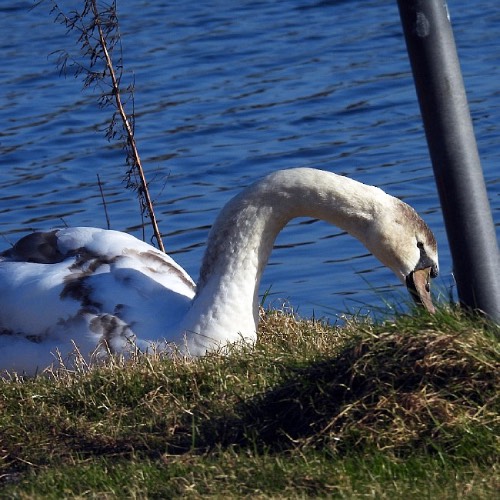
…. and Mute Swans. From the pond I walked westwards through the sand dunes, along well
established paths, onto the Irvine Beach. A handsome wee male Pied Wagtail accompanied me
for part of the short walk along the sands that leads to the mouth of the River Irvine. I
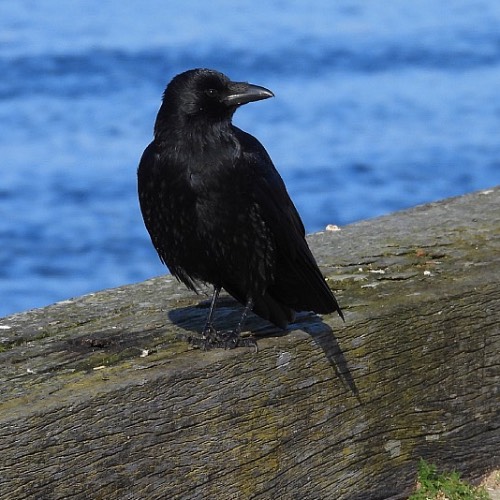
photographed an accommodating Carrion Crow
| Mute Swan |
Juvenile Mute Swan |
 |
 |
| Pied Wagtail |
Carrion Crow |
 |
 |
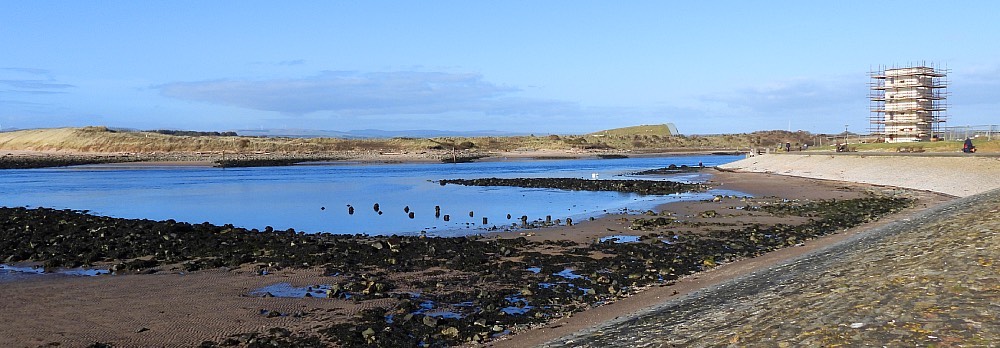
before recording views of the mouth of the estuary….
….. and a view of the
so-named “Scientists Bridge” (although it is actually
called the “Bridge of Scottish Inventions” which carried
people to a project called “The Big Idea”).
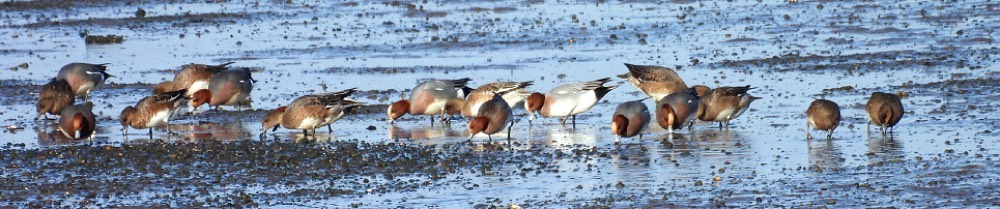
My final shot was of Wigeons feeding on the damp Bogside floodplain now that the tidal water
level had fallen.
It was a very enjoyable visit with 18 species photographed. My favourites are the Little Egret and
waders and Eiders at Troon and the Wigeon and Tufted Ducks at Irvine. Hopefully I’ll get a sunny
day next week, which isn’t very likely - its to be very changeable with lots of wind and even snow.
But I’ll settle for sunny intervals
Week ending:1st March 2026: RSPB Baron’s Haugh and Hogganfield Park LNR
The weather last week was generally damp and grey, but it dried and brightened on Friday and
Sunday and gave me an opportunity to get out with my camera to a couple of local sites.
Friday, 27th February: RSPB Baron’s Haugh
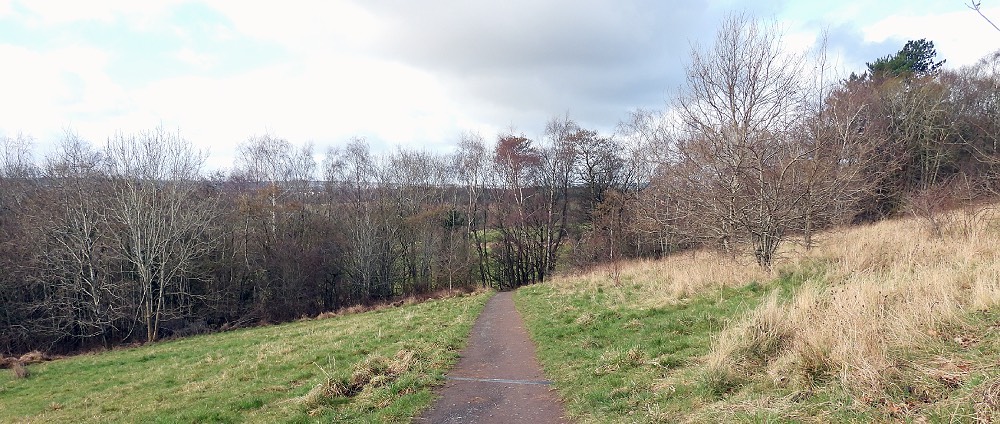
Below is a shot of the start of the path from the Baron’s Haugh car park down to the hides.
I didn’t get any other photo-opportunities on my way down to the Marsh hide, but I was pleased
to see that there were a significant number of birds on the Scrapes. My immediate attention was
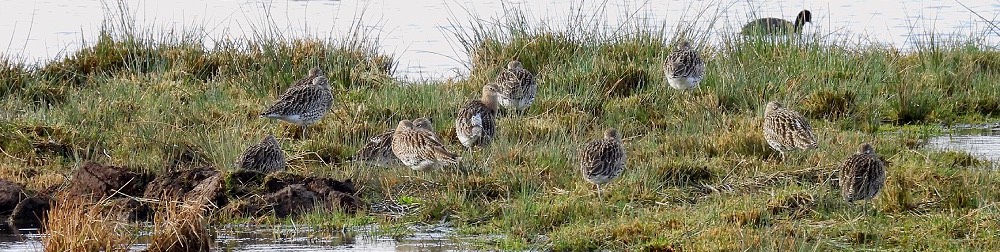
drawn to a dozen Curlews preening on the grassy areas facing the hide, ….
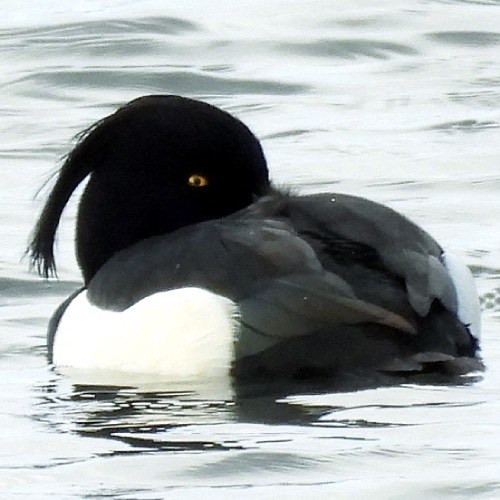
….and also a drake Tufted Duck that was snoozing on the water in front of the hide. But I was
delighted to see a Little Egret prowling at the back of the scrapes, working its way along
the waters getting ever-nearer the hide.
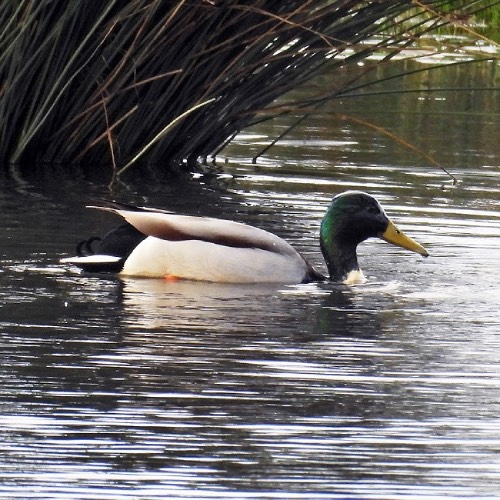
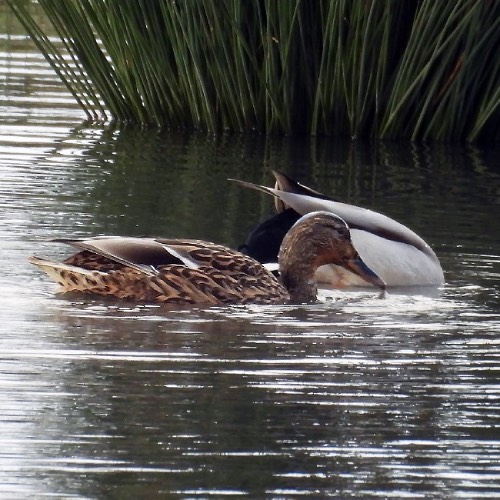
I snapped a pair of dabbling Mallards and then a trio of Green Sandpipers that darted onto
the scrapes near the curlews.
| Drake Mallard |
Female Mallard |
 |
 |
| Curlew / Green Sandpiper |
Green Sandpiper |
 |
 |
More Tufted ducks emerged from one of the back channels and interrupted the feeding dives of a
feisty wee Coot.
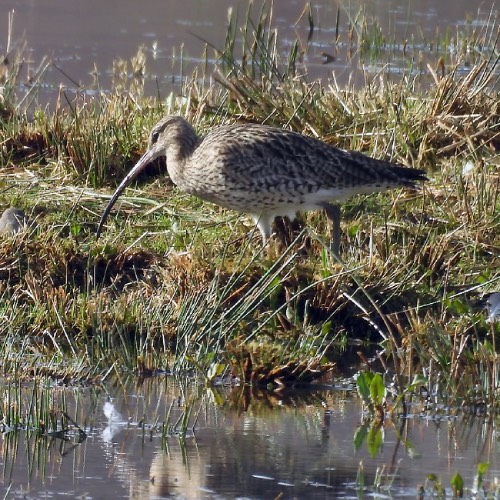
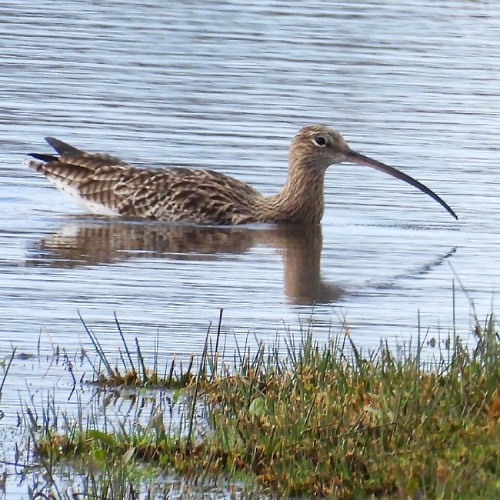
One of the Curlews started wading across the scrape but ended up having to paddle to complete
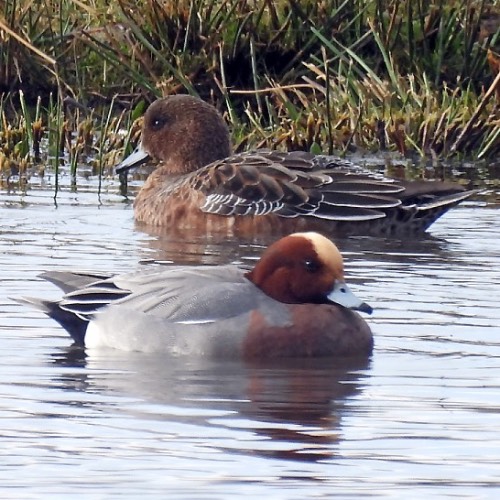
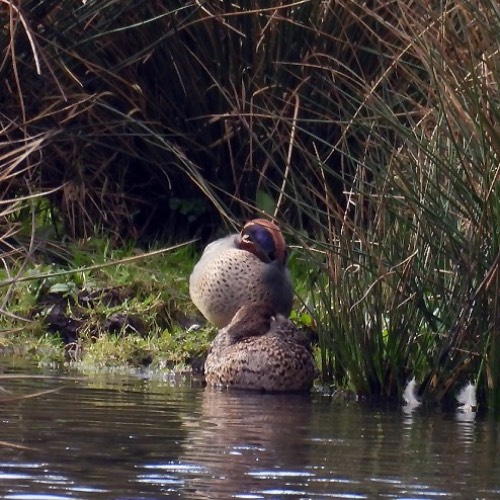
its crossing. A group of sleeping Wigeons suddenly wakened up (unlike the Teals) and began
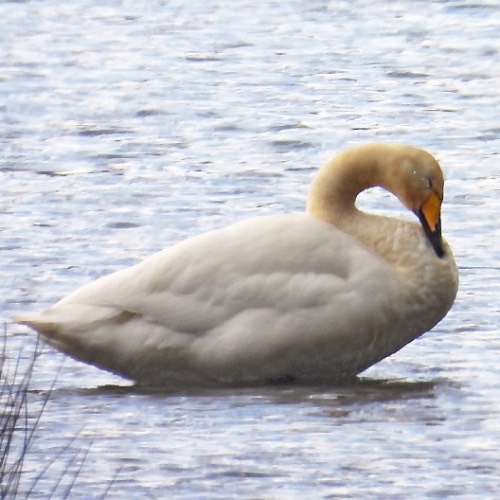
circulating the waters. Before heading for the Causeway hide I noticed a couple of Whooper
Swans in the water far to the left of the Marsh hide.
| Curlew |
Wigeon |
 |
 |
| Teal |
Whooper Swan |
 |
 |
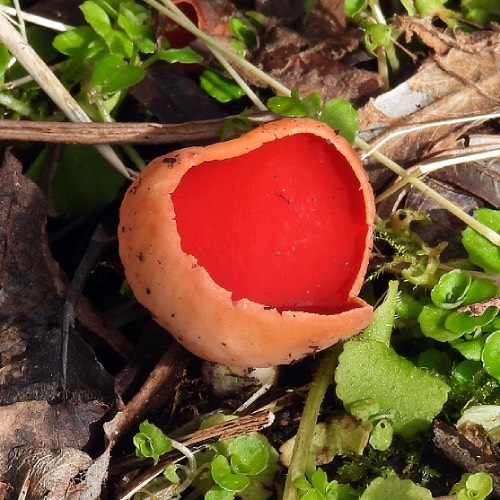
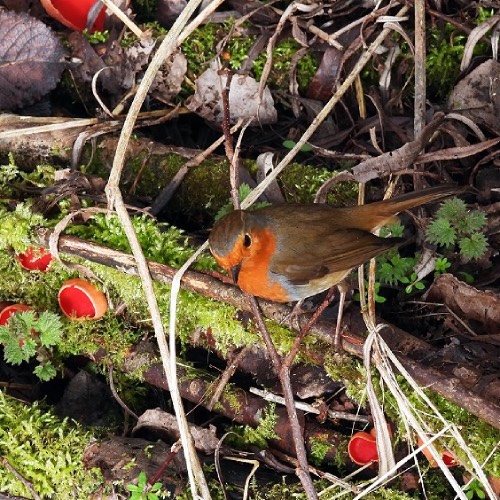
Just off the pathway from the hide were, what at first I thought were red flowers, but on further
inspection turned out to be Scarlet Elfcup fungi. While photographing these I was joined by
a very friendly Robin that posed like a professional until I’d tired of snapping the wee show-off.
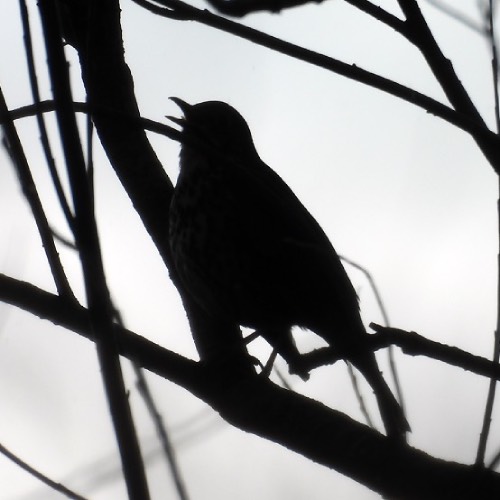
Just before the entrance to the Causeway hide I stopped to locate a singing Song Thrush -
which I did, but could only manage a fairly pleasing silhouette. Also, Magpies were foraging in the
fields.
The view from the Causeway hide was a bit disappointing. The water level was very high and only
a distant line of Teal……
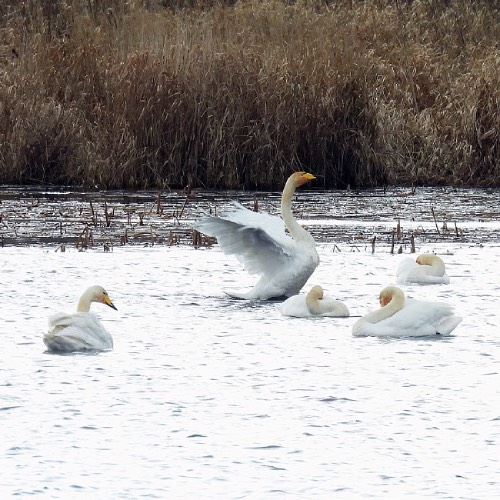
….. and a group of Whooper Swans were on view.
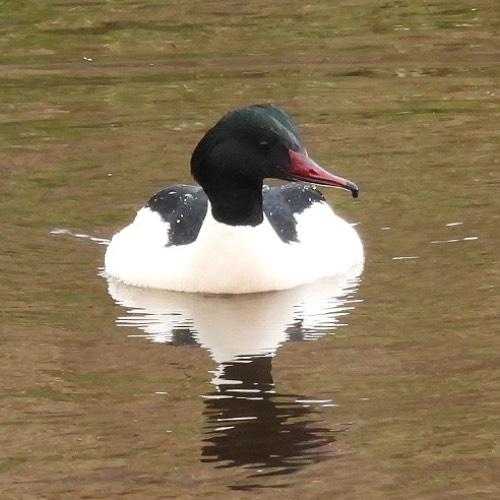
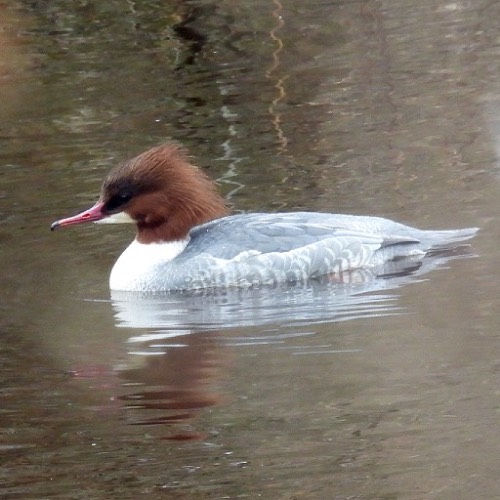
So I didn’t hang about the hide and walked the short distance to the River Clyde where a pair of
Goosanders added to my list of sightings.
| Drake Goosander |
Female Goosander |
 |
 |
Sunday, 1st March: Hogganfield Park LNR
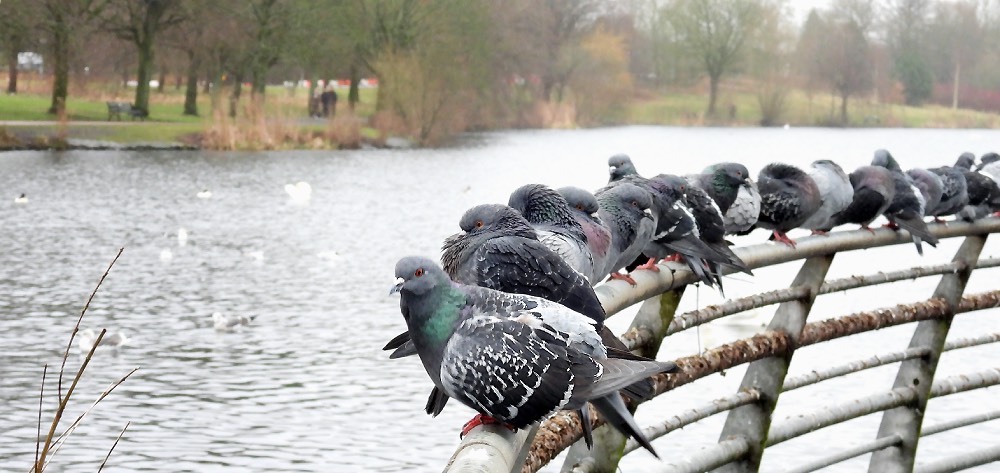
A couple of days later I was in Hogganfield Park LNR. Once again, the light wasn’t great, but at
least it was dry, though a bit chilly - as can be gauged from this shot of Feral Pigeons huddled on
the railings of the dilapidated viewing platform.
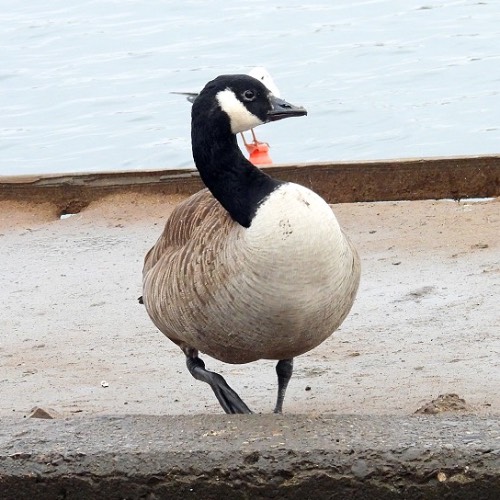
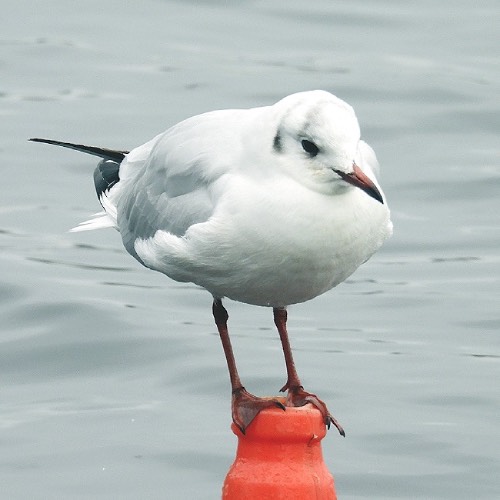
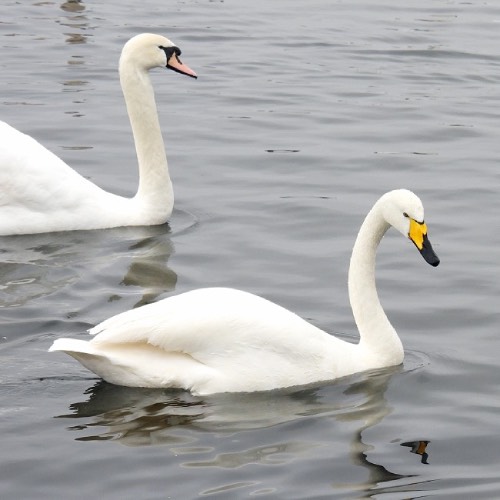
As usual there were many birds hanging around the water at the car park: Canada Geese, Black
headed Gulls, and Whooper Swans. A few drake Goosanders were also giving a lot of attention to
a female Goosander that seemed not enjoying the experience.
| Canada Goose |
Black - headed Gull |
 |
 |
| Whooper Swan... |
|
 |
 |
| Grake Goosander |
Female Goosander |
 |
 |
A single drake Goldeneye appeared fairly near the bank and proceeded to make repeated
dives for food (aquatic invertebrates and small fish). It didn’t seem much bothered by the other
birds, such as the much larger Mute Swans. I walked to the decommissioned viewing platform to
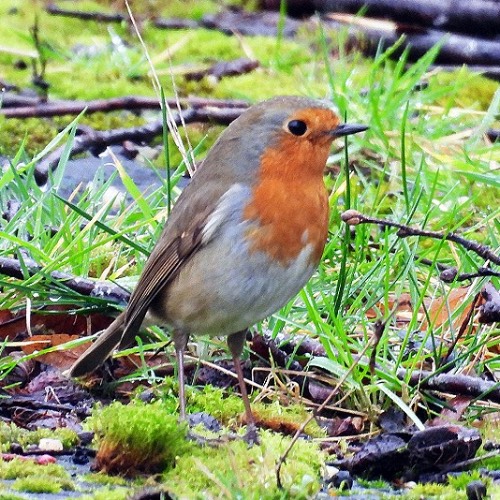
record some of the birds gathered there on the bare framework. Just as I arrived at the platform a
wee Robin landed on the nearby grass, which I dutifully photographed before turning my attention
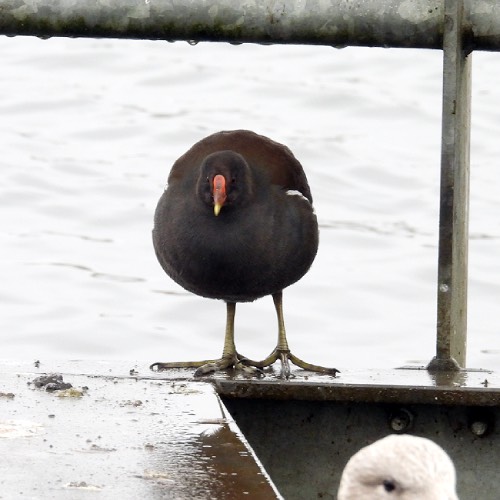
to the birds on the frame of the platform. I started with a timid Moorhen….
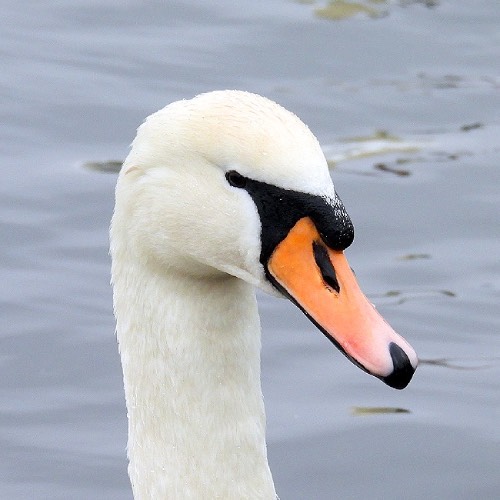
| Goldeneye |
Mute Swan |
 |
 |
| Robin |
Moorhen |
 |
 |
…. and continued with another female Goosander that was standing a metre away from the
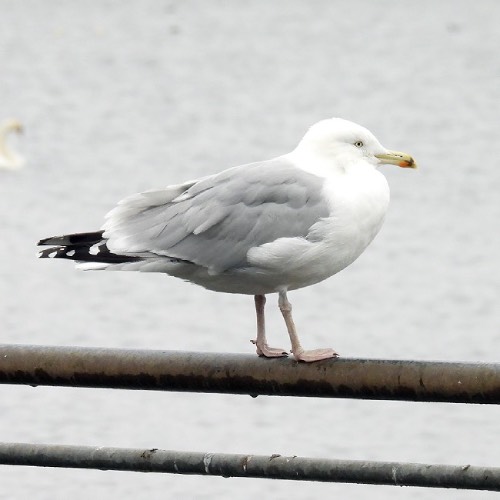
Moorhen. My final shots concentrated on the gulls that were perched on the frame: Lesser
Black-backed Gull, Black-headed Gull and Herring Gull.
| Female Goosander |
Lesser Black - backed Gull |
 |
 |
| Black - headed Gull |
Herring Gull |
 |
 |
My couple of brief visits produced
sightings of 23 species - not a bad outcome. My favourites were the
Little Egret, Green Sandpiper and Scarlet Elfcup fungus with friendly
Robin. Brighter and warmer weather is promised for next week. Hopefully
I can get down the coast to enjoy it.
Back To Top |