|
Week ending: 26th October : Strathclyde Country Park, Hogganfield Park LNR and Doonfoot
The weather for the week was generally cloudy with some rain at time, but also there was sunshine at times.
Monday, Wednesday, Friday, 20th, 22nd, 24th October: Strathclyde Country Park
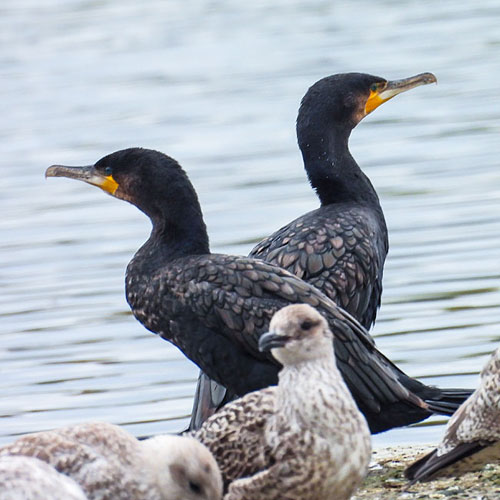
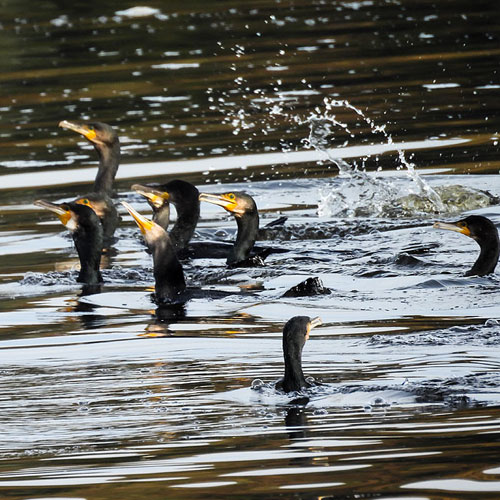
I took my camera for a walk in Strathclyde Park several times throughout the week and the pictures below will give you an impression of what a delightful place the Park is for watching nature. Near the Finishing Tower I was treated to a Cormorant spectacular as a flock of about 50 were diving together for fish. The group systematically progressed south to north along the loch, followed by many gulls hovering above them in anticipation of bits of fish missed by the ravenous cormorants.
I wouldn’t say that it was a cooperative venture by the Cormorants. Rather it was “survival of the fittest”. Any bird that surfaced with a fish had to swallow it quickly or fight to keep it - birds have no morals. In front of the Boathouse a wee female Pied Wagtail made its way along the edge of
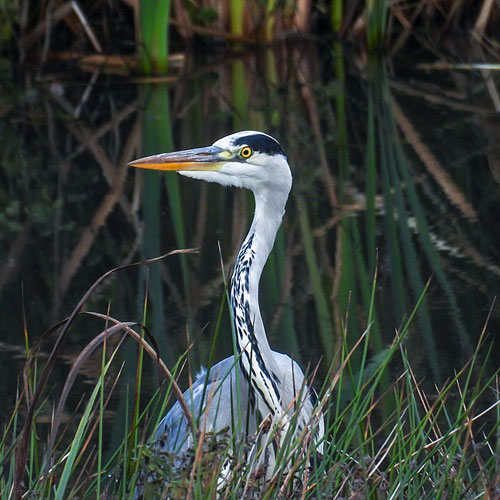
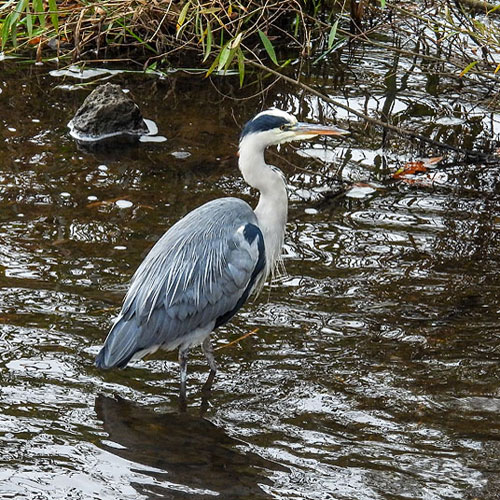
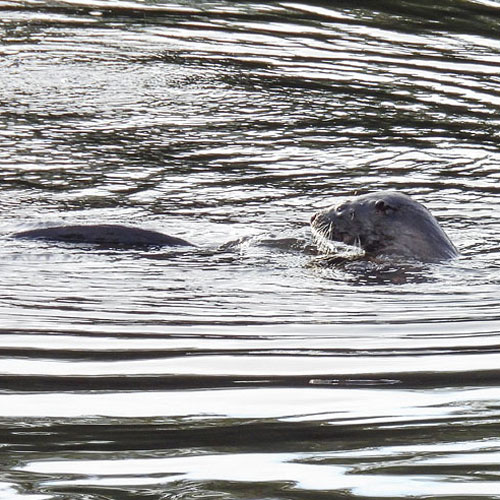
the jetty, occasionally pausing to pick up small vertebrates. At the sluice gate at the south end of the loch there was a Grey Heron looking up at me and as I was photographing it, I noticed some activity where the outflow reaches the River Clyde. Long story short, it was an Otter, the first time Iv'e seen one in Strathclyde Park.
| Cormorant |
Pied Wagtail |
 |
 |
| Grey Heron |
Otter |
 |
 |
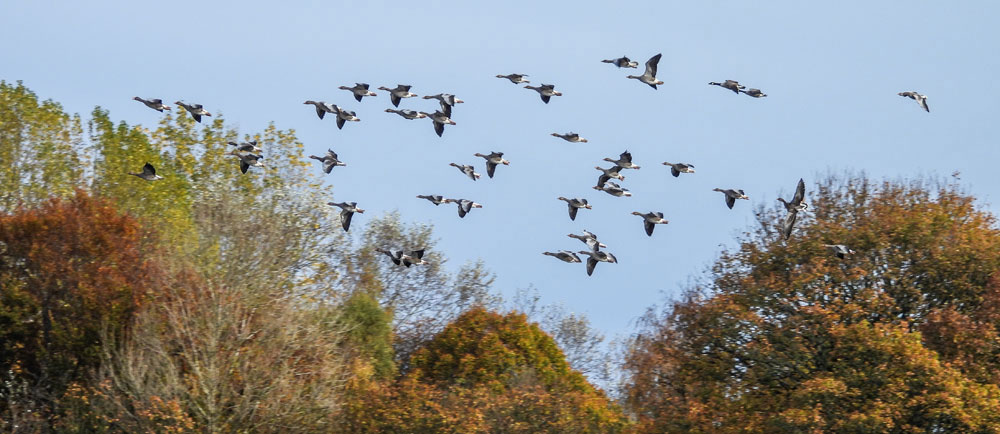
Soon after my brief encounter with the Otter, a noisy flock of Greylag Geese flew in from the south and descended onto the loch, near the Beach Car Park.
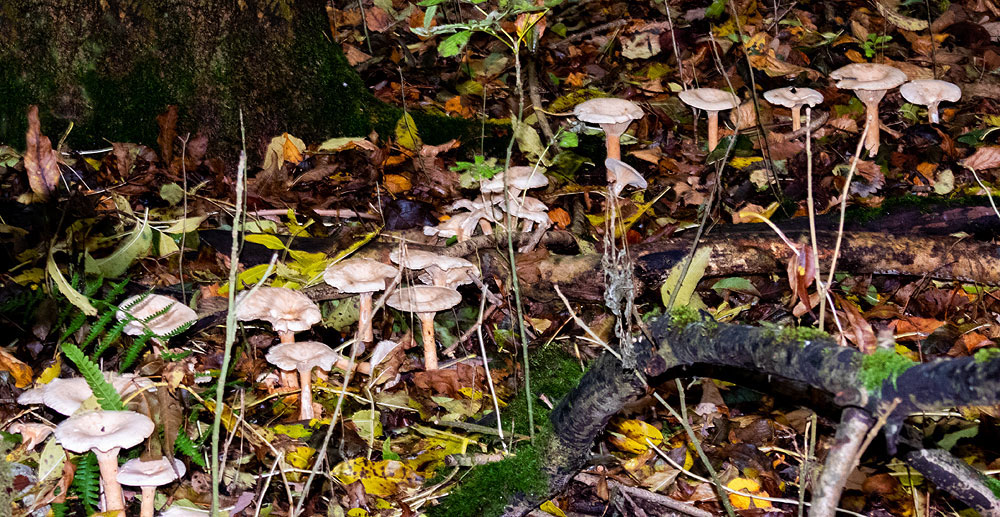
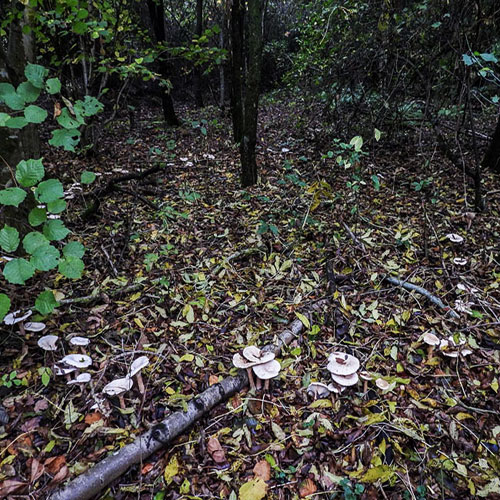
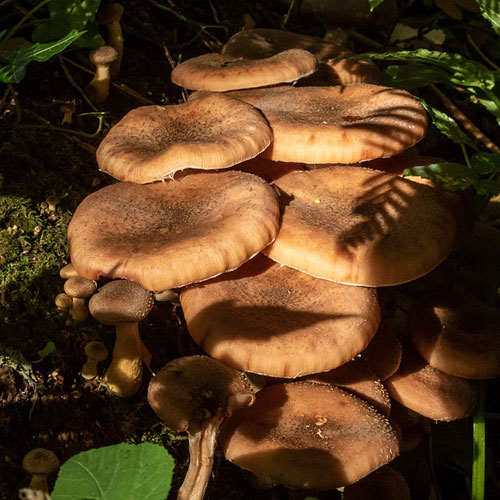
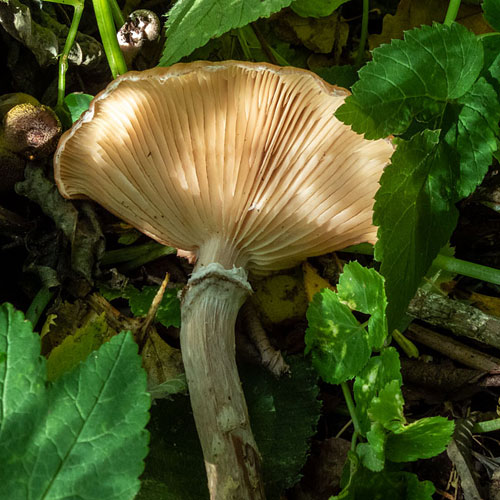
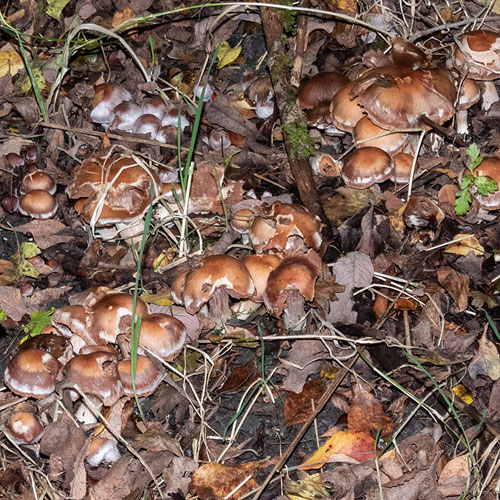
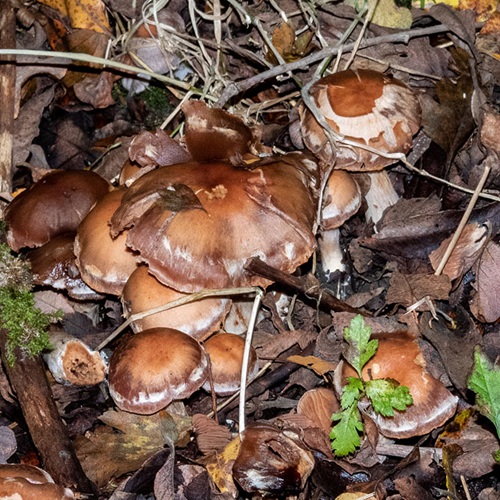
At the north of the loch I spotted lots of fairly big mushrooms behind the bushes. They are most probably Trooping Funnel fungi.
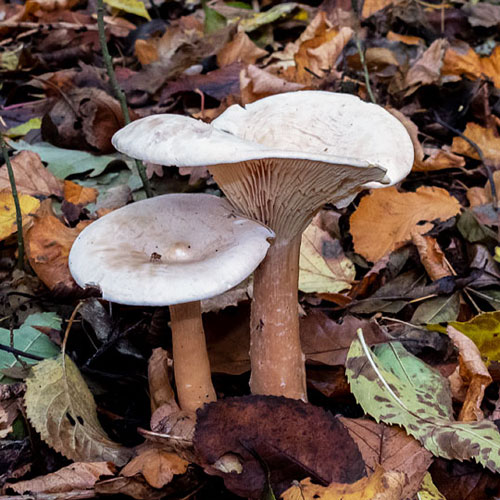
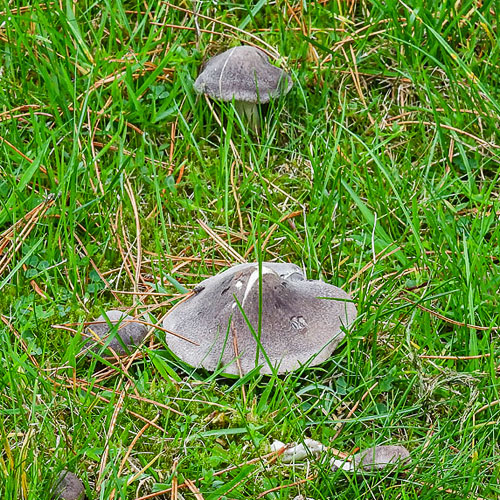
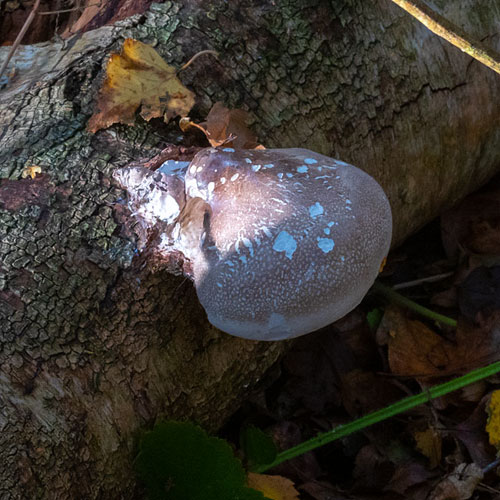
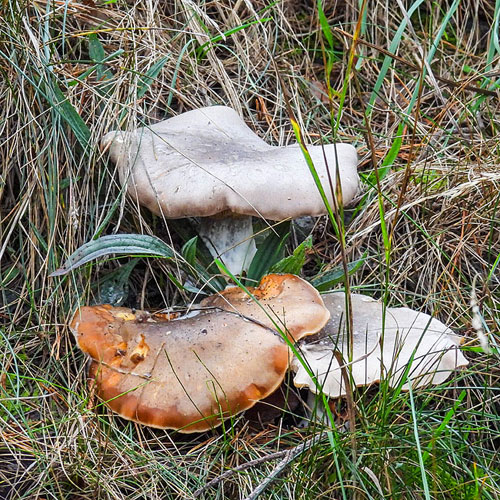
They are often seen growing in lines, or even, as in this case, in rings. I found more fungi near the edges of the path that links the underpass to Hamilton and the Clyde Bridge: Grey Knight, Birch Polypore and Clouded Funnel fungi. Also, on the grassy slope along the park perimeter at Strathclyde Road, I photographed groups of what are most likely Horse Mushrooms, new to the gallery.
Below is the view looking south down the loch, the lines of rowing lane markers converging on the very distant Tinto Hill.
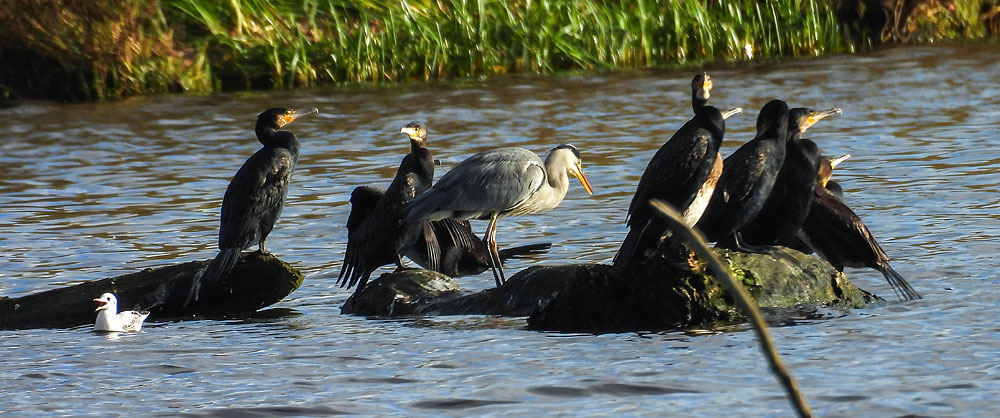
Where the South Calder flows into the loch I was transfixed by the view
of the colony of Cormorants, gulls and a handsome Grey Heron perched on
fallen trees.
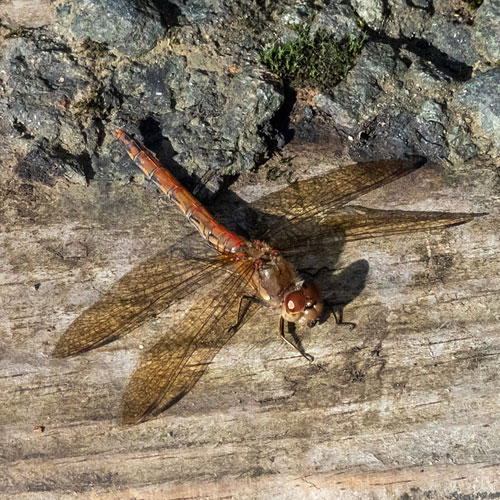
Later I was equally drawn to a trio of Common Darter dragonflies that were soaking up the sunlight on the timber of the stairs that leads to the (defunct) Roman Fort Car Park. And crossing the path that leads from the footbridge across the South Calder to the Foreshore Car Park, was a
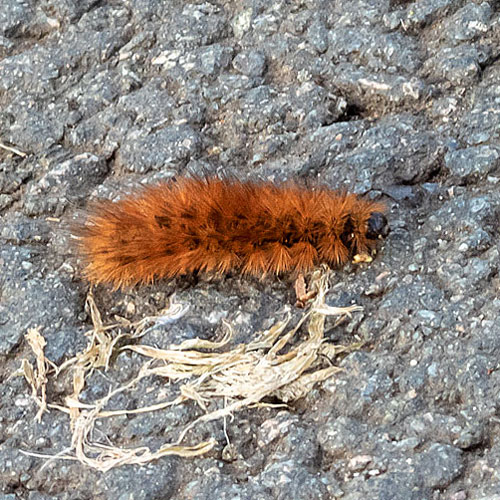
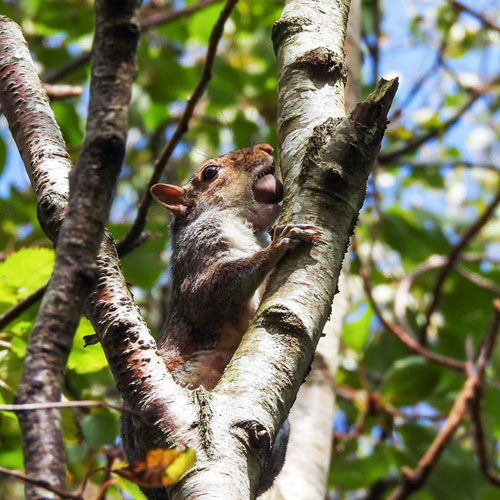
Ruby Tiger Moth caterpillar. I snapped it and encouraged it onto the grass. After that I was surprised to find a acorn-gathering Grey Squirrel on trees by the lochside, looking down on me after it had scurried up to a safe height in the nearest tree. My final shot shows a view of what has
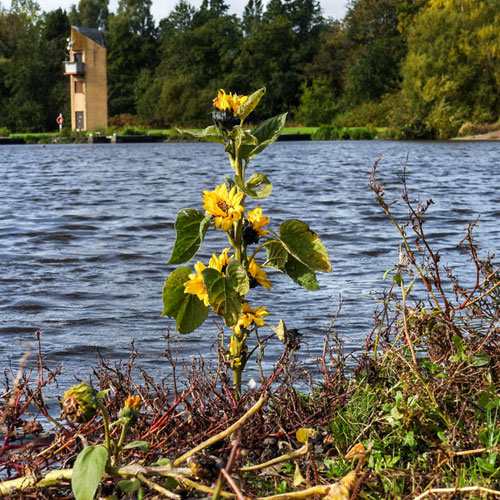
become a common sight this year, a Sunflower growing by the edge of the loch. No doubt these flowers are a result of people throwing sunflower seeds to the ducks and swans.
| Dragonfly - Common Darter |
Ruby Tiger Moth Caterpillar |
 |
 |
| Grey Squirrel |
Sunflower |
 |
 |
Thursday, 23rd October: Hogganfield Park LNR
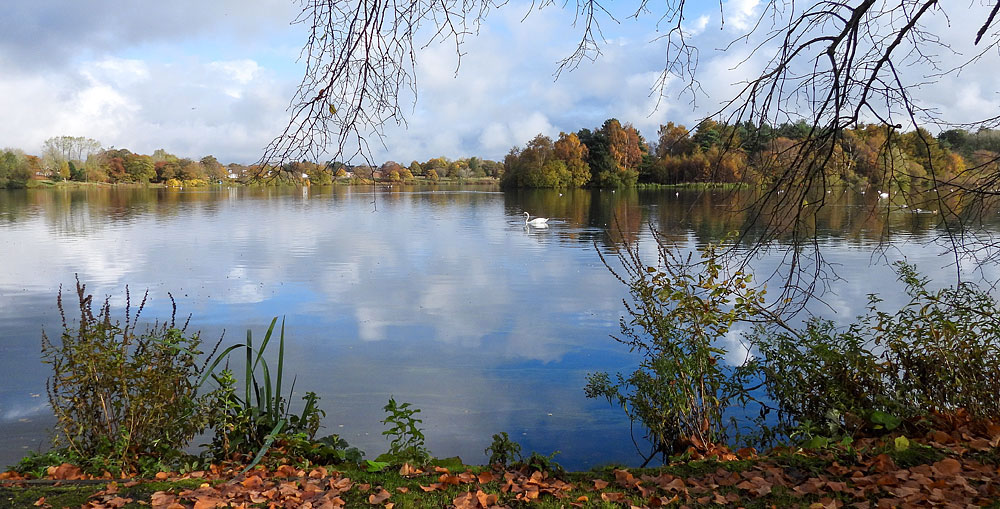
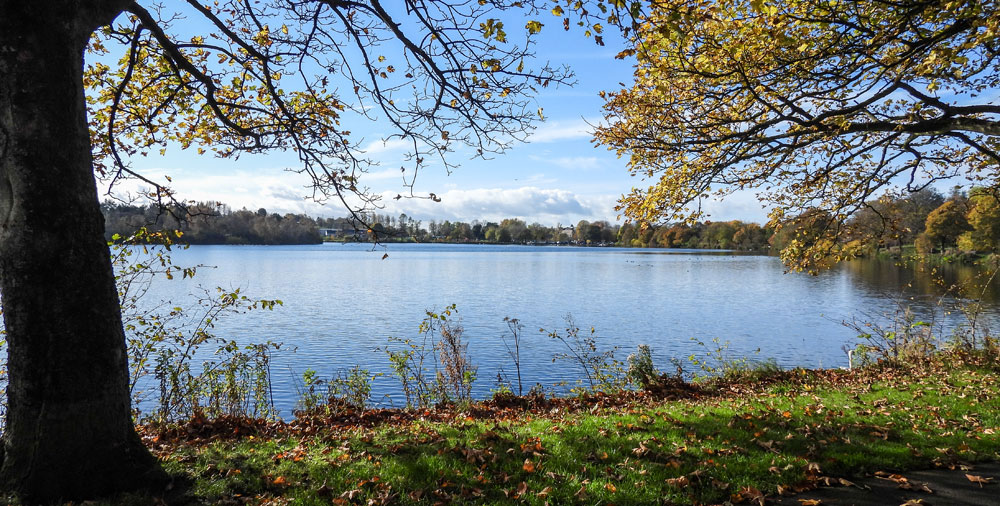
This beautiful autumnal view of the loch met me when I arrived at Hogganfield.
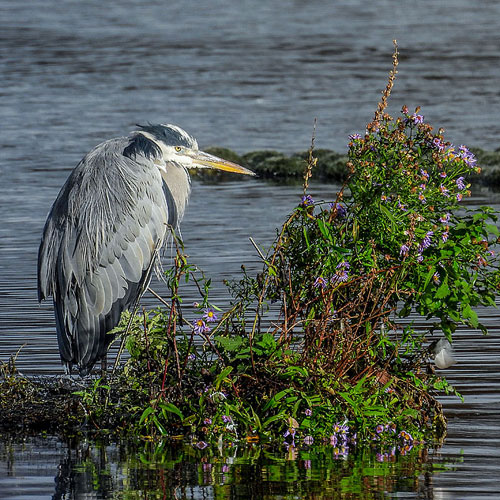
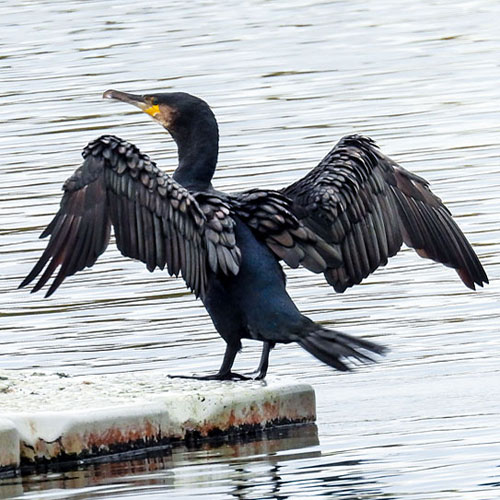
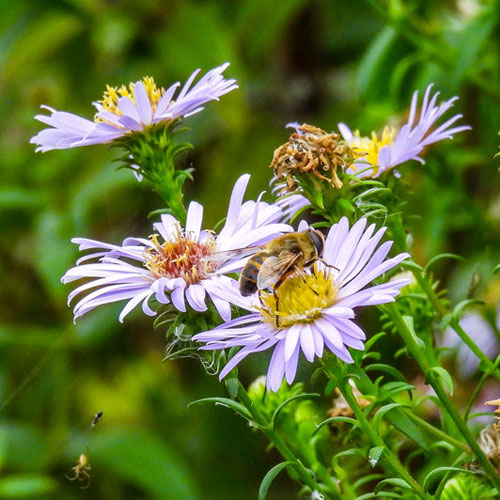
Some Cormorants were gaping in the warm sun. A Grey Heron was relaxing in the sun, standing on one of the artificial islands that was bedecked with Michaelmas Daisies. Further out, on another artificial island, a Coot and a Canada Goose were eye-balling each other. On the path to the
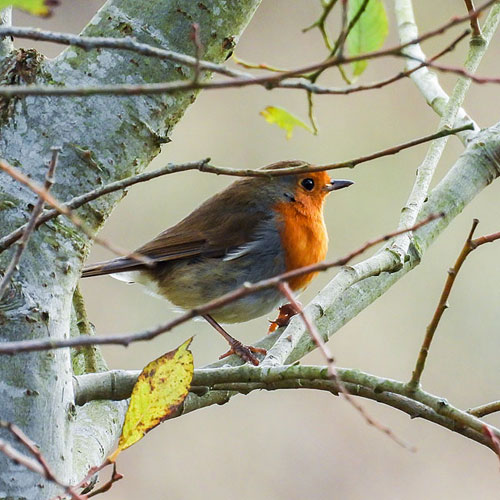
pond at the east end of the park I encountered a wee Robin low in the branches of a young tree.
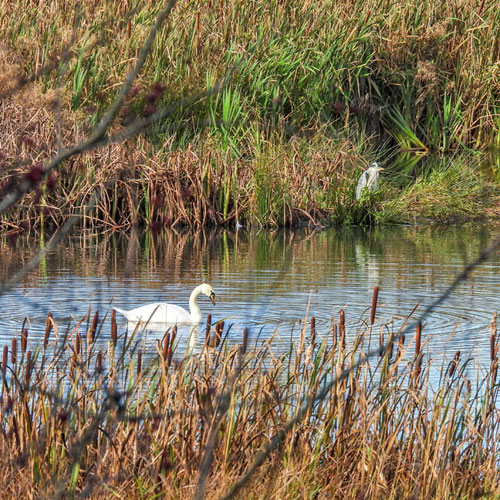
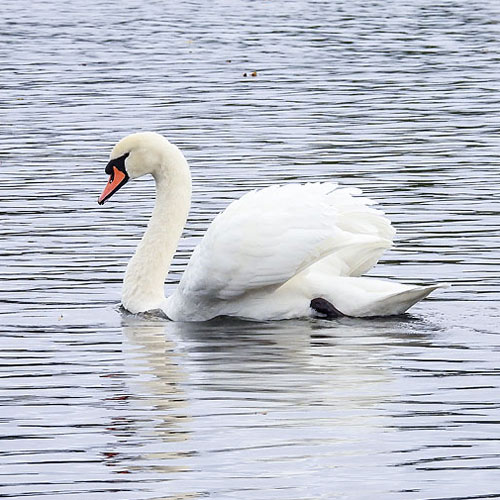
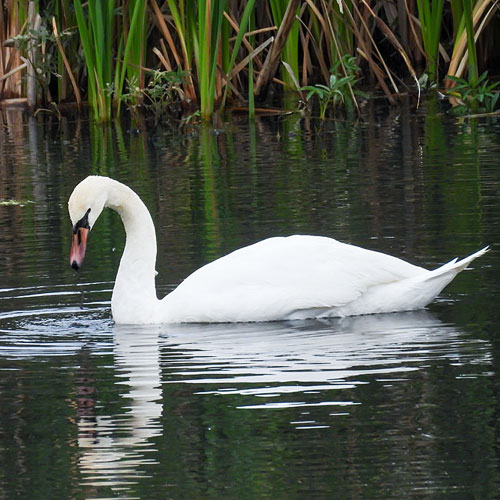
A Buzzard was watching me before flying off towards the pond. A few minutes later I saw where it had landed - on a Hawthorn tree. As you can see, it flew off again when I tried to photograph it. At first I thought the pond was birdless, but the head of a Grey Heron appeared from behind the reeds of the island. I rounded the pond by walking around the park perimeter and from this new viewpoint I could see the other side of the island. I could see a whole Grey Heron and also a Mute Swan that must also have been hidden behind the island.
Below is the view looking down the north side of the loch towards the car park.
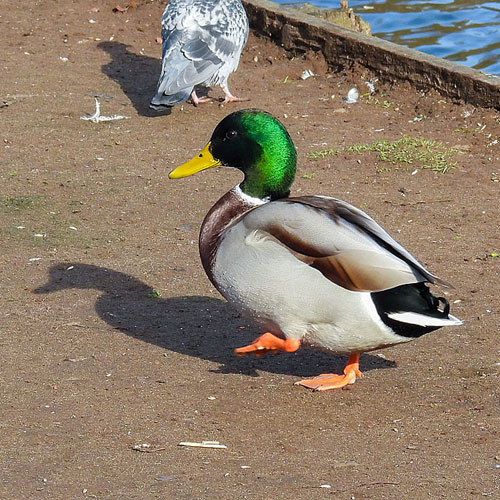
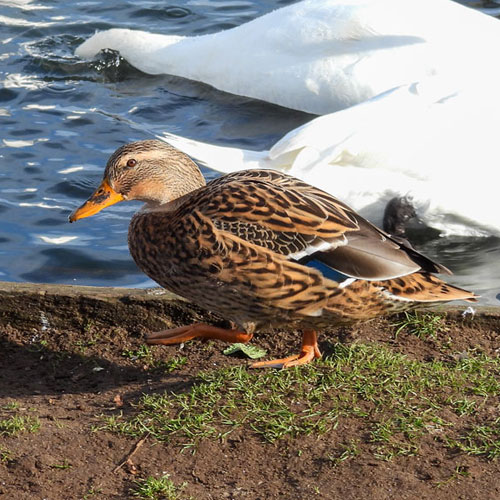
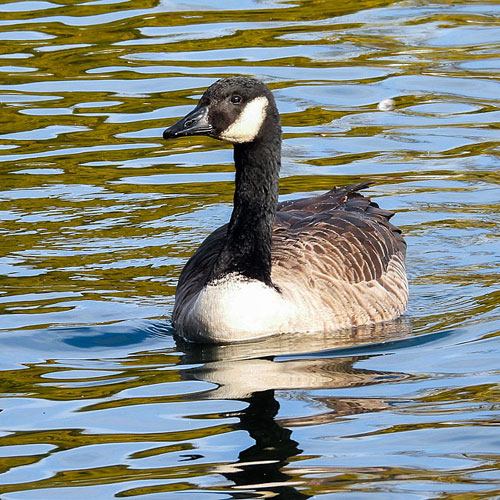
I found a clump of Candlesnuff fungi growing from a rotting wood stump. However, it was a rather uneventful walk along the north side of the loch. Back at the car park I got some pleasing shots of a pair of Mallards and a Canada Goose that was swimming in towards the banks.
| Candlesnuff |
Drake Mallard |
 |
 |
| Female Mallard |
Canada Goose |
 |
 |
Saturday, 25th October: Doonfoot
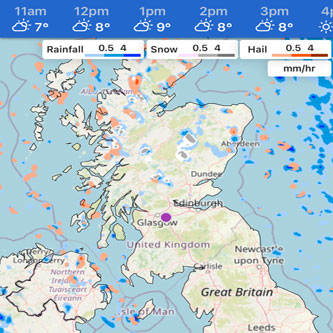
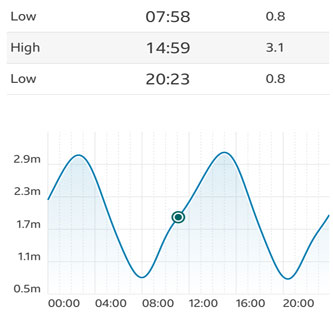
Dry, bright and mild weather was forecast for Saturday at Doonfoot, in the south of Ayr, but the wind was to be fairly strong. The tide would be incoming during the time I’d be there.
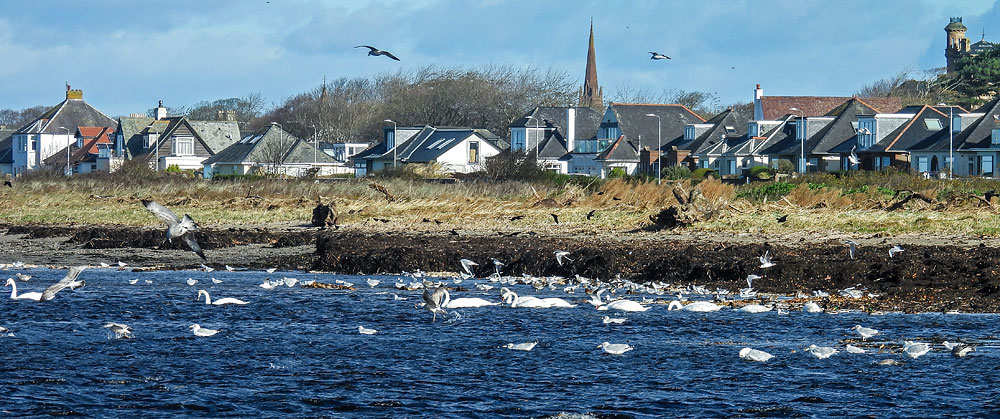
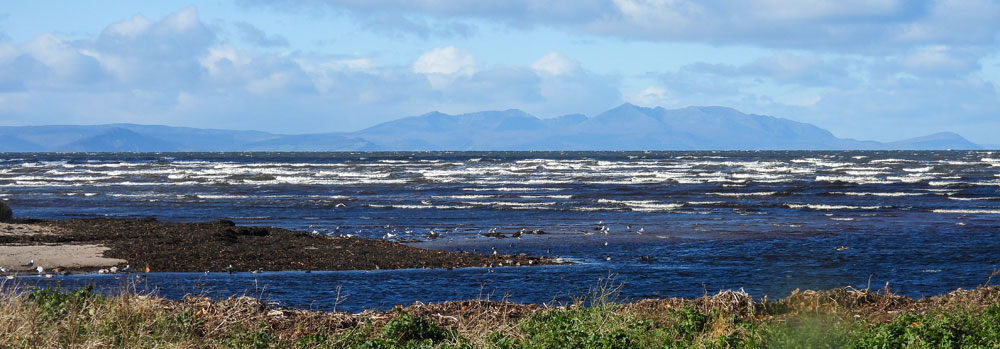
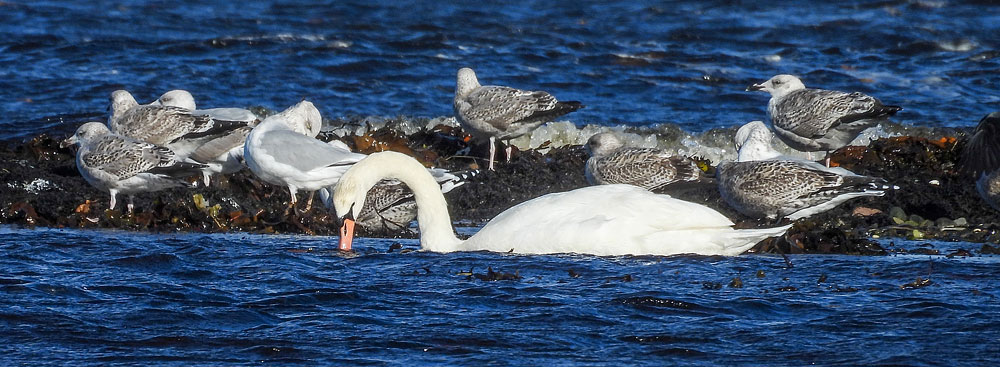
The sea looks calm in the picture below. The Mute Swans and masses of gulls seems to be calmly feeding on the beached seaweed. However, …..
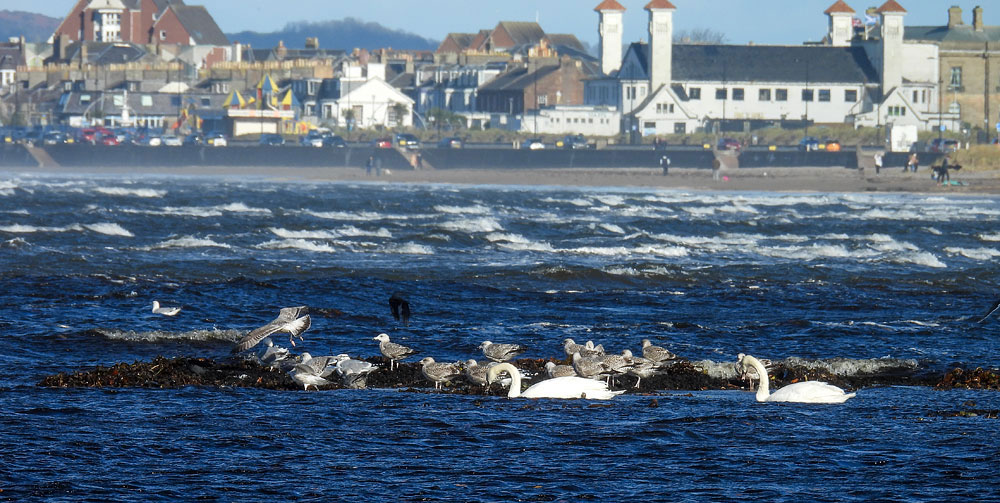
…..this view, looking out from the across the estuary of the River Doon towards Ayr, shows the sea with very many “white horses” (the white crests of breaking waves). These are related to wind speed - extensive white crests indicate 6 on the Beaufort wind scale, which equates to over
30 mph.
The swans and gulls shown below have found a calmer area.
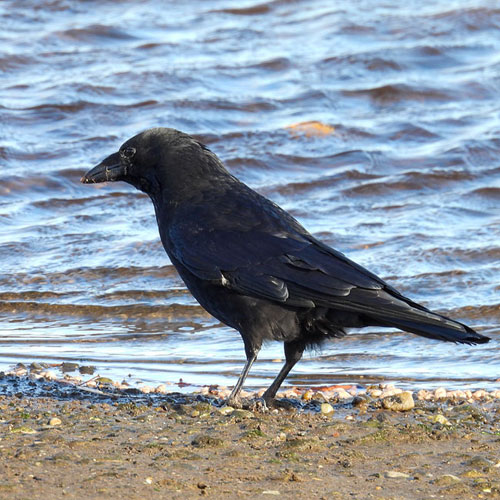
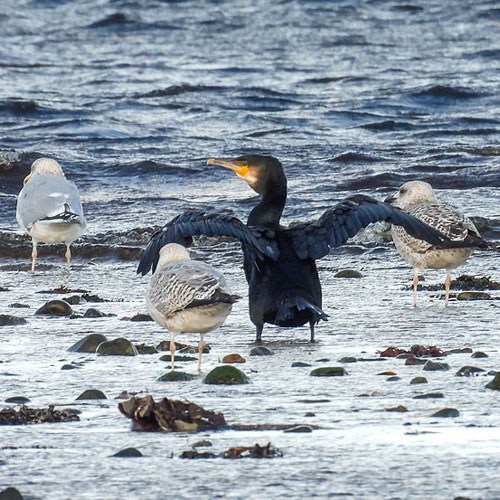
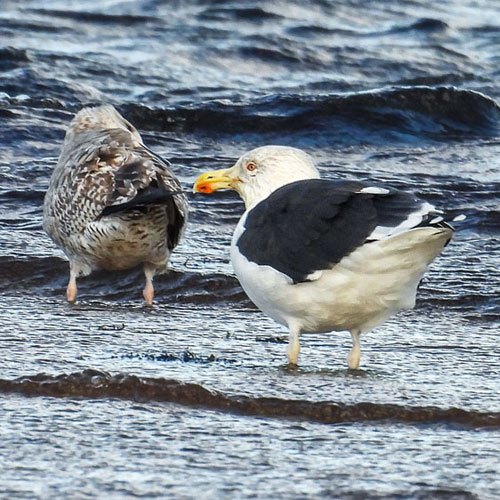
I sat a while on the west side of the estuary and started photographing the birds - not easy in the stiff wind. I managed reasonable shots of the rich variety of birds feeding ahead of the waters of the incoming tide: Carrions Crows, Cormorants, Mallards and a Great Black-backed Gull.
| Carrion Crow |
Cormorant |
 |
 |
| Mallard |
Great Black - backed Gull |
 |
 |
A large number of Black-headed Gulls and Redshanks were busy on the quickly flooding sand on the west side of the estuary.
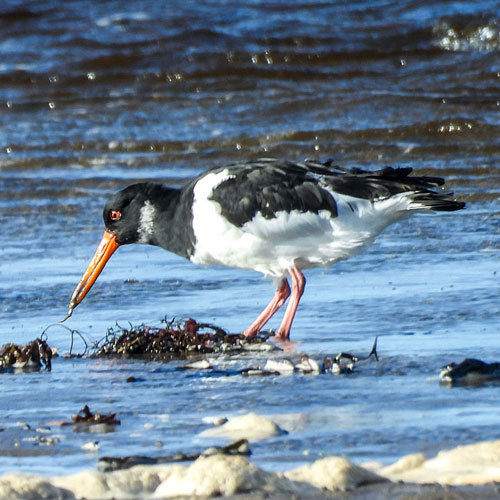
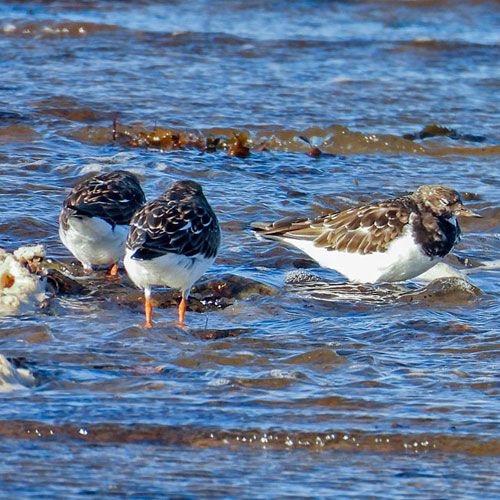
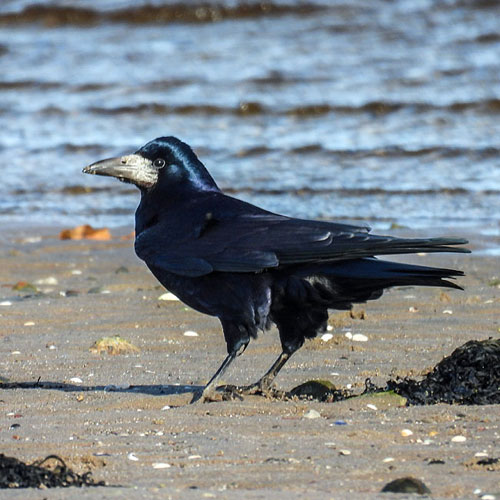
My camera zoom captured the action to my satisfaction: Redshanks, Oystercatchers and Turnstones all dodging the waves as they hunt for invertebrates in the sands. A couple of Rooks flew in to see what they could steal.
| Redshank |
Oystercatcher |
 |
 |
| Turnstone |
Rook |
 |
 |
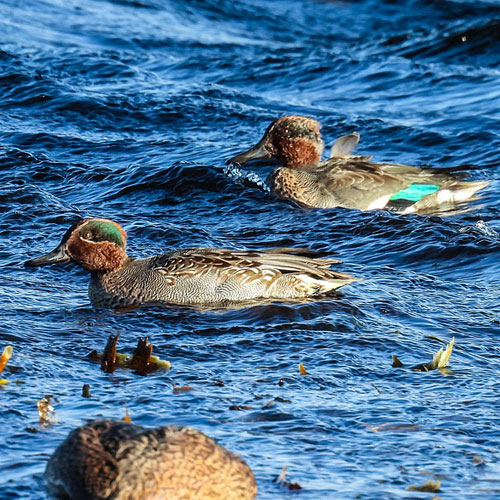
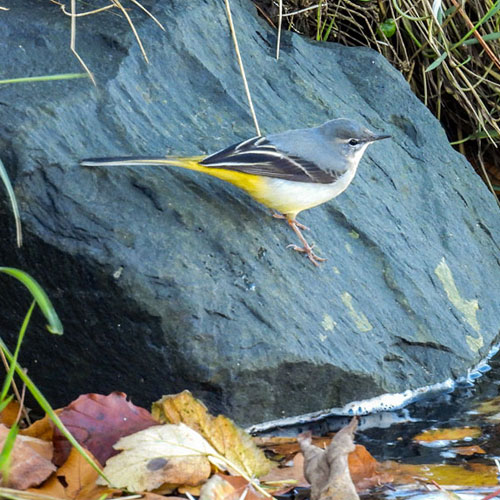
I walked across the footbridge to the other side of the river and immediately captured pictures of some Teal ducks. I heard the familiar high notes of calling Rock Pipits and quickly spotted them on boulders at the side of the Slaphouse Burn. Soon after that a Grey Wagtail appeared briefly in
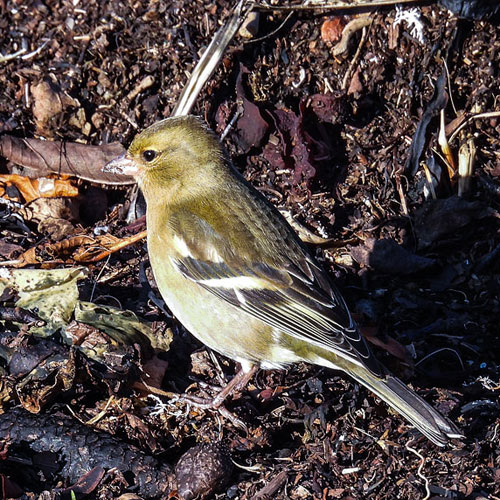
the same area, before flying off along the seashore. I started back towards the footbridge just as a female Chaffinch flew onto the seaweed pile, presenting me with another photo-opportunity.
| Teal |
Rock Pipit |
 |
 |
| Grey Wagtail |
Female Chaffinch |
 |
 |
Below is the view of the flooded estuary as seen from the footbridge. Note the “white horses” still being driven by the strong wind, and also the Isle of Arran across the Firth of Clyde.
I relocated to the Greenan Castle car park and walked along the foreshore toward the castle. Unfortunately there were no pictures worth taking until I reached the cliff. Gulls and Redshanks were foraging along the seashore beyond the castle.
I climbed the very rough and muddy footpath up towards the castle. Halfway up I recorded the view of the field we usually walk along. However, the farmer’s crop was just starting to grow and he has planted right up to the edge of the field. With no path to walk on I felt it would have been
wrong to trample on the crop.
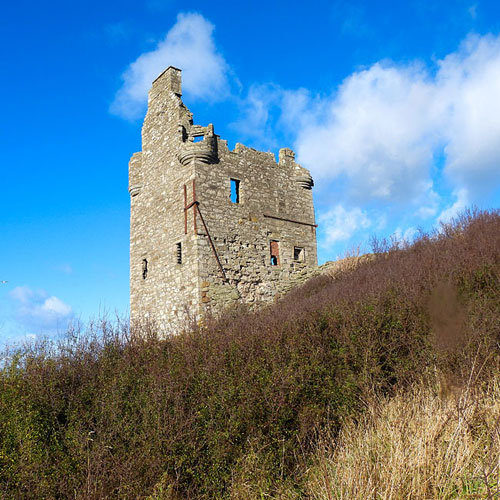
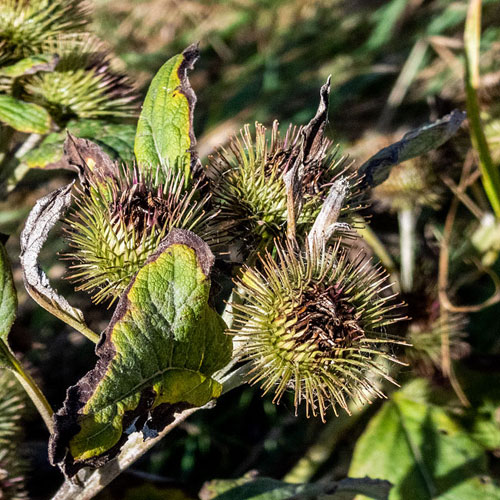
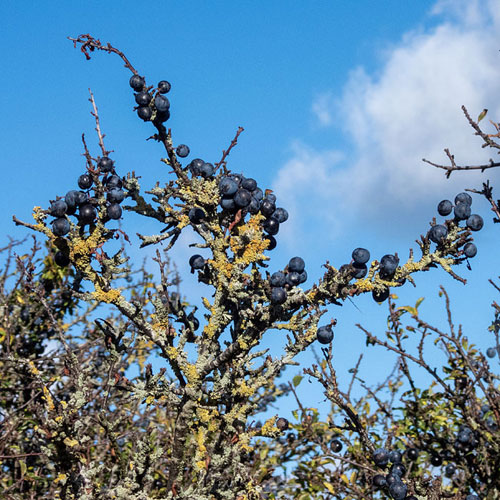
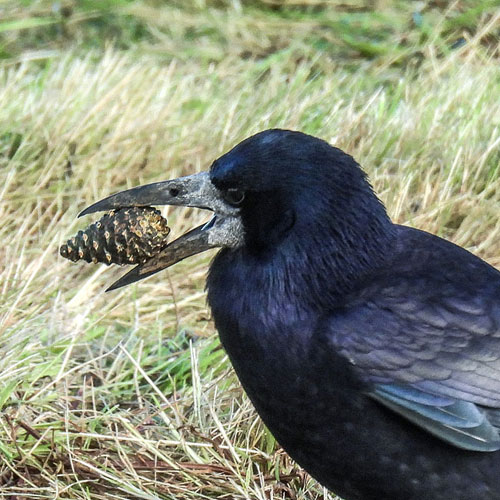
I photographed the castle and followed the path along the fields south of the castle (thankfully the farmer had not eliminated the paths). Sadly there were still no birds to bother the camera, but I did snap some mature Lesser Burdock and Blackthorn berries. My final bird shot is a portrait of a Rook holding a pine cone in its beak.
| Greenan Castle |
Lesser Burdock |
 |
 |
| Blackthorn |
Rook |
 |
 |
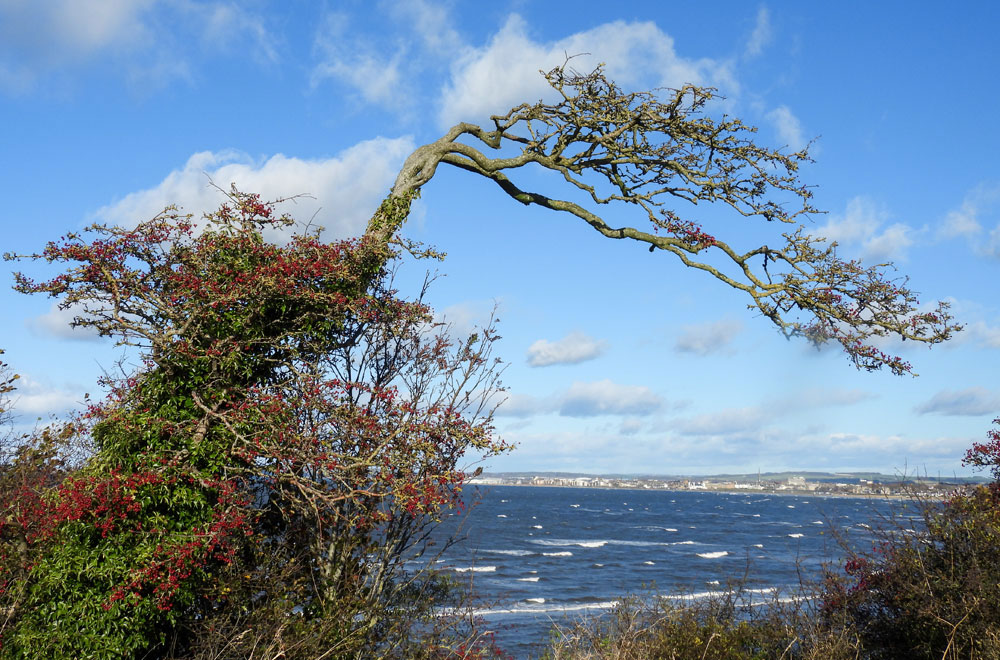
My last picture was taken on the plateau on which the castle is built, and shows a well-weathered Hawthorn that “frames” the view of the distant Ayr seafront.
It has been a very successful week with 43 species photographed. My favourites are the Otter Pied Wagtail, dragonfly, caterpillar and fungi at Strathclyde Park, and the Buzzard at Hogganfield. The weather is to be sunshine and showers next week - More of the same then.
Week ending: 19th October: Strathclyde Country Park, Baron's Haugh
The prediction for the week’s weather was not encouraging. It was to be gloomy with an increasing possibility of rain as the week progressed, although the temperature was to be relatively mild.
Monday, 13th October: Strathclyde Park
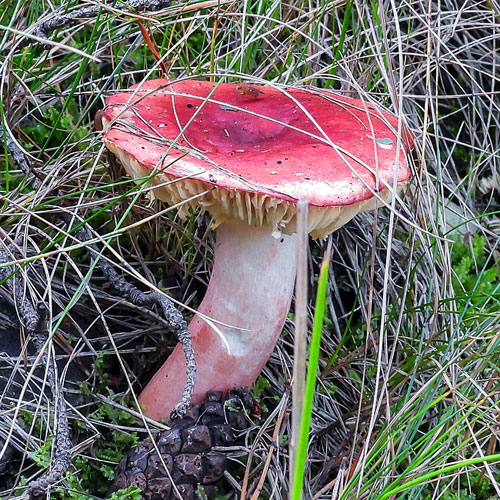
Monday was dull so I decided to spend the day hunting for fungi in Strathclyde Park. I am pleased with the outcome. My first fungus
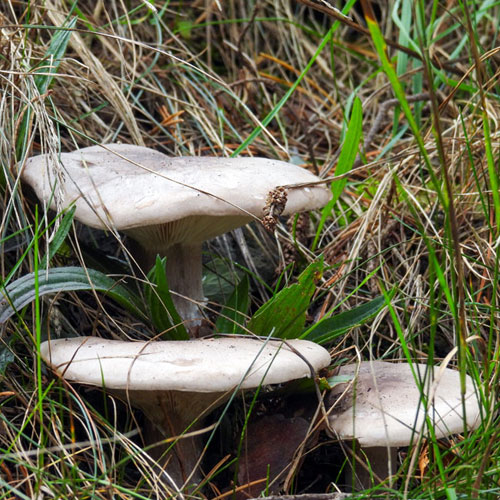
was Bloody Brittlegill, a common species mainly found, as in this case, beneath conifer trees. I followed this with another common fungus, Clouded Funnel, again under conifers. Also, just off the path on the dry edges of the same trees, I found a patch of Grey Knight fungi. My fourth discovery in the section of pine trees was Saffron Milkcap , a fungus that is more common in the northern parts of the UK.
| Bloody Brittlegill |
Clouded Funnel |
 |
|
| Grey Knight |
Saffron Milkcap |
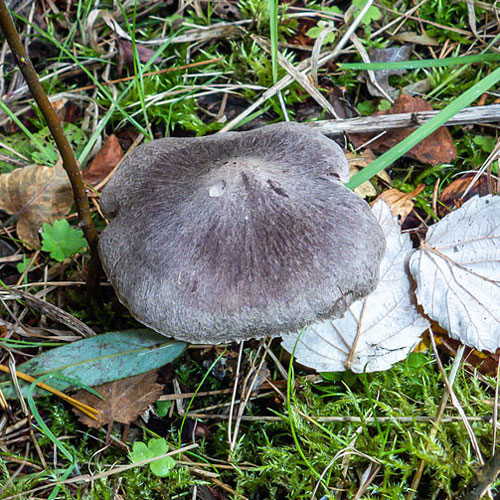 |
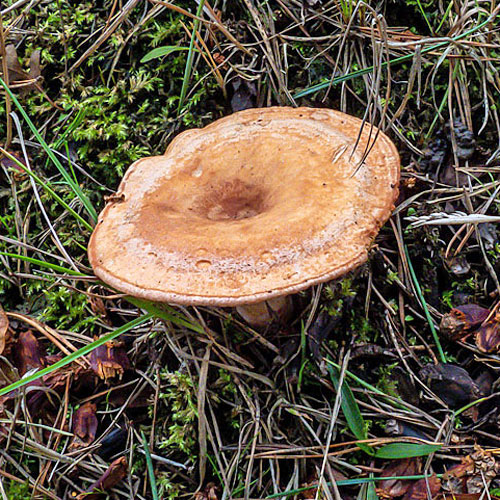 |
Next I came upon a small group of Common Puffball fungi under the branches of small pathside trees. This species can be found beside trees or in grassy areas. As I exited the wooded footpath that took me to the Hamilton Road I nearly passed a clump of small brown fungi,
Sheathed Woodtuft , that were growing from the wooden back boards of one of the steps. This wood-rotting mushroom is widespread and very common throughout Britain. I re-entered the park via the main entrance and found a couple of fungi species growing on the rather uncut park
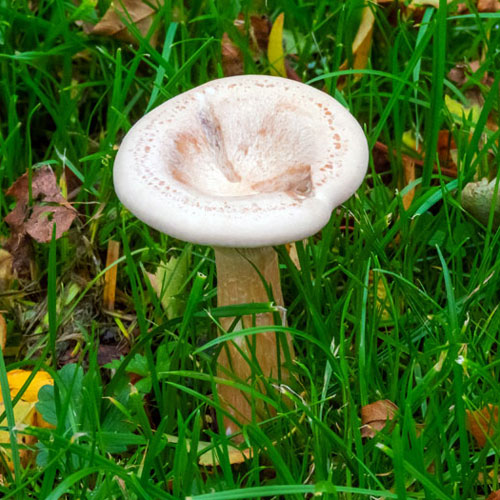
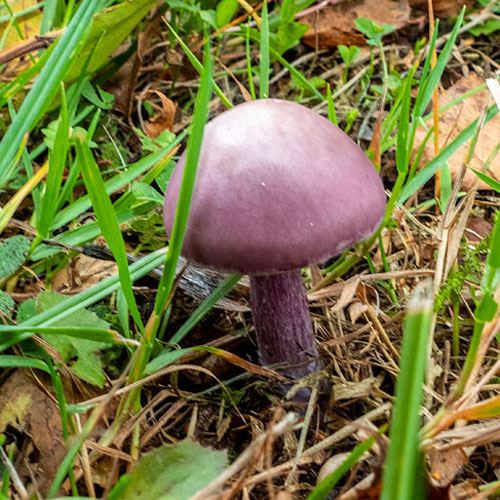
grass. The first of these was Common Funnel , described in texts as “gregarious” because it is usually found in groups. The other mushroom was solitary, and purple, an Amethyst Deceiver. It's called a " deceiver " because it loses it's vibrant violet colour as it ages making it more difficult to identify.
| Common Puffball |
Sheathed Woodtuft |
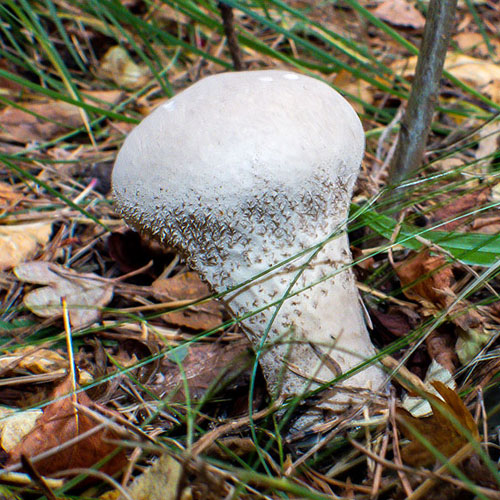 |
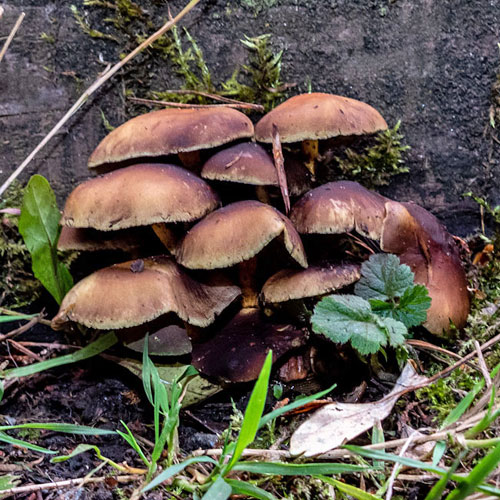 |
| Common Funnel |
Amethyst Deceiver |
 |
 |
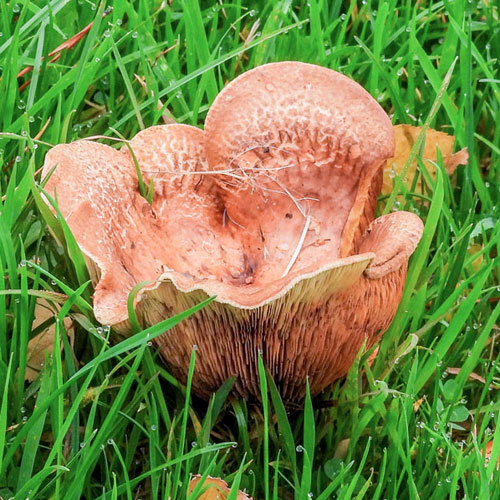
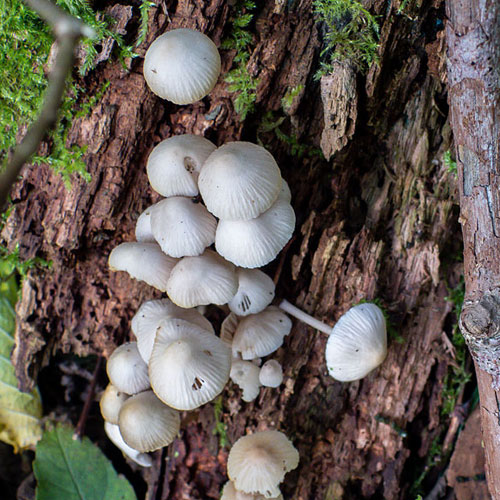
On a grassy bank near the Piper Alpha memorial monument there were several Brown Rollrim, fungi growing. It is a very common and poisonous fungi. In the woods behind M&D’s funfare I completed my search in Strathclyde Park with a couple of nice finds. The first of these was another gregarious mushroom, Fairy Inkcap, which loves rotten trees, and the other was Honey Fungus , a parasitic fungus that can do great harm to both coniferous and broad-leaf trees. By the time the mushrooms show, the damage is usually so great that the tree will perish.
Friday, 17th October: RSPB Baron's Haugh
Tuesday to Thursday was dull and rainy, but Friday was very gloomy, but dry. I was running out of days that I was available to get out with the camera, so I ventured out to Baron’s Haugh to check out the birds. There was talk of a Cetti’s Warbler in trees by the banks of the River Clyde. The tree foliage in all areas of the reserve was in various shades of ochre. It was well and truly Autumn.
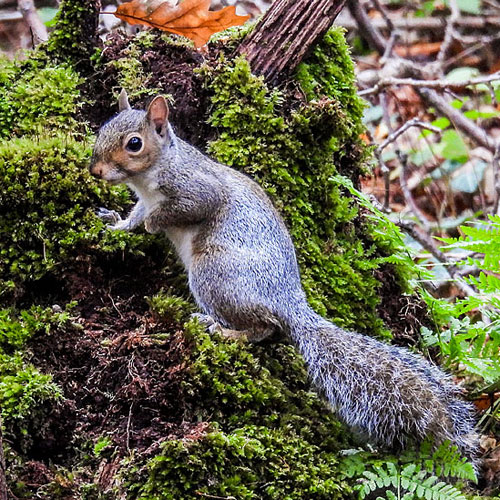
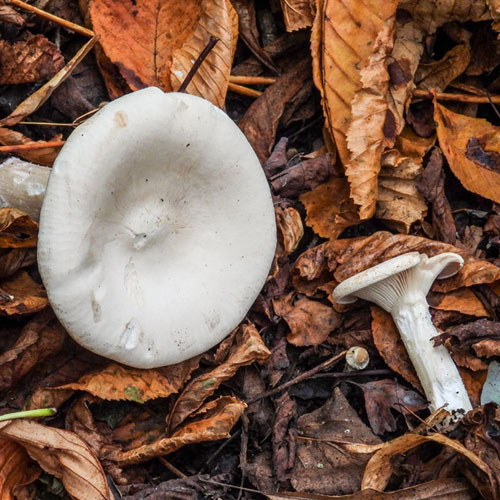
There were a few foraging Grey Squirrels scurrying through the leaves searching for food. Just before the entrance to the Marsh Hide I came upon another fungus, The Miller, a common white mushroom of the woods and pathways.
| Grey Squirrel |
The Miller |
 |
 |
The view from the hide was dismally grey…
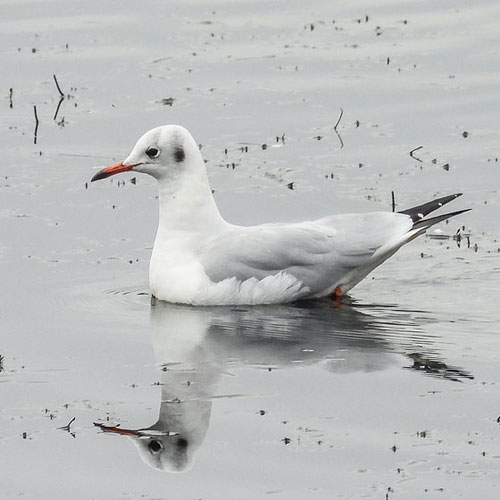
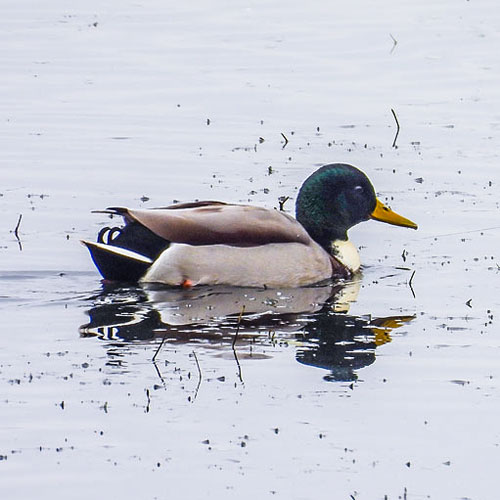
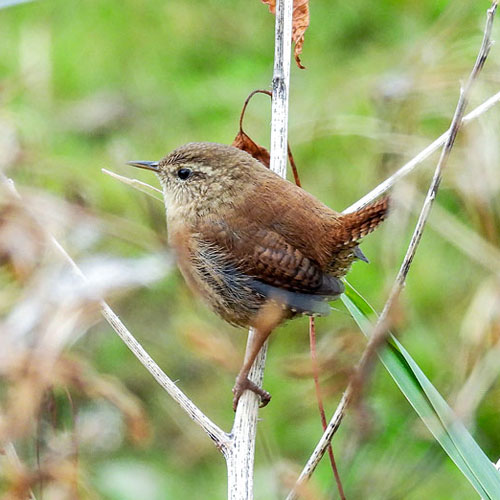
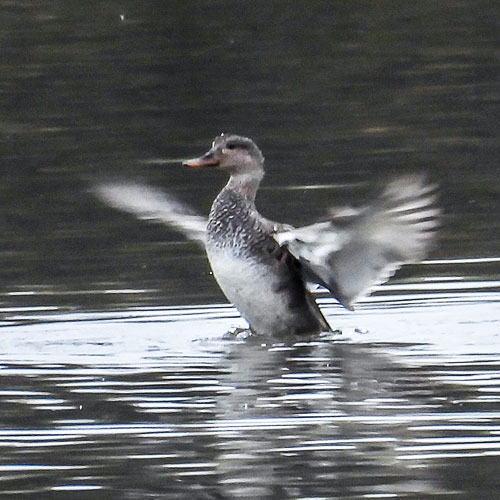
…. but, thankfully, there were birds, mainly Black-headed Gulls and Mallards. I did manage a wee Wren when it started singing on the Teasels in front of the hide. The scrapes were flooded, so I scanned the areas beyond there and found Gadwalla, and caught a juvenile flapping it's wings.
| Black - headed Gull |
Drake Mallard |
 |
 |
| Wren |
Juvenile Gadwall |
 |
 |
…. while the parent Gadwalls dabbled by the Mute Swan.
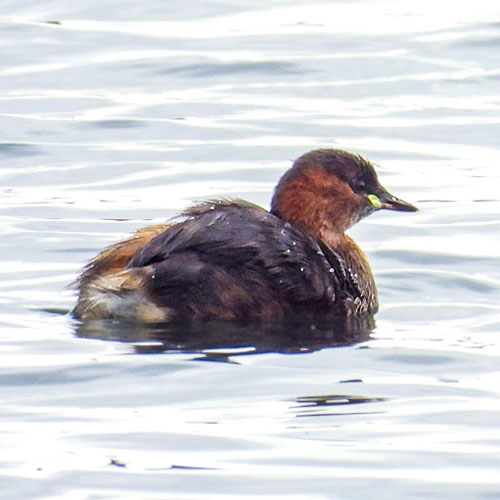
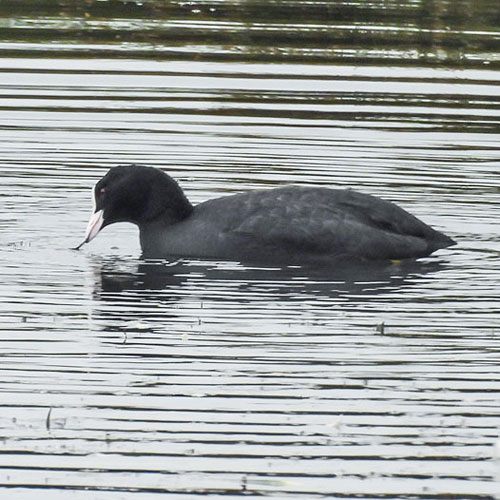
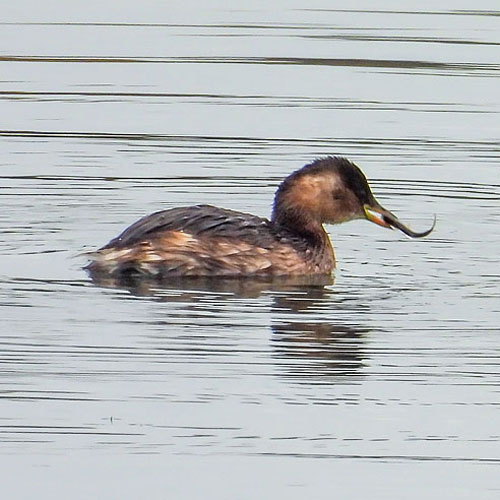
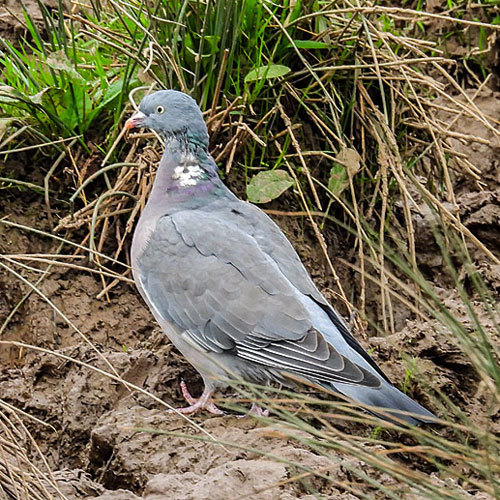
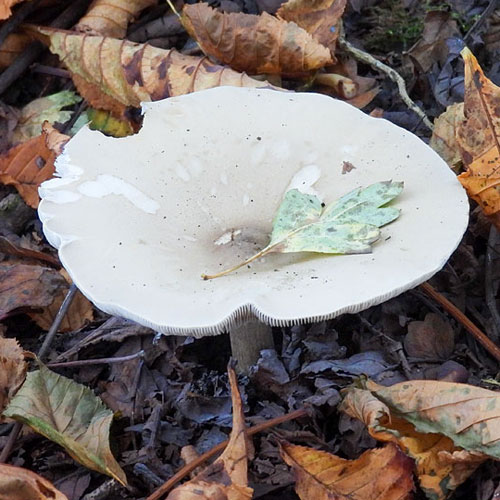
A Coot and a few Little Grebes appeared from some side channels and started diving in the water in front of the hide - for weed and fish respectively. Woodpigeons were feeding to the right of the hide. On my way to the Causeway Hide I found some pretty chewed-up Clouded Funnel fungi partially hidden beyond bushes.
| Coot |
Little Grebe |
 |
 |
| Wood Pigeon |
Clouded Funnel |
 |
|
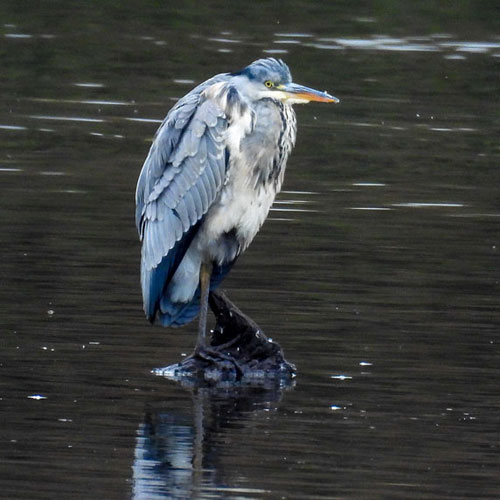
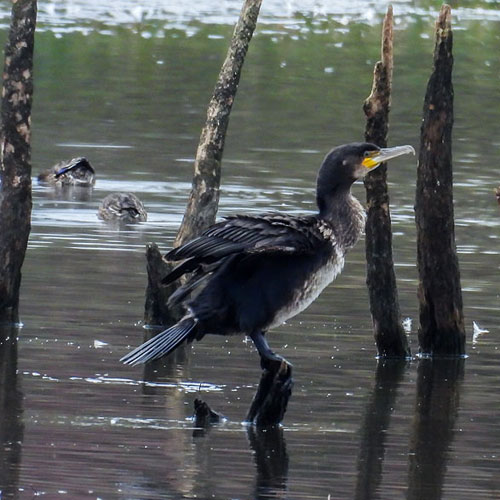
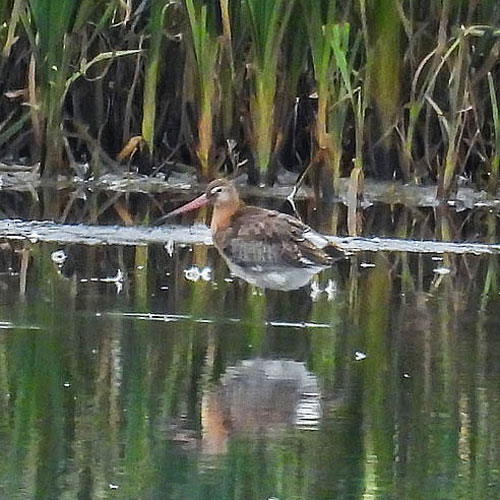
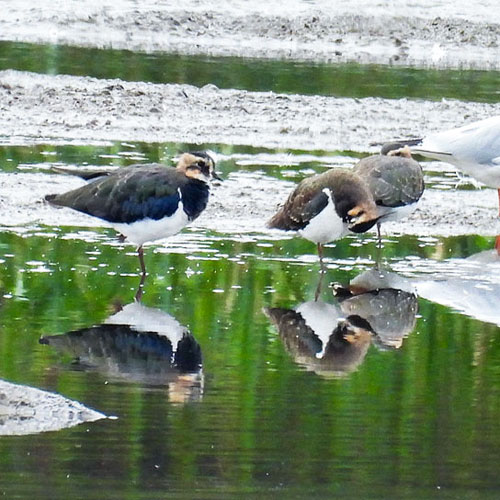
I saw more birds from the Causeway Hide, most of them were feeding or resting at the far side of the Haugh. A juvenile Grey Heron and juvenile Cormorant were a bit closer to the hide, and a Black-tailed Godwit was by the reeds directly opposite the hide, behind a large flock of Lapwings.
| Juvenile Grey heron |
Juvenile Cormorant |
 |
 |
| Black - tailed Godwit |
Lapwing |
 |
 |
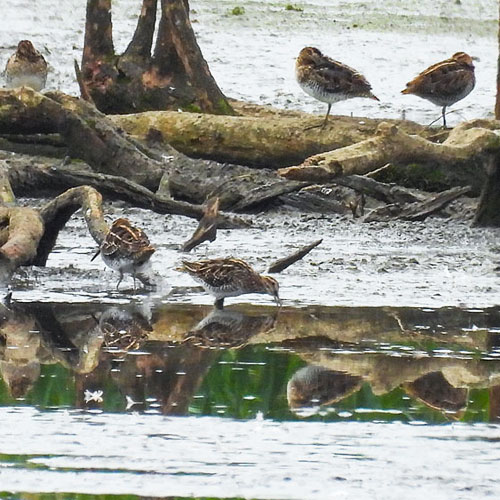
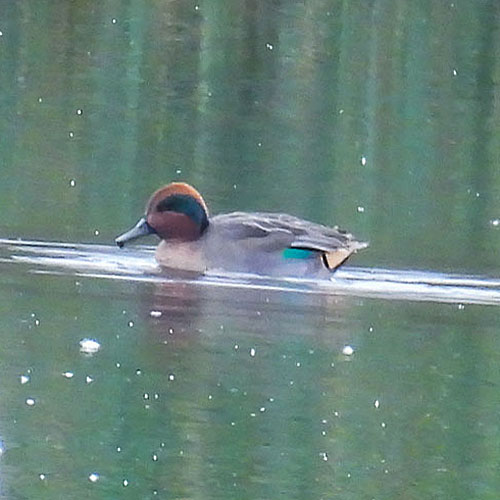
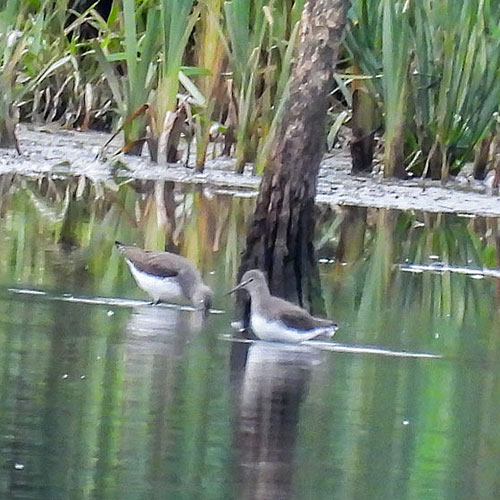
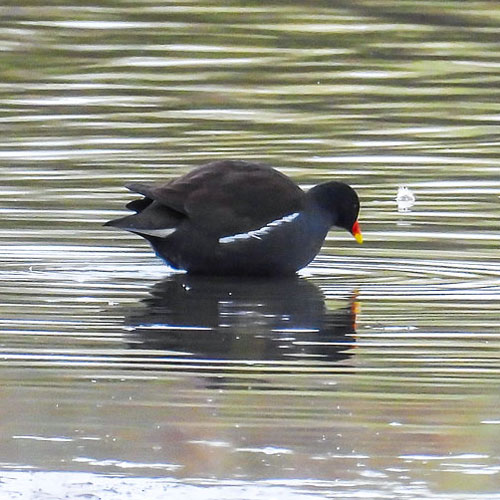
Near the Lapwing flock, Common Snipes were gathered. It was all very gloomy. Some Teal were also in the mix. A pair of Green Sandpipers flew in with their short, piping calls and landed just beyond the Snipe, and began wading. There were also a few Moorhens just beyond the reeds
between the hide and waters.
| Common Snipe |
Teal |
 |
 |
| Green Sandpiper |
Moorhen |
 |
 |
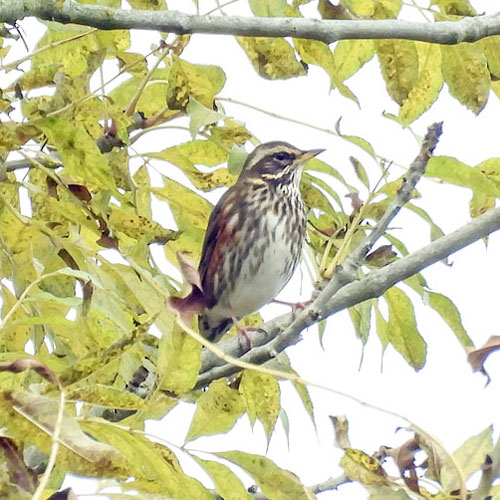
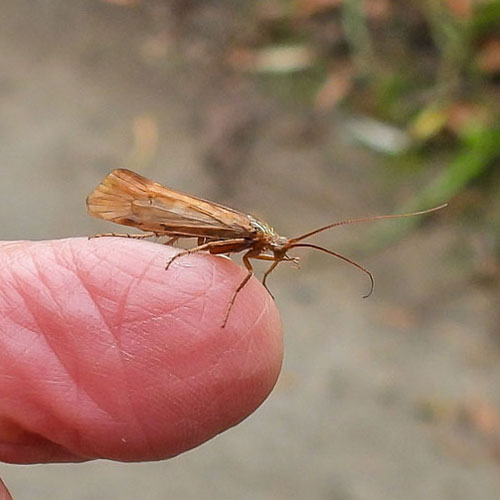
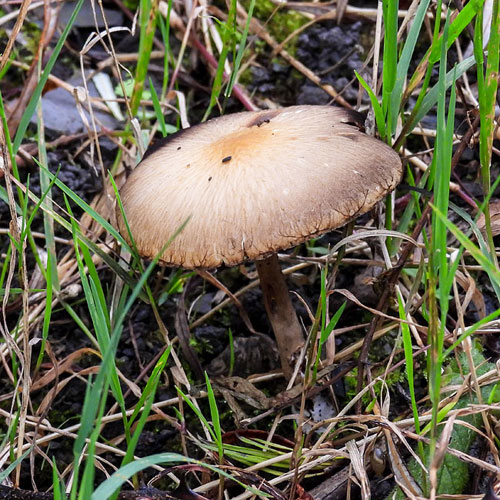
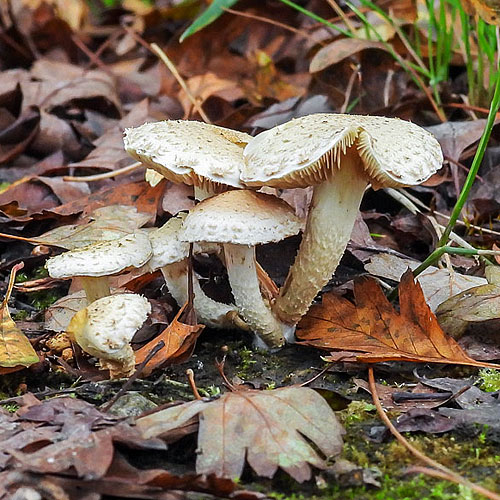
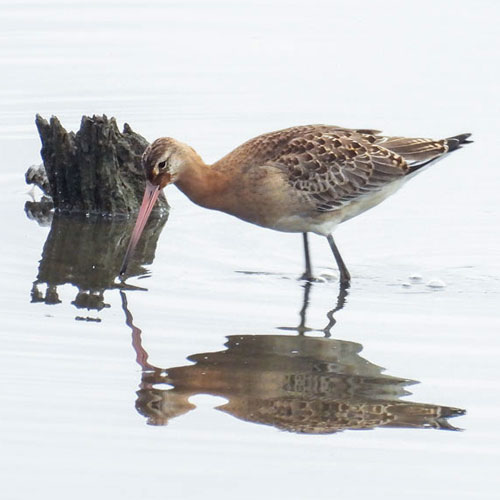
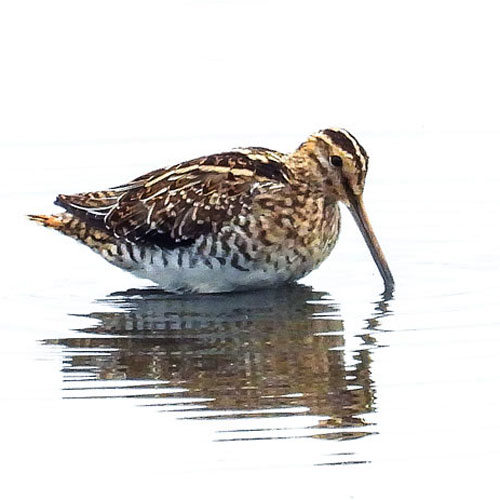
I decided to try to see or hear the Cetti’s Warbler. En route to the “breach” (I.e. the site of the now demolished Phoenix Hide), I spotted a Redwing on top of a tree bordering the fields. As I paused to view the river, a Caddis Fly walked onto my boot and was about to crawl up my leg before I offered it my warm finger - onto which it settled. I managed a quick shot before returning it safely to the grassy verge. And just before the breach, at a sluice gate, I found yet more fungi - Pale Brittlestem and Shaggy Scalycap. At the breach I sat for about 30 minutes listening and watching for the Cetti’s Warbler - in vain, sadly. To be fair, I read in social media that others tried throughout the day, each with little success. However since Friday, the bird has been heard and seen and photographed. My patience was partially rewarded when a Black-tailed Godwit came into view quite close to the breach. A few Common Snipe then flew in and a couple of them started to wade close to the godwit.
| Redwing |
Caddis Fly |
 |
 |
| Pale Brittlestem |
Shaggy Scalycap |
 |
 |
| Black - tailed Godwit |
Common Snipe |
 |
 |
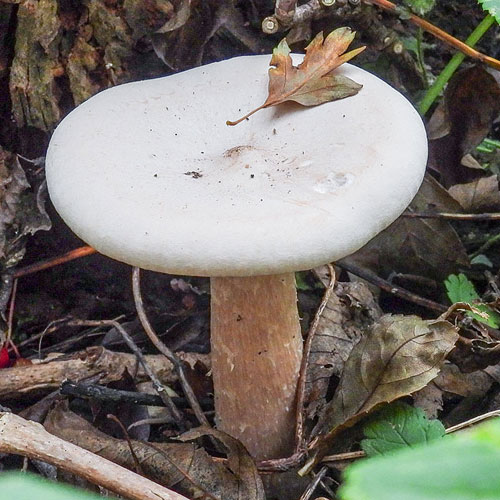
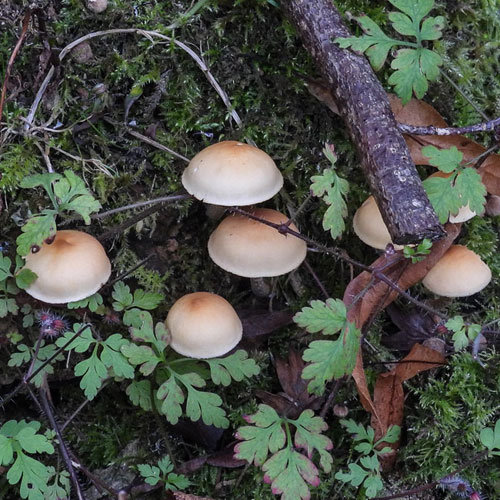
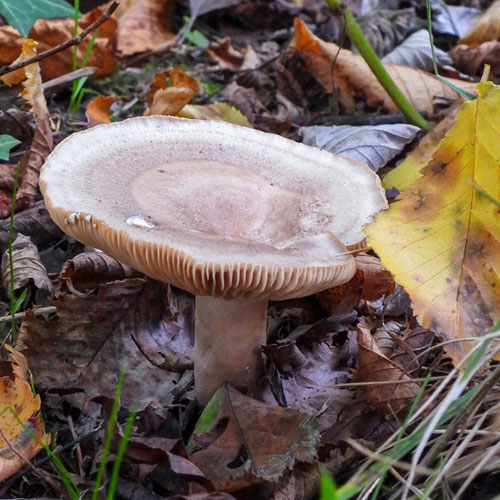
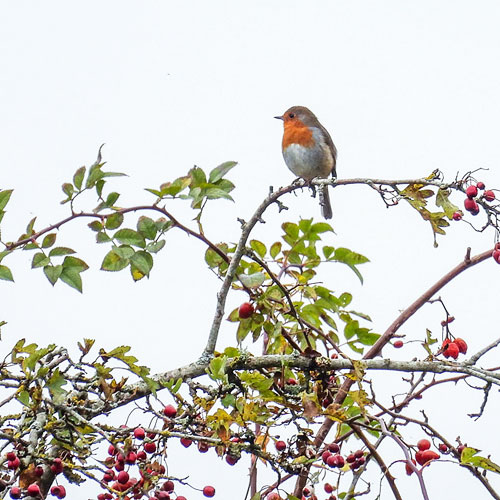
On my way back up the slope to the car park I passed 3 more species of fungi - Trooping Funnel , Conifer Tuft and Oakbug Milkcap . My penultimate photo was of a distant, lone Robin singing atop a Hawthorn bush.
| Trooping Funnel |
Conifer Tuft |
 |
 |
| Oakbug Milkcap |
Robin |
 |
 |
Near the top of the slope I got a scornful look from a Magpie as I tried to catch it unaware. Its look said, “Really?”
It was a lousy week weather-wise but I managed a cracking set of fungus sightings(19) and a nice variety of sightings at Baron’s Haugh (25). My favourite shots were all of the fungi, the Grey Squirrel, Wren and Black-tailed Godwit. Next week’s weather looks to be similar to this week - Well it is Autumn
Week ending: 12th October: Musselburgh, Morrison’s Haven
At the end of a rather poor week of weather, brighter conditions arrived on Friday and I headed for one of our favourite locations, Musselburgh.
Friday,10th October: Musselburgh
When I arrived at the Millhill car park there was still a lot of clouds in the sky but the rather chilly wind kept them moving which produced frequent sunny intervals.
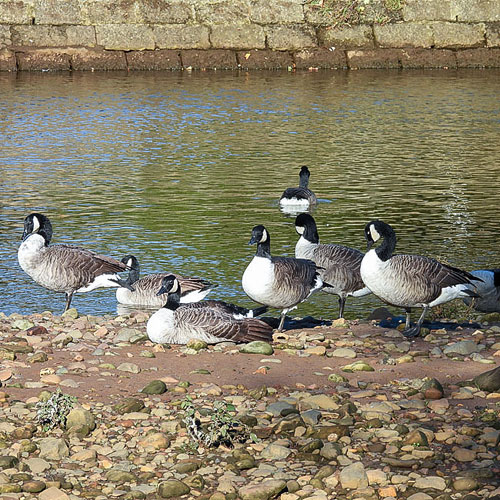
The feeding area at the slipway was dominated by tens of noisy Canada Geese …..
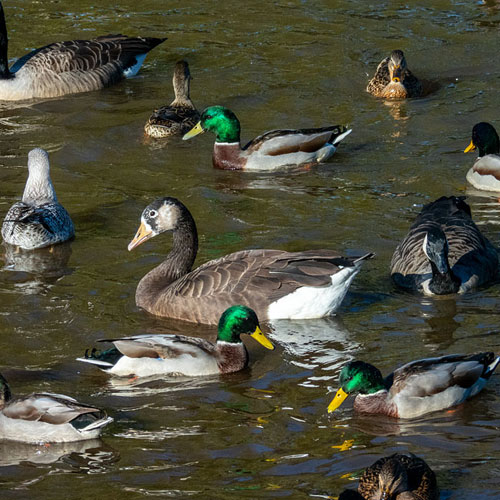
…..and a few Greylags Geese and a couple of Canada-Greylag hybrid geese. I could hear the familiar chirpings of Wagtails and when I moved further upstream I did come across male, female and juvenile Pied Wagtails hopping between large pebbles in the shallow areas of the River Esk. A beautiful Grey Wagtail also turned up, quite far out on the river at first, but after a patient wait it flew in amongst the Pied Wagtails, which allowed me to get an acceptable shot.
| Canada Goose |
Canada X Greylag Cross |
 |
 |
| Pied Wagtail... |
...Juvenile |
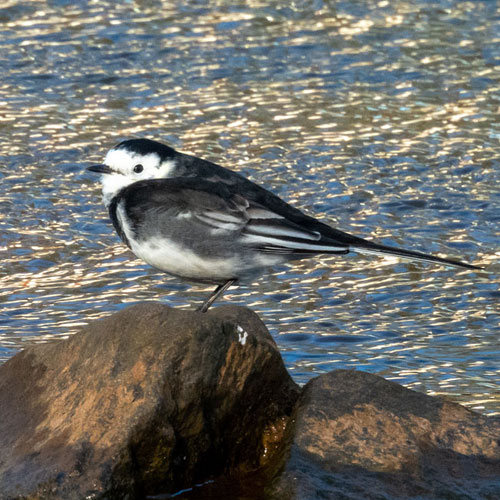 |
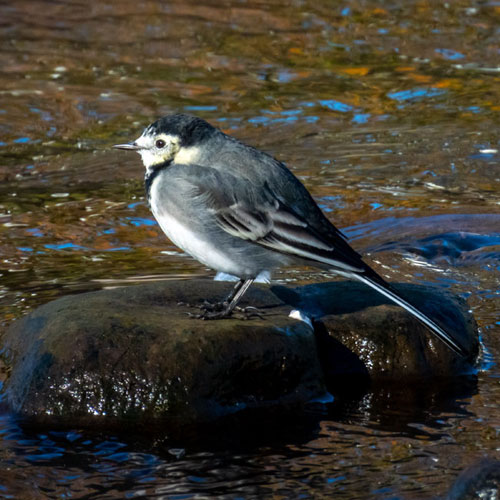 |
| ... Female |
Grey Wagtail |
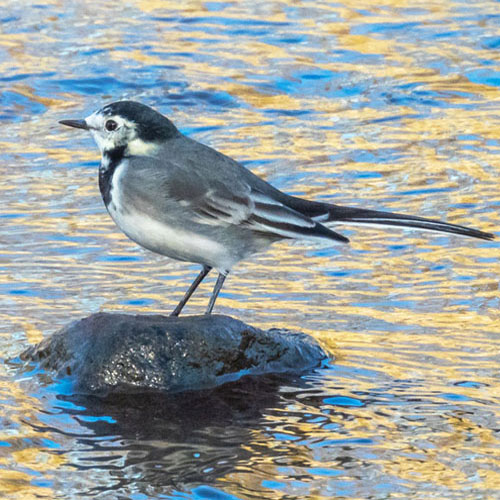 |
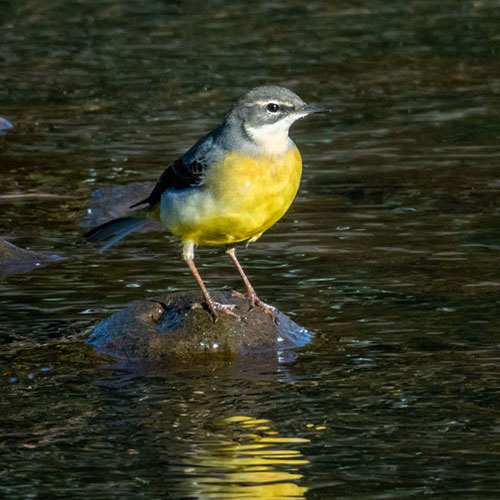 |
Below is the view of the “Store” Footbridge as seen from the New Bridge. The ochre leaves make a lovely autumnal scene.
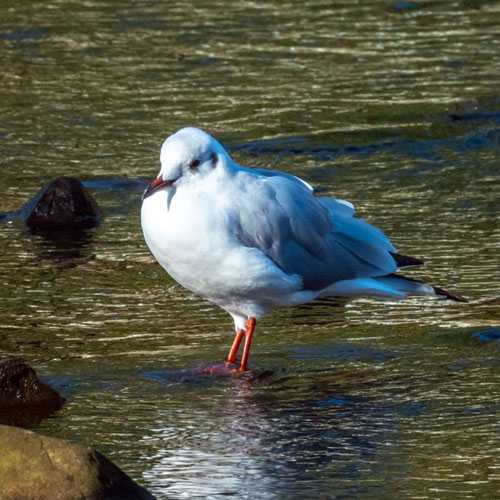
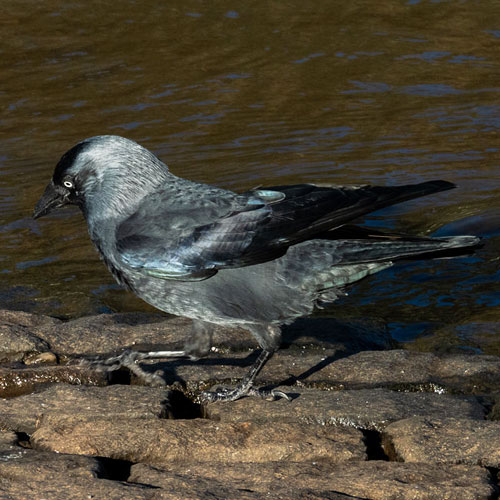
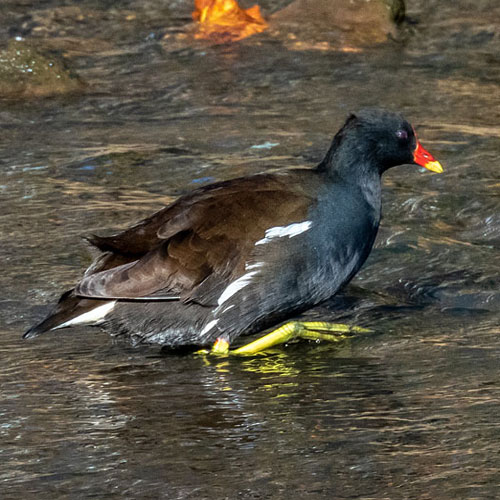
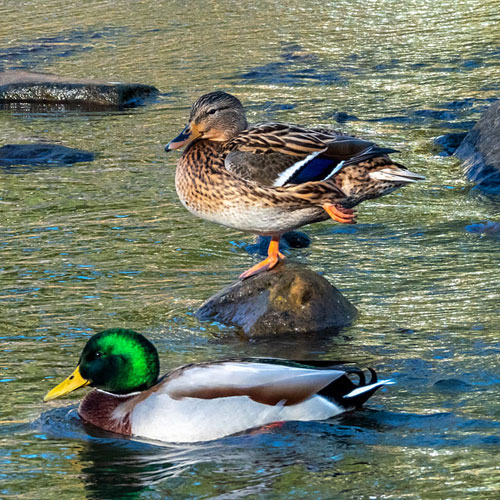
A walk to the Old Bridge produced some pleasing sunlit pictures of some “usual suspects”: Black-headed Gull, Jackdaw, Moorhen and Mallards. I also noticed a white goose standing with the Canadas. It is a Greylag hybrid - precise parentage unknown.
Below is the view of the New Bridge as seen from the Old Bridge
I returned to the car and drove a couple of hundred metres to the end of Goosegreen Road and began a little circuit that would take in views of the mouth of the Esk, the Firth of Forth and, what we’ve been calling the “New” Scrapes (which some contributors to social media have called “the Lagoons”). As predicted, the tide was very low, and the shoreline was a few hundred metres away.
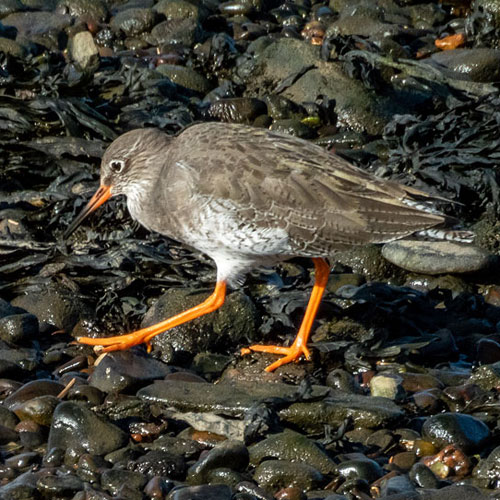
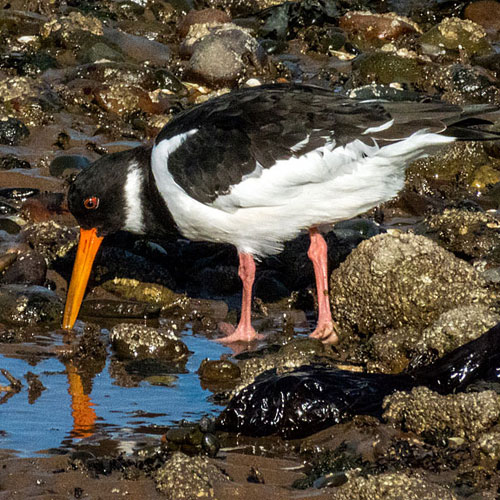
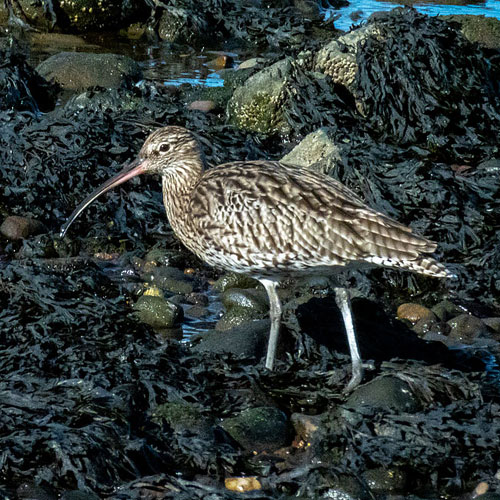
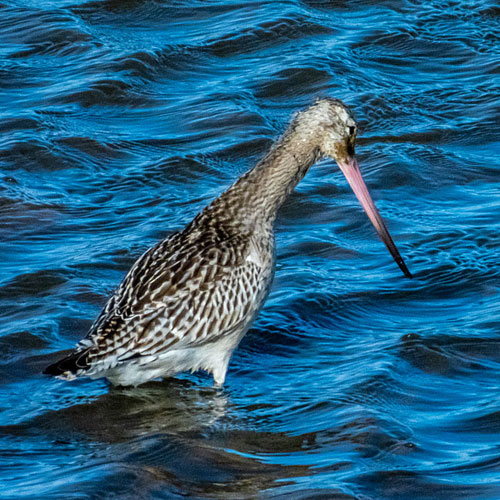
I was relieved to see some waders were feeding along the edge of the river. A wee Redshank and an Oystercatcher were searching the rocks and seaweed for invertebrates. In the shallows there was a Curlew and a Bar-tailed Godwit each probing the water and sands with their long
beaks.
| Redshank |
Oystercatcher |
 |
 |
| Curlew |
Bar - tailed Godwit |
 |
 |
However, the vast majority of birds on the estuary were much further out - too far for my camera.
I made my way east of the estuary and scanned the seascape for anything of interest. It turned out to be a fruitless search. Eventually though I reached the start of the path that leads to the New Scrapes. From the first hide I estimated that the most numerous bird species seemed to be the Greylag Goose.
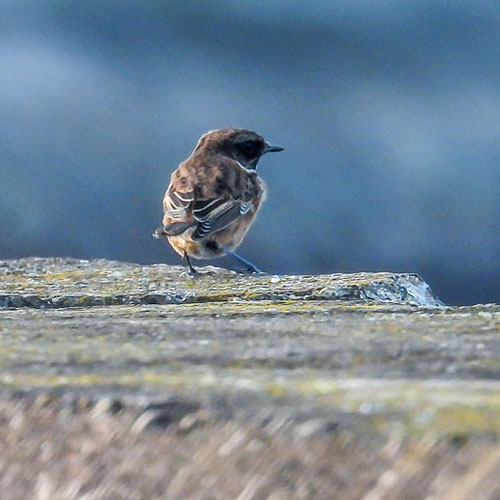
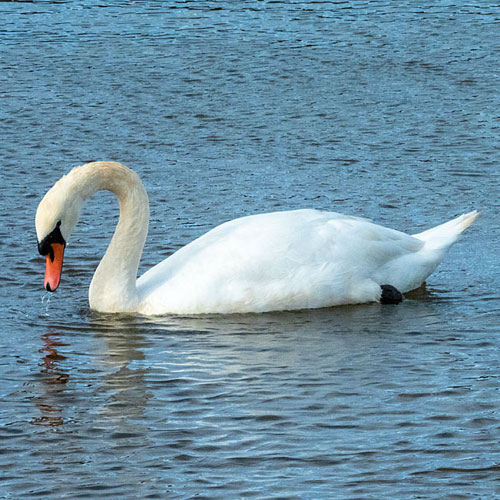
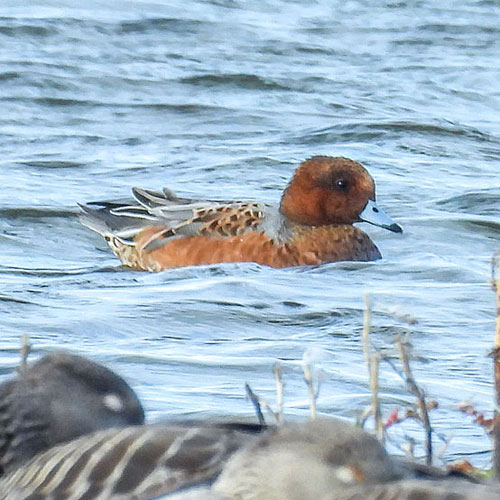
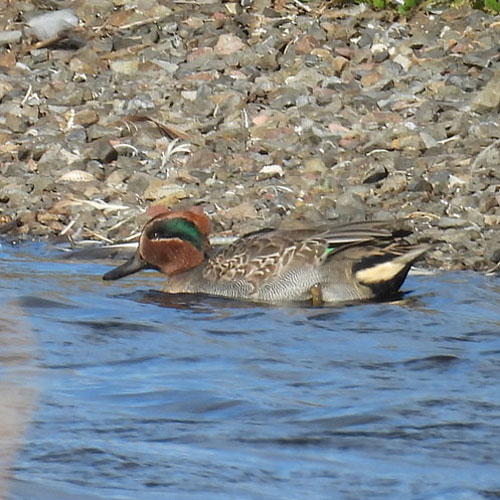
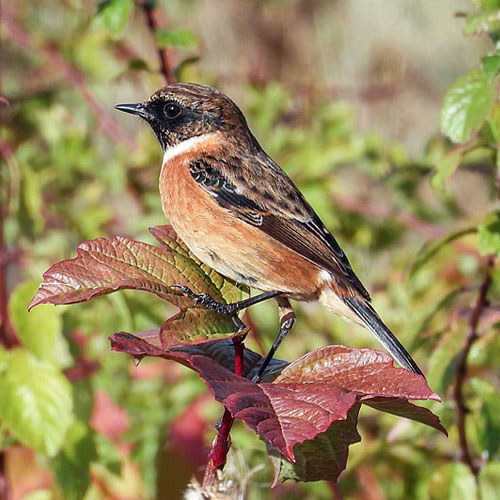
There were a few Mute Swans and several Wigeon and Teals. I snapped a lovely shot of a male Stonechat as I made my way to the next hide.
| Mute Swan |
Wigeon |
 |
 |
| Teal |
Stonechat |
 |
 |
From the gate of that hide I could just make out a cock Pheasant creeping its way through the long grass, before vanishing deep into the vegetation.
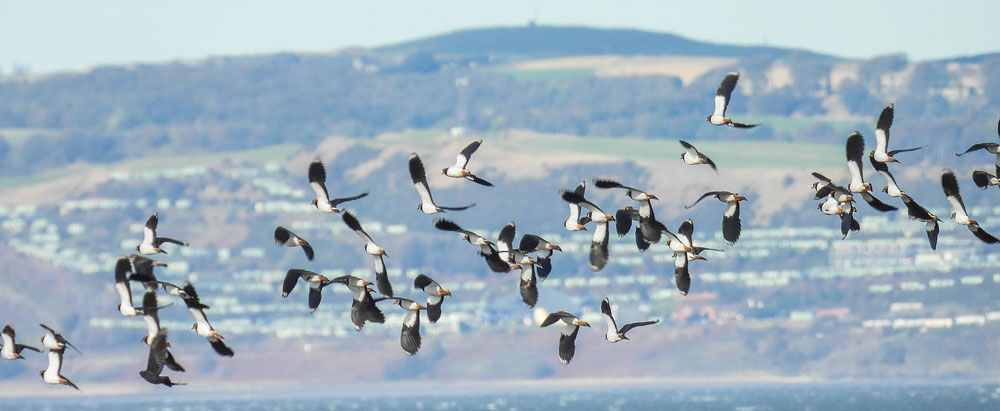
When I took up a position inside the hide, a huge flock of Lapwings took flight from the far side of the scrapes. It was apparent that there were more Lapwings that Greylags.
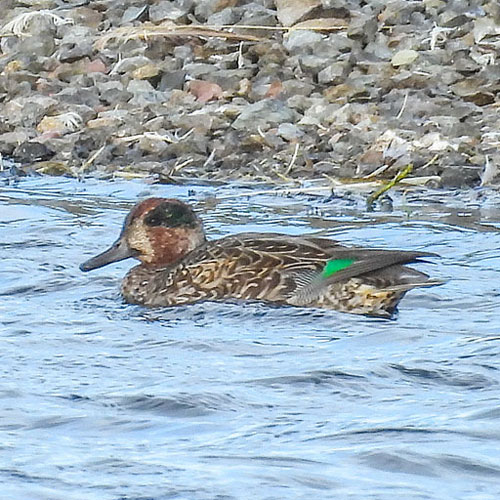
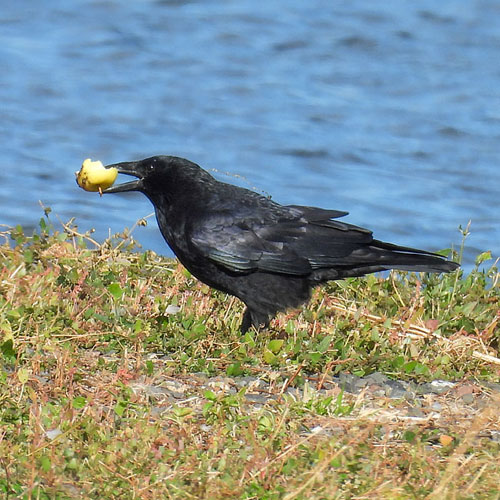
I could see even more Teal: drakes, females and one eclipse male. A Carrion Crow appeared, triumphantly displaying an apple it had found. After that a juvenile Cormorant flew in and landed opposite the hide. It called a few times before starting to preen it feathers. Meanwhile a Curlew
emerged from behind a bank as it searched the waters for food.
| Teal... |
|
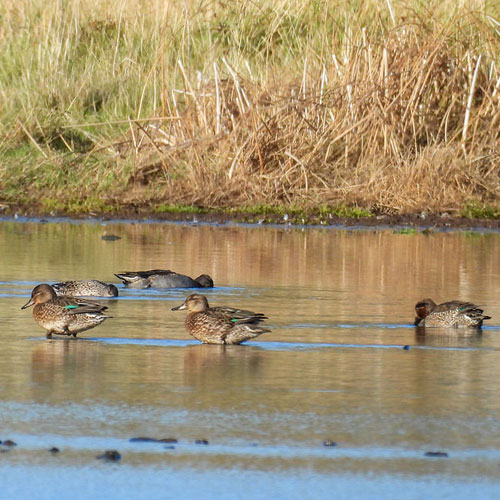 |
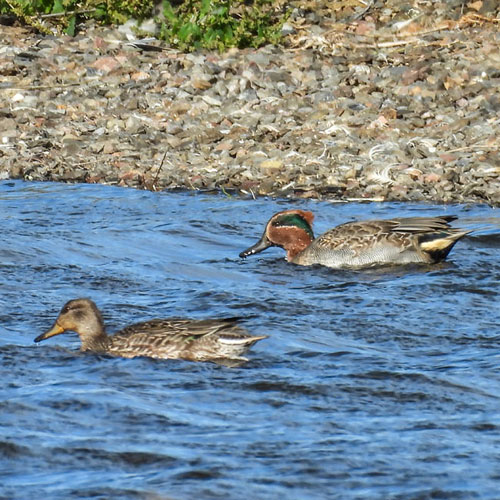 |
| ...in Eclipse plumage |
Carrion Crow |
 |
 |
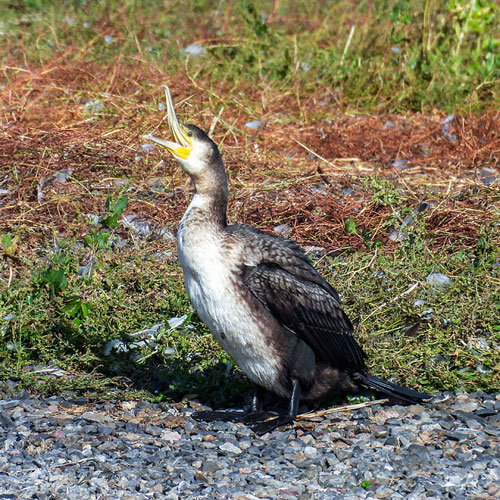
| Juvenile Cormorant |
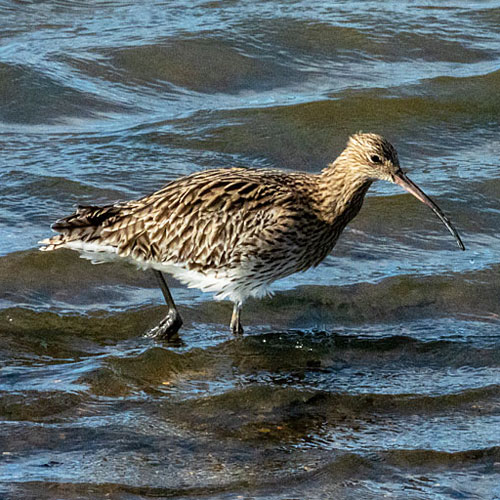
Curlew |
 |
 |
I returned to the car fairly satisfied with my collection of shots. I relocated to the car park at Levenhall Links to explore the “Old” Scrapes. However, after discovering a few weeks ago that there was a scrape to the east of there, at Morrisons Haven, I thought I’d check it out. It is only a 5 minute walk from the car park and I was soon looking back over the Morrison’s Haven scrape.
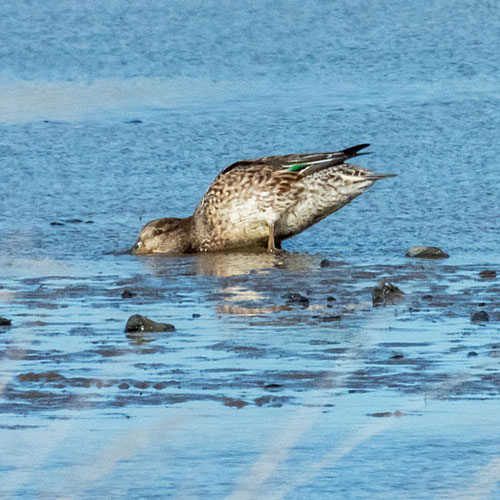
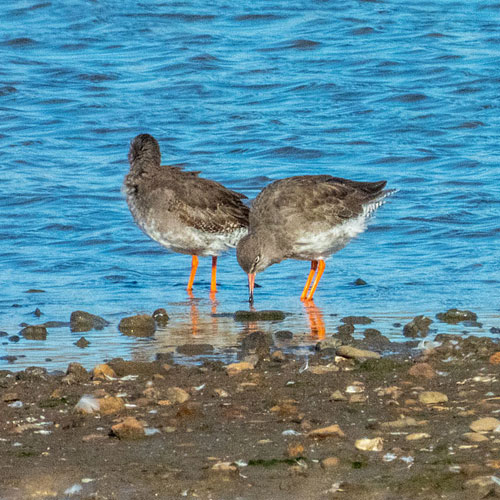
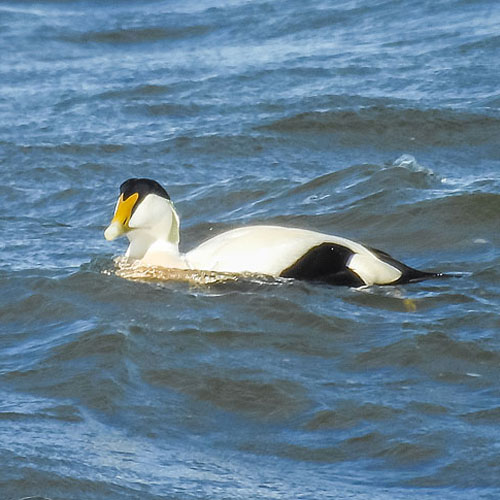
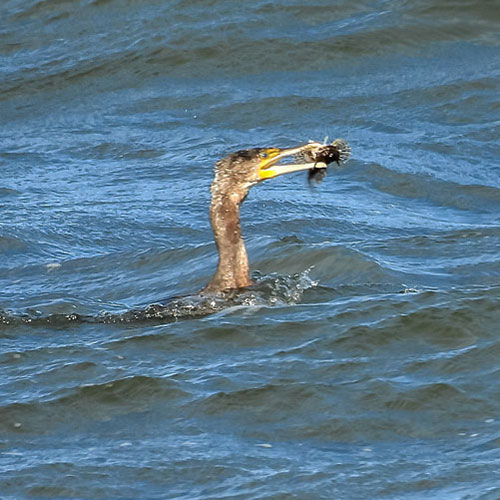
Unfortunately there weren’t many birds on view - only a couple of Teal and Redshanks. I made my way to the sea wall and proceeded to walk back west towards the Old Scrapes. On the way I photographed a drake Eider and a Cormorant that had caught a fish.
| Teal |
Redshank |
 |
 |
| Eider |
Cormorant |
 |
 |
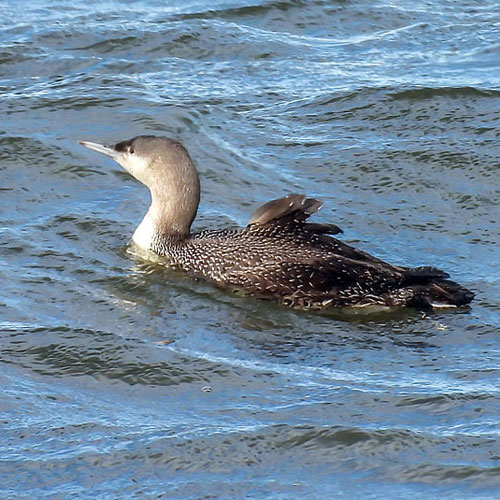
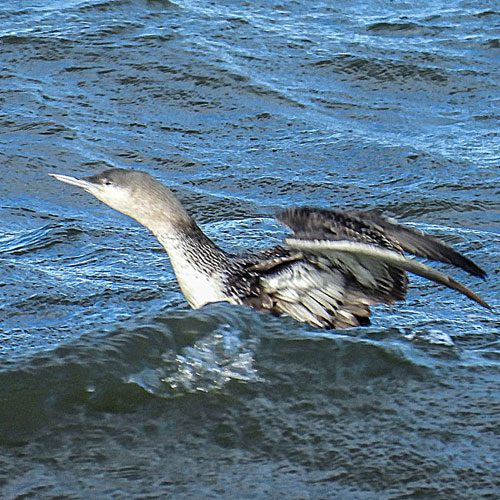
As I neared the Scrapes there were a few Linnets standing on top of the seawall, and also a Stonechat. Of course they flew off when I approached, but a bit further along the wall I spotted a Red-throated Diver fairly close to the sea wall.
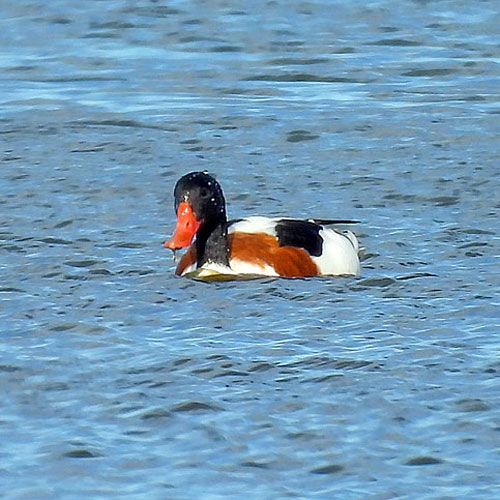
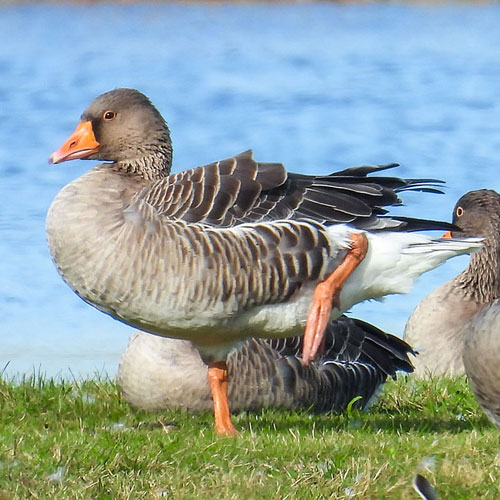
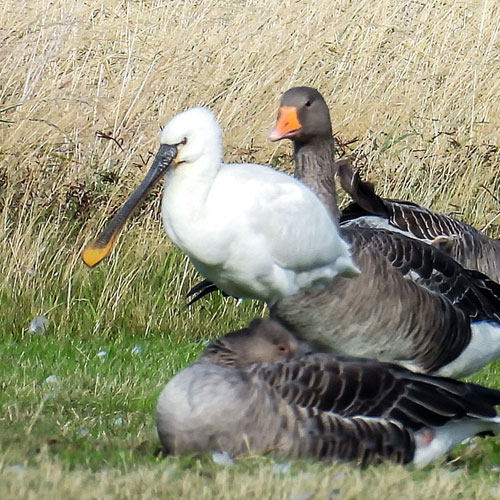
Finally I reached the hides of the Old scrapes and I was pleased to see that it was rammed with birds - and also rammed with birdwatchers. After I started snapping some birds like a Shelduck and Greylag, I decided to ask the chap next to me what was the big attraction and he pointed out
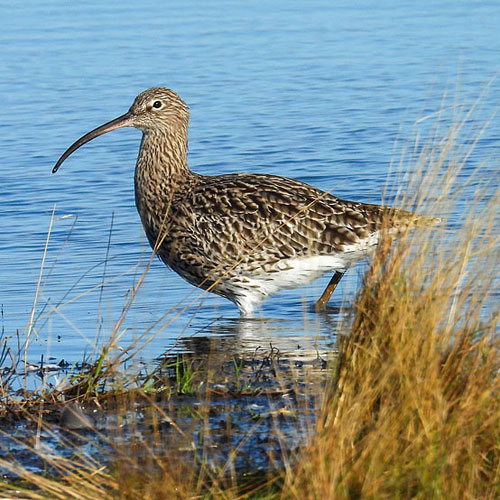
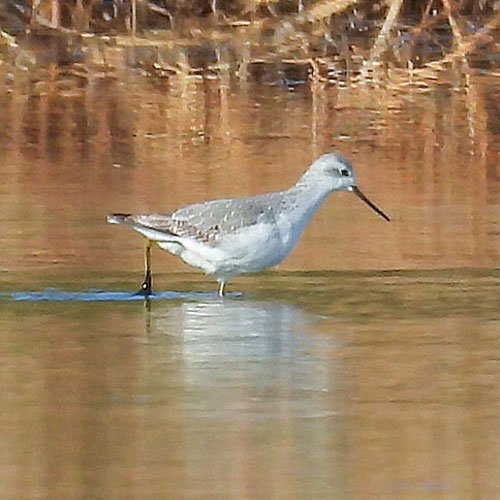
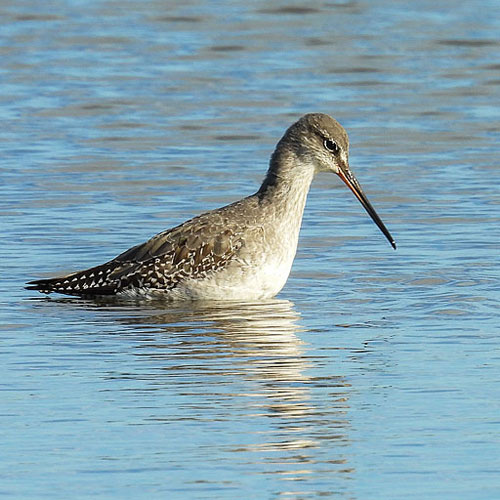
a Spoonbill that was snoozing behind the most distant scrape. Apparently it hadn’t raised its head for a half hour - and even then, it resumed its slumber after a few seconds. I watched it and waited, and after about 10 minutes it briefly raised its head and I had my shot. Next, I was photographing a Curlew when I noticed the Marsh Sandpiper I’d seen at the Morrison’s Haven Scrape a few weeks ago. It was at the far left end of the left-most hide. My final picture was of a Spotted Redshank that was wading close to the right of the same hide.
| Shelduck |
Greylag Goose |
 |
 |
| Spoonbill |
Curlew |
 |
 |
| Marsh Sandpiper |
Spotted Redshank |
 |
 |
It was a successful outing - 31 species photographed. My favourites were the wagtails at Millhill, the Stonechat at the New Scrapes, the Red-throated Diver, Spoonbill, Marsh Sandpiper and Spoted Redshanks at the old scrapes.
Week ending: 5th October: RSPB Baron’s Haugh, Hogganfield Park LNR and Dalzell Estate
After a couple of nice days at the start of the week when the
weather was dull but dry, the rest of the week got progressively worse,
culminating in Storm Amy. Luckily the weatherperson forewarned us on
Sunday night.
Tuesday, 30th September AM: RSPB Baron’s Haugh
I realised that I’d have to use my camera at the start of the
week if I was to gather enough pictures for this blog. So on Tuesday I
visited Baron’s Haugh in the morning and Hogganfield in the
afternoon and managed to amass a pleasing number of shots by the end of
the day.
After parking in the reserve’s car park, I got off to a flying
start when I reached the metal gate that leads down the hill from the
White Walk to the hides. I spotted a wee clump of Shaggy Inkcap fungi by the fence and when I looked beyond the fence there was 10 sq m area of starshaped Collared Earthstar fungi. Halfway down the brae there was a mature Artist’s Bracket growing on an old tree stump at the edge of the path.
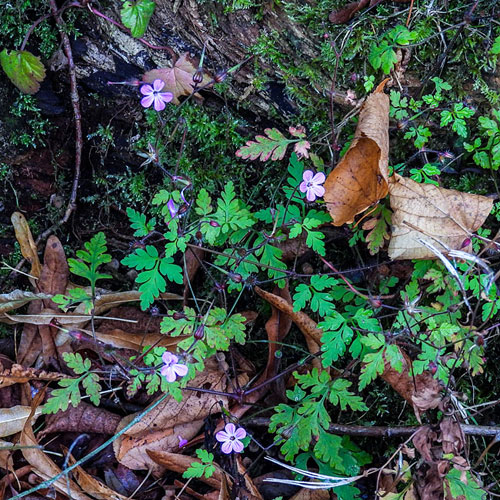
On my way into the Marsh Hide I notice that Herb Robert was still in
flower. Once in the hide I scanned the (flooded) scrapes and came
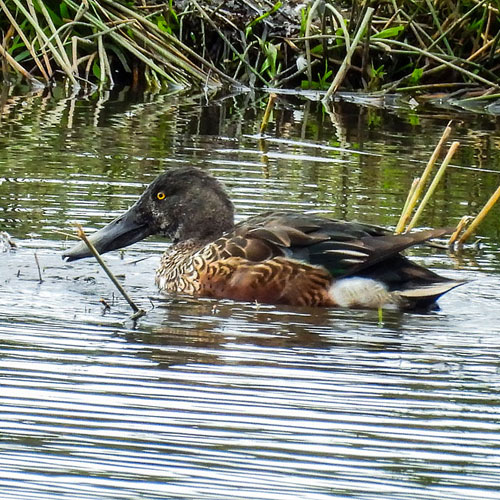
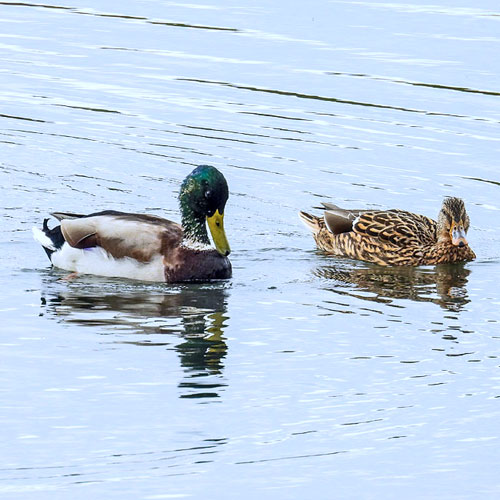
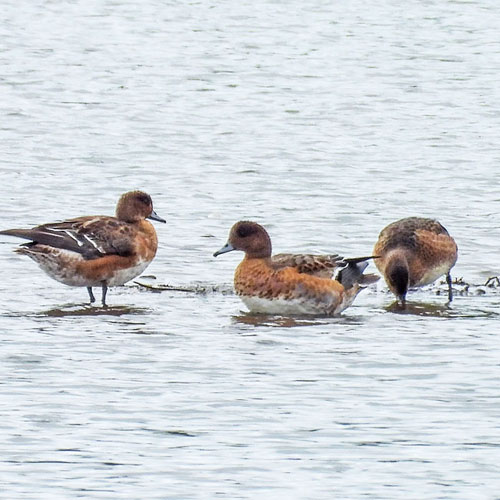
across a drake Shoveler and a romantic pair of Mallards in front of the hide. There was also a trio of Wigeon away to the left of the scapes.
| Herb Robert |
Shoveler |
 |
 |
| Mallard |
Wigeon |
 |
 |
I soon moved to the Causeway hide, where the most numerous birds were a
large flock of Lapwings that were distributed around the shallower
edges of the Haugh.
By the water’s edge by the site of the now demolished Phoenix hide, Common Snipe were partially hidden in the reeds.
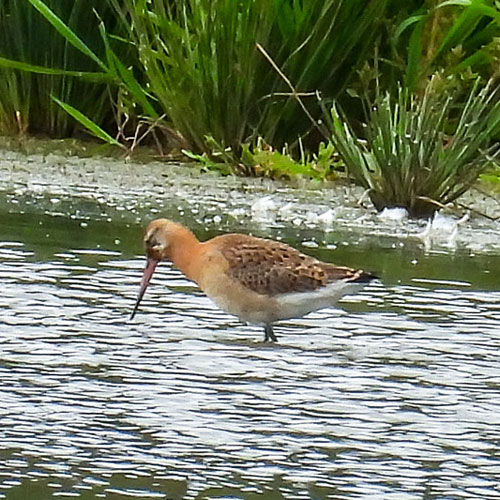
And in front of the snipe there was a Black-tailed Godwit
probing the shallows with its long straight beak. It was one of three
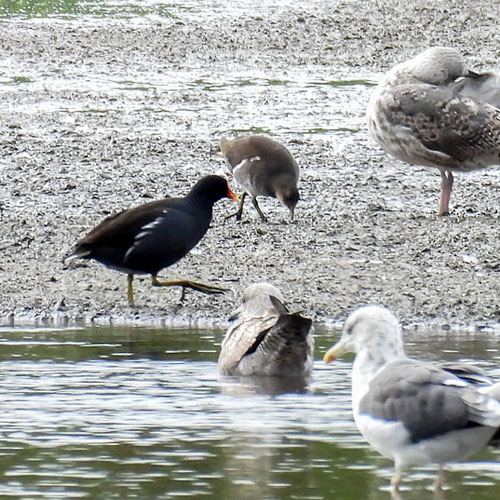
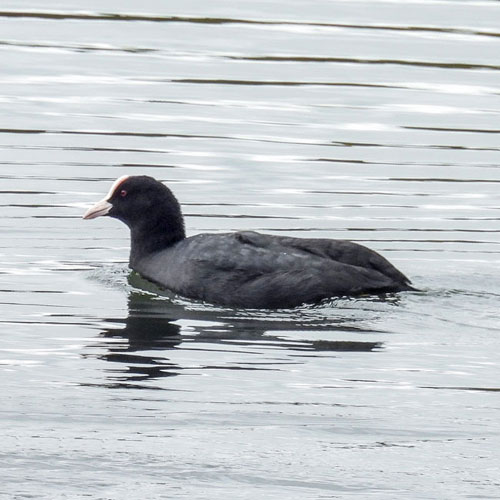
that I saw. There were also a fair number of Moorhens and Coots on the
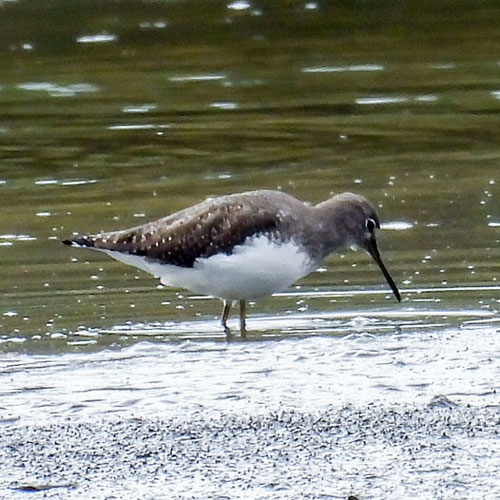
shallows. A Green Sandpiper
flew speedily into the haugh and started foraging in the small pools.
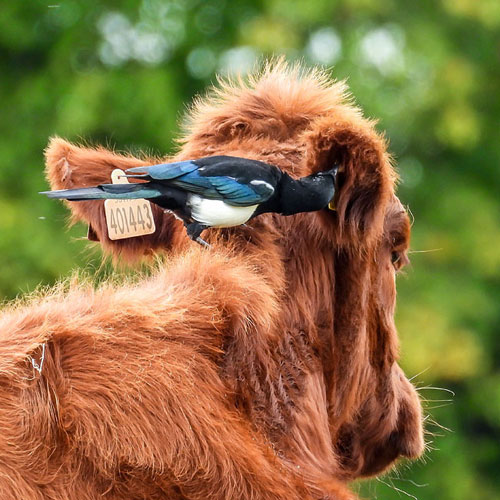
On my way back to car I noticed Magpies were walking all over the cows
that were sitting in a field, presumably nibbling insects that were
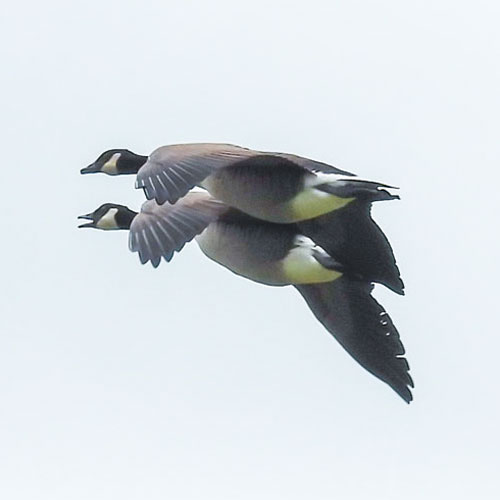
infesting the beasts. As I watched them, a pair of noisy Canada Geese
flew over and descended onto the Haugh.
| Black - tailed Godwit |
Moorhen |
 |
 |
| Coot |
Green Sandpiper |
 |
 |
| Magpie |
Canada Goose |
 |
 |
Tuesday, 30th September PM: Hogganfield Park LNR
After lunch I drove to Hogganfield Park in the east end of Glasgow. The
weather was unchanged - dry but cloudy. A Great Crested Grebe was
preening about 10m from the edge of the loch, among Mute Swans. There
was a pair of Cormorants and a few Lesser Black-backed Gulls on the
raft. A third Cormorant joined them an immediately stretched its wings
to dry its feathers. I continued my usual circuit around the park
noting that although much of the lochside flora was dying back, there
were still some in flower and attracting feeding hoverflies, such as
(probably) Eristalis arbustorum on the Michaelmas Daisies and
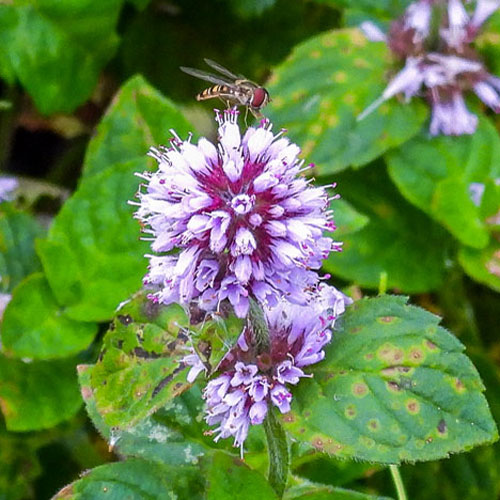
Marmalades on Water Mint.
From the east edge of the loch I could see a fairly large raft of over
thirty Tufted Ducks drifting slowly past the island. Such a big,
slow-moving group, might be feeding together, resting safely, or
staging during migration.
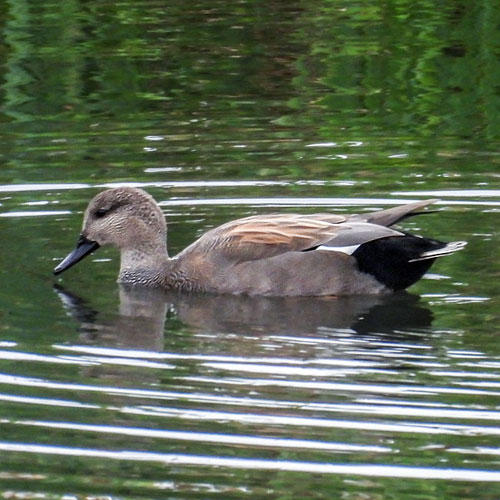
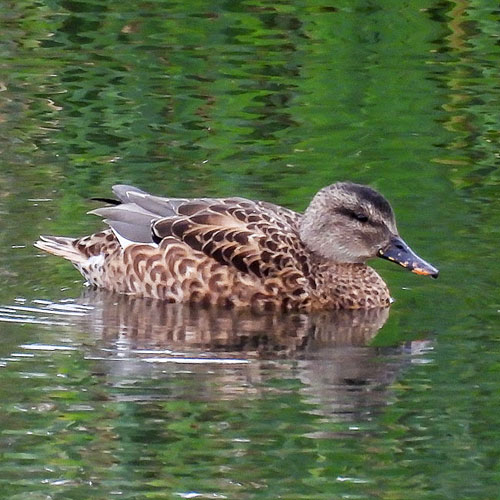
I nipped along the ash path that passes the small pond to the east of the loch and found a pair of Gadwalls feeding there.
Despite the worsening light I managed some decent pictures of each of
the Gadwalls. I then briefly left the park, walking the 100m north to
another entrance that leads back to the loch. I came across a patch of
fungi, probably Common Stump Brittlestem, that nestled below a hedge.
On the walk along the north side of the loch I passed some Mute Swans
taking bread and also got shots of a pair of Little Grebes diving for
fish. Back at the car park a female Goosander was attempting to muscle
past more swans that were taking bread from kindly walkers. My final
shots of the day were of a Grey Heron that was standing with the Mute
Swans at the slipway at the edge of the car park.
Thursday, 2nd October: Dalzell Estate, Motherwell
A couple of days later the weather was damp and dreary but I managed
out during a dry hour and a half to Dalzell Estate in Motherwell. Below
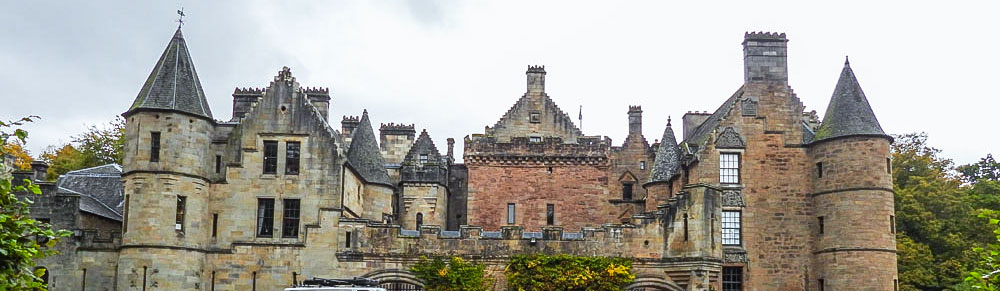
is a shot of the historic Dalzell House which is now the site of private residences.
My wanderings around the roads and paths within the wooded estate
proved very fruitful, as can be seen from the pictures below. The poor
light wasn’t really a problem looking for fungi since I could use
my camera flash to brighten up each shot. In this first set I
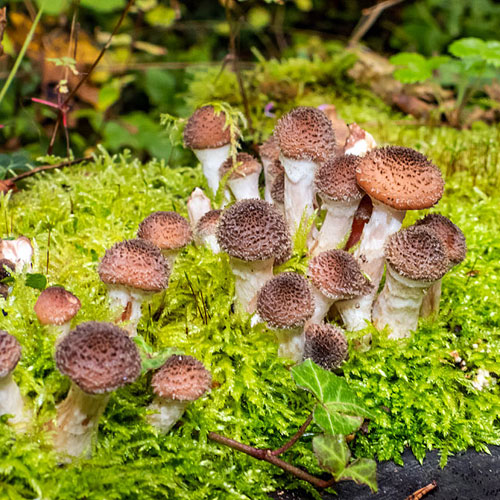
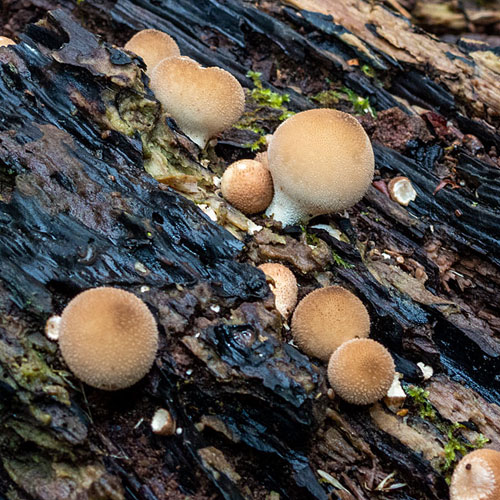
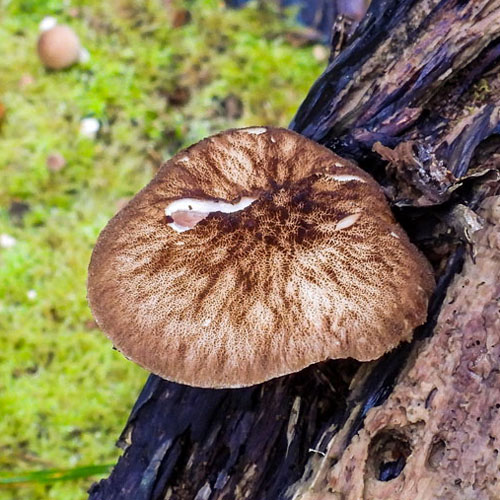
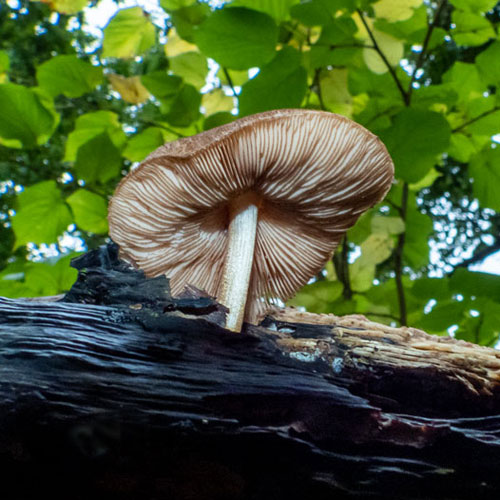
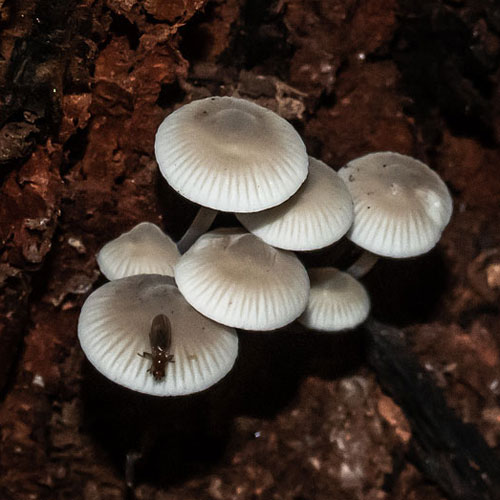
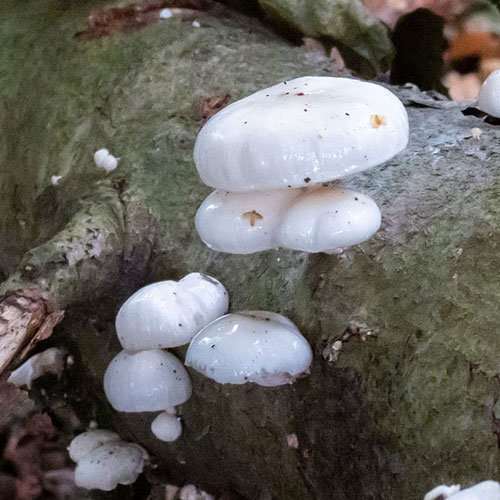
photographed immature Dark Honey Fungus , a newbie, Stump Puffball, Deer Shield , Common Bonnet and Porcelain Fungus - all found in woods to the north of Dalzell Burn.
| Dark Honey Fungus |
Stump Puffball |
 |
 |
| Deer Shield... |
|
 |
 |
| Common Bonnet |
Porcelain Fungus |
 |
 |
The second set of fungi, pictured below: Candlesnuff Fungus , Smokey Bracket, Tawny Funnel and Sulphur Tuft ,
were discovered off the footpaths that run south of the Dalzell Burn. I
took the remaining couple of shots as I returned to the car. The first
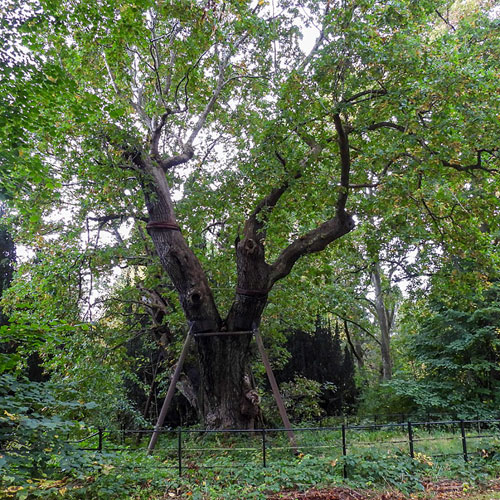
of these shows the “Covenanter’s Oak” ,
an ancient tree which is over 800 years old. In the mid 17th century it
was used by Covenanters as a gathering point for illegal religious
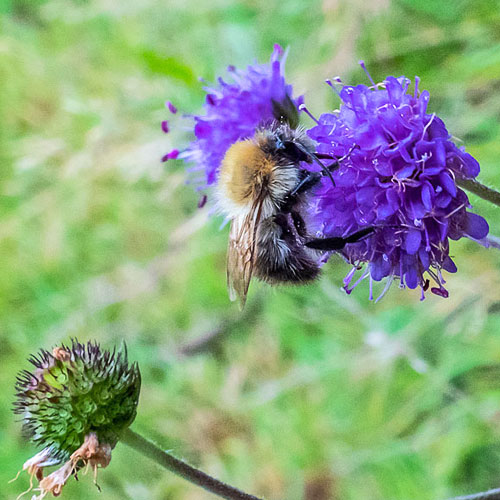
ceremonies. The final shot shows a Carder Bee feeding on Devil’s
Bit Scabious - a heartening sight on a gloomy day.
It turned out to be sunny on Sunday but I didn’t manage out with
the camera due to family commitments - but it didn’t matter since
my efforts earlier in the week had produced pictures of 37 species - my
favourites being the fungi, particularly the Collared Earthstar. Next
week is predicted to be cooler and showery but could improve by the end
of the week. Let's hope so.
Back To Top
|