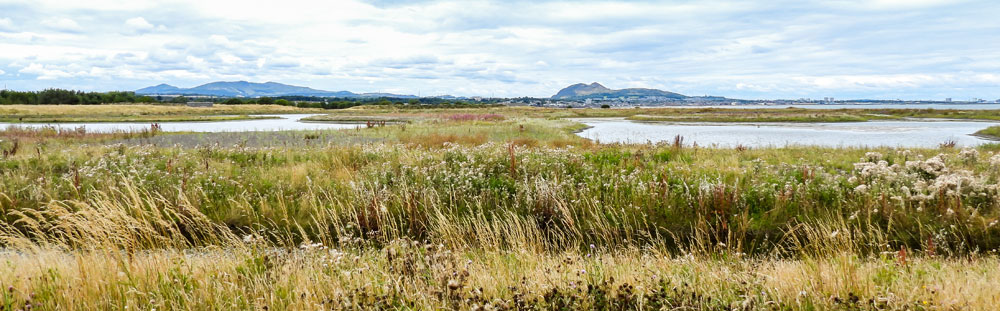
|
Week ending: 31st August: RSPB Lochwinnoch, Hogganfield Park LNR and Strathclyde Country Park
A week of mainly showery weather was predicte for Central Scotland, the exception being Monday, which was to be mainly sunny. I therefore planned to go to a bit further afield on Monday while staing fairly local the rest of the week.
Monday, 25th August: RSPB Lochwinnoch
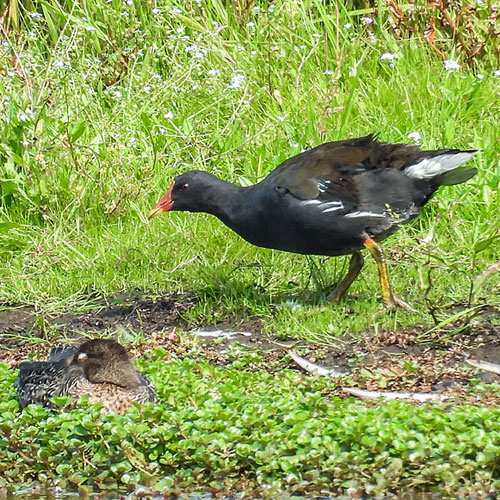
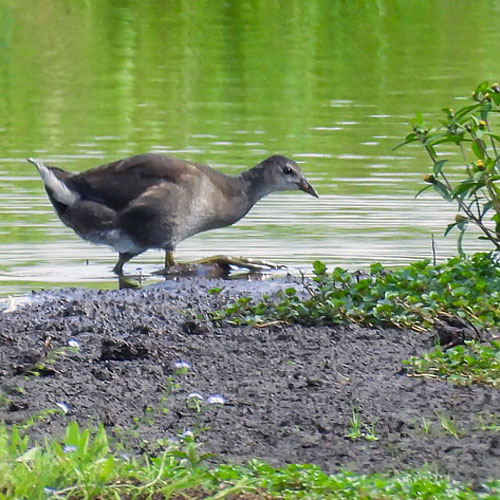
On Monday I travelled to RSPB Lochwinnoch and was pleased to find bright, blue sky. I began by photographing some Spearmint flowers by the now condemned Visitor Centre. From the Channel hide I could see a small flock of lively Canada Geese on the scrapes. A Moorhen and its juvenile were feeding in the middle distance, but little else caught my eye.
| Spear Mint |
Canada Goose |
 |
 |
| Moorhen |
Juvenile Moorhen |
 |
 |
I decided to walk along the trail to try my luck on the way to the boardwalk over to the ruin of the Peel Tower of Castle Semple Loch. I passed a large Hogweed flower that was hosting several insects: a Common Wasp, a Dronefly, probably Eristalis arbustorum, and Greenbottles, probably
Lucilia caesar.
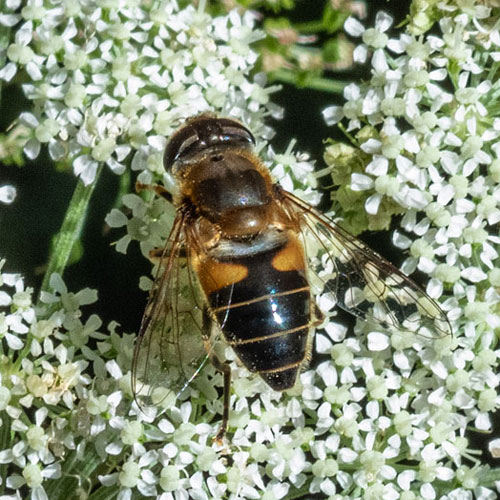
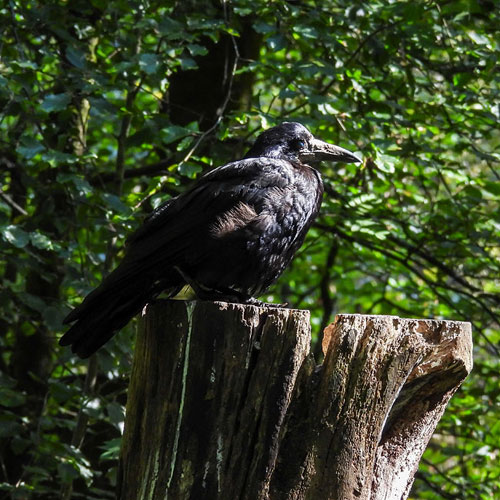
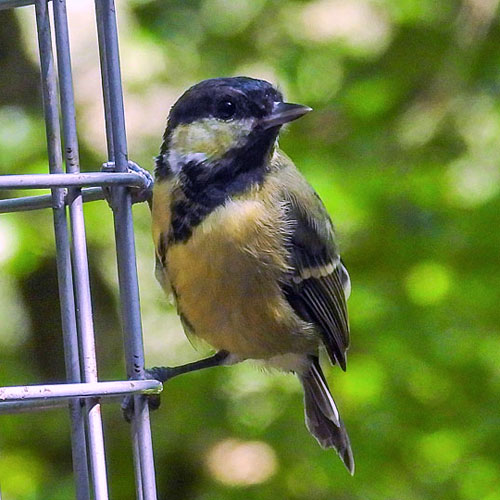
I got a closeup shot of Eristalis arbustorum on another Hogweed just before I arrived at the bird feeder screens. A large Rook was dominating the feeder but Coal Tits and Great Tits were nipping in and “pinching” nuts as the Rook foraged below them.
| Hoverfly - Eristalis Arbustorum |
Rook |
 |
 |
| Great Tit |
Coal Tit |
 |
 |
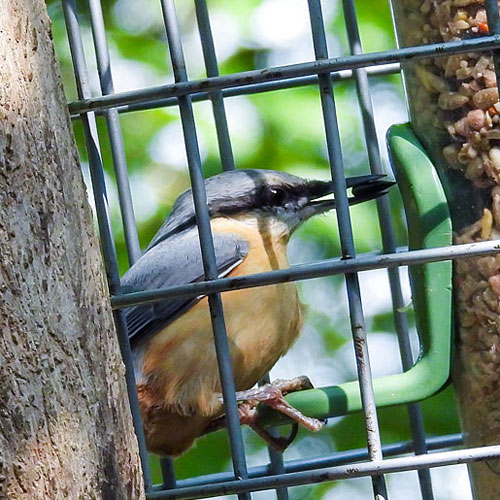
Eventually the Rook moved on to be replaced by a small flock of Chaffinches. After a few minutes the feeder was alive with frequent visits of the Tits, including Blue Tits, Greenfinches and a couple of Nuthatches.
| Chaffinch |
Blue Tit |
 |
 |
| Greenfinch |
Nuthatch |
 |
 |
Fairly satisfied with my pictures at the feeder, I continued my way along the trail, quickly checking the Channel hide. Unfortunately it was birdless, but the view was nice.
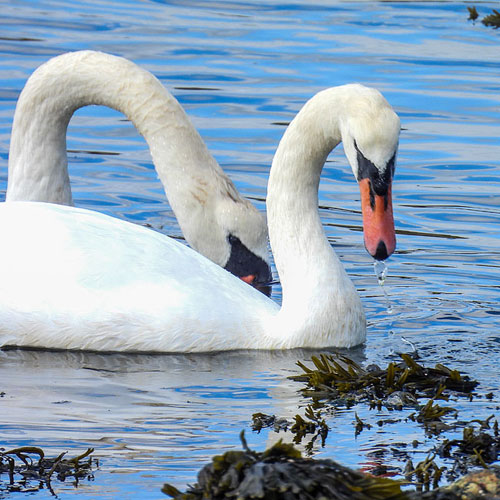
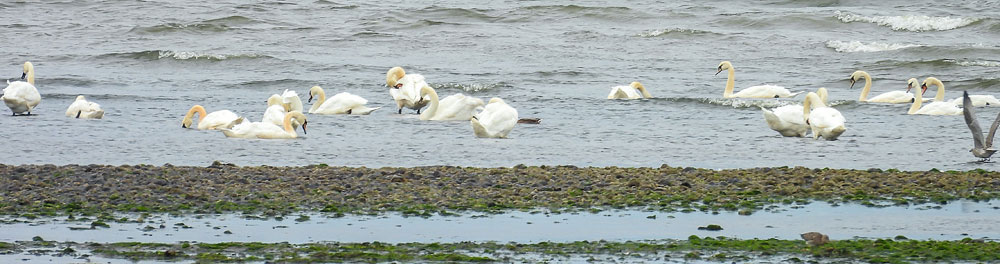
There were few birds on the Aird Meadow loch, just a couple of Mute Swans.
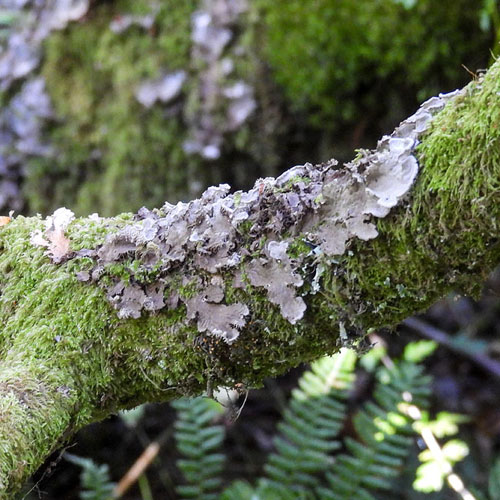
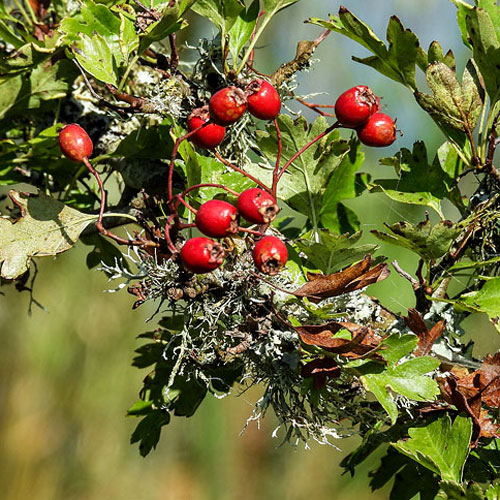
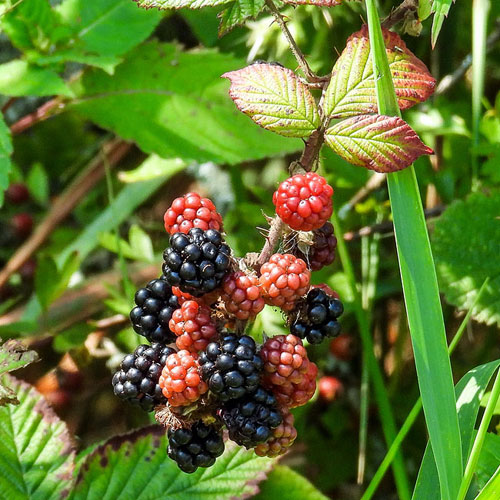
My attention turned the to what I could find along the path. Some Dog Lichen was growing on a small tree. Nearby there was Usnea Lichen growing on Hawthorn branches loaded with berries. Further down the path I found more berries - juicy Brambles. As I snapped a few shots, a lovely Peacock butterfly flew onto the path beside me. There were very many Large Bindweed flowers draped over the bushes along the trail.
| Dog Lichen |
Wild ( Dog ) Rose Fruit |
 |
 |
| Common Hawthorn Fruit |
Bramble Fruit |
 |
 |
| Peacock Butterfly |
Large Bindweed |
 |
 |
Eventually I reached the boardwalk that leads to the historic Peel Tower ruin.
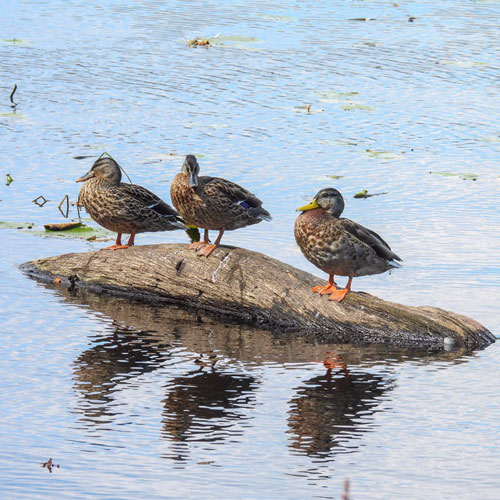
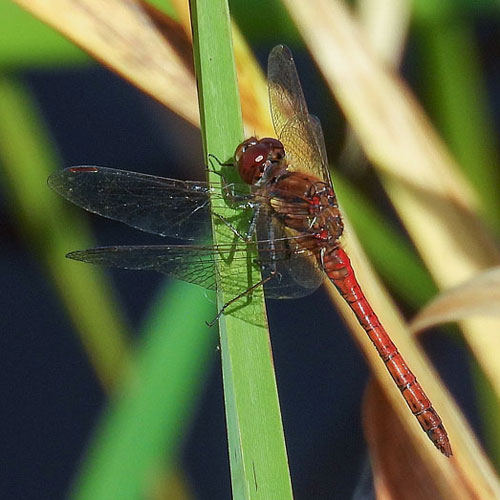
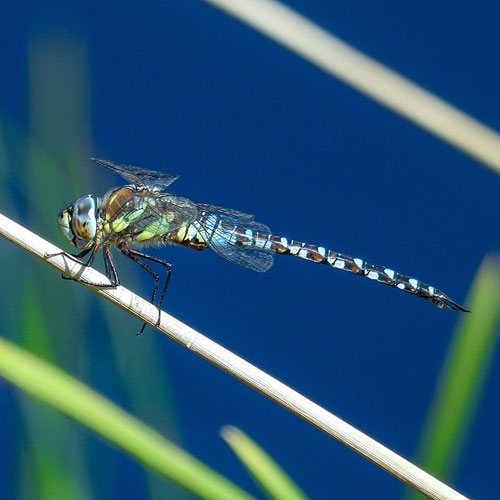
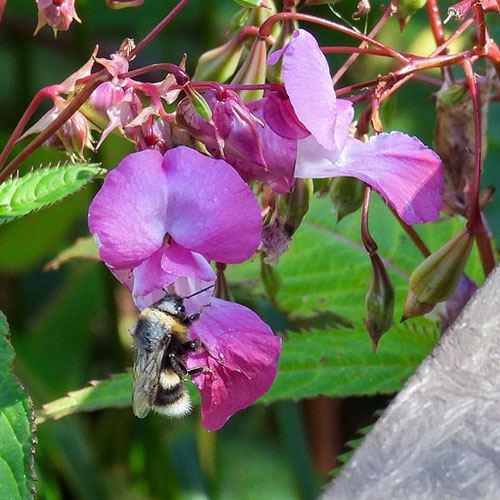
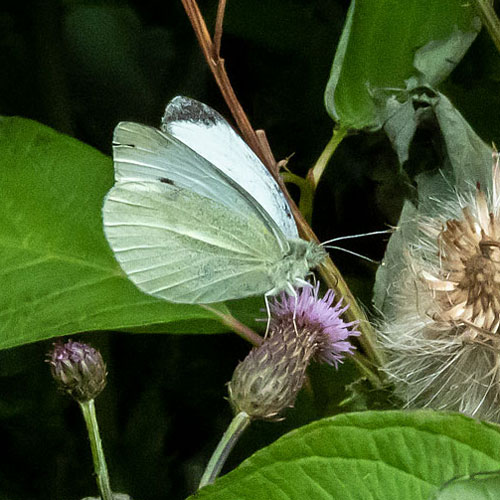
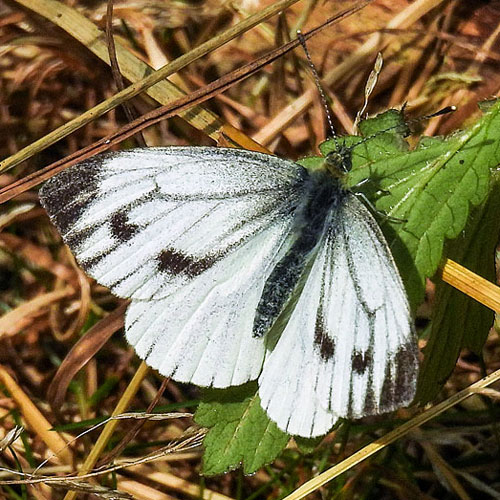
A trio of Mallards seemed to be posing by the tower on the Castle Semple Loch side. I noticed a Common Darter dragonfly sunning itself on reeds near the tower. But as I began my return journey back along the boardwalk a large dragonfly was patrolling the reeds along edges of the boardwalk. With a little patience, I waited until in landed and managed to get a very pleasing shot of what I later identified as a Migrant Hawker. There were masses of Himalayan Balsam plants in flower all along the boardwalk. The White-tailed Bumblebees and Green-veined White
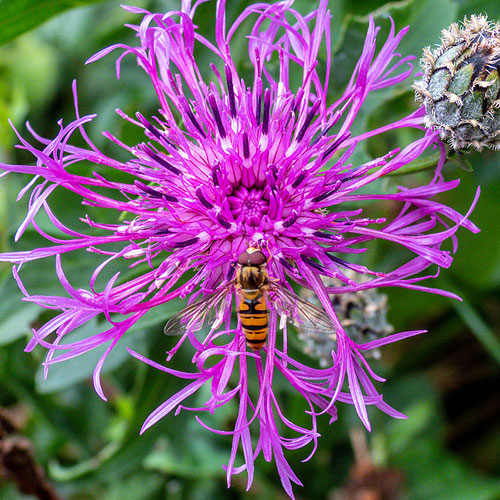
butterflies didn’t seem to mind them, but they have displaced the original plants such as the Common Knapweed enjoyed by the Syrphus ribesii hoverfly below, so upsetting the delicate ecosystem.
| Mallard |
Dragonfly - Common Darter |
 |
 |
| Dragonfly - Migrant Hawker |
White - tailed Bumblebee |
 |
 |
| Green - veined White Butterfly |
Hoverfly - Syrphus Ribesii |
 |
 |
I returned briefly to the Channel hide for one last look at the scrapes before returning home. There was a small flock of Common Snipe in the middle of the scrapes and a pair wading in the shallows. Oddly, I only saw a single Carrion Crow on the whole reserve. My final shot there was of
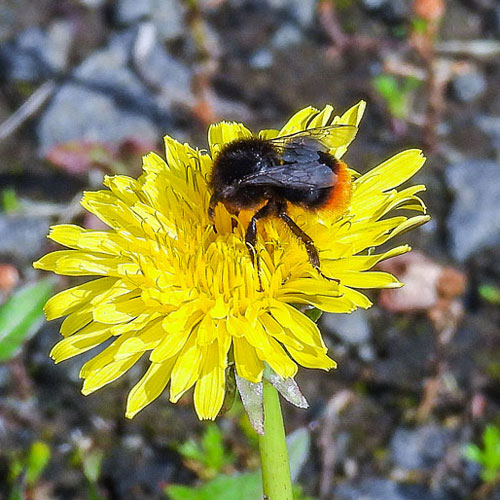
a beautiful Small Tortoiseshell butterfly that landed on a Dandelion flower outside the temporary Visitor Centre.
Tuesday, 26th August: Hogganfield Park LNR
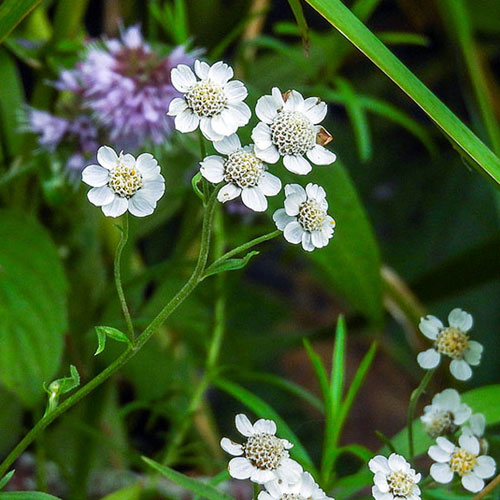
A very brief visit to Hogganfield Park, literally in between showers, resulted in only a few shots: a Red Admiral butterfly on Brambles, a proud young Cormorant boldly presenting its damp wings to the wind, some Sneezewort on the banks of the loch and a fruiting Tutsan plant (obviously a
garden “escapee”) growing in an area of the park known for illegal dumping).
| Red Admiral Butterfly |
Juvenile Cormorant |
 |
 |
| Sneezewort |
Tutsan |
 |
 |
Wednesday, 27th August: Strathclyde Country Park
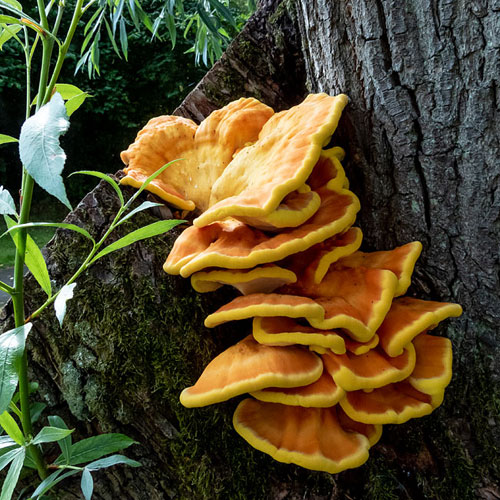
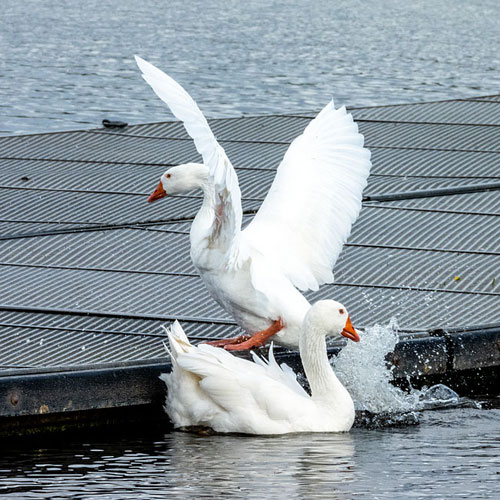
On the next day, which turned out to be my last day this week that I managed out with the camera, I first checked on a fungus I photographed some weeks ago, Artist’s Bracket. It was close to the Foreshore car park. It has grown. Next I parked at car park 4 and walked a favourite wee circuit around part of the loch. Not long after I started, I found a bright pink and yellow-coloured Chicken of the Wood fungi growing on a large tree just south of the car park. Next I noticed a group of Greylag Geese beneath the Starter’s Tower, and some Embden Geese in front of the Watersports Centre.
| Artist's Bracket |
Chicken of the Woods |
 |
 |
| Greylag Goose |
Embden Goose |
 |
 |
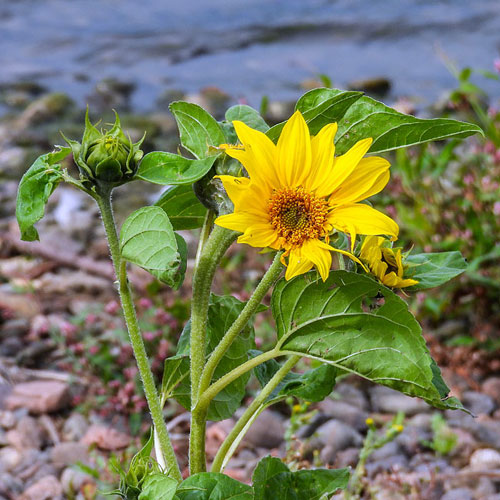
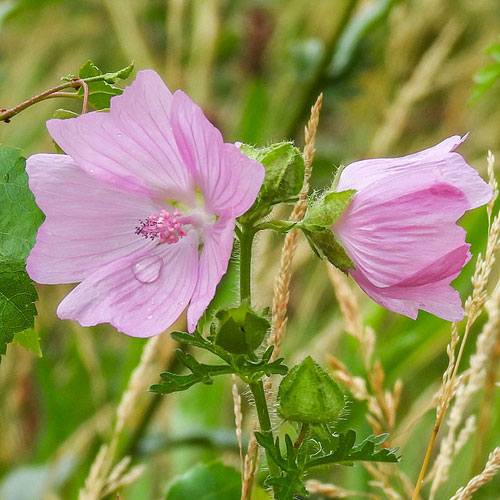
A lonely Sunflower was growing on the pebble banks of the loch, opposite the Watersports Centre. It was probably a result of uneaten seeds thrown to the swans. The Council’s wildflower project was past its peak but I did see a very pretty Musk Mallow in flower at the edge on the now
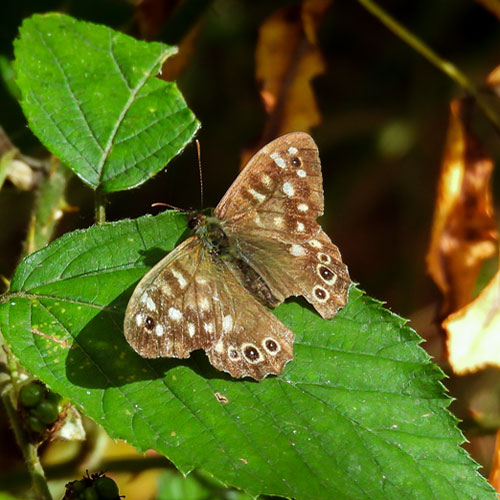
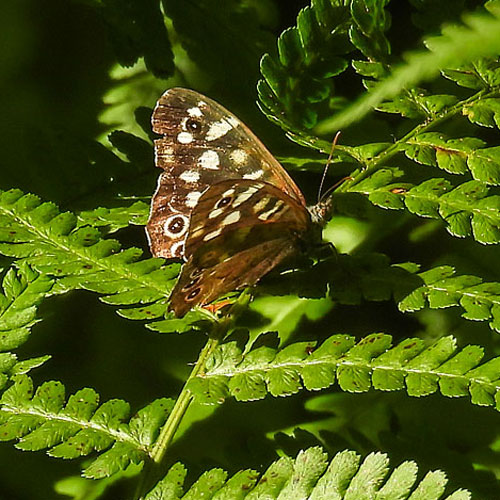
fading flower beds. Beside the trees near the Motherwell entrance to the park I photographed a Speckled Wood butterfly. I walked down to the River Clyde and found a Common Darter dragonfly clinging to an old Hogweed flowerhead.
| Sunflower |
Musk Mallow |
 |
 |
| Speckled Wood Butterfly |
Dragonfly - Common Darter |
 |
 |
Finally, on my way back to the car park I popped across the footbridge in order to check the apple tree I photographed a couple of weeks ago … the apples were ripening … and then I popped back across and that was that.
Week ending: 24th August : Strathclyde Country Park, Troon and Irvine Harbour
The weather for the week was predicted to be dry but cloudy - with the exception of Wednesday, when it was to be a lovely summer day.
Monday, 18th August: Strathclyde Country Park.
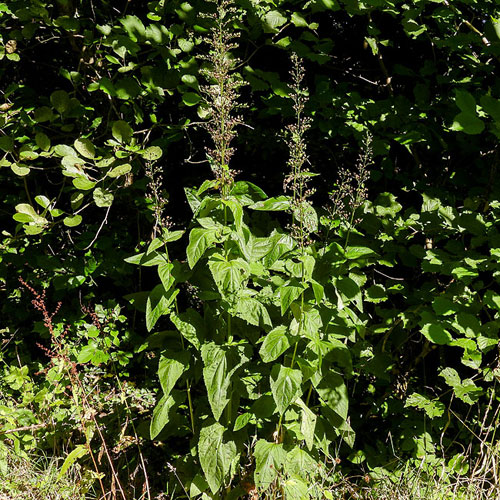
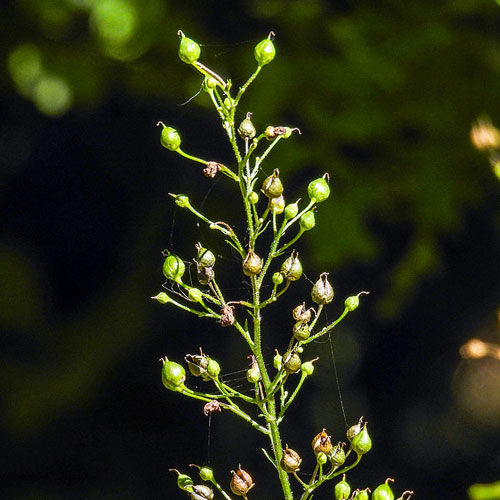
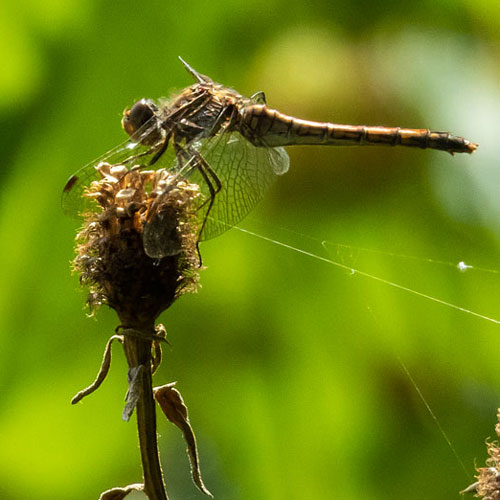
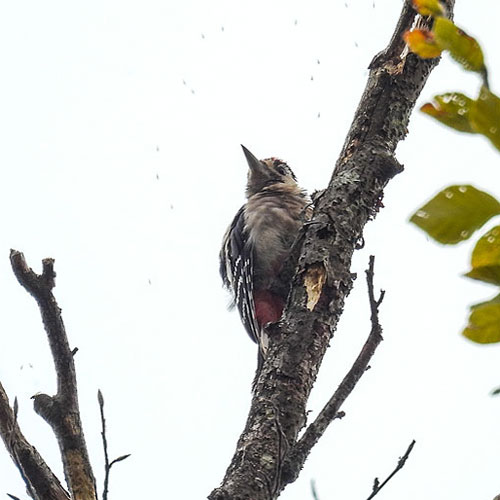
I started the week with a walk with my camera in Strathclyde Country Park, where I encountered a rather large Common Figwort in fruit. There were several sightings of Speckled Wood butterflies, usually when I disturbed them as they rested on the path. There were also multiple sightings of Common Darter dragonflies. Luckily the one shown below landed in clear view of the camera. I was surprised to hear, then see a Great-Spotted Woodpecker on the top of a tree beside the very busy Hamilton Road, near the park entrance. My final picture from my walk was of a Cormorant that had been diving for fish in Strathclyde Loch and had decided to move on just as I had decided to photograph it, hoping to get a picture of it with a fish. Oh well, maybe another day.
| Common Figwort... |
...Fruit |
 |
 |
| Speckled Wood Butterfly |
Dragonfly - Common Darter |
 |
 |
| Great Spotted Woodpecker |
Cormorant |
 |
 |
Wednesday, 20th August: Troon
My hopes were high when I set off for what should, according to the weather predictions, have been “sunny” Troon.
When I parked at the North Shore car park, the weather was fairly warm and dry, but, as the picture below shows, the Sun hadn’t quite broken through a thick blanket of cloud. Even the Isle of Arran in the distance looked gloomy and deprived of light.
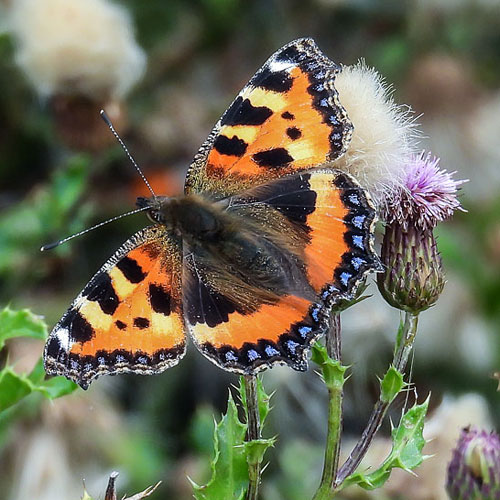
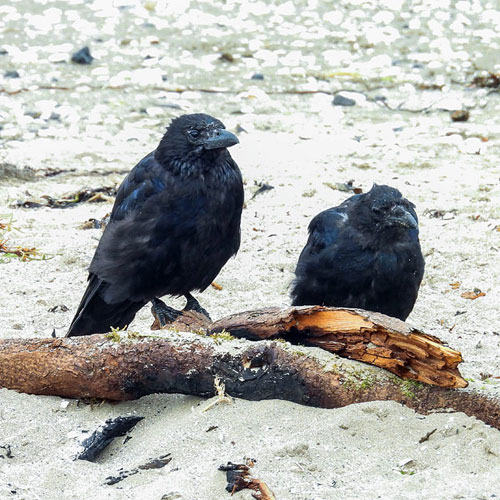
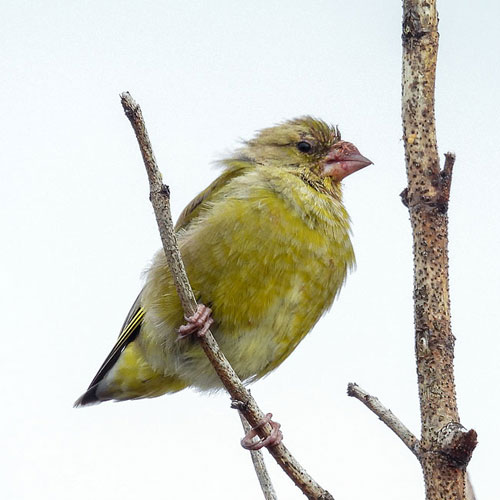
However, as soon as I started my usual trek along the foreshore I noticed butterflies fluttering their way along the undergrowth. Small Tortoiseshell and Small White butterflies provided my first shots of the day. There were no waders on the beach, only Herring Gulls and Carrion Crows. Suddenly a pair of Greenfinches flew out of the Sea Buckthorn bushes that
lined the edge of that part opf the shore. As you can see from
their beaks, they'd been busy eating the orange buckthorn berries.
| Small Tortoiseshell Butterfly |
Small White Butterfly |
 |
 |
| 1st Cycle Herring Gull |
Carrion Crow |
 |
 |
| Male Greenfinch |
Female Greenfinch |
 |
 |
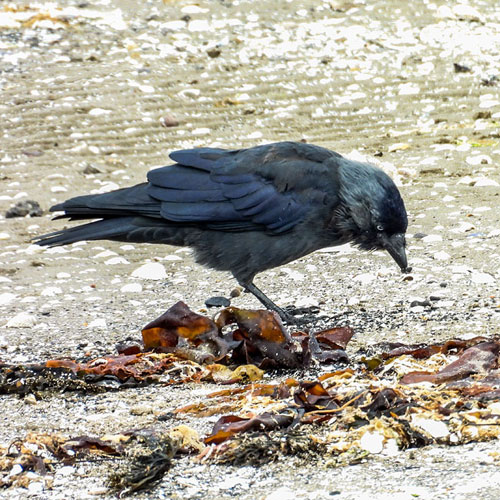
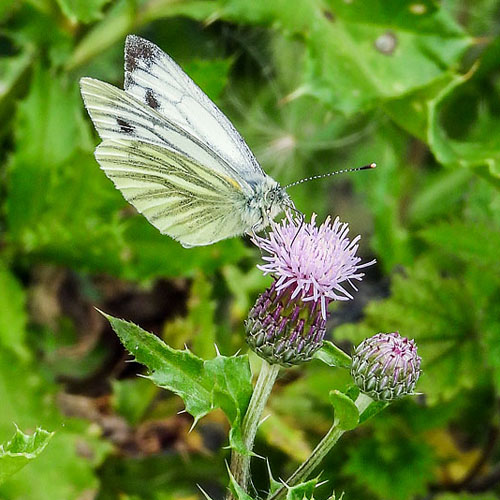
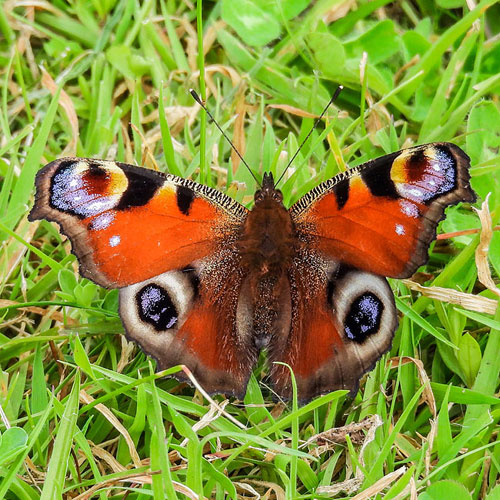
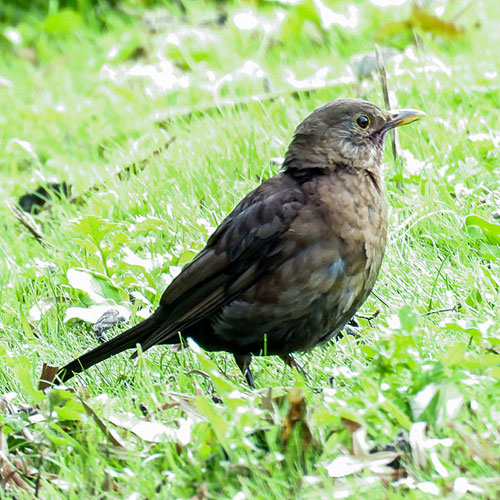
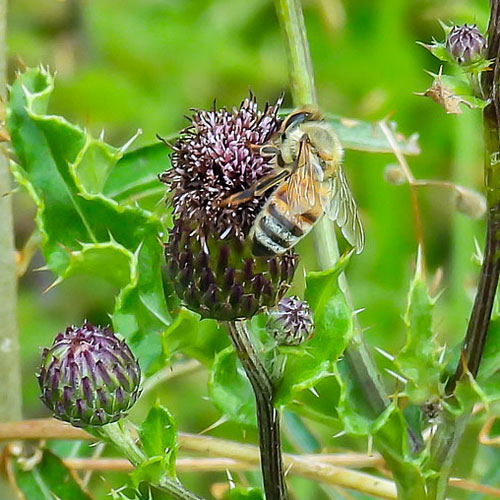
I snapped some Jackdaws that were foraging on the sands and my third butterfly species, a Green-veined White, turned up on Creeping Thistles, then a fourth, a Peacock that landed on the grass verge. A Red Admiral butterfly made it five - it was a Butterfly-Fest. A female Blackbird and a Honey Bee added to my pleasing list of sightings.
| Jackdaw |
Green - veined White Butterfly |
 |
 |
| Peacock Butterfly |
Red Admiral Butterfly |
 |
 |
| Female Blackbird |
Honey Bee |
 |
 |
And the Small Tortoiseshell butterflies kept coming …..
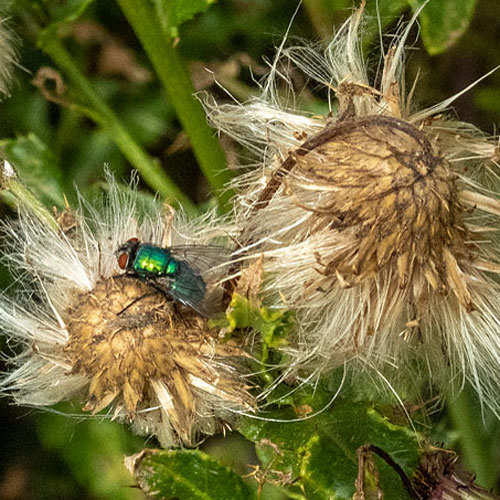
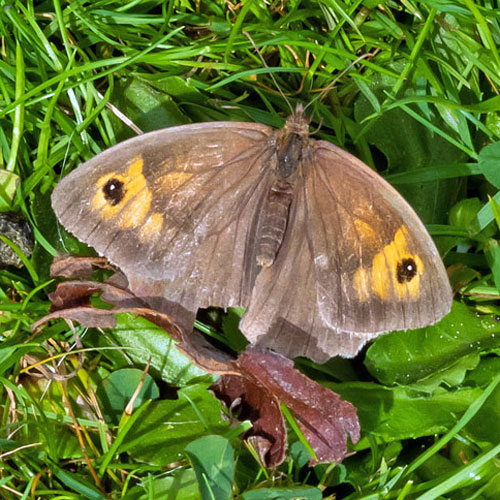
….. and the Red Admiral, as well as Buff-tailed Bumblebees and metallic green blow-fly, Lucilia caesar . I returned to the car via the other side of the Buckthorns and after photographing a handsome Woodpigeon hiding in the Buckthorns, a sixth butterfly made an appearance, a Meadow Brown ….
| Red Admiral / Small Tortoiseshell Butterfly |
Fly - Lucilia Caesar |
 |
 |
| Buff - tailed Bumblebee |
Wood Pigeon |
 |
 |
| Meadow Brown Butterfly |
Peacock Butterfly |
 |
 |
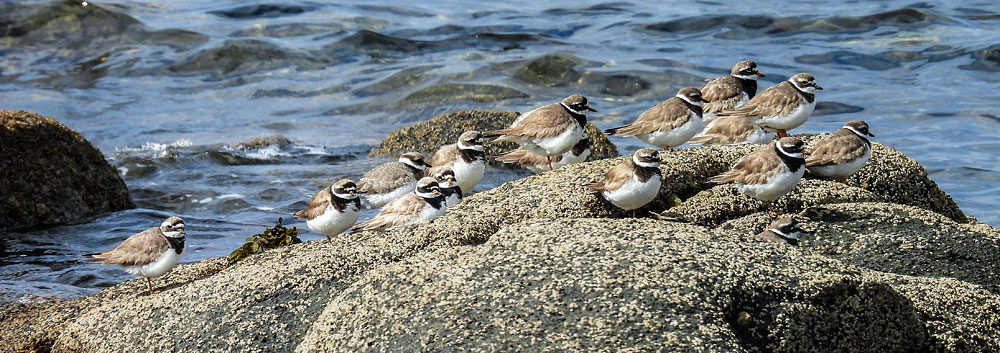
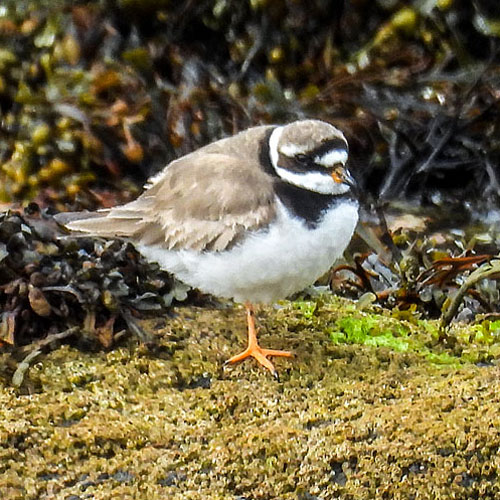
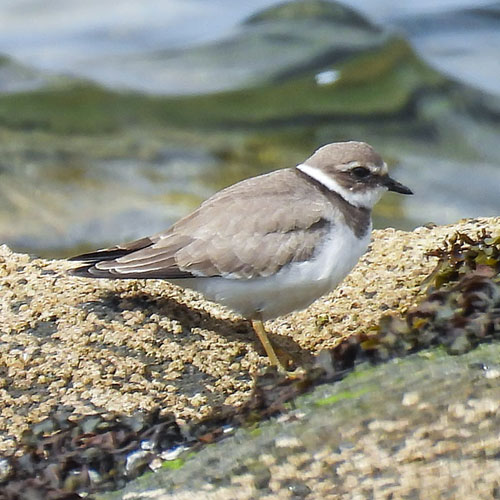
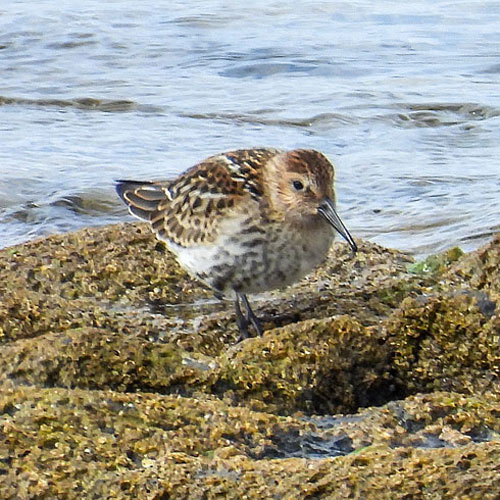
... followed by another Peacock. It had been a productive half hour. I drove the short distance to the small, sea-facing car park near the harbour, just north of the Ballast Bank. In the short time I was at the North Shore car park, the clouds had parted and the Sun started shining for most of the time I was there. There are usually birds on the rocks, especially when the tide is low. I was pleased to see about a dozen Shags on a rocky islet just offshore. And on an adjacent islet there were Ringed Plovers and Dunlin - small waders waiting on the tide to recede.
| Shag |
Ringed Plover |
 |
 |
| Juvenile Male Ringed Plover |
Dunlin |
 |
 |
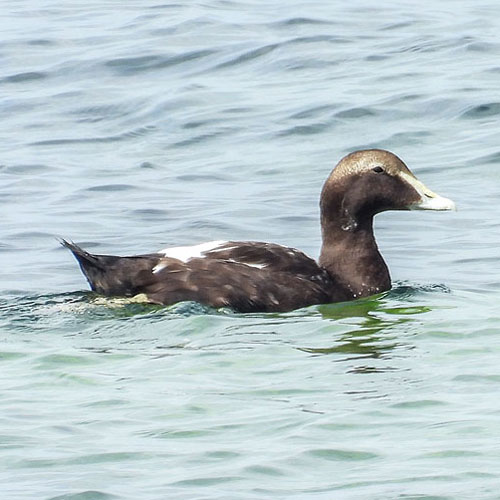
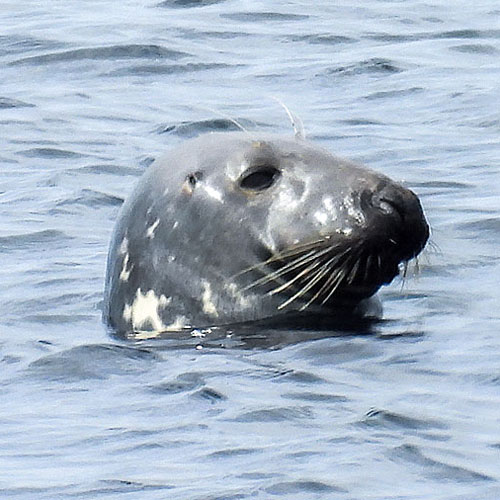
I could also make out a Knot among the Ringed Plovers, as well as an eclipse drake Eider. The arrival of a gull onto the rocks caused the Eider to take to the water and paddle away past a few Grey Seals whose heads were bobbing in and out of the water.
A thoughtless pair of youths who were attempting to photograph the Shags only succeeded in spooking them into the water.
I wandered onto the wee sandy stretch of shore north of the car park and discovered some more Ringed Plovers.
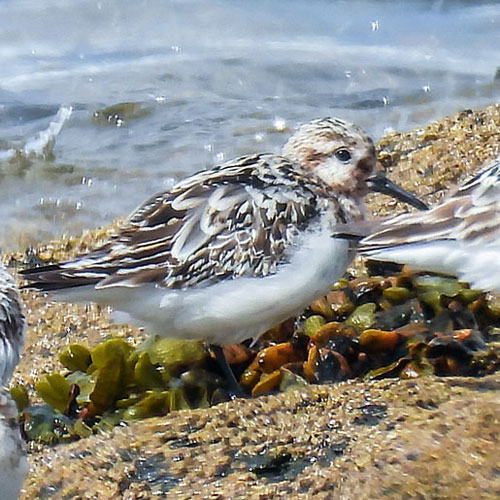
Meanwhile I came upon a half-hidden flock of Sanderlings that were gathered on a boulder I didn’t spook them because, unlike the youths, I didn’t use a smart phone - I used my Nikon Coolpix 950P which has a mega zoom lens.
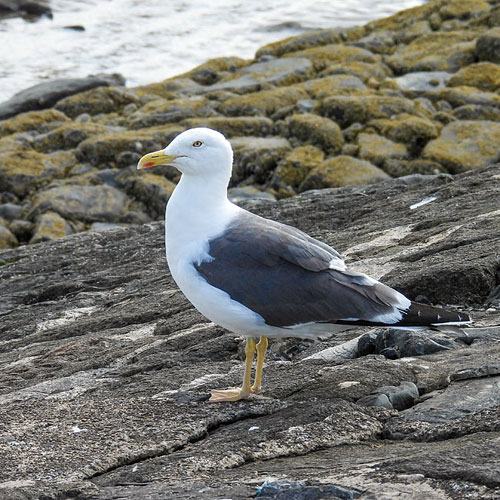
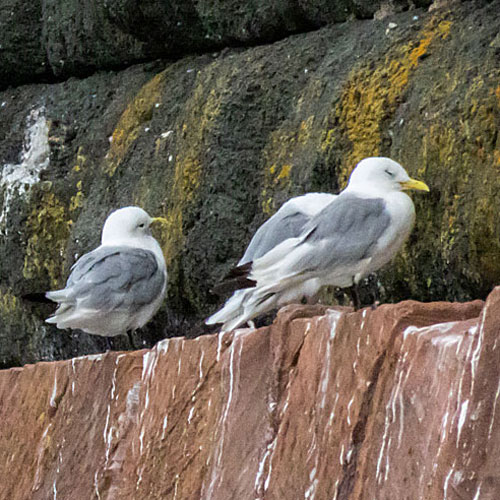
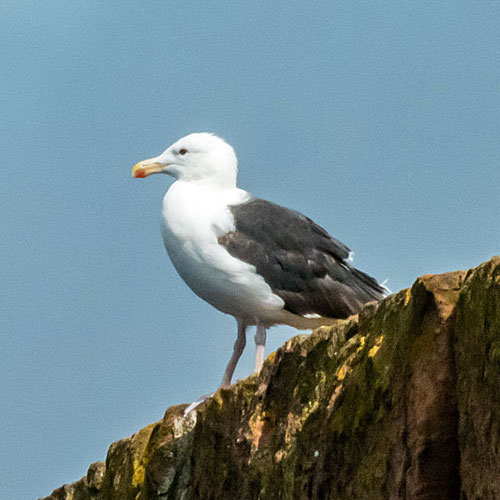
The Sanderlings appeared to be losing their Summer plumage. A helpful fellow birder advised me that there was a pair of Kittiwakes perched on the harbour walls. After photographing these, I turned my camera on the variety of gulls that were perched on the rocks or the harbour wall: Lesser Black-backed, Great Black-backed and adult and juvenile Herring Gulls.
| Sanderling |
Kittiwake |
 |
 |
| Lesser Black - backed Gull |
Great Black - backed Gull |
 |
 |
| Herring Gull |
1st Cycle herring Gull |
 |
 |
Wednesday, 20th August: Irvine Harbour.
Delighted with my haul of shots taken in Troon, I drove north to Irvine Harbour. The luscious scene that greeted me is shown below.
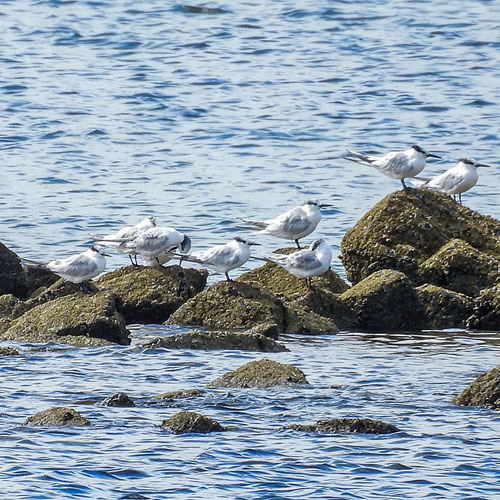
I was keen to photograph the Sandwich Terns that are usually present at the mouth of the estuary. After hearing their distinctive calls I found the Sandwich Tern Flock on a narrow island on the far side of the estuary (just visible on the righthand side of the shot above).
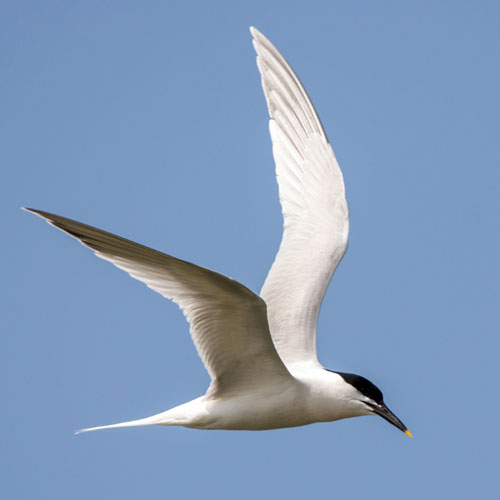
I zoomed my camera lens into the flock to pick out the adults and juveniles. Unfortunately, in the hour I was there, no Terns flew over the estuary, so I’m missing a flight shot for the visit. However I’ve included one I took there some years ago. On the near bank of the estuary there were Mute
Swans and a Lesser Black-backed Gull. When I walked out to the viewpoint I found Oystercatchers and Turnstones on the rocks furthest from the viewpoint. My final shot is one I’ve sneaked in at the end, because it was taken on Saturday in the Woodlands area of Glasgow. It is a fairly common moth, called the Old Lady , a newbie for us, which is not usually seen during daylight hours.
It was a very enjoyable week, with several pleasing highlights: the Common Darter and Woodpecker at Strathclyde Park, the Butterfly-Fest, small waders and Grey Seals at Troon and the newbie Old Lady moth rounding off the week. There’s the remnants of a Caribbean hurricane heading our way during next week, but hopefully it won’t rain all the time and I’ll manage out with the camera long enough to gather enough sightings to build next week’s blog.
Week ending: 17th August 2025: RSPB Baron’s Haugh
The spell of lovely weather was set to continue this week and I was looking forward to making the most of the ideal conditions for outdoor nature photography.
Monday, 11th August: RSPB Baron's Haugh
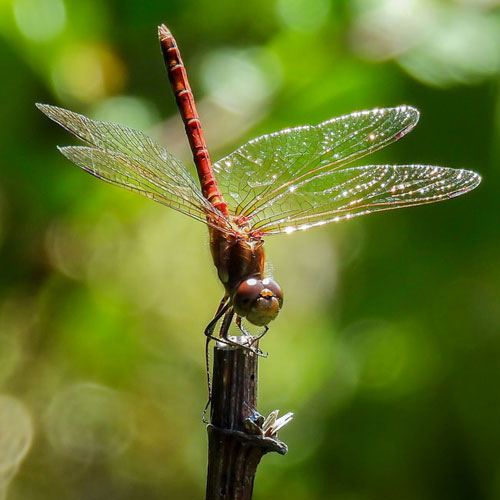
At my local reserve, with the bird population recovering from the breeding season, I concentrated mainly on flowers and insects, and anything else that grabbed my attention - like the cattle wading in the Haugh:
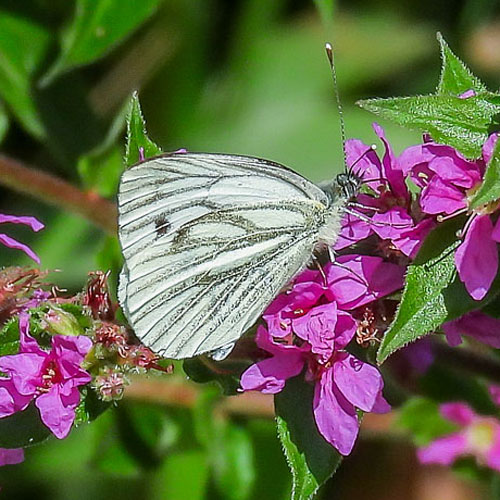
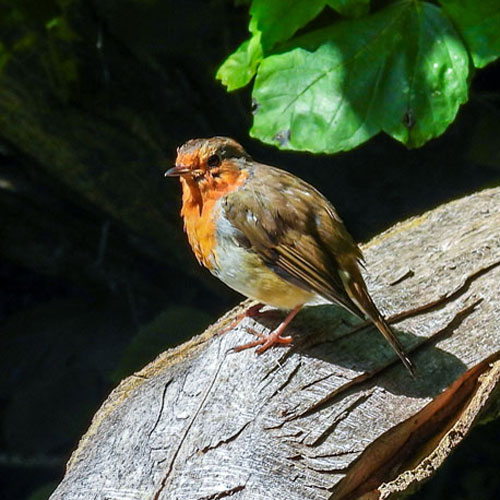
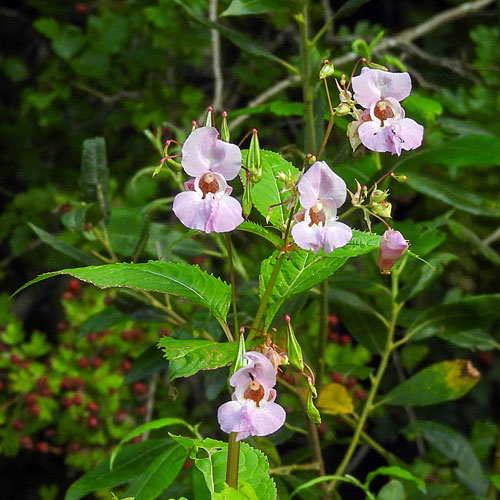
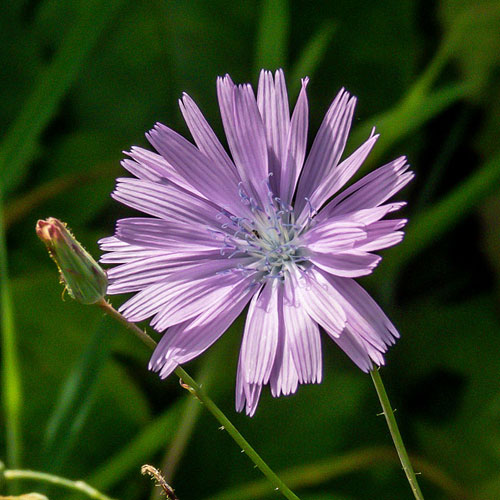
That was seen from the Marsh Hide, as were the shots below: a Common Darter adopting a threatening posture, a Green-veined White butterfly on Purple Loosestrife, and a very friendly young Robin. I walked the footpath to the west of the the Haugh. It is officially closed due to damage by the River Clyde breaking its banks. However, it was easily passable and I got some pleasing flower shots. The alien species, Himalayan Balsam remains out of control despite attempts to remove it. It has replaced the indigenous species along huge sections of the riverside. Common Blue Sow Thistle is another foreign species (from the Urals) - seen on the riverbank. The familiar Large Bindweed was actually introduced to the UK from Southern Europe, so also may be considered to be a foreign invader.
| Dragonfly - Common Darter |
Green - veined White Butterfly |
 |
 |
| Juvenile Robin |
Himalayan Balsam |
 |
 |
| Blue Sow Thistle |
Large Bindweed |
 |
 |
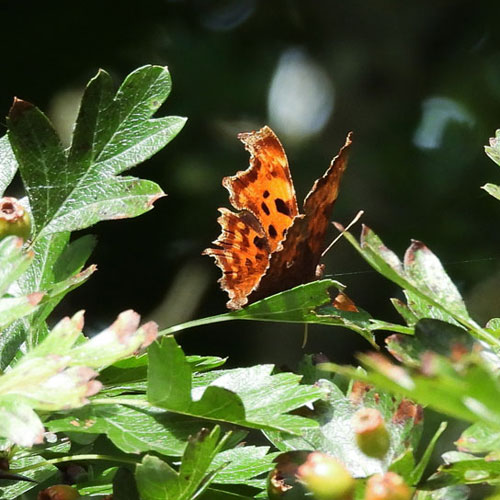
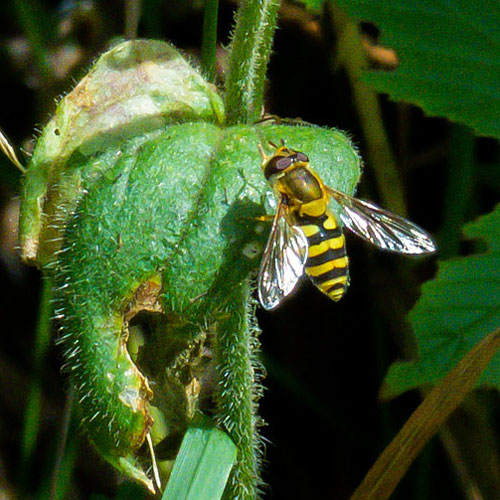
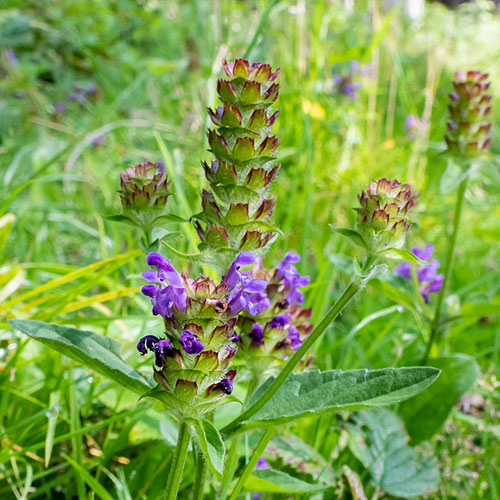
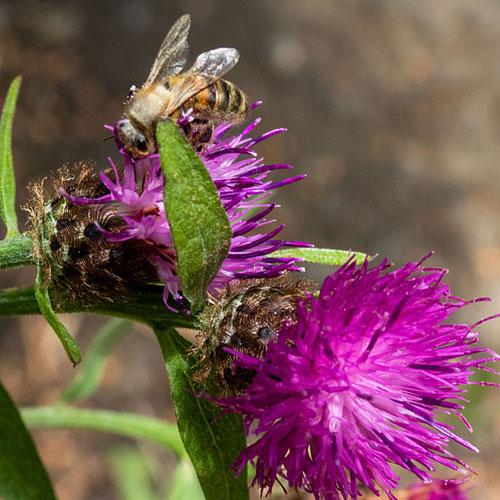
I was delighted when a Comma butterfly descended onto the Hawthorn hedge. That butterfly was once rarely seen at Barons Haugh, but is now fairly common. Next I came upon a hairy caterpillar racing across the footpath - a White Ermine moth caterpillar. I followed that with shots of a Syrphus ribesii hoverfly and then a Peacock butterfly fluttered around me before landing on a Common Knapweed flower. The last part of my route back to the car was through part of the Dalzell Estate, where I photographed some unusually tall Common Self Heal plants. These were once used in herbal medicine to treat a range of ailments. My final shot was of a very excited Honey Bee on Knapweed.
| Comma Butterfly |
Ermine Moth Caterpillar |
 |
 |
| Hoverfly - Syrphus ribesii |
Peacock Butterfly |
 |
 |
| Common Self Heal |
Honey Bee |
 |
 |
Wednesday, 13th August: Musselburgh
A couple of days later I found myself in Musselburgh for a couple of hours. Luckily I had my Nikon Coolpix 950 with me and the weather was very sunny, so I set off from the Millhill car park by the River Esk on a short circuit that would take me to the river-mouth, around the New Scrapes and
back to the car. Unfortunately the tide was very low during the time I was there, but although the water birds were not near the shore, there were other birds to photograph - as I will relate.
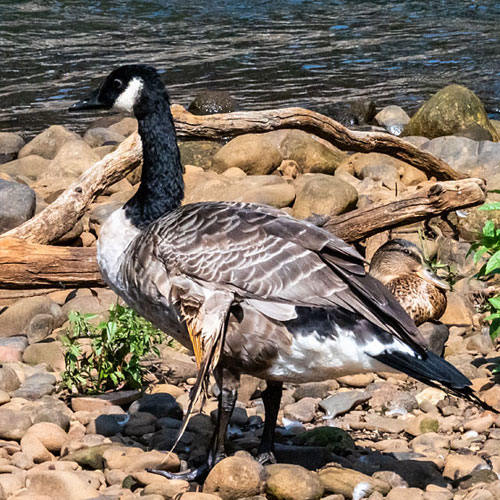
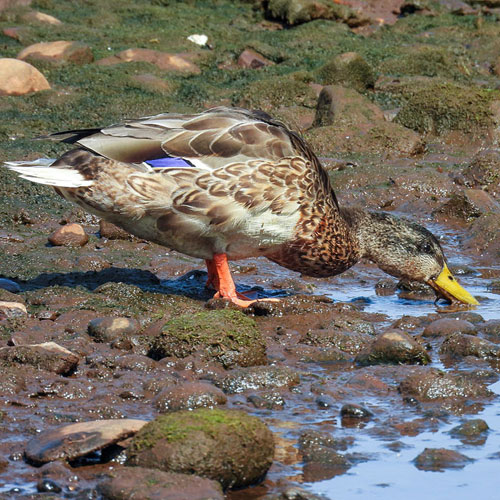
As I set off from the Millhill car park, the strong sunshine caused the birds, such as the Canada Geese, to become inactive, especially those already incapacitated through the moulting of their flight feathers, and even the Jackdaws were less nippy. The drake Mallards too were in eclipse
and barely moved from the water’s edge.
| Canada Goose |
Canada Goose in Eclipse plumage |
 |
 |
| Jackdaw |
Drake Mallard in Eclipse plumage |
 |
 |
There was a large flock of gulls on the river when I arrived but they were spooked when a couple of dogs were let loose to run in the river, causing the gulls to take flight ……
….. and disappear over the footbridge to the relative safety on the river east of the car park.
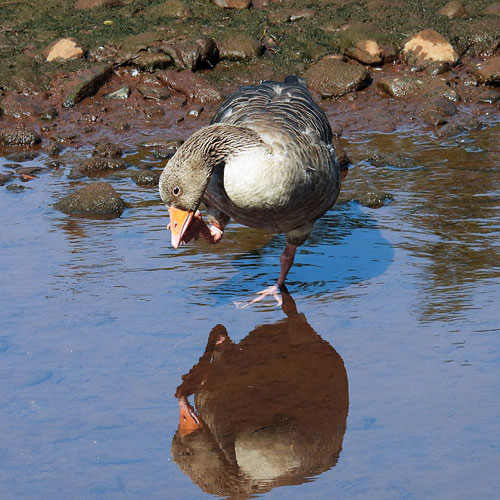
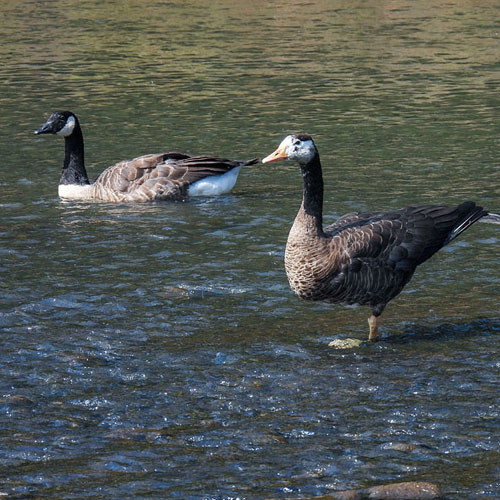
I saw only one Greylag Goose on the river, and a Greylag X Canada Goose hybrid. I watched the antics of a big Herring Gull chick incessantly pleading for food, as it followed its obviously demented adult. Eventually the adult flew off, leaving its baby behind.
| Greylag Goose |
Greylag Goose X Canada Goose |
 |
 |
| 1st Cycle Herring Gull |
Herring Gull |
 |
 |
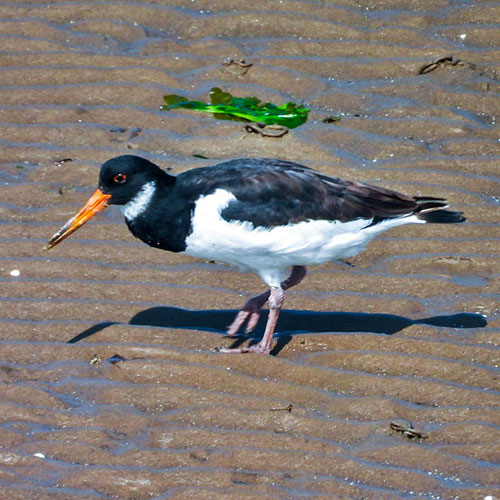
At the river mouth sands there were a few Oystercatchers and Curlews, but there were more things of interest around the Cadet Halls. On the grass there were Flowering Flax and Candytuft flowers in bloom. Also, a Starling was singing on the tall radio antenna.
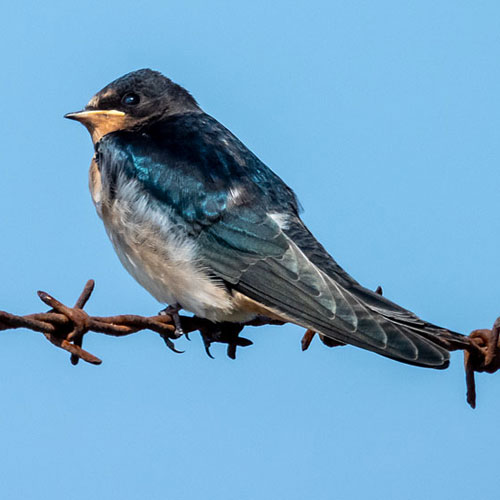
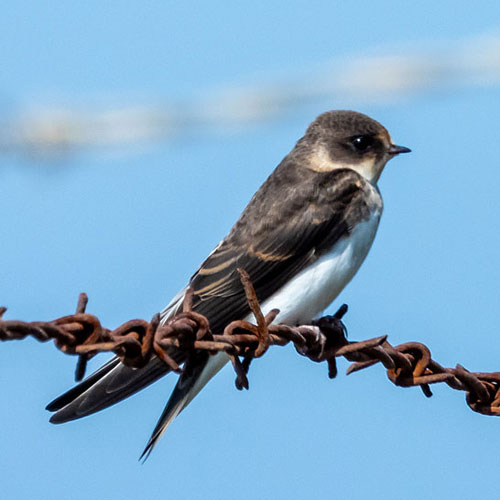
My main attention was drawn to Barn Swallows and Sand Martins that were circulating the area, swooping low over the water catching flies and then resting on the perimeter fences of the Cadet hall. Goldfinches joined them on the fence as they rested between forages on the shore.
| Barn Swallow |
Juvenile Barn Swallow |
 |
 |
| Sand Martin |
Goldfinch |
 |
 |
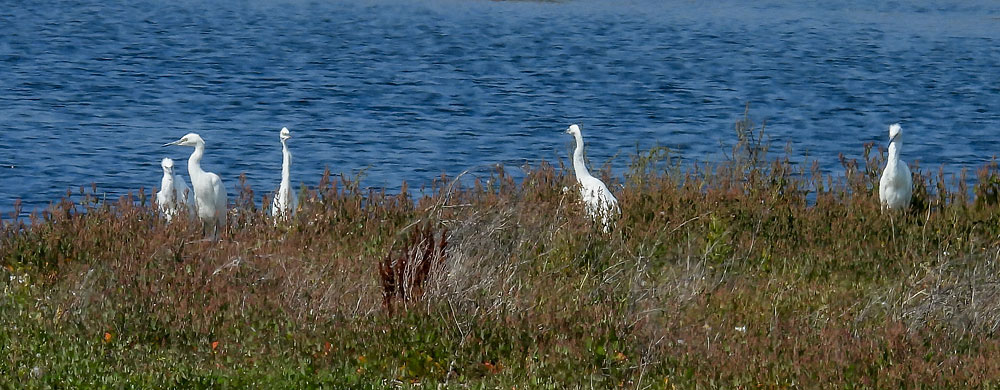
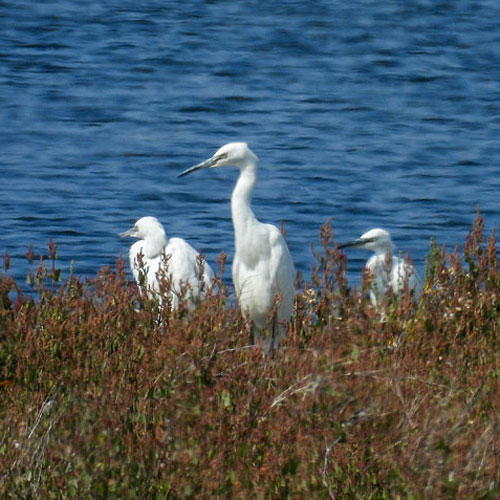
The last time I visited the New Scrapes there were four Little Egrets there. This time that number had increased to five.
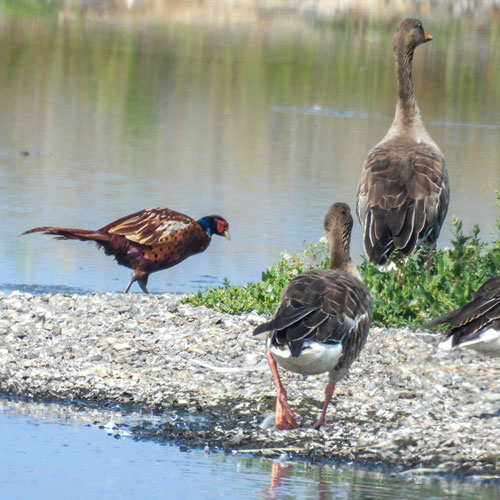
The egrets were pretty inactive. It will be interesting to see how long they’ll hang around the Scrapes. As I moved between hides, a Wall (linkE) butterfly landed on a fencepost and spread its rather worn wings. A pair of Cormorants were standing at the edge of the water, one holing out its
damp wings while the other was making a gurgling noises. Just before I left the Scrapes I noticed a cock Pheasant just before it disappeared behind dense vegetation behind the Cormorants.
Thursday and Friday, 14th and 15th August: Strathclyde Country Park
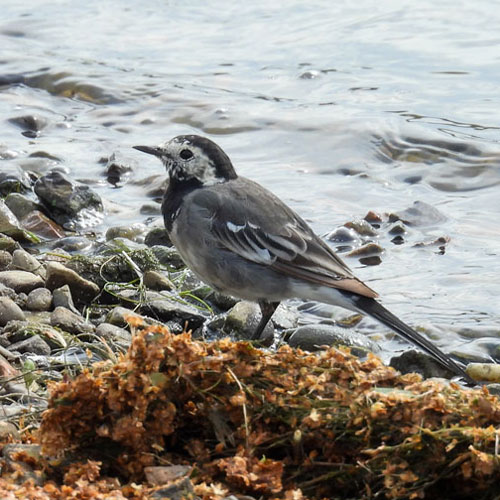
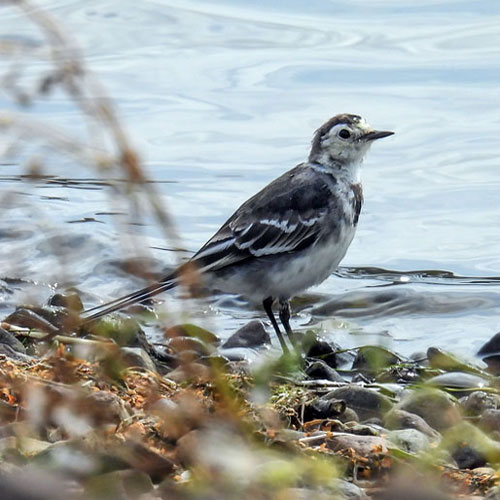
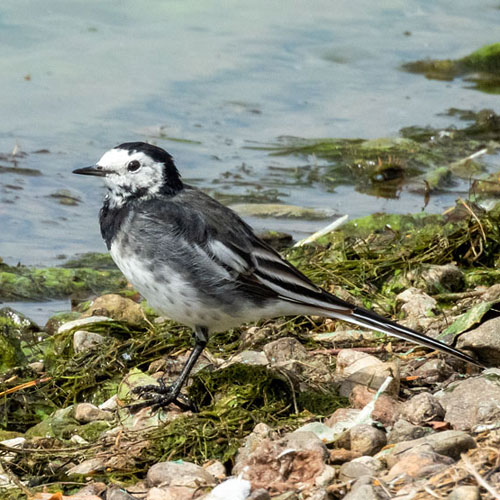
During the next two days I made brief visits to Strathclyde Park. My idea was to search for fungi as I hadn’t found as many as I’d expected in the Park during the spring and summer months. As I set off along the east side of the Park I noticed a male Pied Wagtail at the edge of the Loch. The
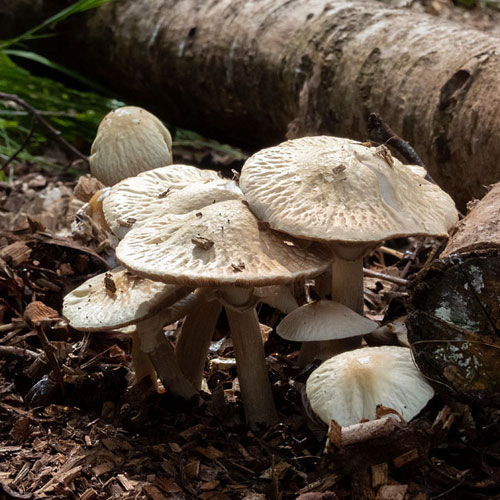
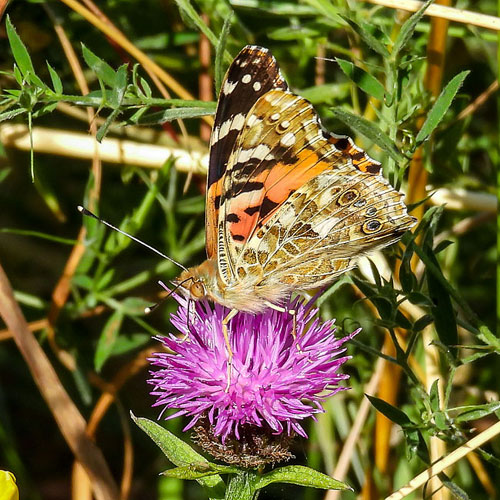
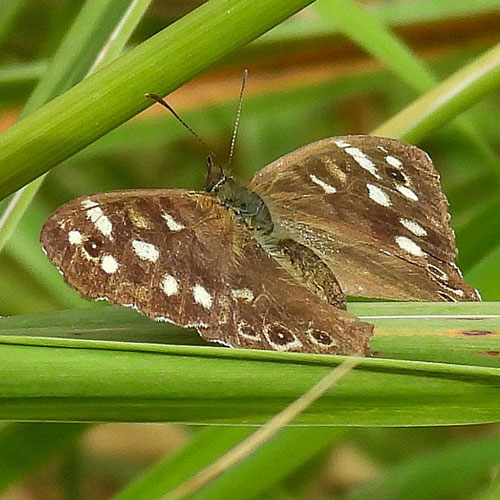
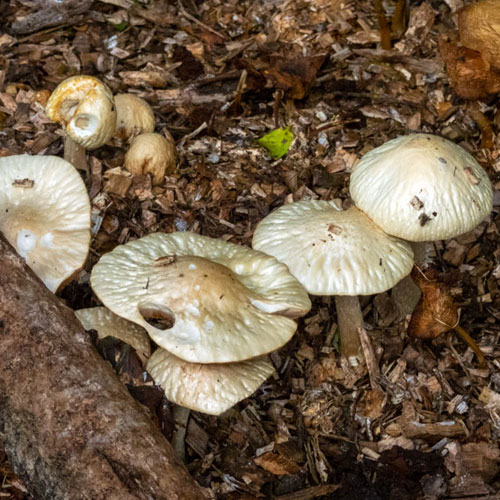
first fungi I photographed was the Wrinkled Fieldcap that I first noticed a few weeks ago, near the lochside, just east of the Foreshore, growing out of a pile of woodchips. It certainly was more wrinkled than on the first time I saw it. Next I ventured into the woods behind M&Ds fairground and was rewarded with a shot of a Artist’s Bracket fungi that was growing on a fallen tree. At the north end of the woods, near the caravan park, I discovered Pale Brittlestem fungi growing through leaf litter. On emerging from the woods I was delighted to find a Painted Lady butterfly as it fed on a Common Knapweed flower. As I walked back through the woods I disturbed quite a few Speckled Wood butterflies and after a few fruitless attempts, I managed to photograph one as it sat on vegetation at the edge of a ditch.
| Pied Wagtail |
Wrinkled Fieldcap |
 |
 |
| Artist's Bracket |
Pale Brittlestem |
 |
 |
| Painted Lady Butterfly |
Speckled Wood Butterfly |
 |
 |
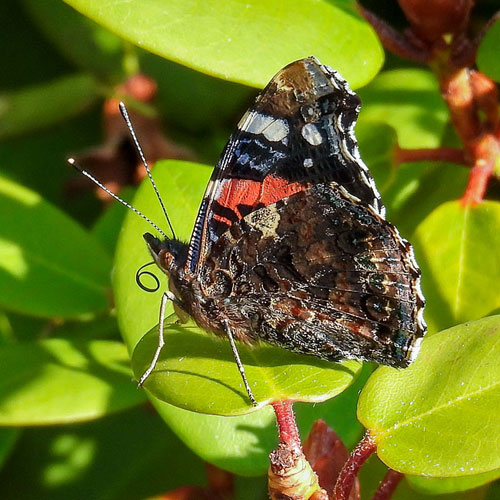
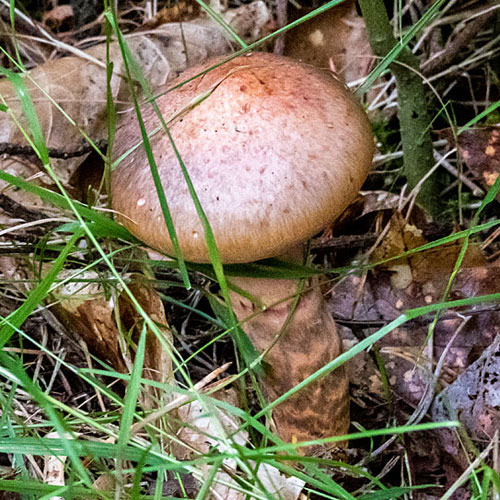
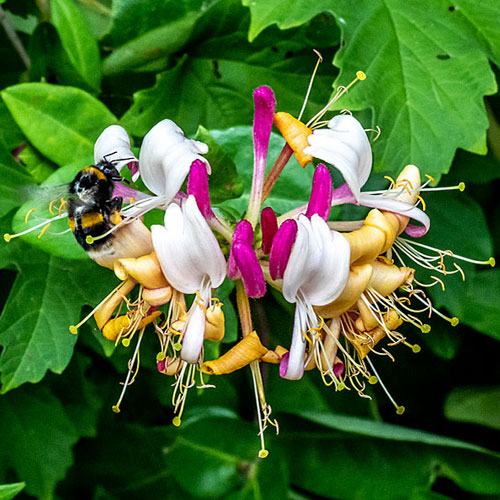
As I passed M&D’s, a Red Admiral butterfly landed on a decorative Shrub growing by the roadside. The next area I explored was at the south end of the park starting at the edge of the path the leads to the underpass below the M74 and footbridge across the River Clyde. My first finds there were a Weeping Widow fungus and a Bloody Brittlegill fungus, each well hidden in overgrown grass and small bushes. I crossed the Clyde Bridge to re-enter the Park and found Common Toadflax growing from the bridge’s brickwork (the dark background is the water of the River Clyde). I passed back into the Park through its Motherwell entrance. The grassy area to the right once was a pitch and putt course, and it was there that I found a few instances of Rooting Bolete. My final shot of the week was of a White-tailed Bumblebee exploring a Honeysuckle flower.
| Red Admiral Butterfly |
Weeping Widow |
 |
 |
| Bloody Brittlegill |
Common Toadflax |
 |
 |
| Rooting Bolete |
Common Honeysuckle |
 |
 |
Having collected a wide variety of photographs, with 56 species sighted, it was a very satisfying week. My favourite sightings were all of the fungi and butterflies, and also the Swallows. It is unrealistic to expect that the good weather will continue - but one never knows.
Week ending: 10th August: Strathclyde Country, Hogganfield Park LNR
It was a rather “short” week due to family commitments, but
I managed to get out a few times locally with the camera. The weather
was showery, mild and cloudy with sunny intervals (and that was to last
until the weekend).
Tuesday and Wednesday AM, 5 and 6th August: Strathclyde Country Park
Early in the week I spent the mornings in Strathclyde Park. On Tuesday I started near the Watersports Centre.
I was rather surprised to find a pair of Bullfinches on the brambles
right next to the very busy and noisy Hamilton Road. They tolerated my
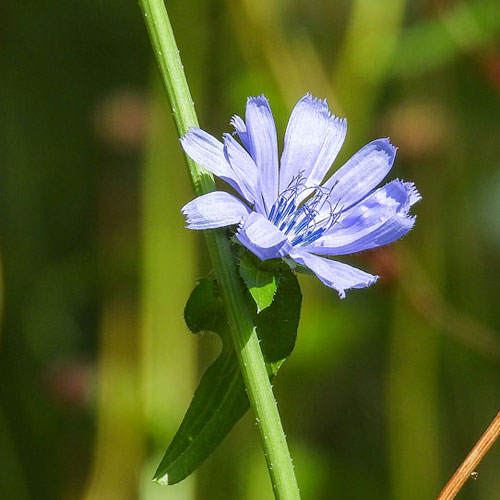
presence as I snapped away merrily. There was Chicory flowering in the
extensive wild flower beds near the park entrance. A Speckled Wood
butterfly was fluttering by the edge of the park road and Broad-leaved
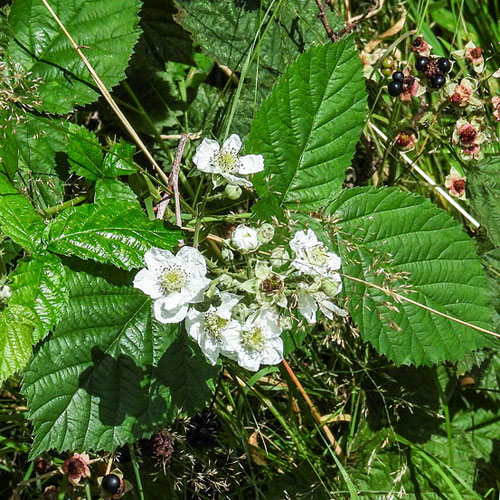
Helleborines and Brambles were all along the roadside.
| Male Bullfinch |
Female Bullfinch |
 |
 |
| Chicory |
Speckled Wood Butterfly |
 |
 |
| Broad - leaved Helleborine |
Bramble |
 |
 |
I wasn’t out during Monday after taking the weatherman’s
advice to avoid Storm Floris. But the next day there was a fair bit of
small branch and leaf debris evident on and around the road - like the
bit of Oak tree shown below.
I returned to the Park the following day to walk in its northeast
section. I was interested in photographing the extensive wild flower
beds there since they seemed to contain different flowers from the
other areas. A few flighty Pied Wagtails were foraging along the edges
of the Loch near
the wildflower beds. Cornflowers were attracting Honey Bees, driving
them to roll in their pollen. Yarrow was growing along the edges of the
flower bed.
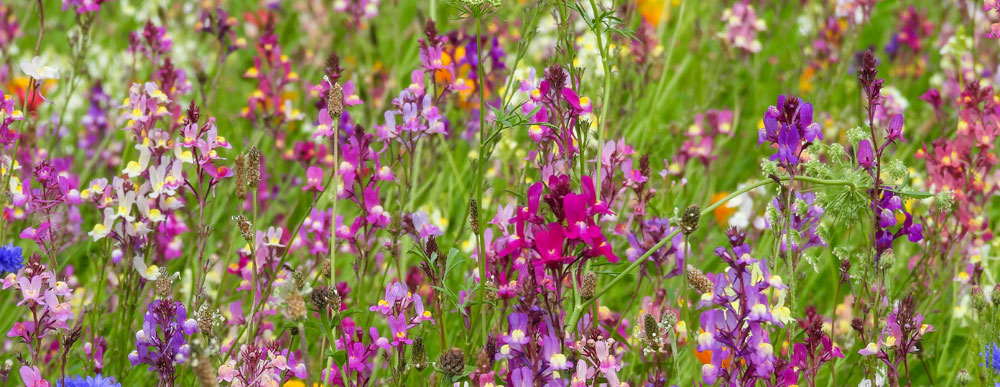
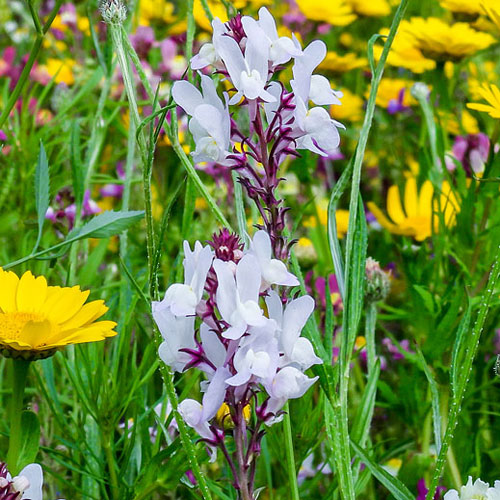
Moroccan Toadflax, which is not considered to be a true wildflower, but is considered to be a garden escapee.
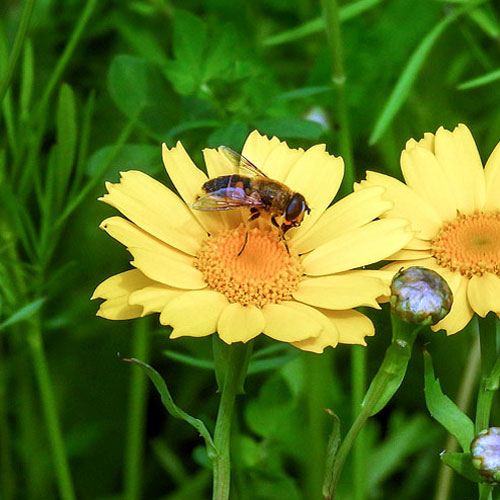
Moroccan Toadflax is a member of the toadflax family and is often mistaken for a Snapdragon. Crimson Flax, another garden escapee, is a very pretty flower which originated in North Africa. Corn Marigolds
were also in the mix of plants in the wildflower plots - and guess
what? - when found in the wild, they too are considered garden
escapees, but horticulturalists don’t particularly like them and
think they’re a bit of a weed. The insects I photographed as they
fed on them obviously think they’re great: the hoverflies,
Buttercup Blacklet , Cheilosia albitarsis, and Eristalis arbustorum
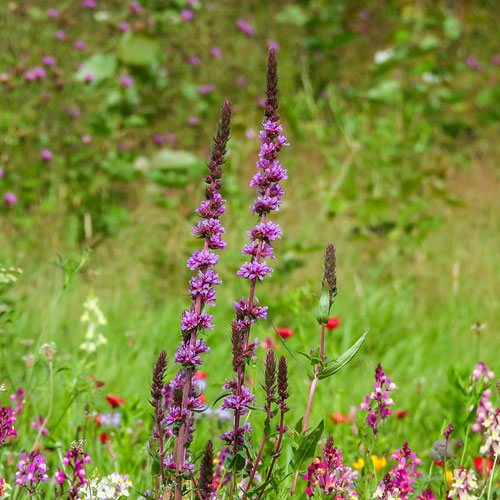
Purple Loosestrife spikes were standing proud of the great mass of flowers, as were the less familiar, but fascinating Lacy Phacelia,
another non-native escapee. It is a plant grown widely in agriculture
as green manure. The wildflower area is populated with pretty flowers,
but they are unnaturally packed with non-native flowers - hardly
genuinely wild. As I completed my walk a Small White butterfly was
feeding on a true native wildflower, a Creeping Thistle.
My final shot at the Park was of a fungus I’d photographed a
couple of weeks previous, Wrinkled Fieldcap. It has certainly lived up
to its name since it has wrinkled well as it aged.
| Purple Loosestrife |
Lacy Phacelia |
 |
 |
| Small White Butterfly |
Wrinkled Fieldcap |
 |
 |
Tuesday and Wednesday PM, 5th and 6th August: Hogganfield Park LNR
On Tuesday and Wednesday afternoons I relocated to Hogganfield. After
parking, when I approached the loch, something seemed different. Then I
noticed the Mute Swans were gathereda few metres from the waters edge,
rather than close to the edge, or even out of the water. Then I noticed
the Dulux dog paddling in the water. It was a very naughty dog and
managed to evade all attempts to get it under control. I don’t
know what happened after that because I set off on my usual circuit of
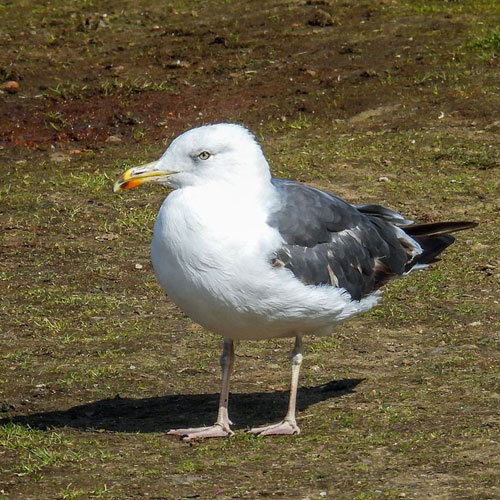
the reserve. I photographed a bold Lesser Black-backed Gull atop the
bin and also
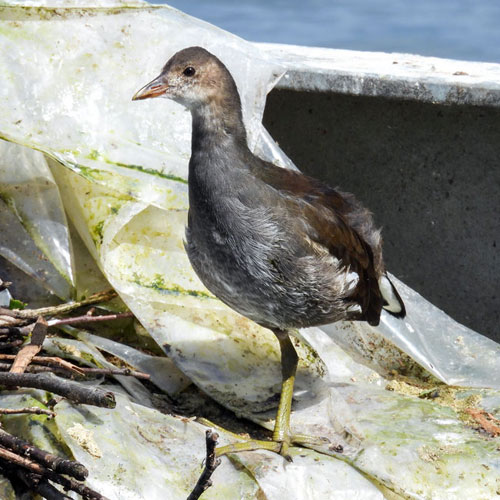
got a bonny juvenile Moorhen standing within the derelict viewing platform.
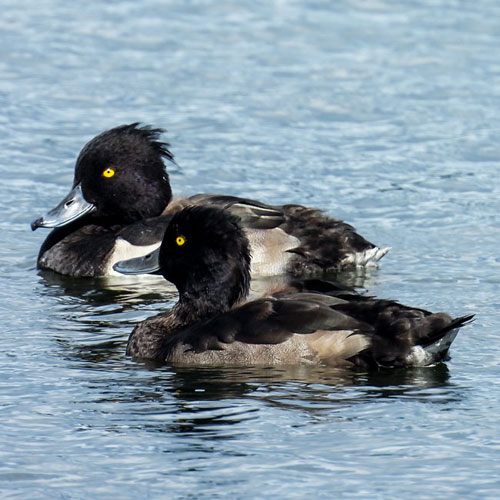
A male Cormorant was standing alone on a pontoon as Tufted Ducks
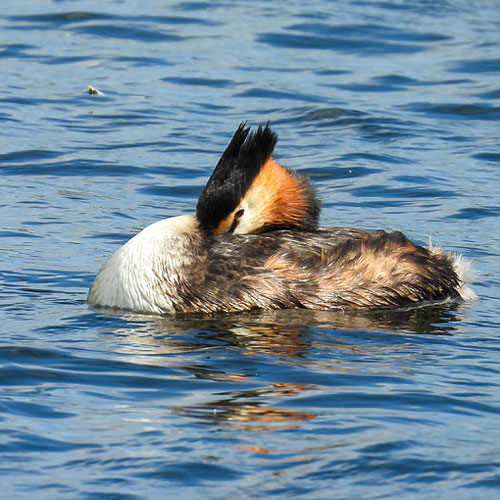
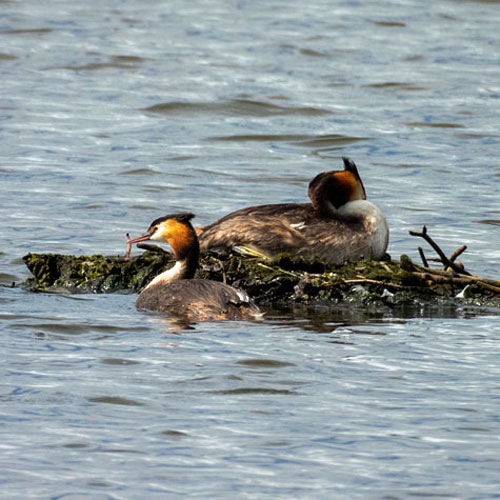
paddled past. A pair of Great Crested Grebes were initially snoozing
until the male lifted its head to check on an approaching group of
swans. Further along the path I caught a glimpse of a female Mallard
with her pair of ducklings.
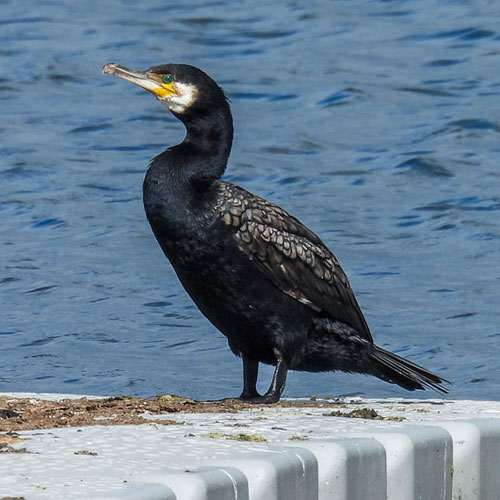
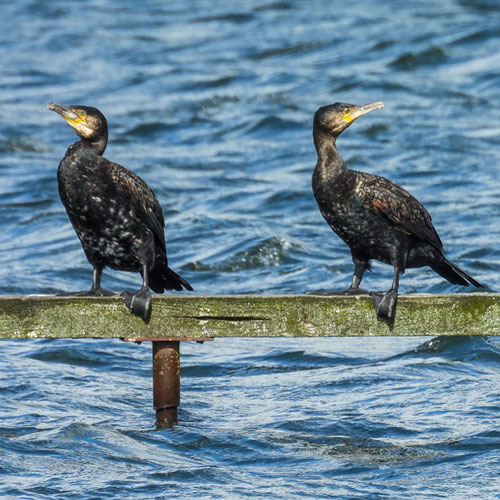
There were another five Cormorants on perches in the middle of the loch, three on one perch…..
….. and a pair on the other. The male Cormorant of the pair had
just arrived carried the gift of pond weed for his mate (who looked
rather disinterested). I think the pair on the other perchlooked as if
they’d just fallen out. On the wee Sandy beach at the southwest
corner of the loch an
immature Lesser Black-backed Gull was standing alone as a lone Mute Swan glided past close tothe shore.
Next I left the main park road to explore the east side of the park. I
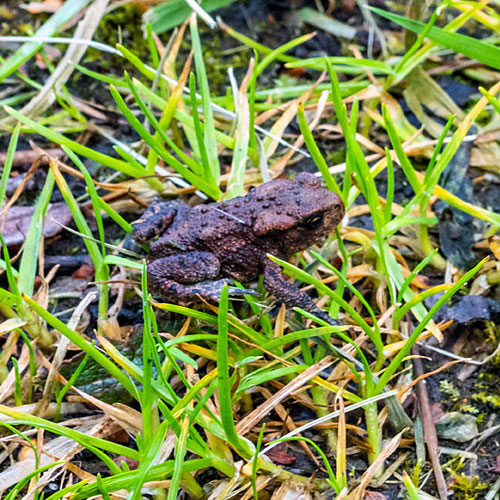
nearly stood on a very small baby Common Toad that was crossing the
gravel footpath. I also snapped a Rosebay Willowherb and a Canadian Goldenrod and while I did so, I notice a bird flying onto the branches of a tree some 30m away. It turned out to be a female Blackcap.
| Juvenile Common Toad |
Rosebay Willowherb |
 |
 |
| Canadian Goldenrod |
Juvenile Blackcap |
 |
 |
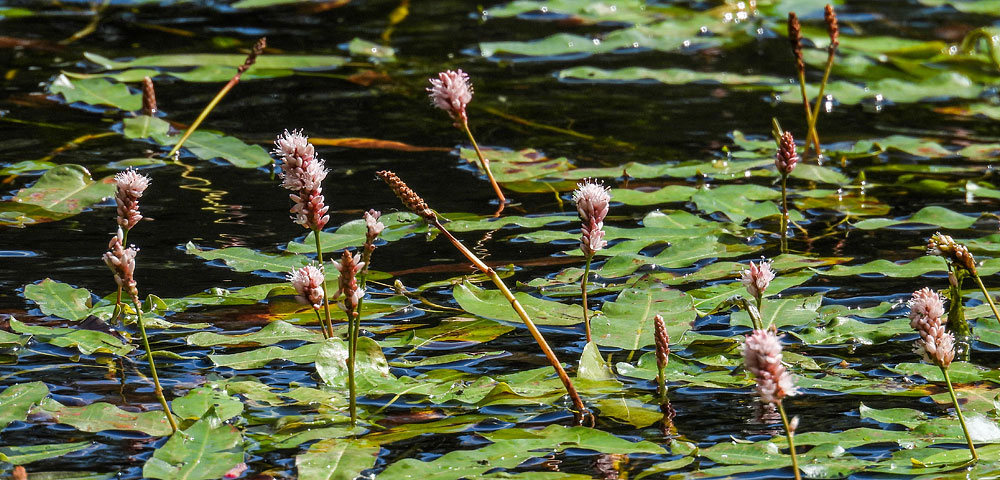
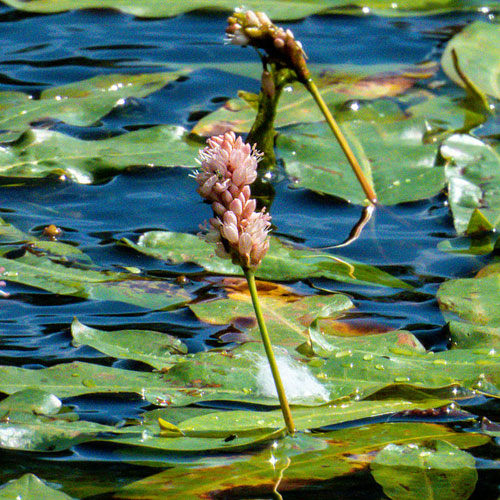
Back on the park road I could see that there were rafts of Amphibious Bistort growing near the edges of the loch.
Amphibious Bistort is specially adapted for water, eg leaves that float
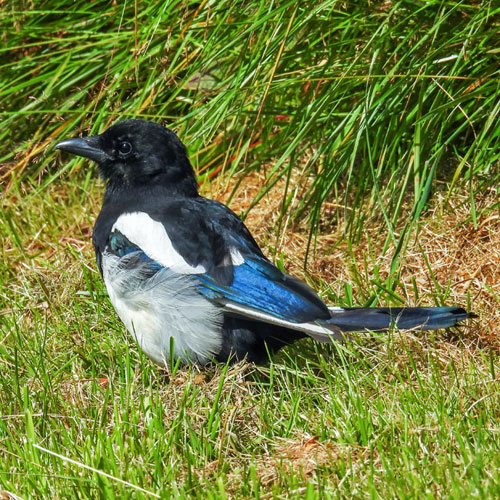
and support flowers that stand above the water level. There were quite
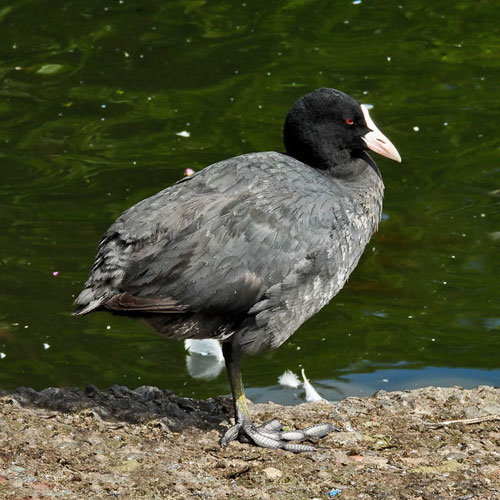
few Magpies in the park, always searching for food. As I completed the
circuit of the park, I photographed a Coot that was standing on the
slipway at
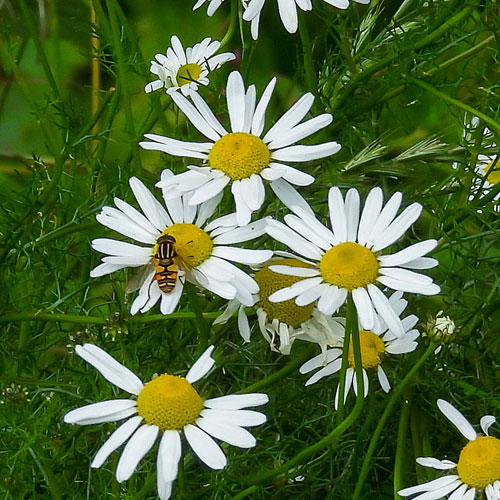
the northwest corner of the loch. My final picture of the week was of a Scentless Mayweed that was host a hoverfly: the Sunfly (or “the Footballer” as some like to call it).
It was a brief but fairly productive week with 44 species photographed
(not all of which were discussed above). My favourites were the
Bullfinches, Cormorants and Great Crested Grebes. Next week is to be
warmer but with periods after rain and showers - so I’ll need a
brolly then.
Week ending: 3rd
August :
It was a week of fair weather - mainly dry, a bit cloudy with sunny
intervals, so I managed to getout
a few times, walking with my camera.
Monday
& Tuesday, 28th & 29th July: Strathclyde Country Park
At the start of the
week, I strolled by the woods near M&D’s Fairground.
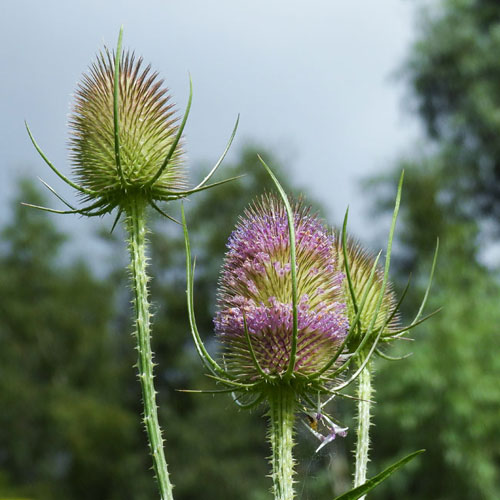
There were tall Teasel
plants flowering and Red-tailed Bumblebees were feeding on the wild
flowers. I was pleased to
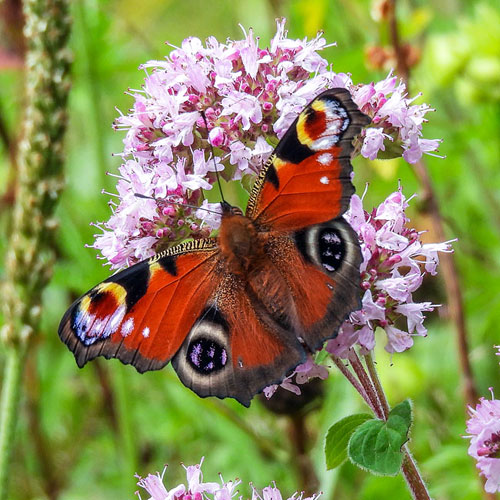
find a Peacock butterfly on some Marjoram flowers. A pair of Great
Crested Grebes had built a
nest near where the South Calder river flows into Strathclyde Loch.
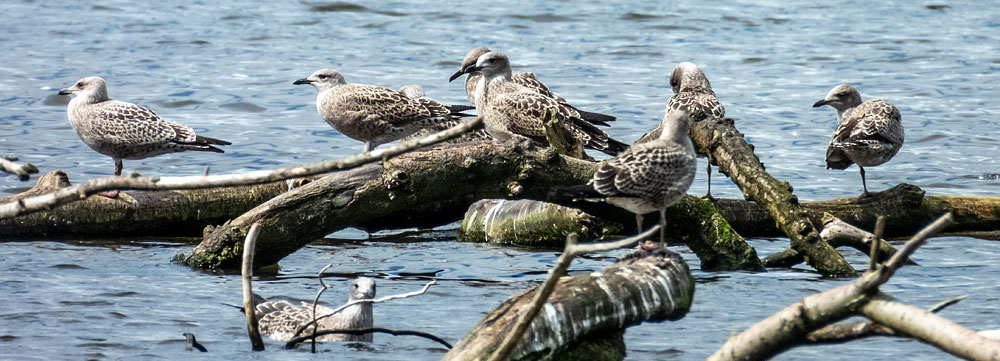
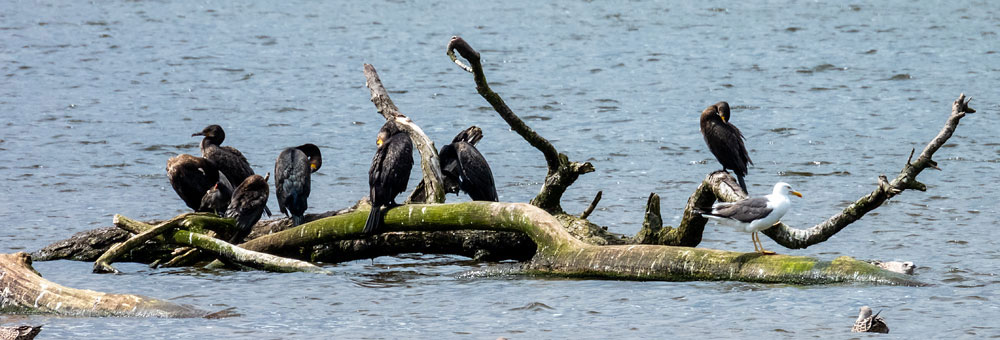
The remains of fallen
trees, probably carried down the river and into the loch, were being
used for ideal perches
for the park’s gulls and ….
…. healthy
Cormorant flock. These were well away from the rowing lanes, although I
have seen speedboats
dashing along the narrow channel to the east of the island and emerging
at speed, veering
sharply away from the trees.
Further along the
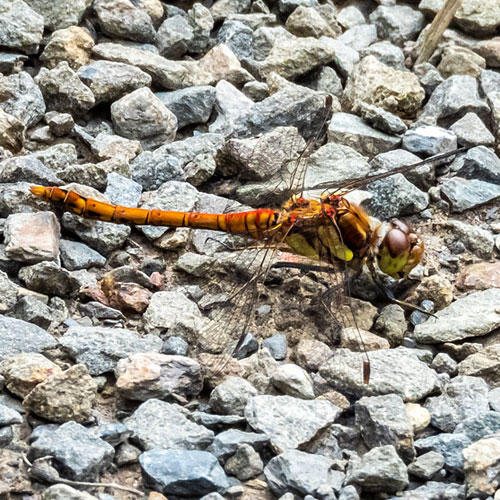
footpath, at the dipping pond, a Common Darter dragonfly was standing
on the gravel soaking
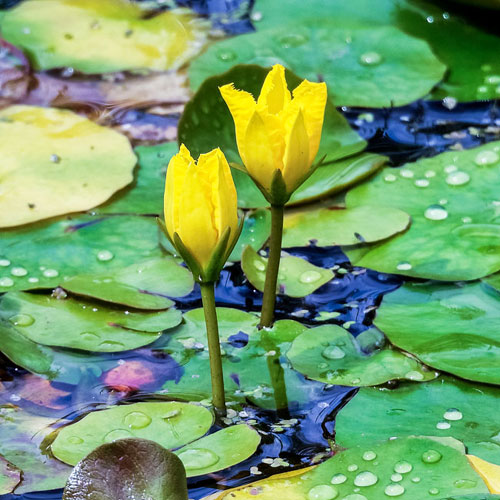
up the sunlight. Most of the pond surface was covered by Fringed
Water Lillies,
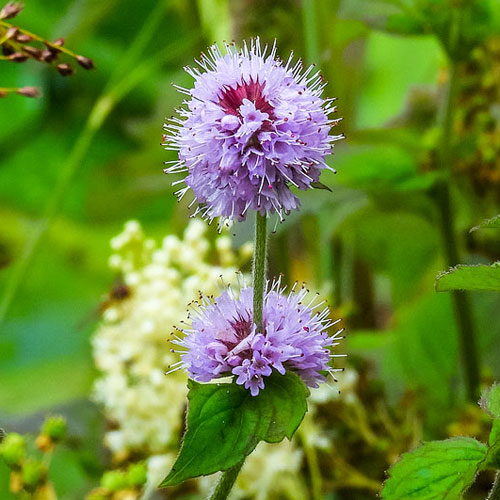
and around the edges of the pond, flowers of Water Mint were prominent.
I left the pond
and continued along the
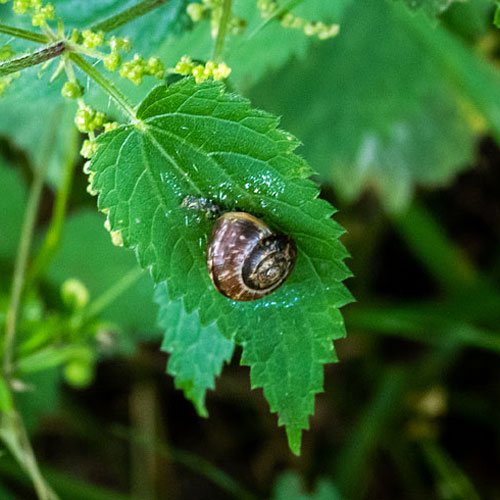
footpath and eventually came across a Copse
Snail that was on a Common Nettle leaf. On my way back to the
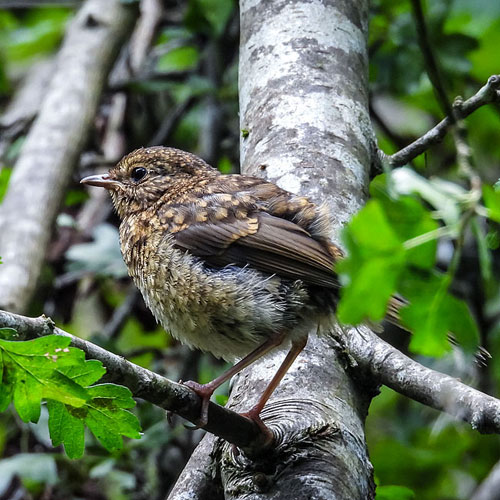
car I noticed a juvenile Robin perched on a low branch, probably waiting for the return of
its adult with a juicy invertebrate. Near the car a Green=veined White butterfly was sitting in the sunlight
absorbing the heat.
| Common
Darter |
Fringed
Water Lily |
 |
 |
| Water
Mint |
Copse
Snail |
 |
 |
| Juvenile
Robin |
Green - veined
White Butterfly |
 |
 |
Tuesday
29th July: RSPB Baron's Haugh
I spent Tuesday morning
at Barons Haugh. I paused as I was leaving the car park, when I saw that the RSPB’s wild garden tubs were
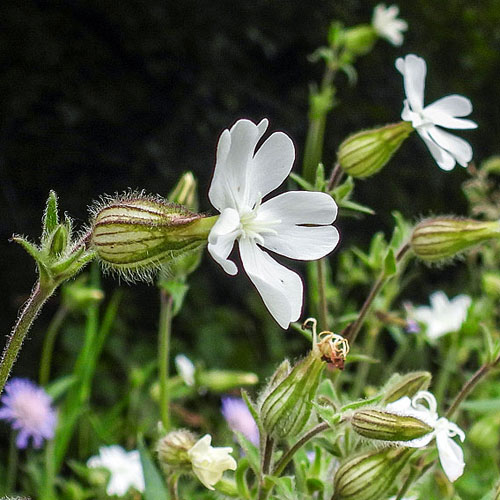
packed with interesting flowers that were hosting quite a few insects. The White Campion flowers were the
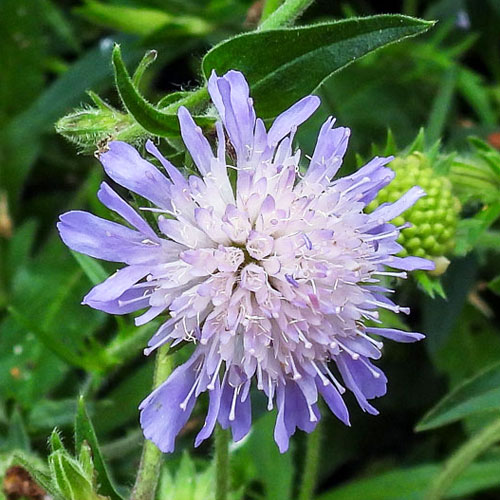
first I photographed, followed by a Field Scabious
bloom. I then turned to
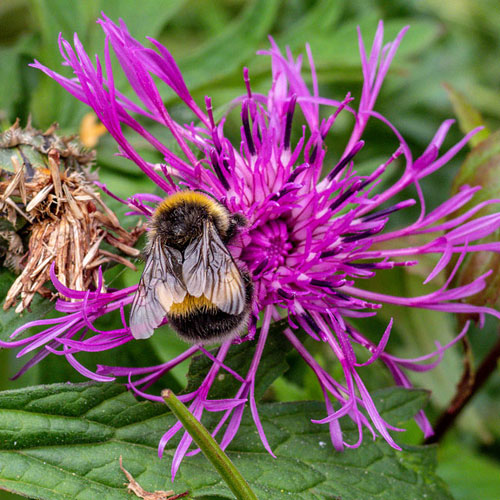
the insects that were on the Greater Knapweed flowers in the second tub: White-tailed Bumblebees and Marmalade
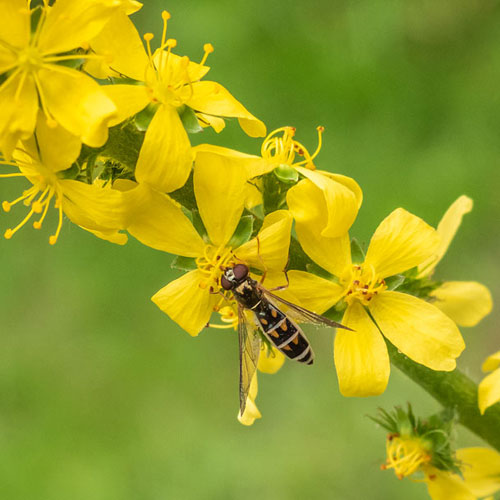
hoverflies. There was an unusual insect on a spike of Common Agrimony - a Long-winged Duskyface (
Chequered Hoverfly) hoverfly which was infected with the fungus, Entomophthora
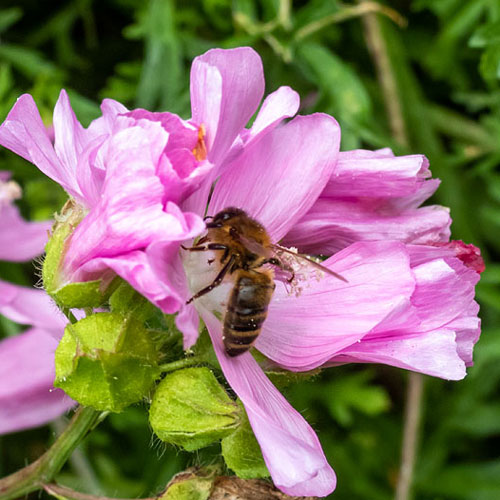
muscae. Finally, on Musk Mallow there was a Honey Bee rolling
in the
flower’s pollen.
| White
Campion |
Field
Scabious |
 |
 |
| White - tailed
Bumblebee |
Marmalade
Hoverfly |
 |
 |
| Chequered
Hoverfly |
Honey
Bee |
 |
 |
Once I actually left the
car park, I met a Magpie that was foraging on the footpath. And a
hundred metres further
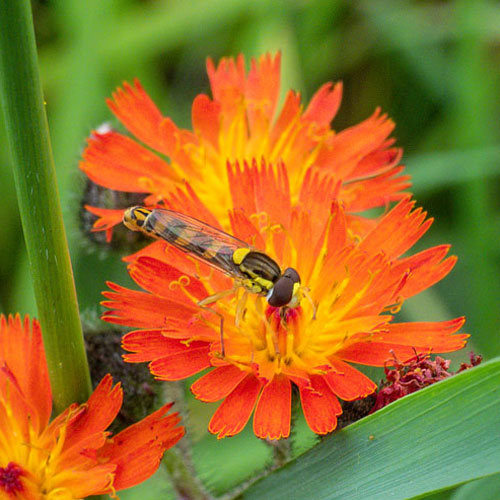
along the trail I snapped another hoverfly: a Long Hoverfly on Foxes
and Cubs. There
wasn’t much of interest until I was inside the Causeway Hide,
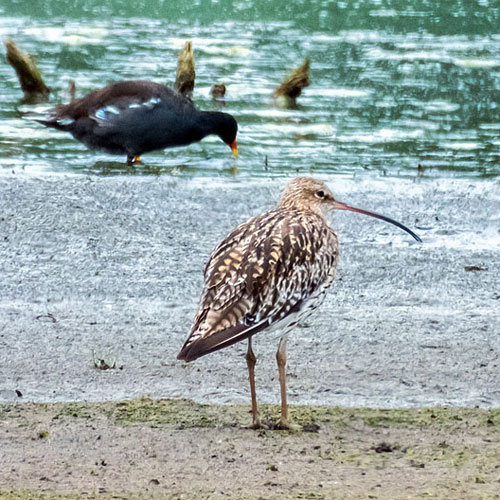
when I found a Curlew
standing in the middle
of the Haugh. I also got shots of a wading Woodpigeon bathing in theshallows.
| Magpie |
Long
Hoverfly |
 |
 |
| Curley |
Wood
Pigeon |
 |
 |
I was disappointed that
there was no sign of Sandpipers that had been reported on Monday. I decided to relocate to the Marsh Hide to
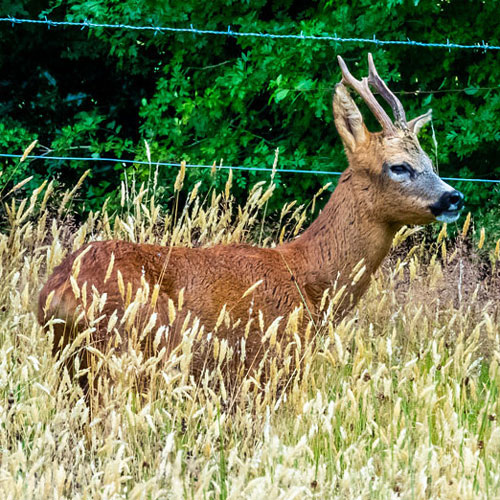
look for them there. On the way I was delighted to see a pair of Roe Deer grazing in the field
between the hides. Once I had settled in the Marsh Hide and
I’d scanned
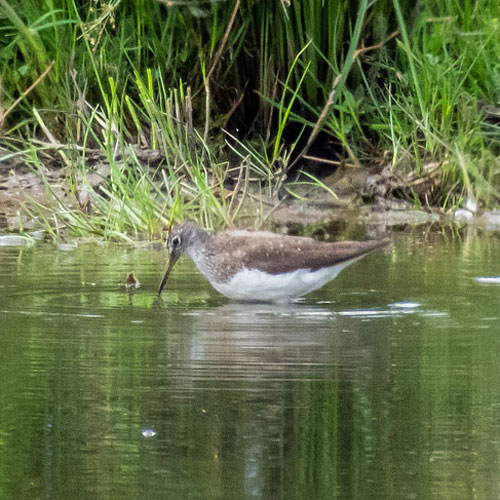
the scrapes, I eventually spotted a couple of Green Sandpipers and also
a Wood Sandpiper. There
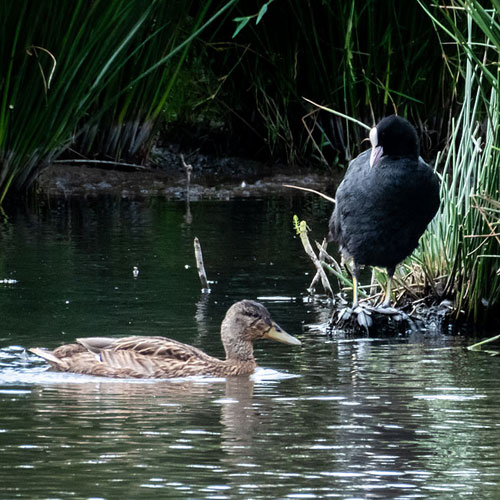
were other birds there, such as Mallards and Coots. On the walk back up
to thecar park I found Peeling
Oysterling fungi sprouting from a damaged tree
trunk.
Thursday
31st July: Drumpellier Country Park
The next couple of days
were taken up by “granddad duties” however I
managed to take them to
Drumpellier Country Park and I showed them how I take pictures with my
Coolpix camera. They
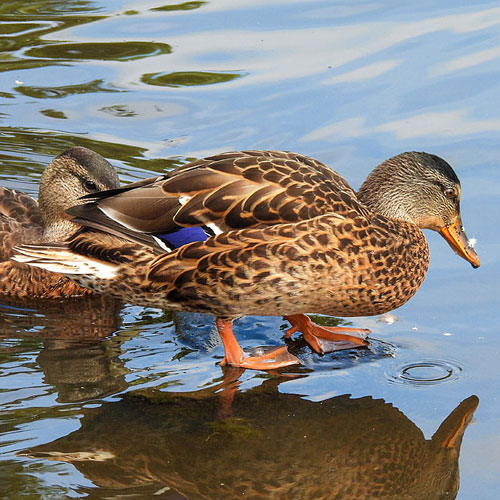
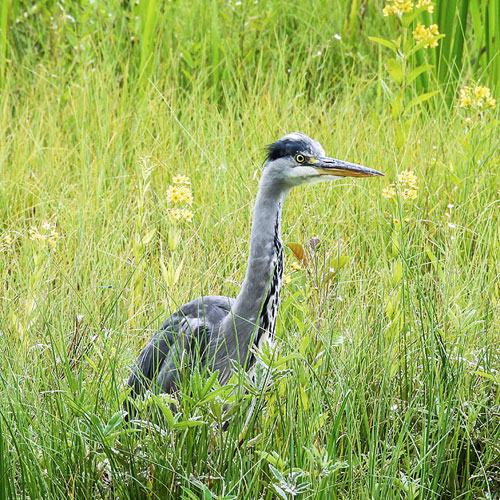
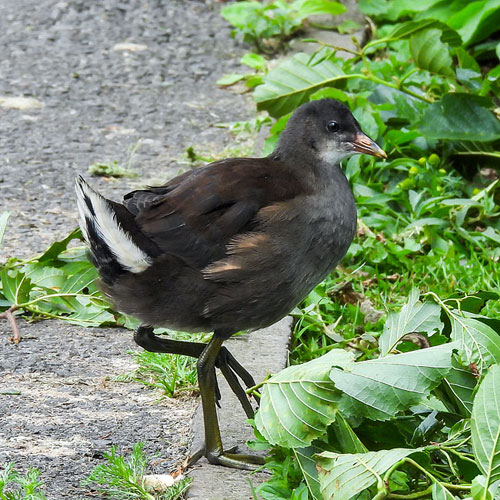
now know what a Mallard and Grey Heron look like. They loved the baby
Moorhen and the
juvenile Black-headed
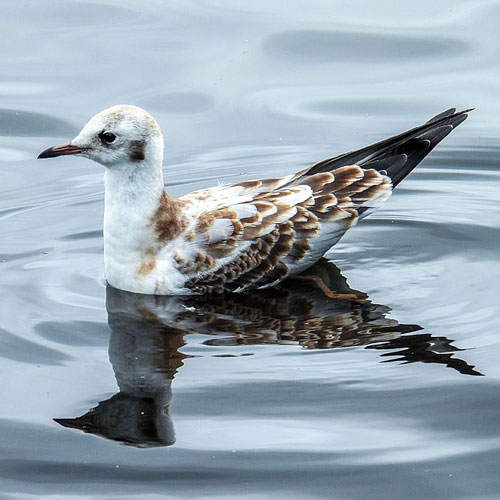
Gull (even although its head wasn’t quite black). I found an
unfamiliar shrub
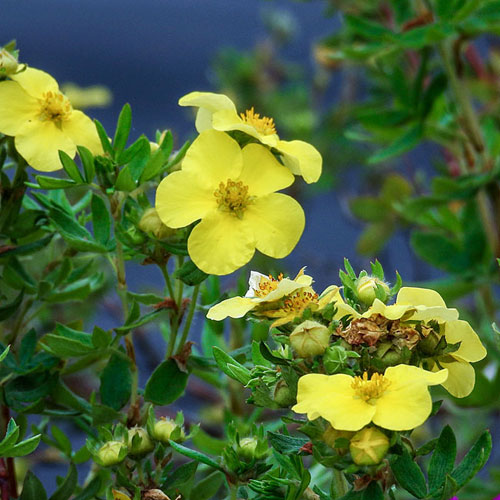
growing at the edge of the loch: Shrubby
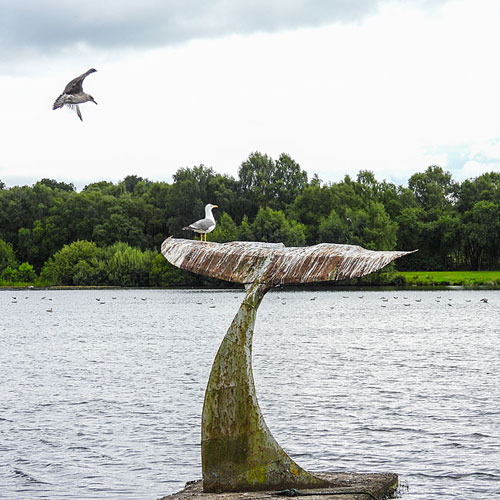
Cinquefoil, Dasiphora fruticosa. My final shot was of a Lesser Black-backed Gull standing on a
metal sculpture entitled “Between the Devil and the Deep Blue Sea".
| Female
Mallard |
Grey
Heron |
 |
 |
| Juvenile
Moorhen |
1st
Cycle Black - headed Gull |
 |
 |
| Shrubby
Cinquefoil |
|
 |
 |
Friday
1st August:Musselburgh
My final visit of the
week was at Musselburgh. The weather was to be dry but cloudy, and the
tide was low - not
great for taking pictures, but I was determined to keep my eyes open
and get on with it.
I parked at the
Levenhall Links car park and set off for the “Old
Scrapes”. There were lots of Broom bushes lining the
path. Each bush showed signs that they’d cast their seed by
the “exploding”
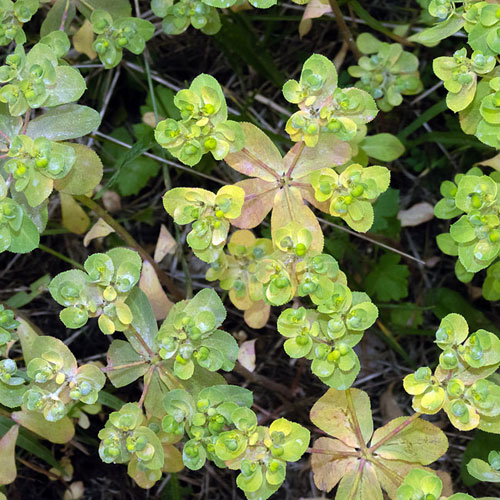
pods. I also found a patch of Sun Spurge, a plant with sap that
can cause irritation to the skin.
On entering the middle hide, I was a bit disappointed by how few waders were on show.
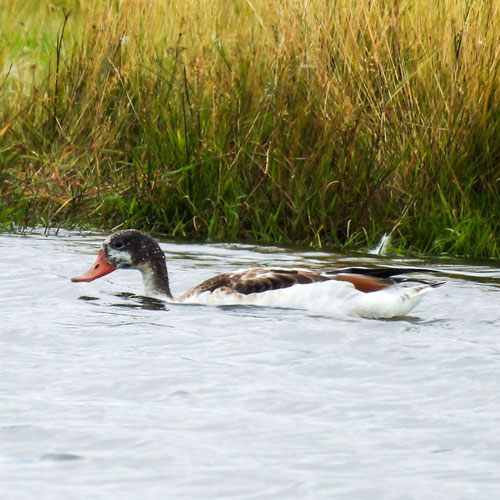
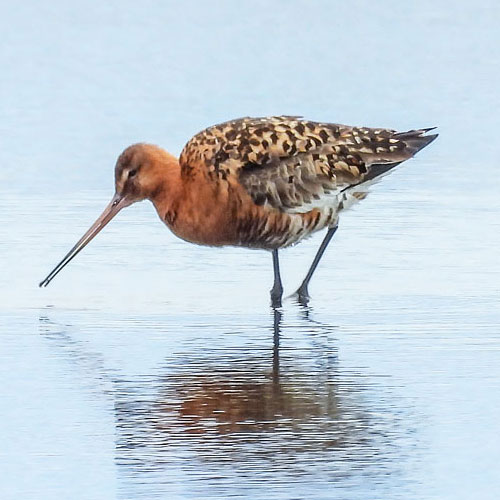
However, I did manage to photograph a juvenile Shelduck and also a pair
of Black-tailed Godwits.
| Broom |
Sun Spurge |
 |
 |
| Juvenile Shelduck |
Black - tailed Godwit |
 |
 |
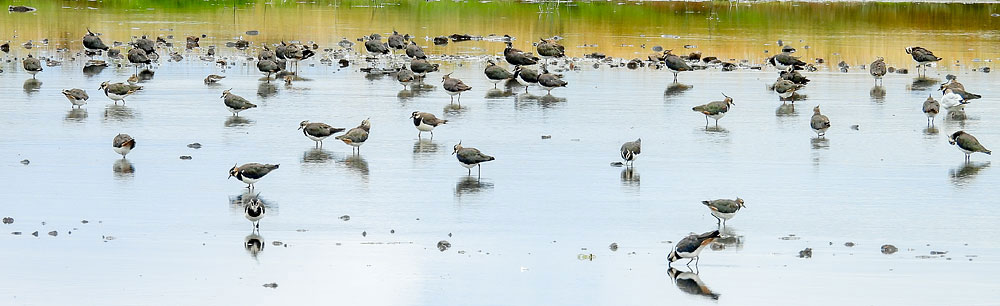
There were a lot more
birds in the left-hand hide - mainly Lapwings ….
…. and Canada
Geese.
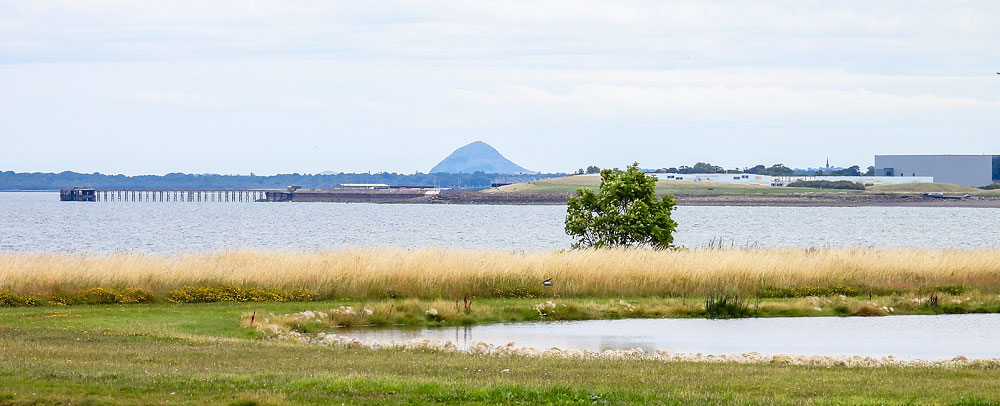
The view east from the
hide shows Cockenzie in the middle distance with the hill called North Berwick Law in the far
distance.
About 20 minutes later I
was in one of the hides of the “New Scrapes” and I
was very disappointed to find it
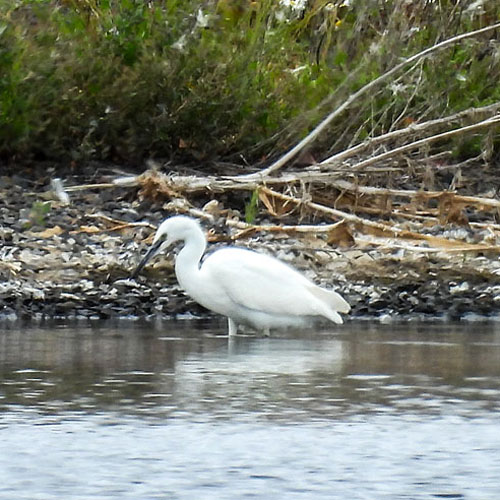
almost vacant, apart from a very distant Little Egret and a lone Oystercatcher.
| Little Egret |
Oystercatcher |
 |
 |
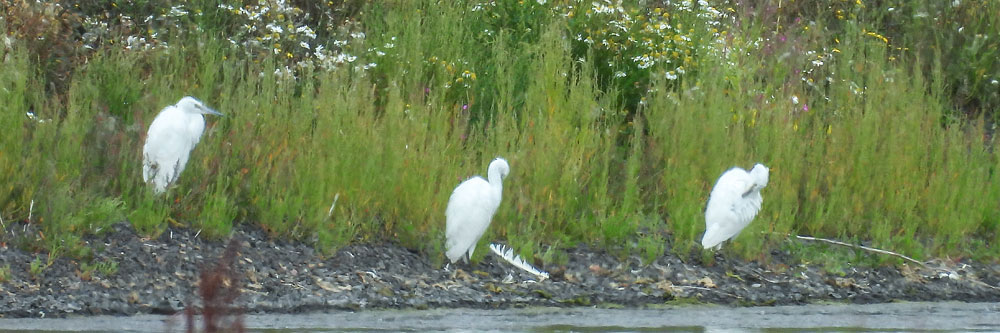
I moved to another of
the hides that allowed me to see more of the north side of the scrapes.
A surprise was waiting
when I discovered that there were a further three Little Egrets
preening on the northern banks of
the reserve.
The view west from the
east-most hide shows Edinburgh and Leith with Arthur’s Seat
most prominent in the centre
of the shot.
The final stage of my
visit was to explore the mouth of the River Esk. At the waterfront
there were many Mute
Swans…….
….. and
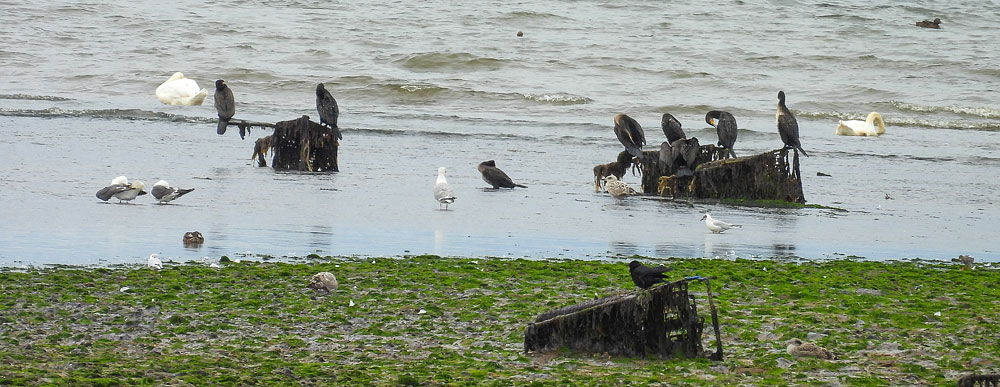
Cormorants that are sitting on corroding, sea-weed-covered supermarket
trollies.
Luckily there were many
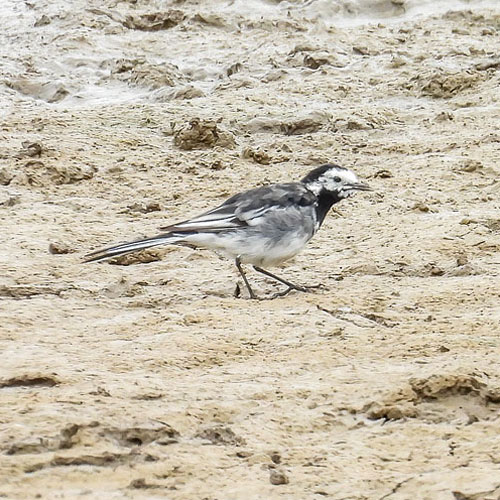
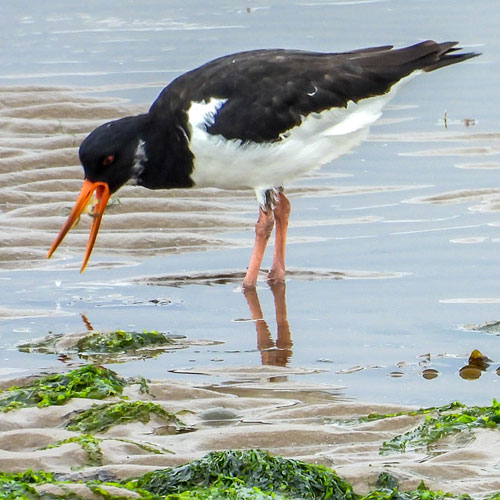
birds a lot nearer the sea wall. A female Pied Wagtail appeared just below the wall not far
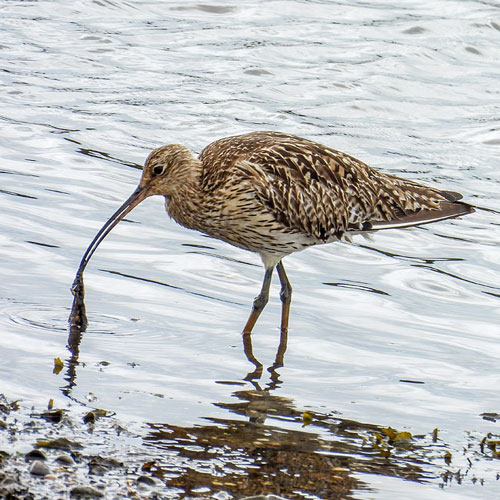
from a few Oystercatchers. A Curlew was using its long, curved beak to
find invertebrates deep in
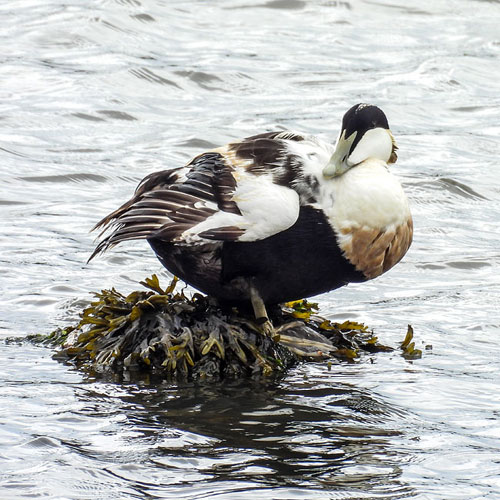
the sands, as a moulting drake Common Eider sat midstream watching the
world go by. I also came
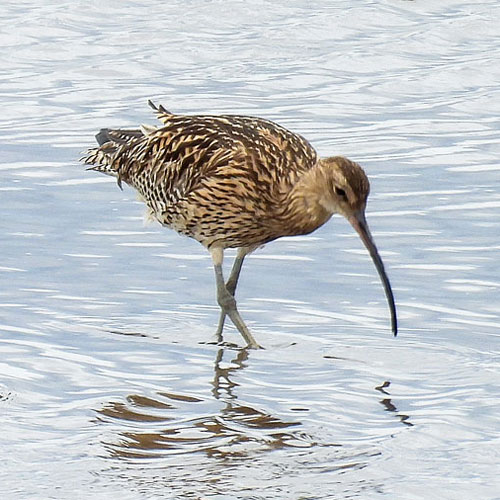
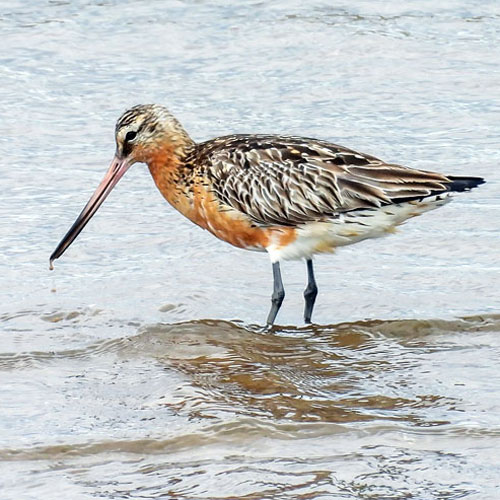
upon about a dozen Whimbrels and Bar-tailed Godwits wading fairly near the sea wall.
| Female Pied Wagtail |
Oystercatcher |
 |
 |
| Curlew |
Common Eider Duck |
 |
 |
| Whimbrel |
Bar - tailed Godwit |
 |
 |
It was very productive
week with 52 species photographed (not all included above). My
favourites were the Sandpipers,
Godwits, Little Egrets and Roe Deer and of course the Dragonfly and Hoverflies. The weather
should be reasonable next week so I will try to visit a range of sites
to
amass another eclectic
mix of species.
Back To Top
|