|
Week ending: 30th November: Stevenston, Saltcoats, Irvine Harbour
The
weather for the week was predicted to have only one sunny day -
Tuesday. I was keen, therefore, to get out on that day and decided that
I’d prefer somewhere on the North Ayrshire coast.
Tuesday, 25th November: Stevenston
The
weather presenters got it right - I awoke to clear blue skies and that
didn’t change for the whole day. I headed for Stevenston Point and
before long I was photographing a magnificent panorama - the Firth of
Clyde with the backdrop of the Island of Arran which wasn’t, for once,
capped with thick grey cloud!
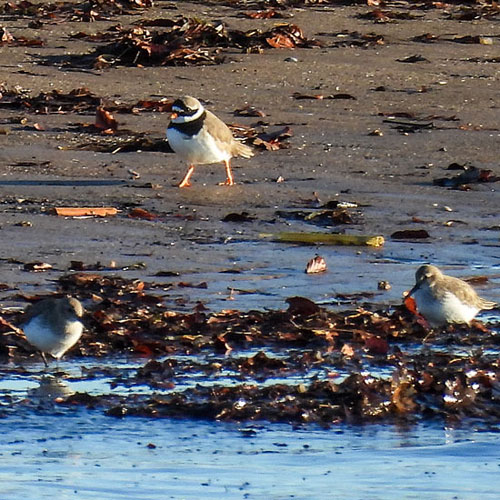
I spotted Ringed Plovers and Dunlin
scampering along the beach to the south. Frustratingly, they started to
move nearer to the Point and would get fairly close before dashing back
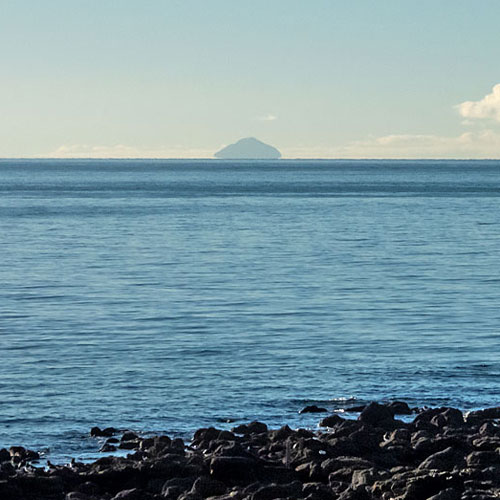
to where they started from. I snapped a shot of the distant Ailsa Craig
and then walked around the peninsula and took a snap of anything with
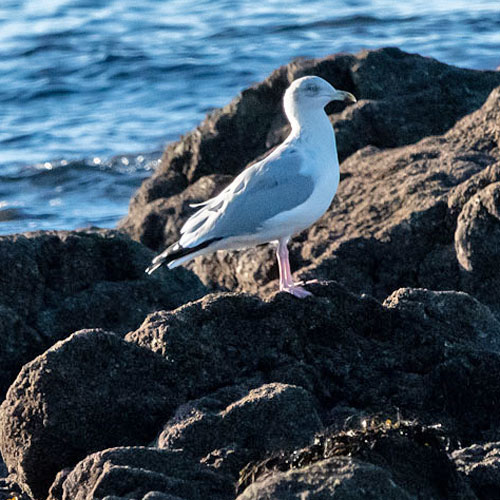
feathers. First up was a lone Herring Gull.
| Dunlin (Foreground) |
Ringed Plover |
 |
 |
|
Herring Gull |
 |
 |
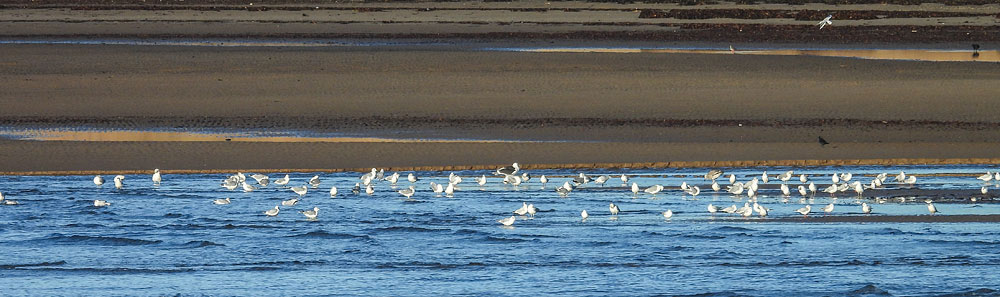
Next, I noticed a huge flock of gulls on the beach to the north.
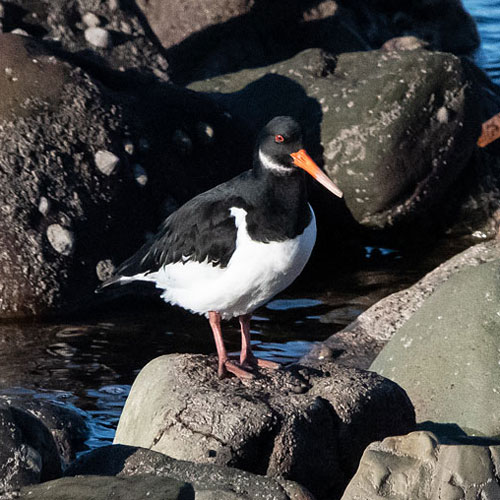
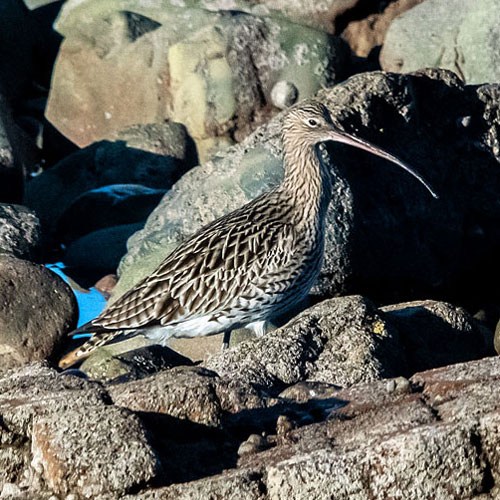
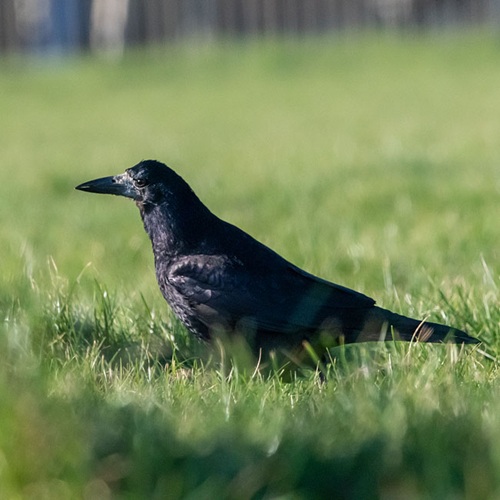
Tucked in the rocks on the north east corner of the Point I found a few Oystercatchers and a single Curlew. Black-headed Gulls were continually flying overhead - as were a series of noisy paragliders. However, they didn’t seem to bother the birds. After photographing a pair of Carrion Crows that were perched of the back of a bench, I returned to the car and made my way off of the Point. There were Rooks on the grass field on either side of the access roads.
| Oystercatcher |
Curlew |
 |
 |
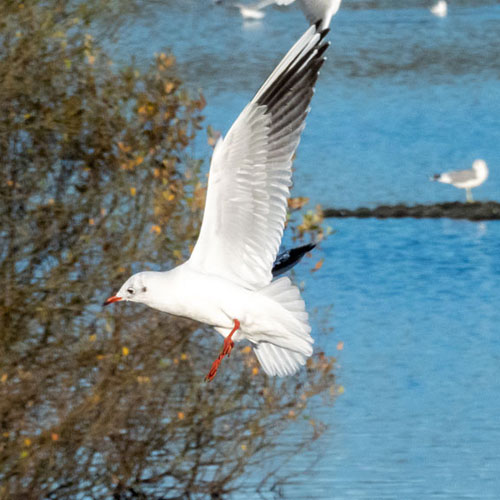
| Black - headed Gull |
|
 |
 |
| Carrion Crow |
Rook |
 |
|
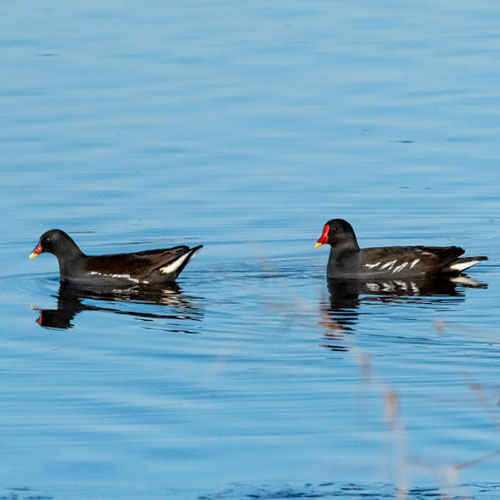
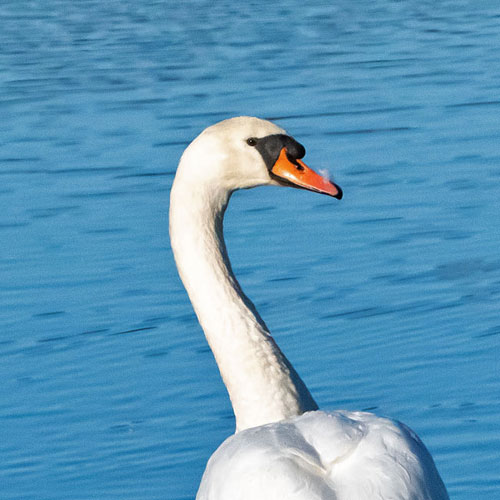
My next stop was the car park at the Auchenharvie Golf Course. The area surrounding the course often has interesting birds. At the wee pond at the end of Moorpark Road W, there were Moorhens, Mallards and Mute Swans.
| Moorhen |
Drake Mallard |
 |
 |
| Mute Swan |
...Juvenile |
 |
 |
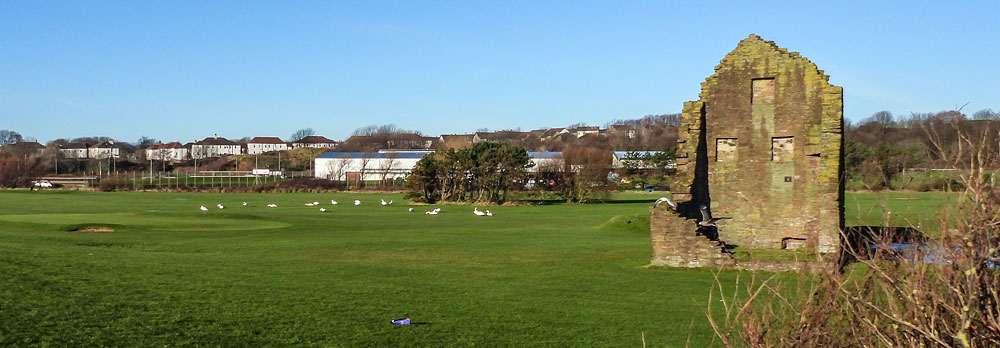
A few minutes along the convenient footpath that runs the length of the course, one finds the Auchenharvie Loch and the rather scenic ruins of a pump house. Note the fifteen grazing Mute Swans.
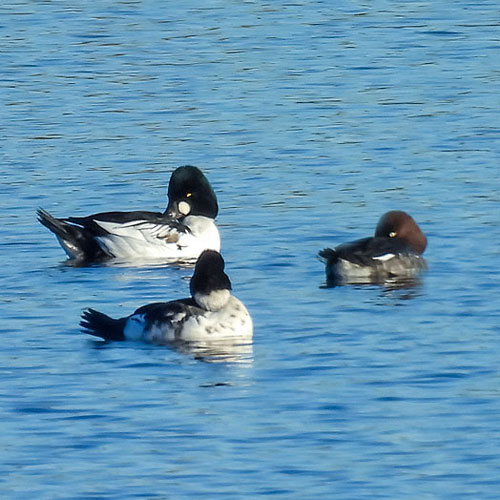
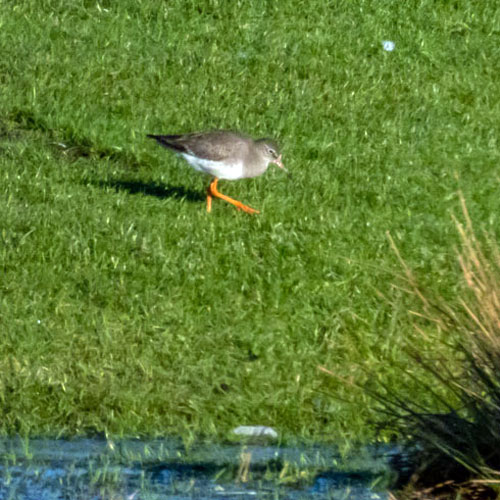
The Loch had mainly Herring Gulls (not shown), but there were more Mute Swans, Goldeneyes and female Lesser Scaups. I also spotted a Redshank tip-toeing across the fairways.
| Mute Swan |
Goldeneye |
 |
 |
| Female Scaup |
Redshank |
 |
 |
Tuesday, 25th November: Saltcoats
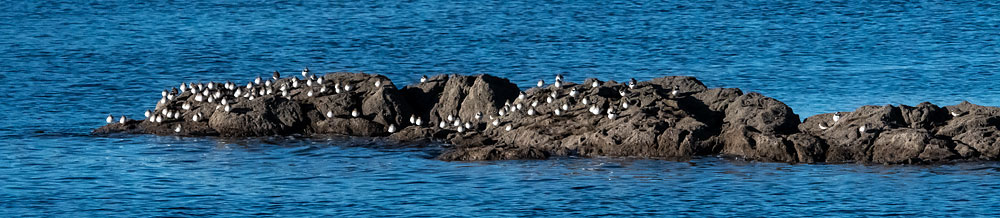
Just up the road from the golf course there is the seaside town of Saltcoats. I parked at the harbour and immediately noticed a large flock of small waders on a long narrow exposed rock at the north side of the harbour.
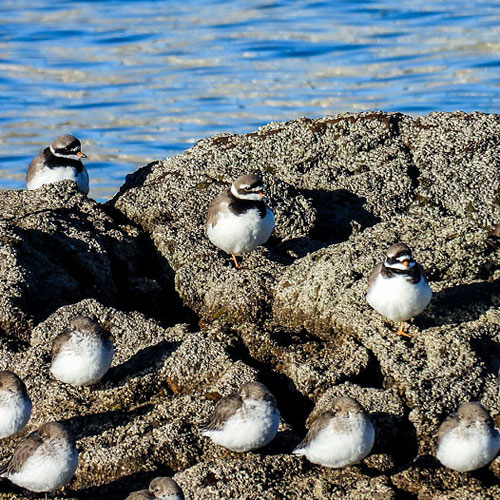
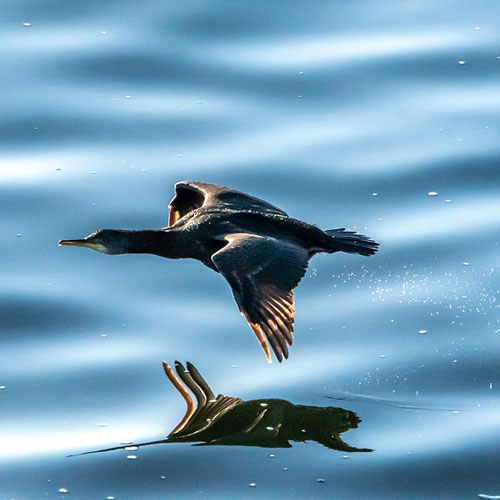
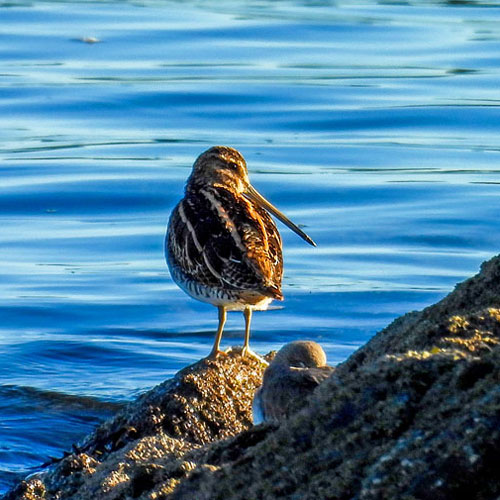
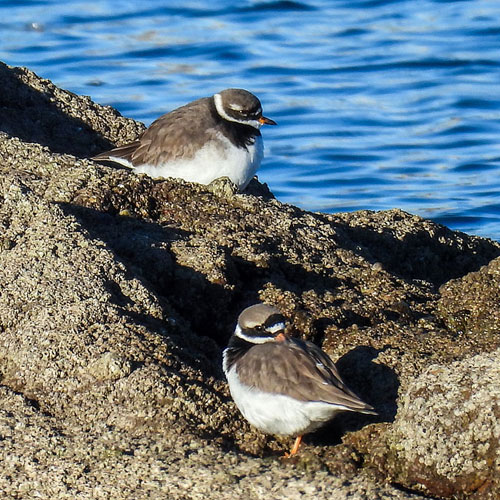
They were Dunlins and Ringed Plovers, although I was surprised to find a solitary Common Snipe in their midst. Just beyond the harbour mouth, some Shags were drying their wings after diving for fish.
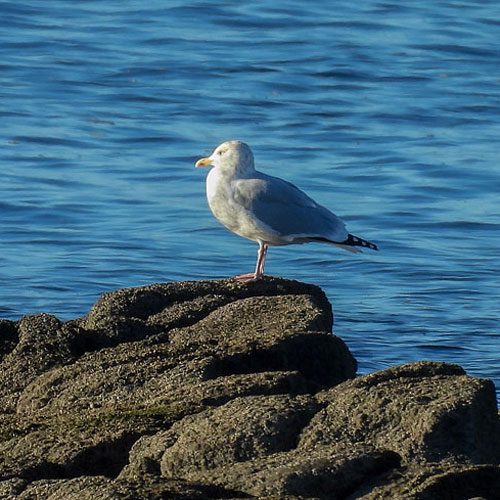
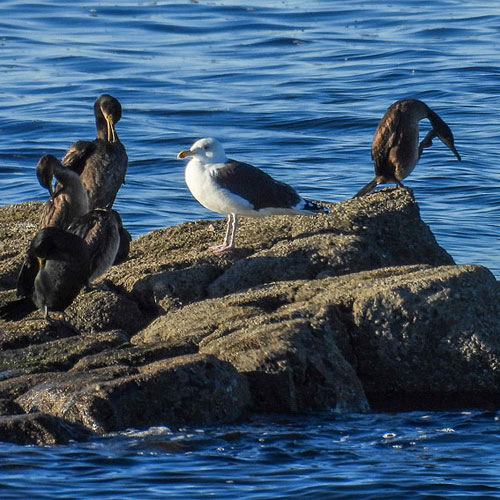
Herring Gulls and Great Black-backed Gulls were standing on other rocks with more preening Shags.
| Herring Gull |
Great Black - backed Gull |
 |
 |
|
Shag |
 |
 |
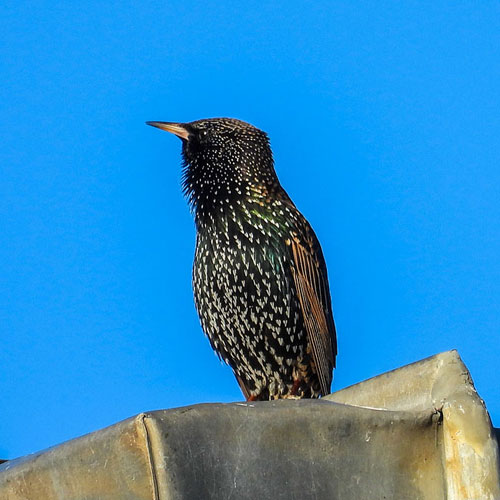
I relocated to The Braes car park and began a walk along the north side of the sea wall. I photographed a singing Starling that was perched on a chimney stack on the row of houses on Windmill Street. I managed closer shots of the Snipe and Ringed Plovers I’d seen from the harbour. I also snapped a snoozing Redshank.
| Starling |
Common Snipe |
 |
 |
| Ringed Plover |
Redshank |
 |
 |
Below is the view of the harbour as seen from the north side of the harbour mouth.
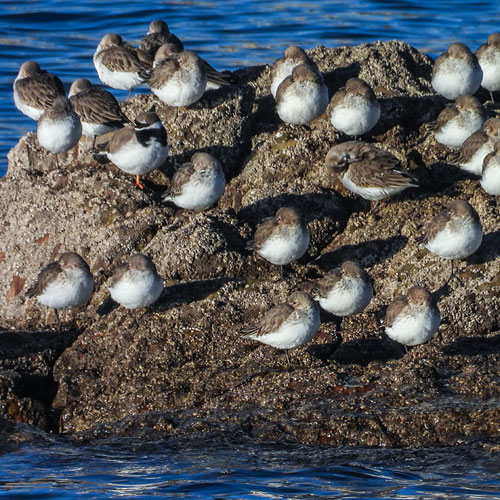
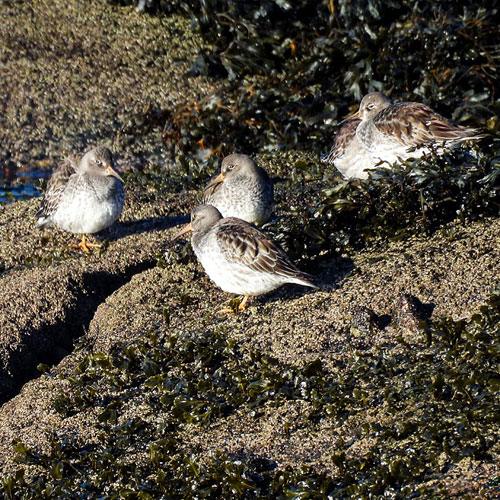
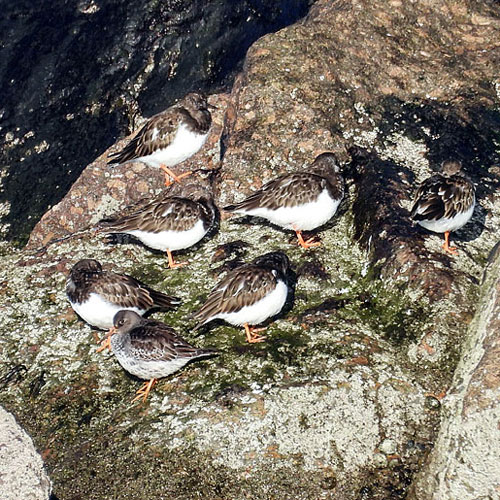
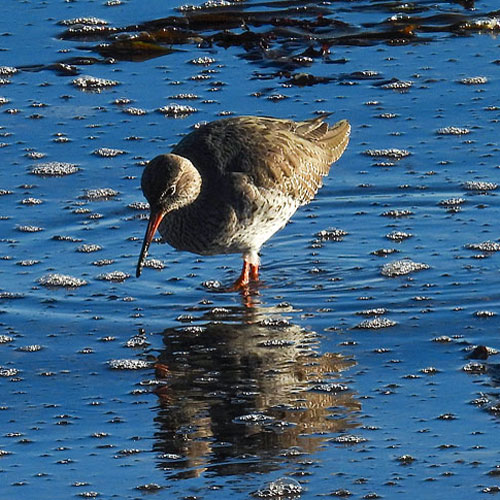
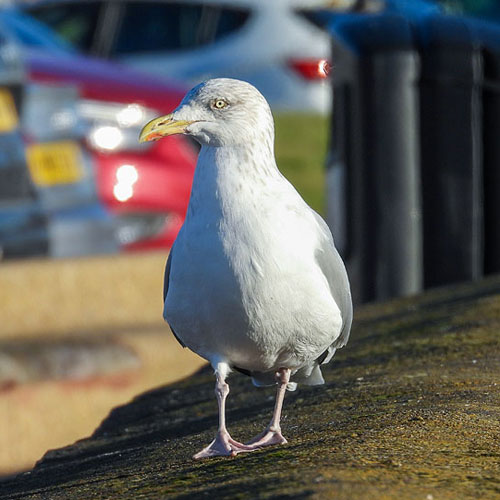
There were Oystercatchers and Purple Sandpipers on the rocks north of the harbour mouth, near “Salcoats Tower”. A young Herring Gull on the sea wall watched me at the tower as I observed a group of six Turnstones snoozing on a sun-licked boulder by the outdoor paddling pool. On further inspection I realised that there are five Turnstones plus a single Purple Sandpiper. I got another couple of shots on my way back to the car: a moody picture of a Redshank foraging in the shallows, and big chip-hungry Herring Gull on the sea wall, looking at me longingly.
| Oystercatcher |
Purple Sandpiper |
 |
 |
| 1st Cycle Herring Gull |
Turnstone / Purple Sandpiper |
 |
 |
| Redshank |
Herring Gull |
 |
 |
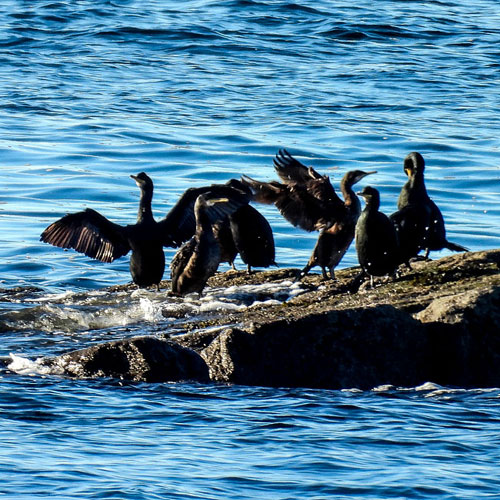
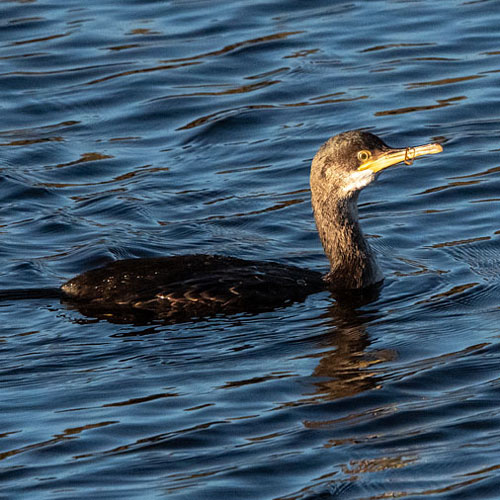
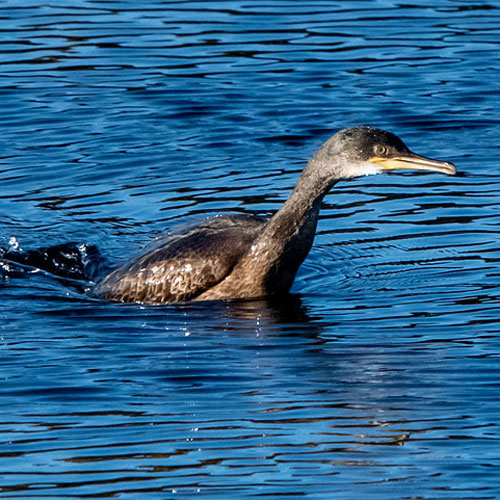
My final shot at Saltcoats was of birds on a rock that was soon to disappear beneath waves as the tide continued to rise. A pair of Cormorants, adult and juvenile, had joined the half-dozen Shags and Great Black-backed Gull I had photographed earlier.
 |
Tuesday, 25th November: Irvine Harbour
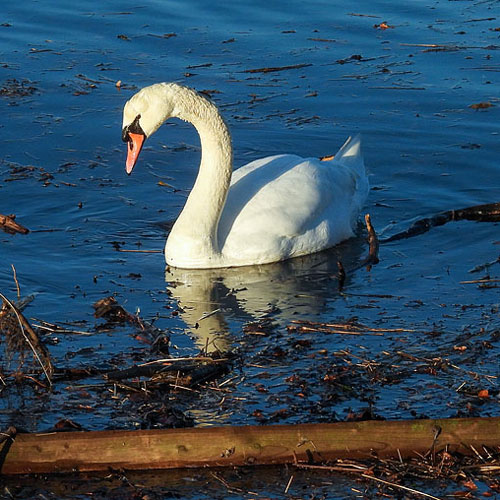
On my way home I decided to pop into Irvine Harbour for a cup of tea. I had visited there on the previous week and didn’t really intend taking any photographs. However, I spotted a couple of Shags diving in the amber sunlight, by the Scientist’s Bridge. And I rather liked the Mute Swan
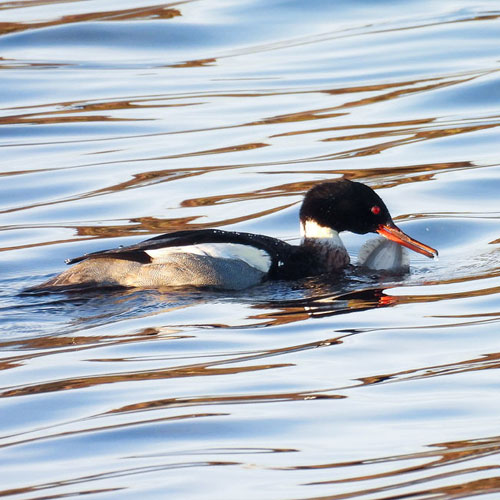
that was moving in the same light. Things got interesting when a pair of Red-breasted Mergansers paddled into the same section of the estuary. The female was diving for fish, but it was being harassed by Herring Gulls that were keen to rob her of any fish brought to the surface.
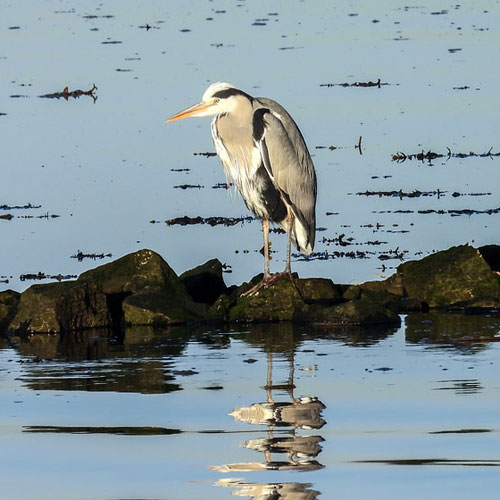
Turns out the gulls were watching the wrong Merganser. The drake , which was about 20m away from its partner, brought up a flatfish and began chewing. Eventually the gulls noticed and chased the drake away. A Grey Heron then flew in and settled on the far bank at the confluence of the
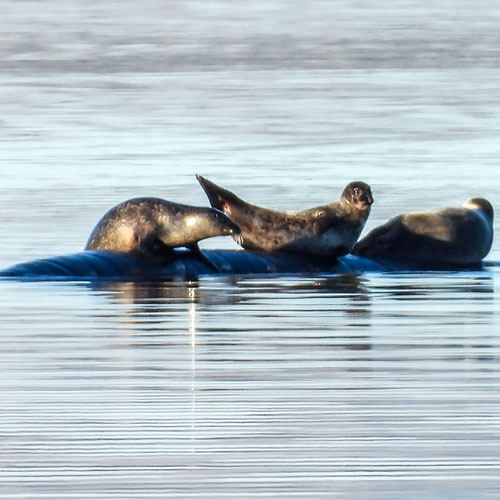
Rivers Irvine and Garnock. Finally, the lighting conditions seemed to increase the reach of my camera since I managed to take some clear shots of a trio of Common Seals that were lounging on some kind of floating platform that is at least 200m from the harbour promenade.
| Shag |
Mute Swan |
 |
 |
| Female Red - breasted Merganser |
Drake Red - breasted Merganser |
 |
 |
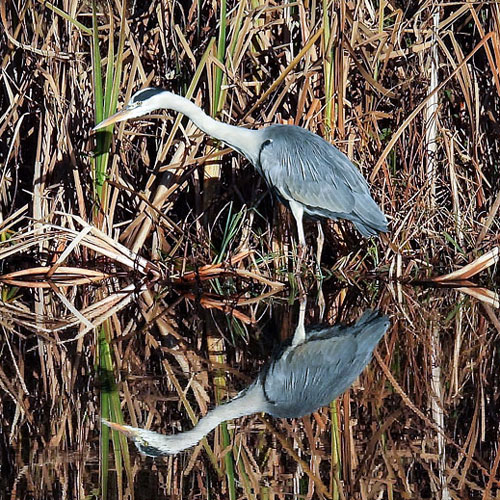
| Greay Heron |
Common Seal |
 |
 |
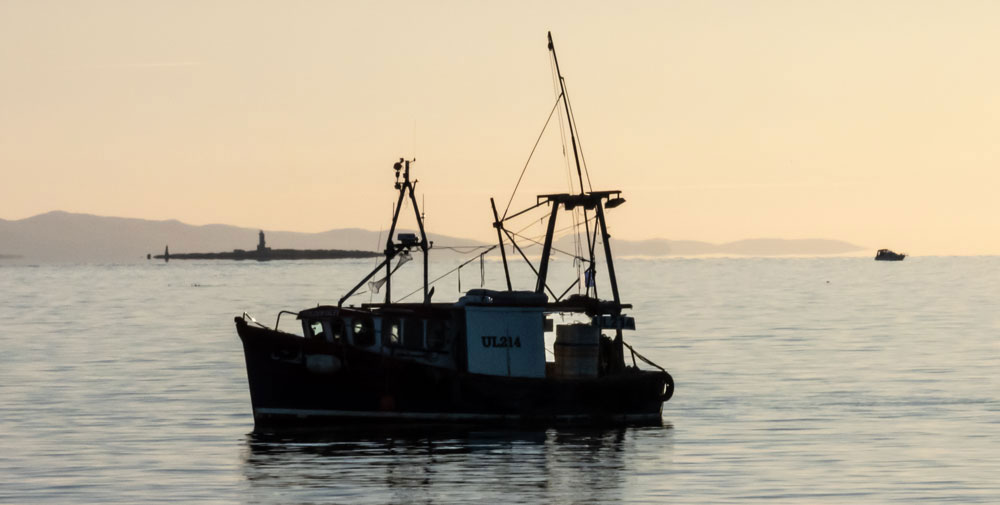
Talking of lighting conditions, the shot below is a backlit, moody picture of a small fishing boat that was anchored beyond the viewpoint at the end of the estuary.
 |
With 28 species photographed I consider my Tuesday outing to the North Ayrshire coast to have been a success. My favourites are the unexpected Scaup, Snipe, Purple Sandpipers, Redbreasted Mergansers and Common Seals. Next week’s weather forecast is reasonably good for
Monday to Thursday in Central Scotland, but will change for the worse by Friday. Sounds like I need a repeat of this week's strategy.
Week ending: 23rd November : Troon, Irvine Harbour, Broadwood Loch
On Sunday night, the weather prediction for the week ahead indicated
that Monday was to be the best day for nature photography: sunny, mild,
but a bit cold. The rest of the week would have a few sunny spells, but
would generally be cloudy and damp. I decided that a Monday visit to
Troon
and Irvine Harbour was a good plan - get out when it is sunny.
Monday, 17th November: Troon
The prediction proved correct and after a relatively stressless journey
down the M77 I found myself in dry, sunny Troon, specifically at the
south edge of the North Bay where the tide was high but receding.
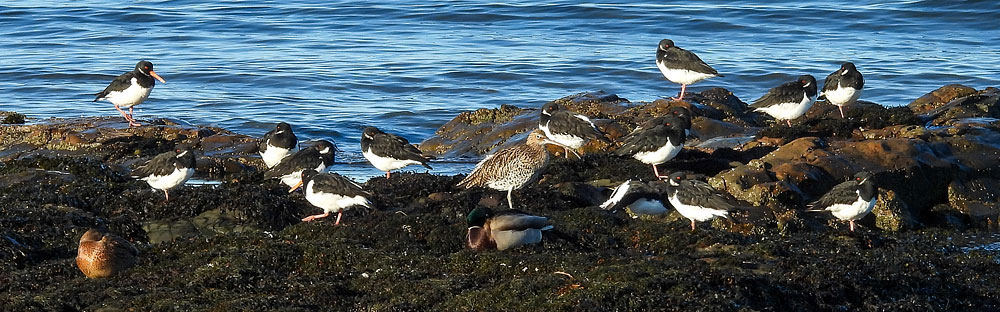
There was a large number of Oystercatchers massed on a long ridge of exposed rock.
On the shoreline, Redshanks were
feeding. A closer look at the Oystercatchers showed that most were
preening. There were a few Curlews on the shoreline and some Mallards
paddled in from the harbour…
| Redshank |
Oystercatcher |
 |
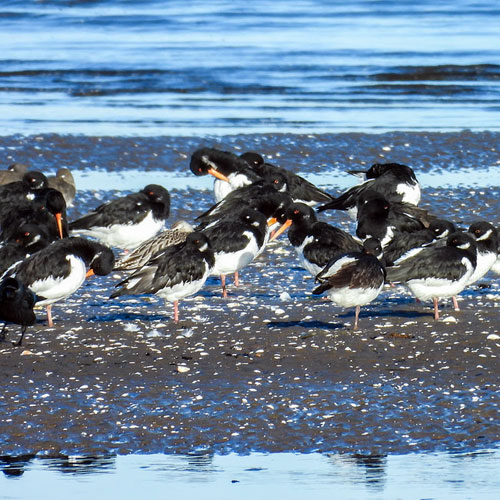 |
| Curlew |
Mallard |
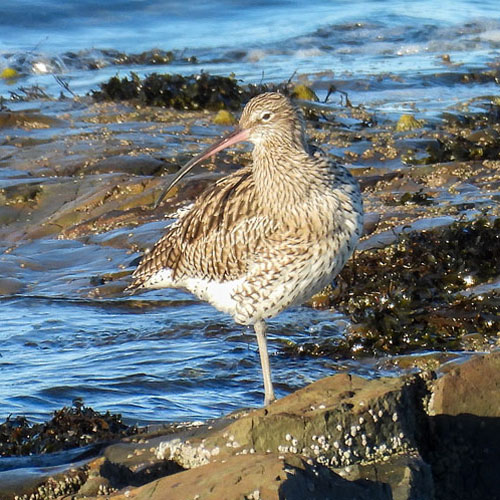 |
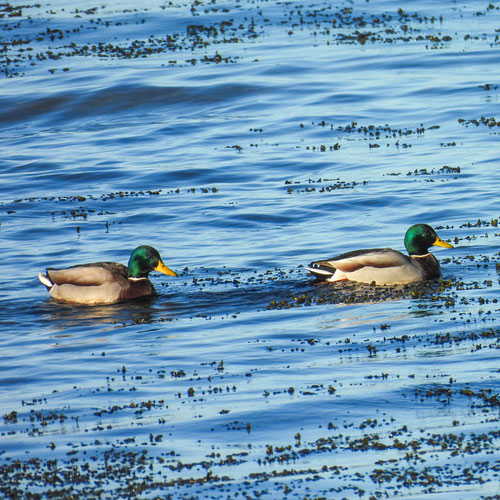 |
… and snuggled down beside the Oystercatchers and Curlews.
I walked around the Sea Buckthorn trees
that line that part of the coast, south of the North Shore car park. I
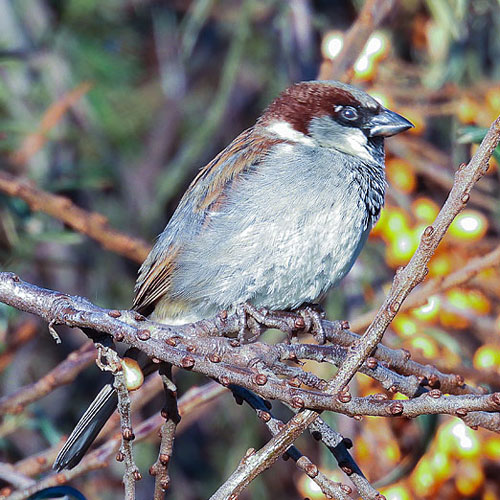
immediately came across, and just managed a shot of a flighty Song Thrush. Next I was very pleased to photograph a male Blackcap, the first we’ve recorded there. We always though, see a Robin, which is usually singing, and House Sparrows.
| Song Thrush |
Blackcap |
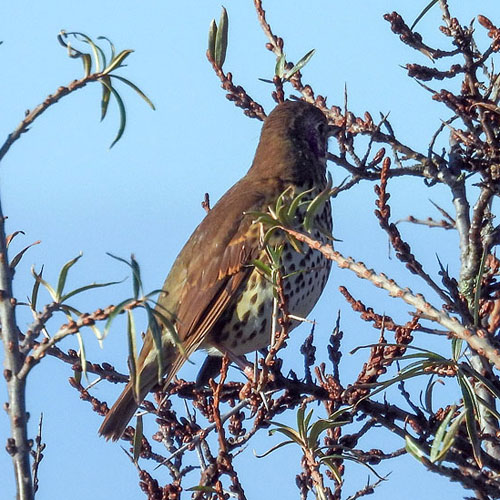 |
 |
| Robin |
House Sparrow |
 |
 |
I relocated to the sea-facing car park
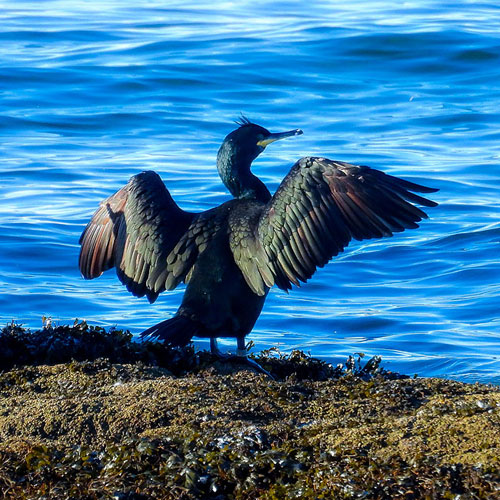
off Harbour Road where I found Shags occupying the exposed rocks about
40m from the parked cars. Note the stunning view of the Isle of Arran.
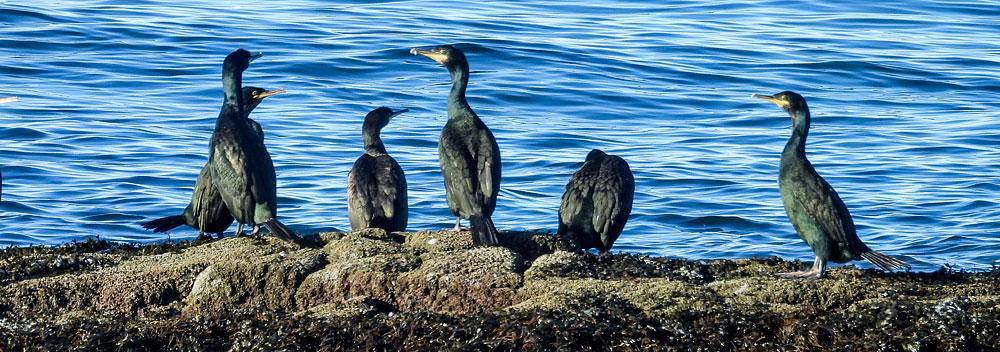
Below is a magnified shot of some of the Shags. A few were diving for fish….
…. and then returning to the rock
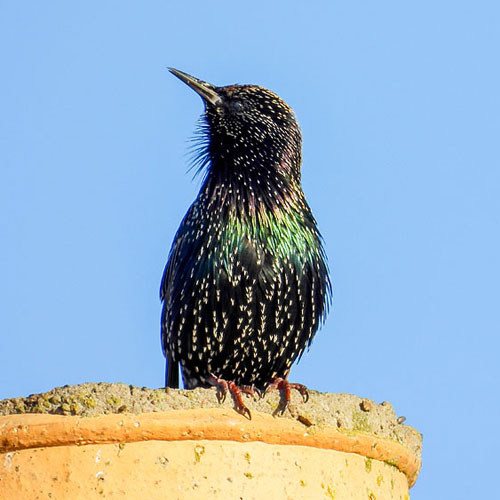
to dry their wings. A Starling was singing its heart out from a chimney
of the row of houses by the car park. I walked along the small sandy
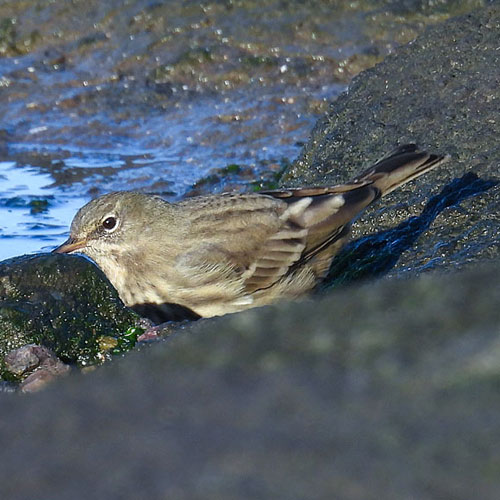
beach north of the car park and nearly got a good shot of a very busy Rock Pipit.
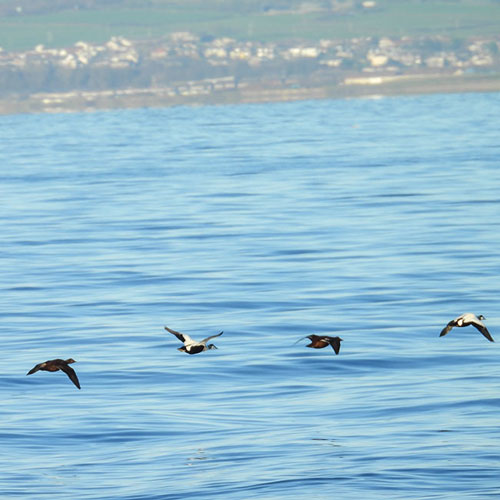
A rather lonely-looking drake Eider was on the beach and I wondered if
it was injured or ill. But it seemed ok. There was a juvenile Black Guillemot bobbing up and down in the waters and calling for its mum just beyond the end of the beach.
| Shag |
Starling |
 |
 |
| Rock Pipit |
Eider... |
 |
 |
|
Juvenile Black Guillemot |
 |
 |
A wee Robin appeared on barbed wire that runs along the perimeter of the timber yard, adjacent to the car park.
A friendly fellow-birder beckoned me to join him on the rocks as there was a group of Purple Sandpipers
half-hidden on the sea-facing side of the rocks. I very carefully
picked my way across the slippery rocks, saving the NHS a new hip
(Ed.), to join my friend, who had an excellent view of the birds.
I also saw a few Turnstones with the Purple Sandpipers. After snapping
the elusive birds I managed my way back to the car where I came across
a White Wagtail that was skipping across the grass.
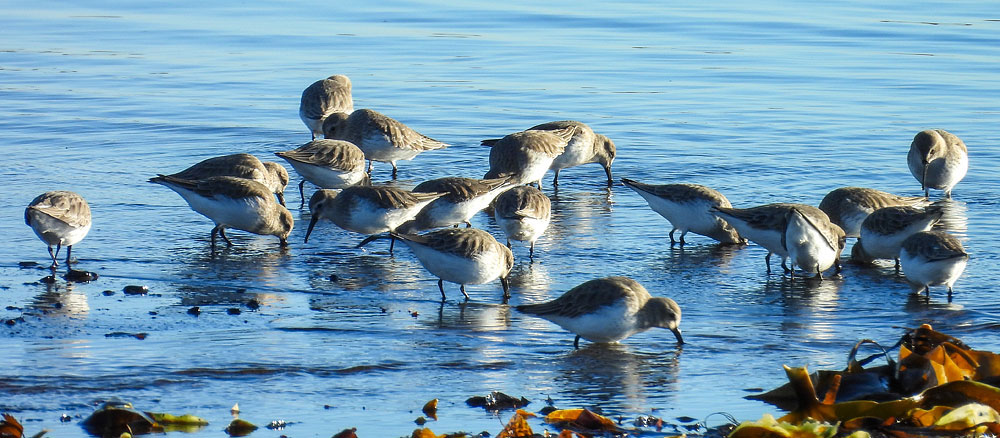
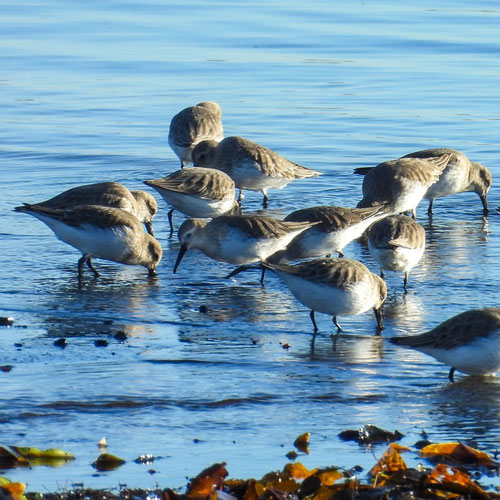
Next I drove to the Titchfield Road car park and walked along by the sea wall to view a large flock of Dunlins that were feeding on seaweed piles. The low Autumn sunlight backlit the birds but I managed some decent shots.
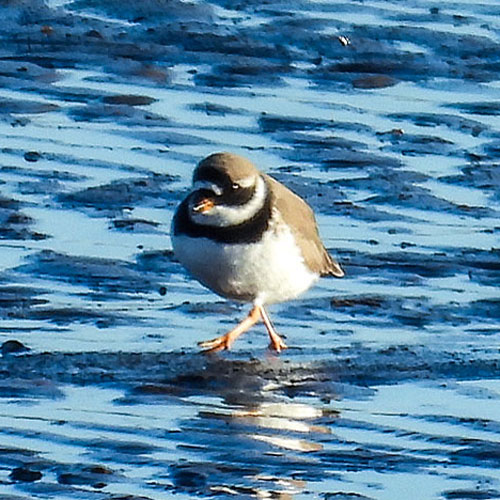
Below is a more detailed crop of the the previous picture. I also spotted a lone Ringed Plover moving across the sands.
| Dunlin |
Ringed Plover |
 |
 |
My final shot at Troon was of the shore adjacent to the Titchfield Road car park. Note Ailsa Craig in the distant horizon.
Monday, 17th November: Irvine Harbour
After leaving Troon reasonably happy with my haul of pictures, I
visited Irvine Harbour, keen to add to that list. Below is the the view
of the mouth of the River Irvine estuary.
I passed a handsome Black-headed Gull
that was perched on top of a tall wooden pole at the edge of the river.
I spent some time observing a young Shag as it made repeated dives in
the river. Unfortunately it didn’t bring up any fish.
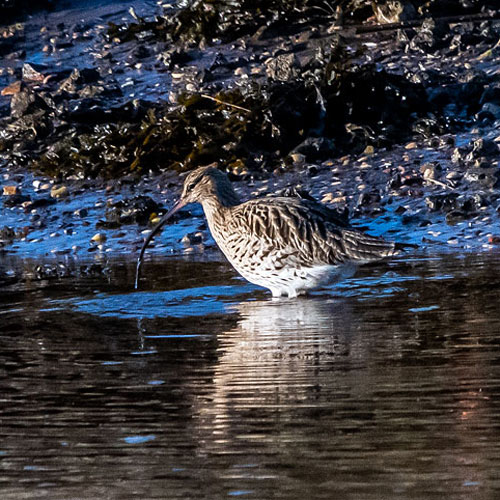
On the opposite bank of the river I
watched a Curlew and then a Grey Heron as they waded along the
river’s edge. The Curlew seemed to catch something long and thin
- perhaps an elver. There were several passes of Oystercatchers flying
downstream. On my way back to the car I
photographed my long shadow to emphasise how low the Sun was in the sky.
| Curlew |
Grey Heron |
 |
 |
| Oystercatcher |
|
 |
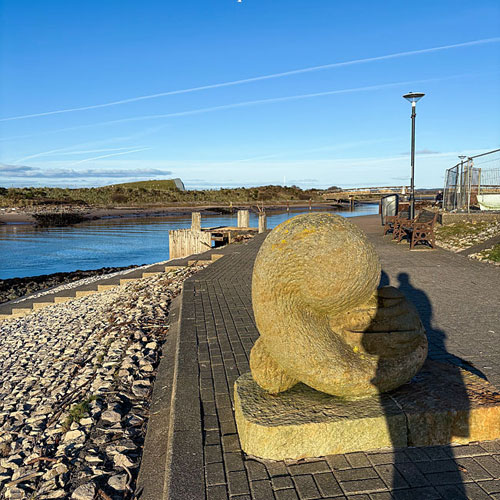 |
My final shot was of the famous Scientists’ Bridge.
Thursday, 17th November: Broadwood Loch
Poor weather on the next two days prevented me from getting out with
the camera. It did though brighten up on Thursday and I visited the
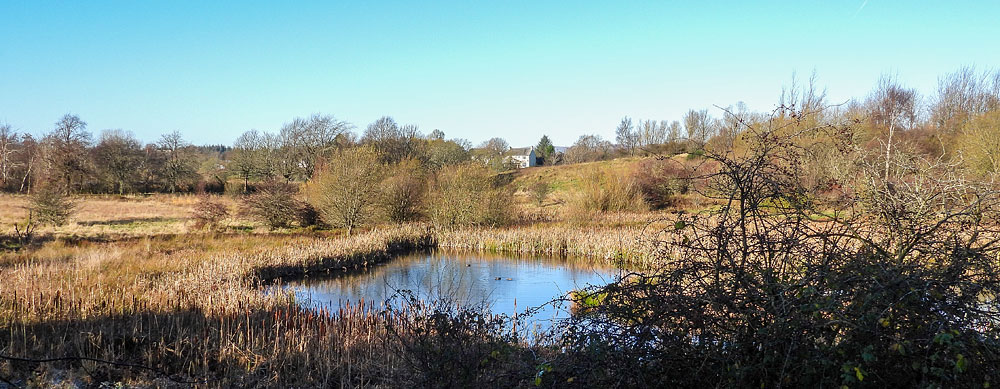
beautiful Broadwood Loch in Cumbernauld.
After parking at the car park at the
south end of the loch, I was impressed with the sight of thirteen
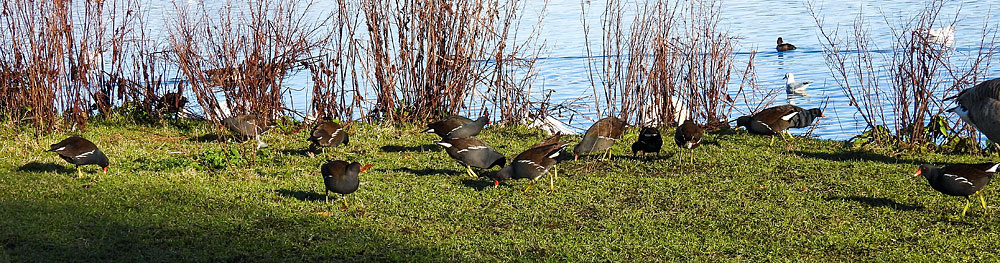
Moorhens foraging on the grassy area by the car park.
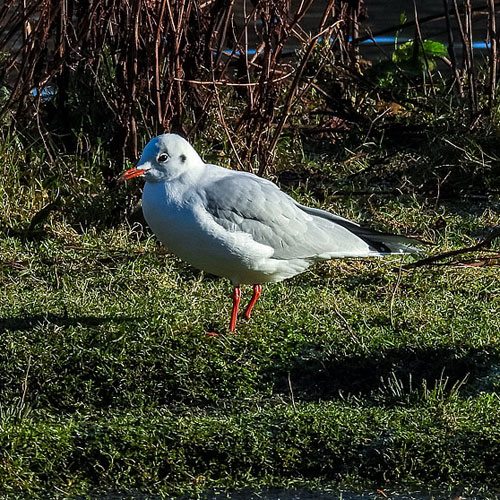
Other birds in the same patch of grass
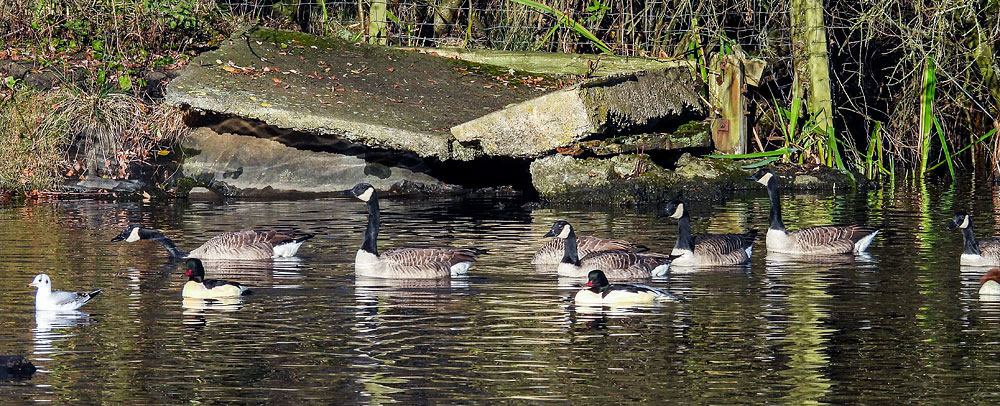
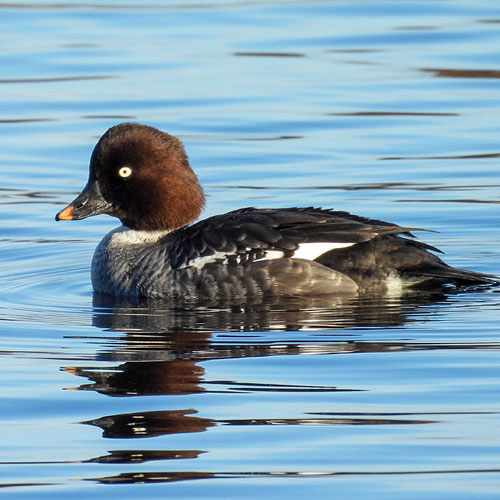
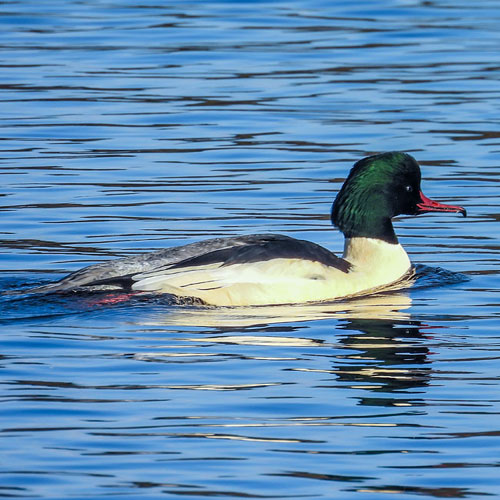
included Black-headed Gulls and Canada Geese. On the water were
Goldeyes, Goosanders, Mute Swans and more Canada Geese.
| Black - headed Gull |
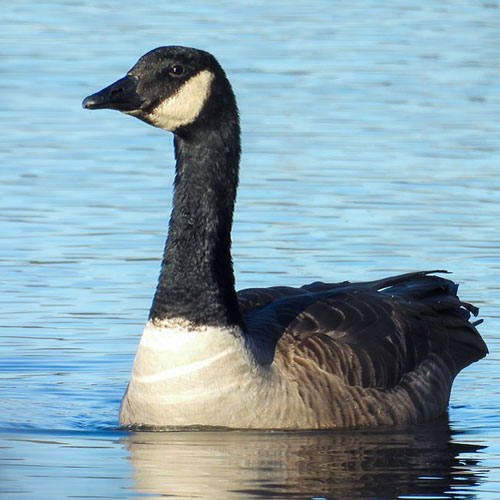
Canada Goose |
 |
 |
| Female Goldeneye |
Drake Goosander |
 |
 |
|
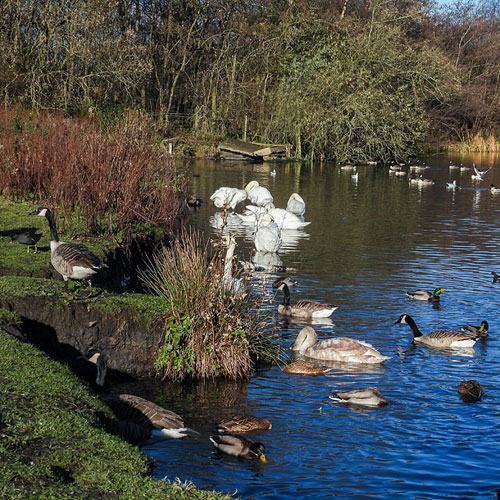
Canada Goose |
 |
 |
I walked around the loch and found even more Canada Geese…..
….. and lots of Herring Gulls and Black-headed Gulls.
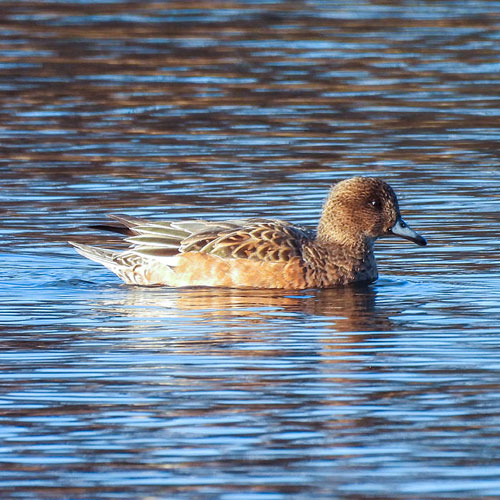
There were also quite a few Wigeons
dotted around the whole loch. The wee island hosted a few Cormorants
drying their wings after spells of diving. It turned out that most of
the bird “action” was at the start of my circuit - but it
was a satisfying walk.
It was a quiet week in terms of the
number of times I got out and about, but even so, I managed to
photograph 26 species, all birds, not to mention some satisfying scenic
shots. My favourite birds were the Purple Sandpipers, Blackcap,
Goldeneye, Starling and White Wagtail. My favourite
scene was the shot of Ailsa Craig. Next week’s weather is to be
milder but wet and changeable - but I’ll get out when I can
though.
A slight delay in this week's blog...Scotland 4 Denmark 2...nuff said
It was yet another dreary start to the week but cooler and brighter conditions were possible from Wednesday onwards.
Monday, 10th November: Baron's Haugh.
At the Marsh Hide the water level on the Haugh was raised by the plentiful rain, so I wasn’t expecting small waders such as Sandpipers or Snipe. Of course the relatively high water level wasn’t a problem for the trio of Whooper Swans that were cruising on the water to the left of the scrapes.
However, there were longer-legged waders, namely Curlews. A dozen or so were snoozing on the grassy banks of the scrapes…
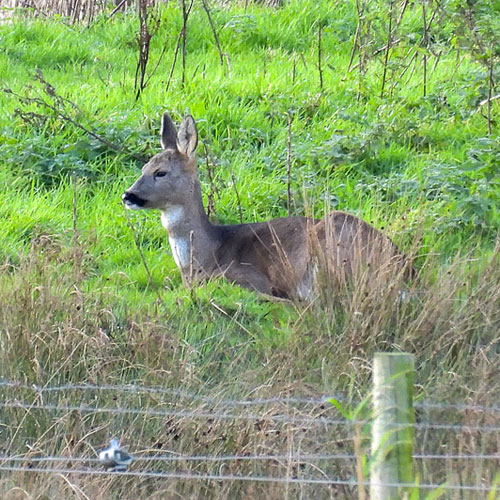
…. and a few were foraging at the water’s edge, along with another long-legged wader, a Grey Heron. There were a few Teals and Wigeons dabbling in the gloomy light. I spotted a lone Roe Deer
in long grass beyond the scrapes. I relocated briefly to the Causeway
Hide only to find more Whooper Swans but little else of note.
| Curlew |
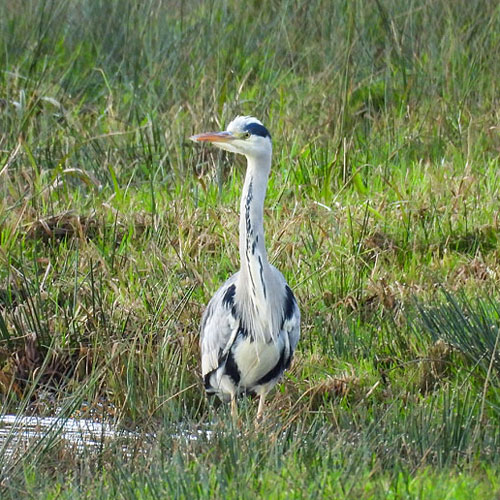
Grey Heron |
 |
 |
| Teal |
Female Wigeon |
 |
 |
| Roe Deer |
Whooper Swan |
 |
 |
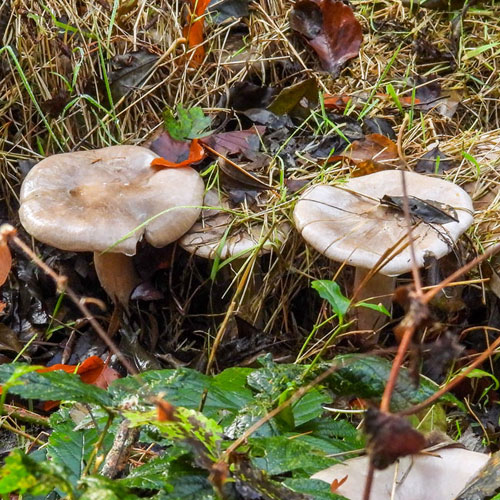
At the edge of the woods by the car park, I found the very pretty Crimped Gill bracket fungi sprouting generously from a rotting felled tree trunk.
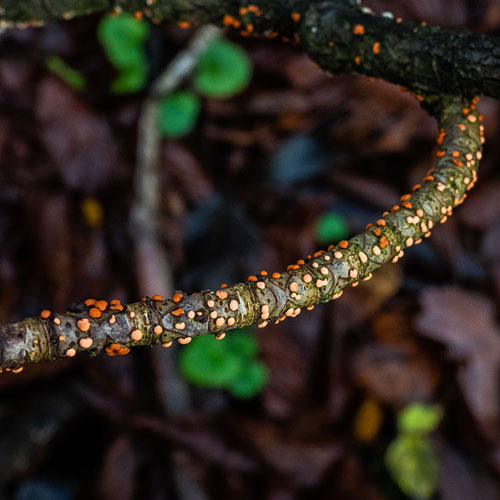
A few of the smaller branches of the rotting tree were infested with a newby, Coral Spot, a fungus that is sometimes found in decaying trees that are already weakened with another fungus. I also found a Shaggy Inkcap standing around of the leaf litter.
| Coral Spot |
Shaggy Inkcap |
 |
 |
Wednesday, 12th November: Dalzell Estate
A couple of days later, the weather brightened a bit, but there were frequent showers. I did though manage to get out with my camera for an hour to Dalzell Estate (which neighbours RSPB Baron’s Haugh). I entered the estate from the Baron’s Haugh car park, and a wee Robin was singing a
welcome at the entrance. Several minutes later I captured a shot of a Nuthatch high in a tall tree. As I crossed the wee bridge over the Dalzell Burn I noticed clump of Oyster Mushrooms growing on a fallen tree at the edge of the burn. There were quite a few fallen trees in that area of
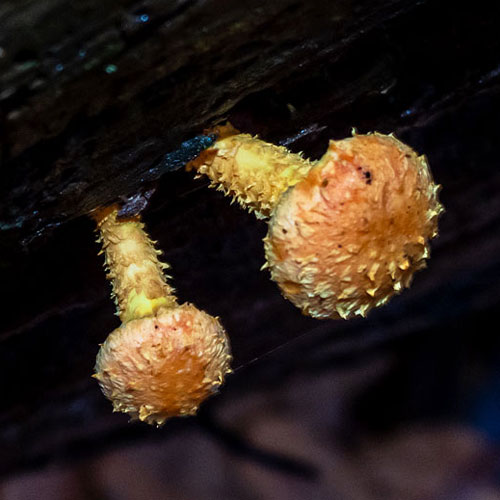
the woods, and they were great places to look for fungi. Before too long I had another four: Candlesnuff, Birch Polypore and another newby, Flaming Scalycap ...
| Robin |
Nuthatch |
 |
 |
| Oyster Mushroom |
Candlesnuff |
 |
 |
| Birch Polypore |
Flaming Scalycap |
 |
 |
….. and Hairy Curtain Crust,
Sunday, 16th November: Hogganfield Park LNR.
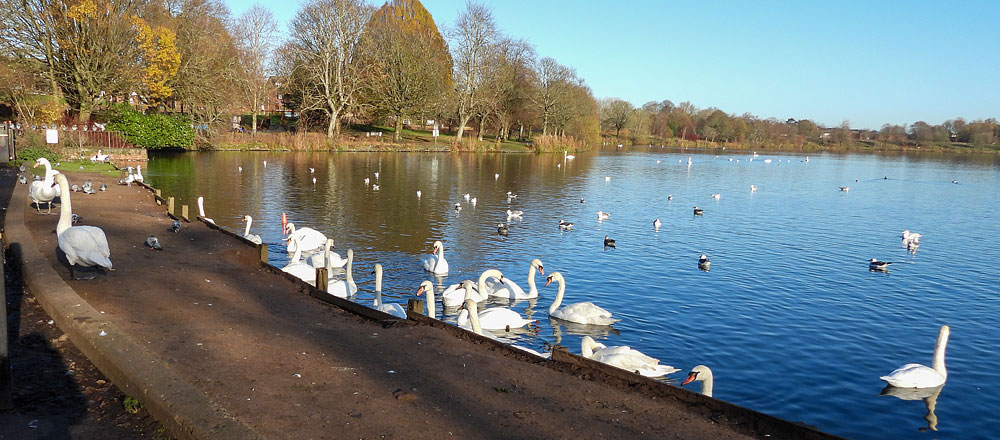
Sunday’s weather proved to be the best of the week: dry, sunny and warm, as you can see from the picture below, at Hogganfield Park . The swans were Mute Swans. There are usually Whooper Swans among them by this time of year but, sadly, there were none - as yet. Perhaps they
preferred Baron’s Haugh this year.
 |
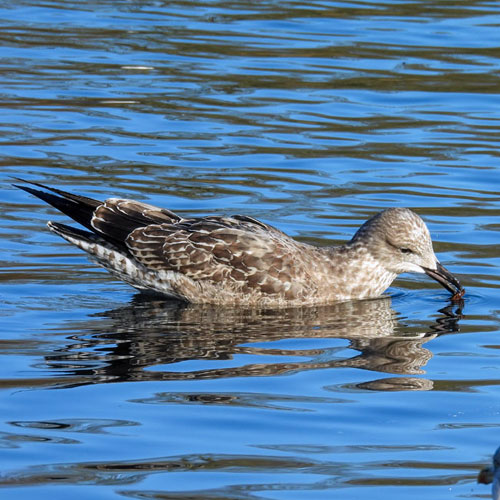
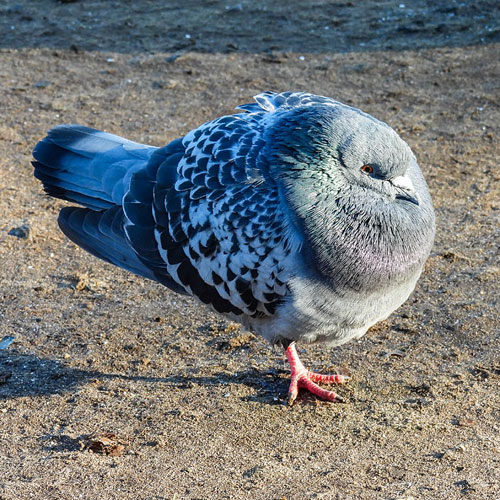
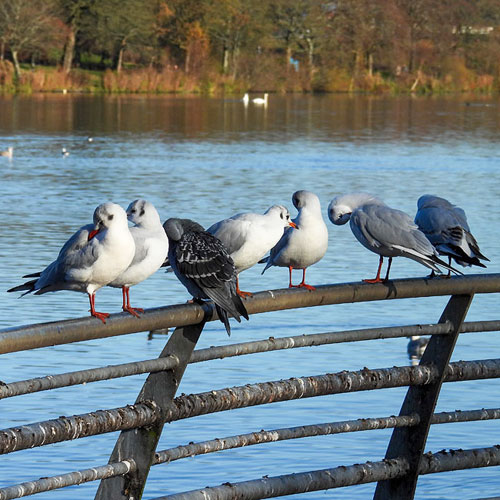
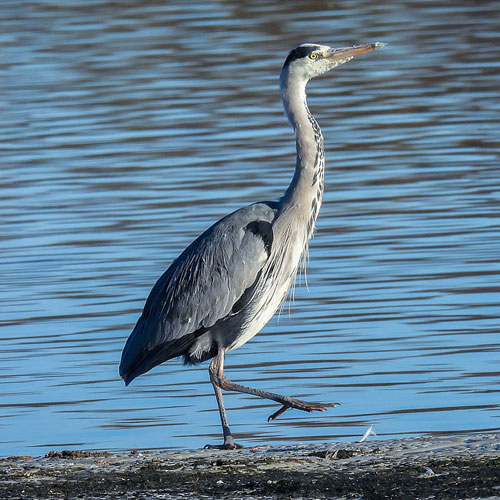
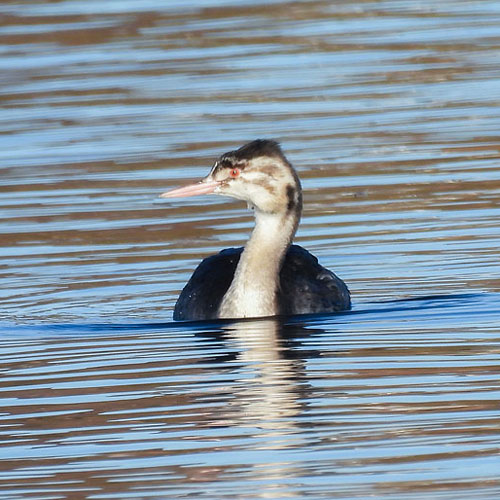
I thought I’d give a mention of an often ignored bird, but which is, arguably, the most common gull in the park, the Lesser Black-backed Gull . Many Feral Pigeons are also found in the park and they too are often overlooked or are even considered to be pests . Black-headed Gulls are also very common in the park, and also are held in some contempt by park visitors who like to feed the swans and ducks only to see these gulls pinch the food. A big Grey Heron was on the pontoon that is opposite the car park. I watched it chase the gulls off of the pontoon, so it would seem that the dislike of gulls is not confined to humans. Great Crested Grebes also hate gulls because they harass them and attempt to rob them of the fish they catch, so the juvenile in the picture below will have to learn how to evade the harassment.
| Lesser Black - backed Gull... |
...1st Cycle Juvenile |
 |
 |
| Feral Pigeon |
Black - headed Gull |
 |
 |
| Grey Heron |
Juvenile Great Crested Grebe |
 |
 |
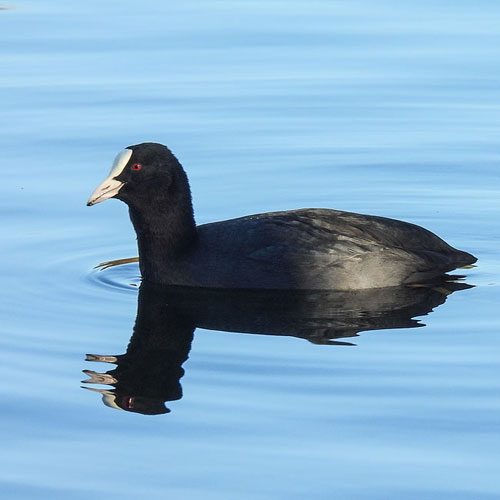
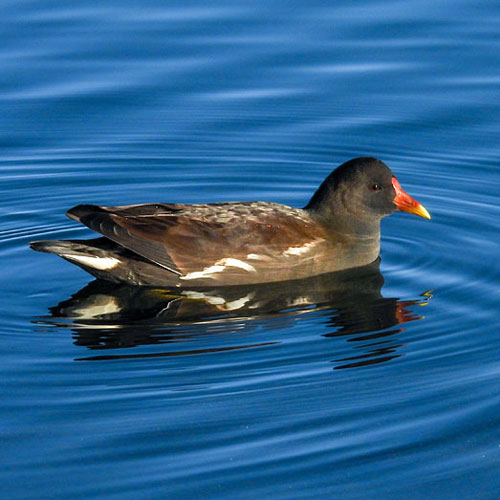
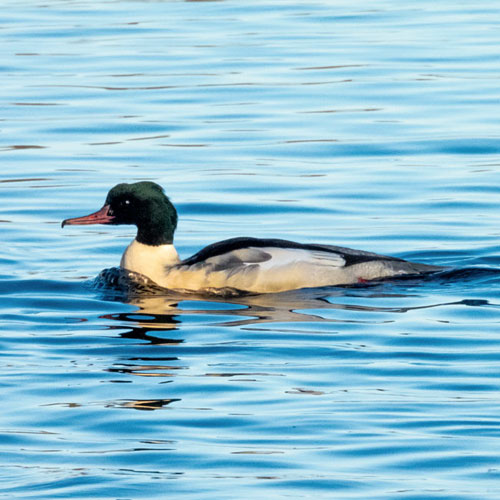
It was obvious to me that the birds were enjoying the fine weather as much as the humans walking around the loch. The Coots and Moorhens were moving freely along the edges of the loch without the usual disputes with each other. I saw only a few Goosanders moving individually
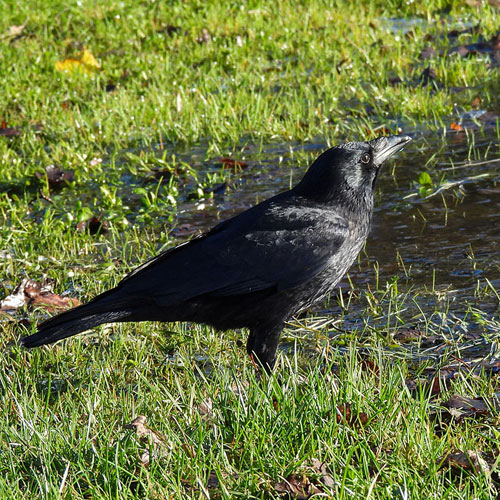
across the loch. I was lucky enough to get fairly close to a Little Grebe that was diving for fish behind one of the small artificial islands. I also got a quick, sneaky close shot of a Carrion Crow that was drinking from a puddle, when usually the crow flies off if it sees me stopping.
| Coot |
Moorhen |
 |
 |
| Male Goosander |
Female Goosander |
 |
 |
| Little Grebe |
Carrion Crow |
 |
 |
Below is the view looking north from the south side of the loch. The amber shades across the scene are typical of Autumn.
I snapped a Magpie catching it just as it flew off one tree and photographed it again once it settled in the next tree. I got a second flight shot when a Black-headed Gull hovered over an unseen swan, presumably to relieve it of something it was eating. A solitary Canada Goose was working its way around the edges of the lochs it searching amongst the reeds.
As usual, I took a detour east of the loch to view the “hidden” pond.
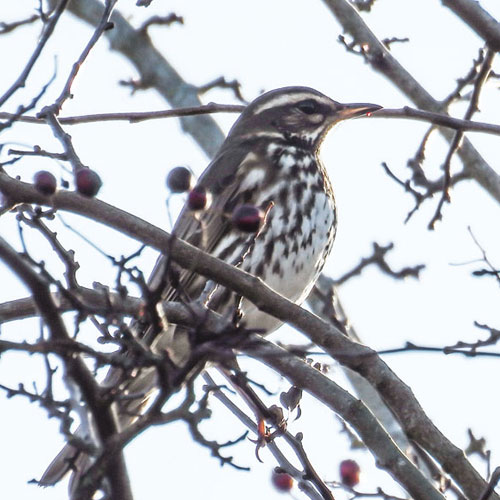
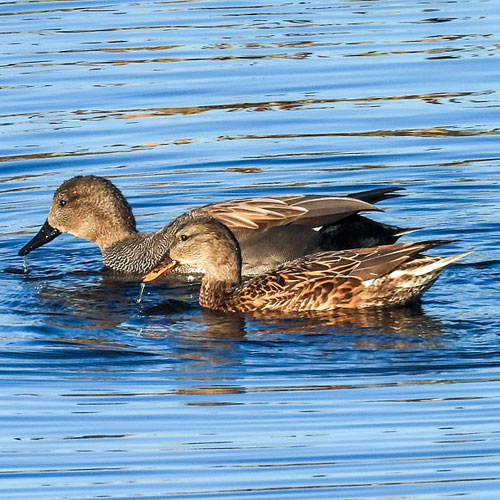
As I scanned the pond I heard the call of a Redwing in a tree behind me. Unfortunately it was backlit by the low Sun. A prowling Grey Heron appeared at the right side of the pond and then a drake Gadwall came out of the reeds at the left hand side. Soon after that, a pair of
Gadwalls emerged from behind the island.
Pleased with my few shots at the pond, I returned to the north side of the loch.
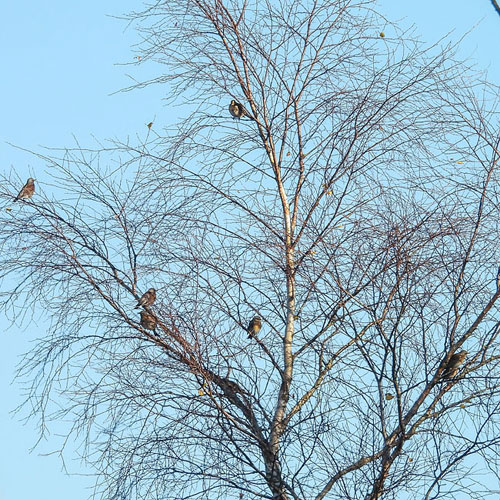
I spotted a group of Fieldfares in a tree and although they were a good 50m away, I got a reasonable shot of one of them. And then I noticed a big bird sitting in a tree in the park but by the main road. It was a Buzzard. I paced along the park road nearer to the Buzzard and got a few decent shots. On my way back to the car I got some pleasing shots of a drake Mallard, a couple of Feral pigeons and a close shot of a Feral Pigeon.
It was an enjoyable week with 36 species photographed. My favourites are the Buzzard, Gadwalls and the fungi.
Next week is to be cold, with snow possible, so I’ll put on my long johns.
Week
ending: 9th November: Aberlady,
Longniddry
Bents, Port
Seton & Morrison’s
Haven
After
another week of mild weather which was disappointingly dull and damp,
my spirits were raised
on Friday when it brightened up across Central Scotland, especially in
the east. So my plan
was to visit the Lothian coast between (and including) Aberlady and
Morrison’s Haven. The tide would be low and rising.
Friday,
7th November: Aberlady
When I arrived in
Aberlady I drove through the High Street, turning down Sea Wynd and
round onto Gullane Road
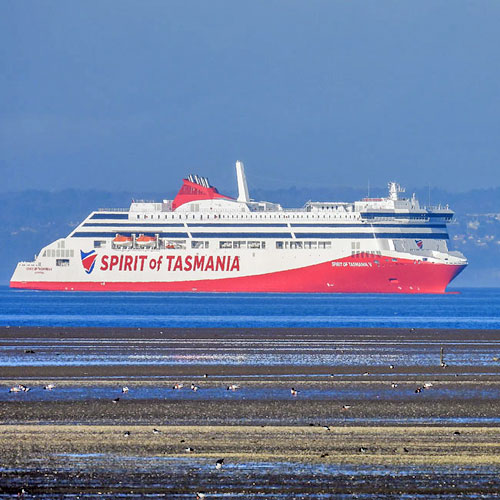
where Aberlady Bay came into full view. There were two large sea
vessels on the Firth of
Forth: a ship carrying large cylindrical components, likely monopiles
or foundations for
offshore wind turbines
and a newly-built ferry ship intended for service in Tasmania.
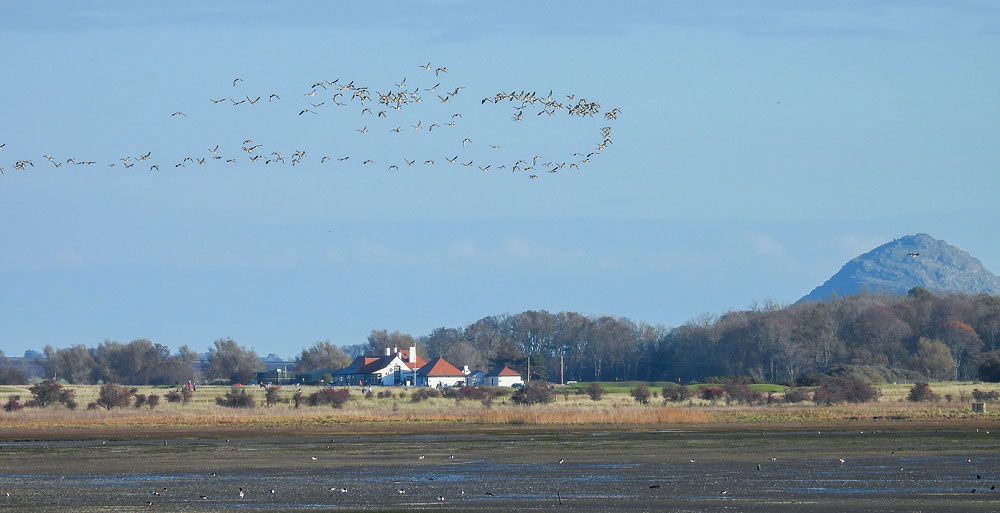
There were hordes of
birds on the sands of the bay. I stopped the car since I wanted to photograph them, especially the nearer ones
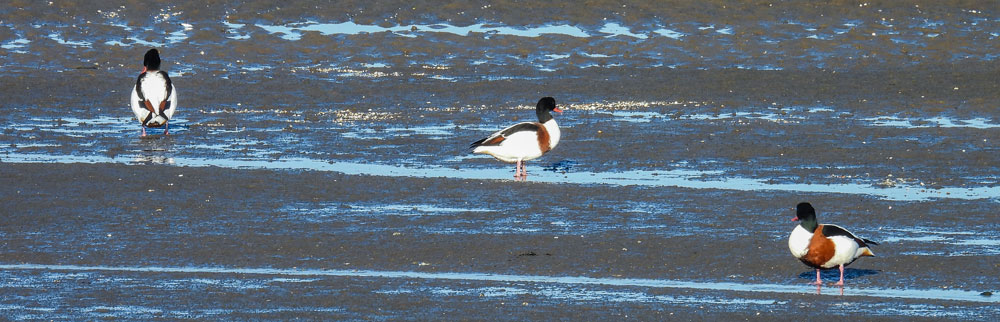
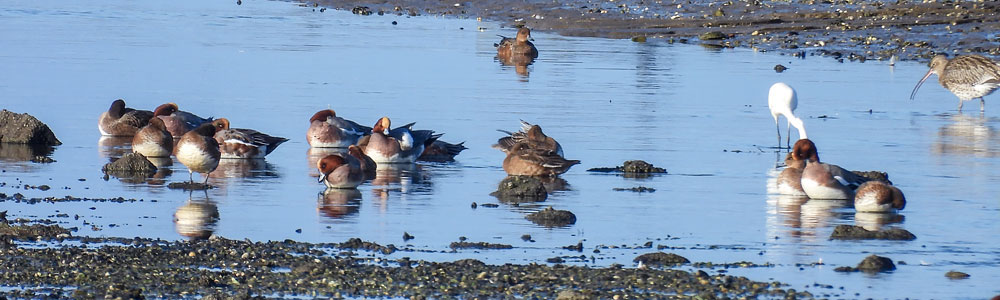
on the meandering Peffer Burn. Shelducks , Wigeons
and Herring Gulls made up most of the flock and their numbers were
about to be added to by
the Greylags I could see circling in the distance.
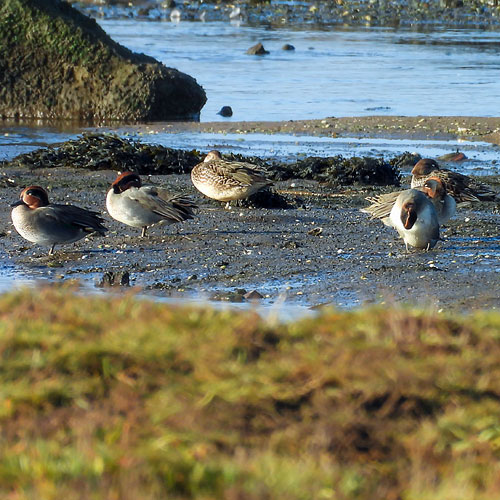
The Shelducks were
drinking between their foraging. I could also see Teal but they were
mainly snoozing and
there were also a few Mallards cruising along the stream. I was pleased
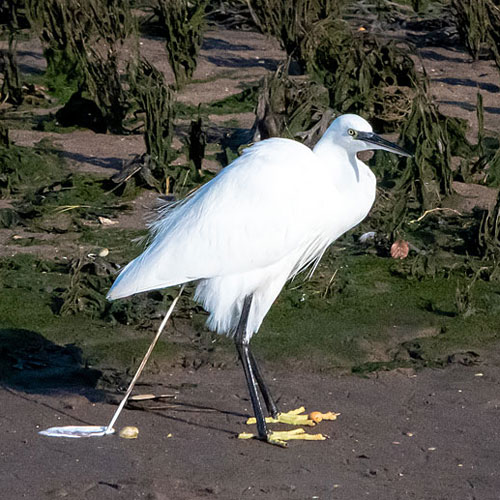
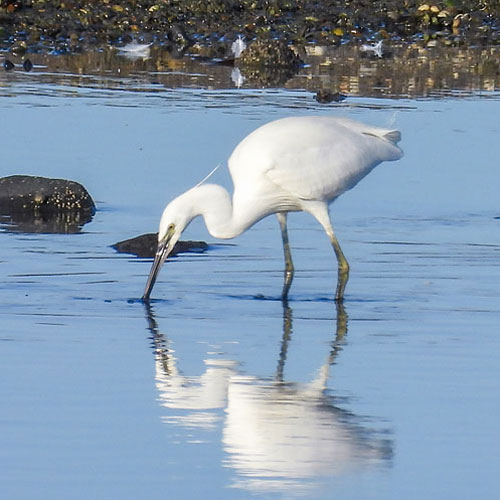
to see a few Little
Egrets on the Burn.
| Shelduck |
Teal |
 |
 |
| Mallard |
Little Egret |
 |
 |
Eventually I moved on to
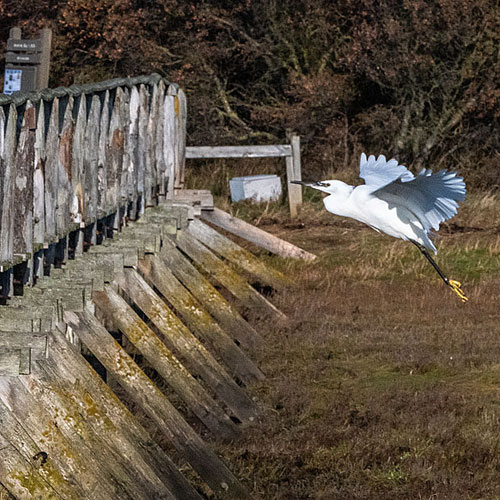
the car park for the Aberlady LNR. The reserve is accessed via a picturesque wooden bridge.
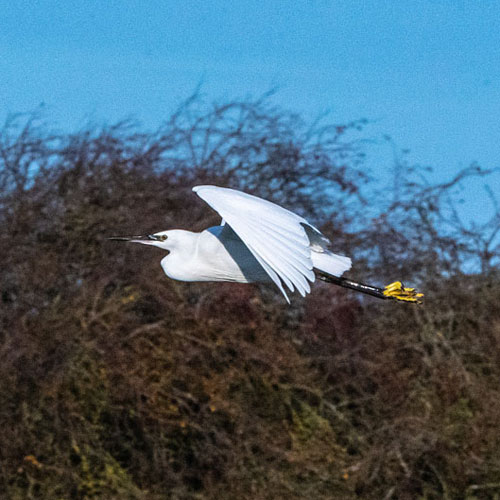
A Little Egret flew in
from upstream on the right…,
…. and began
feeding close to the bridge. However, it was interrupted by walkers
crossing the bridge and
it flew onto the bank and expressed its disgust in an inappropriate
manner, before taking
off and flying over the bridge to feed in less threatening surroundings
further downstream.
The Greylags
I’d spotted landed during the short distance I’d
driven to the car park and they were gathered on the bare sands on the other
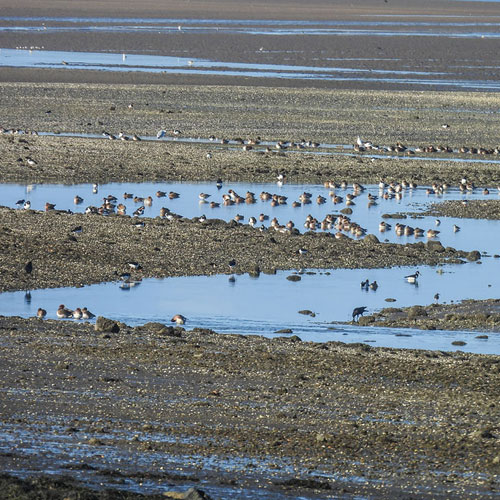
side of the Burn where a sizeable number of Wigeons were congregating.
There were more Wigeons
on the salt-marsh on the near side to the left of the car park. I also noticed Redshanks and Black-headed Gulls on
the river. The Greylags were getting a bit restless, for no apparent reason. Perhaps they were
dissatisfied with the feeding opportunities at the Burn.
| Wigeon |
Redshank |
 |
 |
| Black - headed Gull |
Greylag Goose |
 |
 |
Friday, 7th November:
Aberlady Point, Kilspindie Golf Club
My plan did not include
exploring the Aberlady reserve since past experience of autumn visits have been relatively fruitless. So I
decided instead to have a quick look at the bay from Aberlady Point which is just north of the Kilspindie
Golf Club. I did just that. Again though, it seems the Greylags had taken to the skies whenever
I’m in the car because I could see them flying northeast towards the prominent North Berwick Law.
From the Point I could
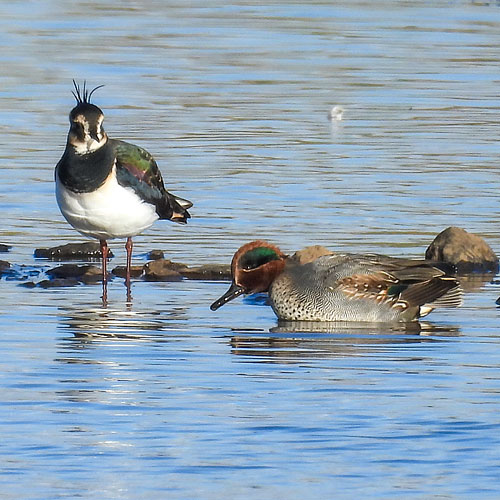
see there were more Wigeons gathered and a few Lapwings on the sands. Since there was nothing more of interest, I
decided to set off for Longniddry. However just as I started the car, a male Stonechat landed
on the roof of a neighbouring parked car. I hastily
lowered my window,
calmly reached for my camera and managed a fairly decent shot of the handsome wee fellow.
| Wigeon |
Stonechat |
 |
 |
Friday,
7th November: Longniddry Bents
Longniddry
Bents enjoys a wonderful panoramic view of the Firth
of Forth with Fife to the
north and Edinburgh and the Pentland Hills to the west.
However, the bird count
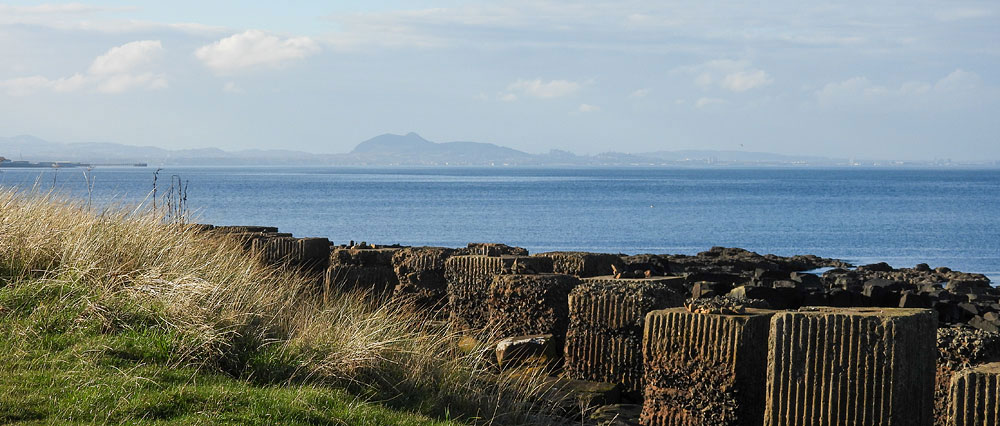
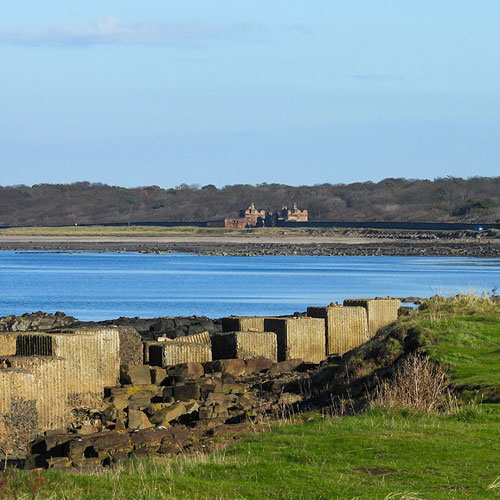
was a disappointment, with only a big Herring Gull on show, though the view east to Gosford Sands and the gateway
to Gosford House, with a line of World War II tank traps in the foreground - was quite fine.
Friday,
7th November: Port Seton
I didn’t hang
around Longniddry Bents for long and drove the couple of miles east to
Port Seton where I
parked at our usual place, the Wrecked Craigs car park. The tide was
still out and there
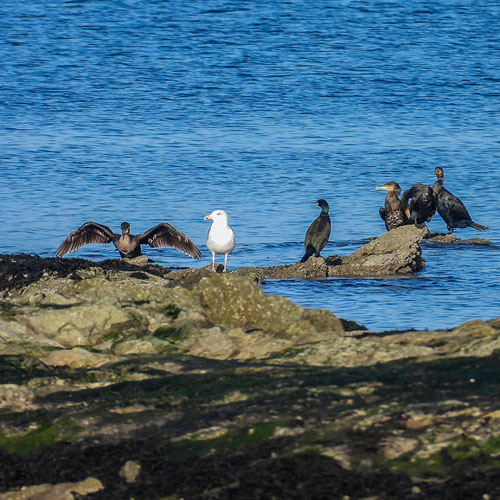
were only a few distant Cormorants drying their feathers on the rocks.
I decided to walk to the
harbour and found there
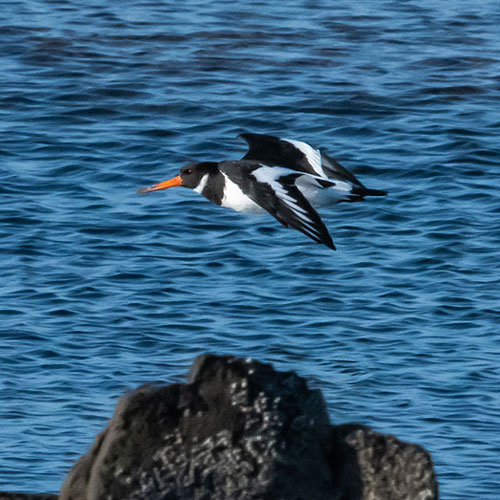
were more birds on the exposed rocks just before there, including a
Curlew and some Oystercatchers. At the harbour a Herring Gull
was looking down from its
rooftop perch.
| Cormorant |
Curlew |
 |
 |
| Oystercatcher |
Herring Gull |
 |
 |
The Port Seton harbour
was a fine, colourful sight filled with working fishing boats.
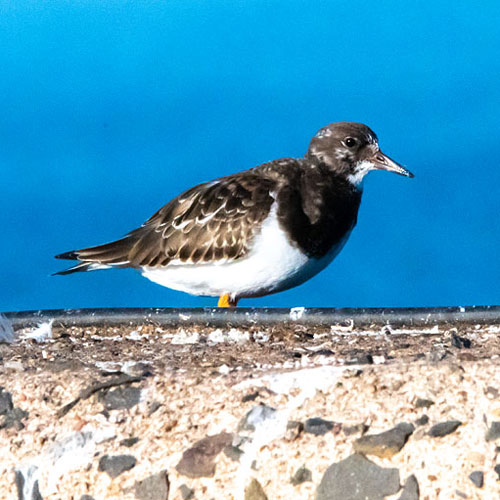
I spotted a Turnstone
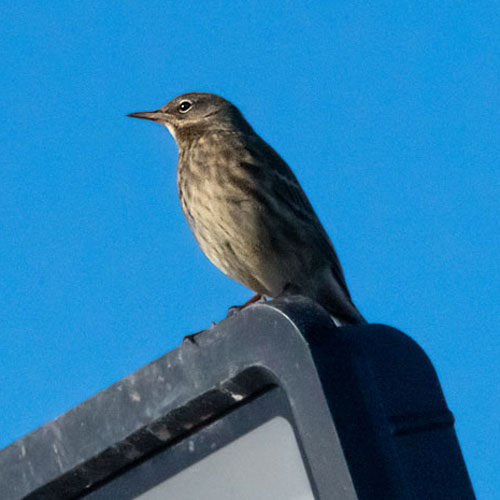
on top of the tall seawall, and, from the top of one of the fishing boats, a Rock
Pipit was calling. There was much noise and excited behaviour
coming from gulls
flying beyond the the seawall, which made me think there were other
birds diving in the
waters and the gulls were alert to the possibly of nicking some food. I
walked around the harbour
to the harbour mouth and when I had the full view of the waters beyond
the wall, there were
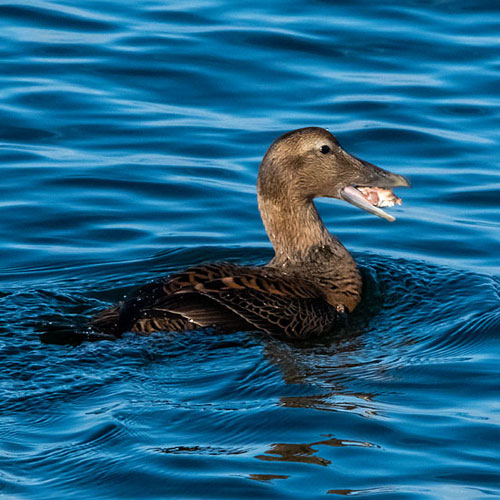
indeed Eiders diving for shellfish and the Herring Gulls were circling
over then, waiting for
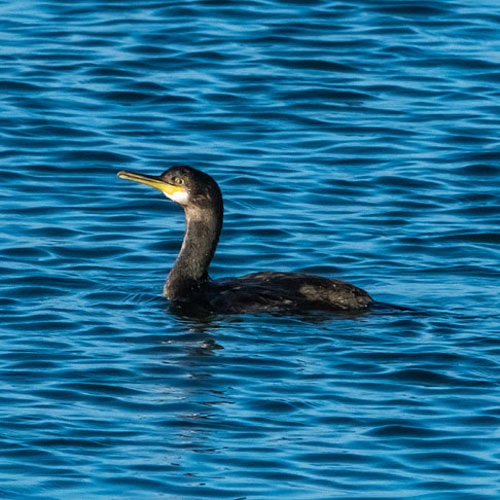
opportunities to rob the Eiders of their catches. A small Shag surfaced
at the harbour-mouth as I
was photographing the eiders.
| Turnstone |
Rock Pipit |
 |
 |
| Male Eider |
Female Eider |
 |
 |
| 1st Cycle Herring Gull |
Shag |
 |
 |
Friday,
7th November: Morrison's Haven
Satisfied with my short
time at Port Seton, I moved on a mile or so west to to my final
location, the
romantically named Morrisons
Haven. I was hoping that the tidal water would still be low enough to leave exposed the rocks that the
Seals like to lounge on. Sadly the waters had already
covered the rocks. But I
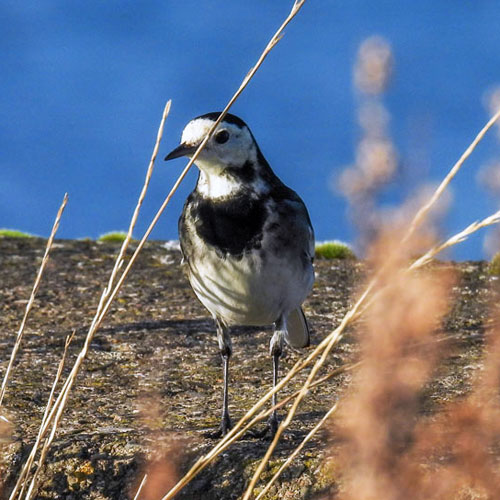
still managed to get some interesting shots, starting at the sea wall where a tweeting male Pied Wagtail was
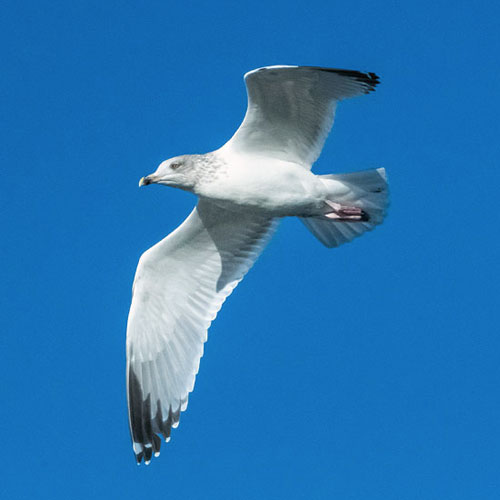
playing hide-and-seek with me just as an immature Herring Gull circled overhead. From the
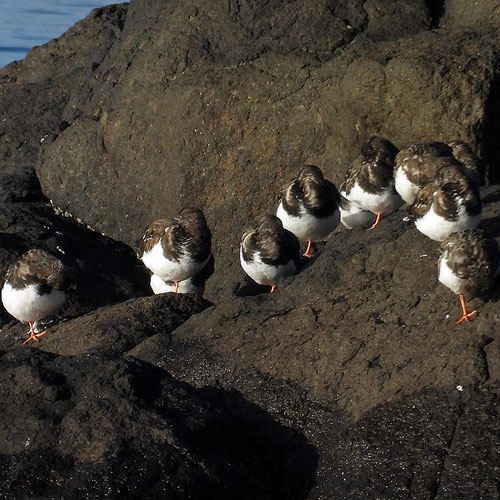
wall I could see a young Cormorant and some sleeping
Turnstones on a rocky
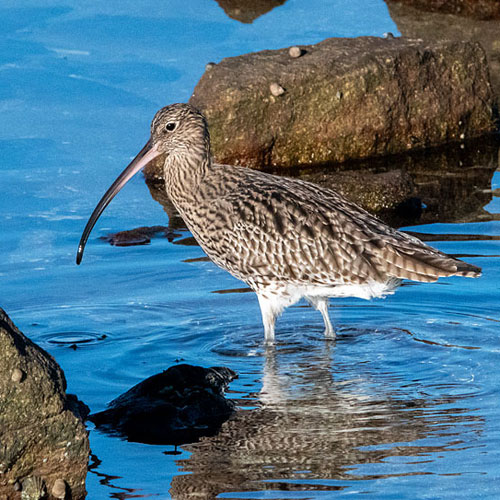
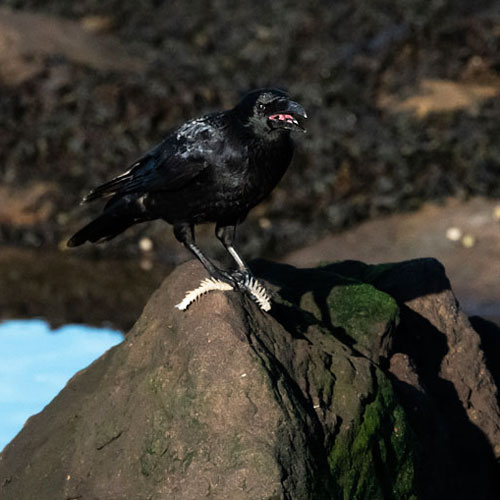
outcrop by the shore. A Curlew came into view at the opposite end of the rocks and then a Carrion Crow flew in and
took up a position on a low rock. The crow had brought a nearly bare fish skeleton from which it
was picking off the remaining flesh.
| Pied Wagtail |
3rd Cycle Herring Gull |
 |
 |
| Juvenile Cormorant |
Turnstone |
 |
 |
| Curlew |
Carrion Crow |
 |
 |
Most of the wildflowers
in the areas I’d visited have died back, but there were a few
exceptions. I found a
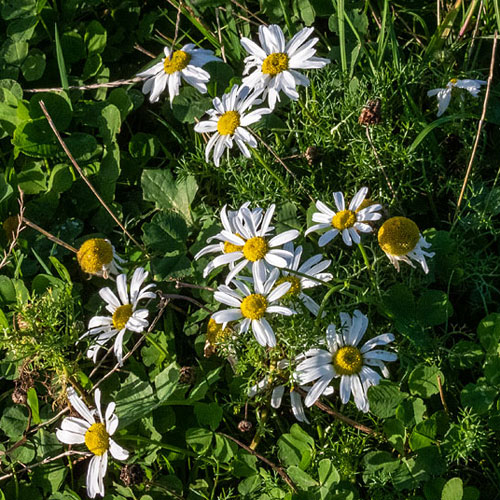
few patches of flowering Sea Mayweed, Oxford Ragwort and White Campion.
And if you thought that
this was going to be the first blog in a good few weeks that
hadn’t mentioned fungi,
then you’re
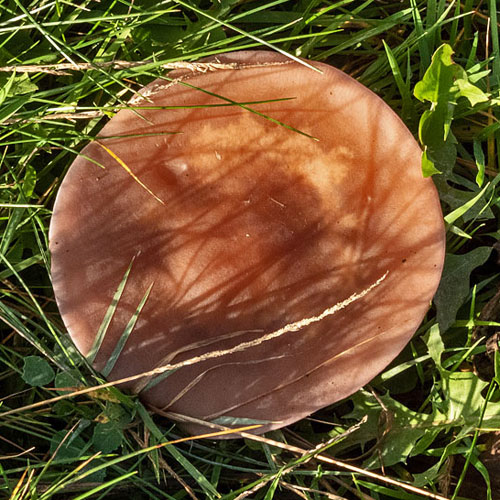
very much mistaken, because my final find was indeed a fungus, most
likely a Field
Blewit mushroom sprouting though low grass by the
seawall.
| Sea Mayweed |
Oxford Ragwort |
 |
 |
| White Campion |
Field Blewit |
 |
 |
It had been a rather
speedy sweep of the main birdwatching areas of the coast between
Aberlady and
Morrison’s Haven, with 24 species photographed, not as many
as usual but it was bit of a
“flying visit”. My favourites were the Aberlady
Little Egrets, the Port Seton Stonechat, Turnstone, Rock
Pipit and the Morrison’s Haven Curlew. There’s to
be more inclement weather next week so I'll be careful to find the sunny days - or even half days.
Week ending: 2nd November : RSPB Lochwinnoch,
Strathclyde
Country Park
Another week of changeable weather loomed and I was determined to seek
out any sunny intervals
during which I could take my camera for a walk.
Monday,
26th October: RSPB Lochwinnoch
The week got off to a
good start on Monday. After a gloomy morning, the weather turned out sunny by late morning and early afternoon.
I thought I’d check out RSPB Lochwinnoch for birds and probably fungi. The Sun was just
beginning to break through the cloud when I arrived at the Channel Hide.
 |
The
scrapes weren’t packed with birds, but there were quite a few
Teal scattered around the site.
A
few paddled fairly close to the hide and some settled in the middle
distance. A few Lapwings
flew in and mingled with the Teals. The only other bird I spotted was a
Grey Heron in a tall tree
away to the left boundary of thew reserve. When I left the hide, at the
start of the Aird Meadow
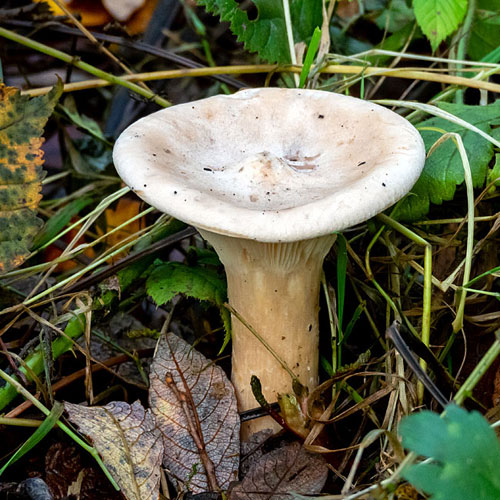
Trail, I found my first fungus, a Trooping
Funnel, a very common mushroom across the UK.
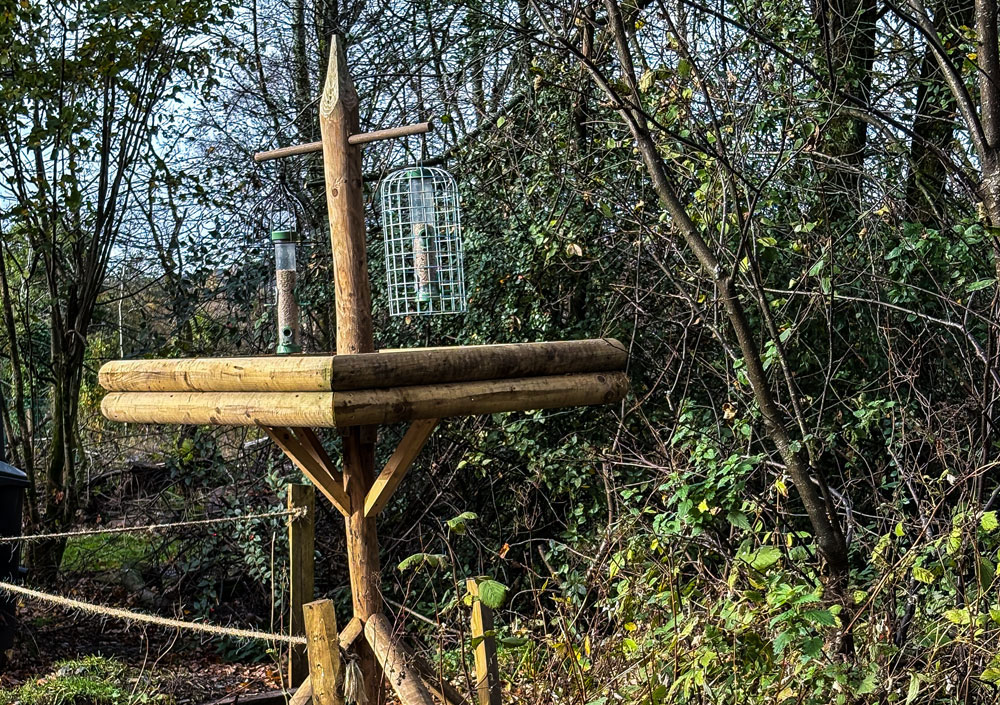
There
was a newly erected bird feeder outside the new visitor cabin and there
were birds in the
surrounding trees waiting until I got out of the vicinity before they
started to use it.
I
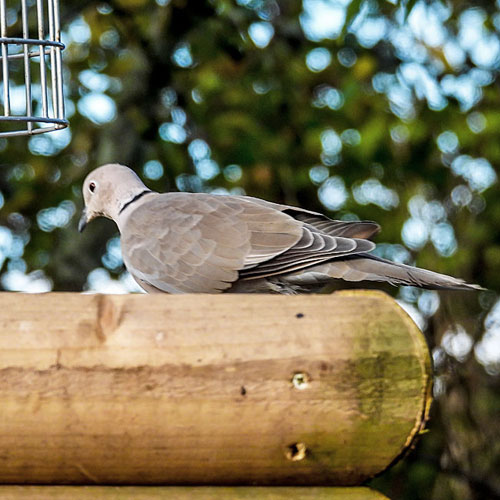
sat at one of the picnic benches and watched and waited. First in was a
big Collared Dove but it
didn’t hang about about. When it left, the small birds piled
in: Great, Blue and Coal Tits nipping in, selecting a seed and carrying it back to
consume on a high branch. Also on the branches, but less keen to venture onto the table, were House
Sparrows.
| Collared
Dove |
Great
Tit |
 |
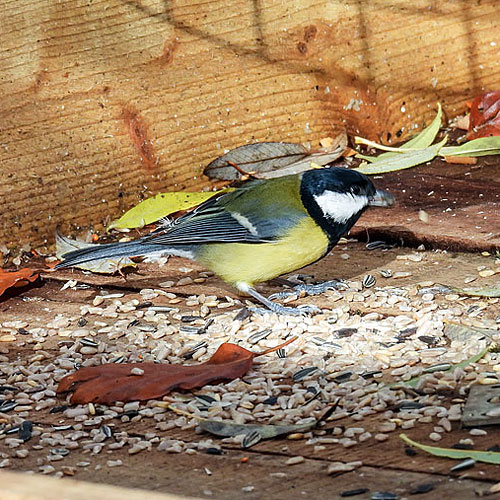 |
| Blue
Tit |
Coal
Tit |
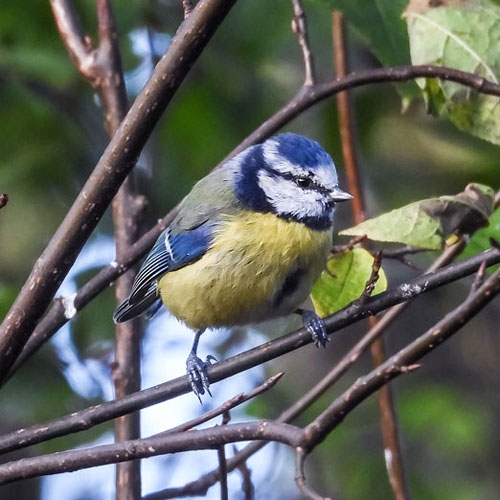 |
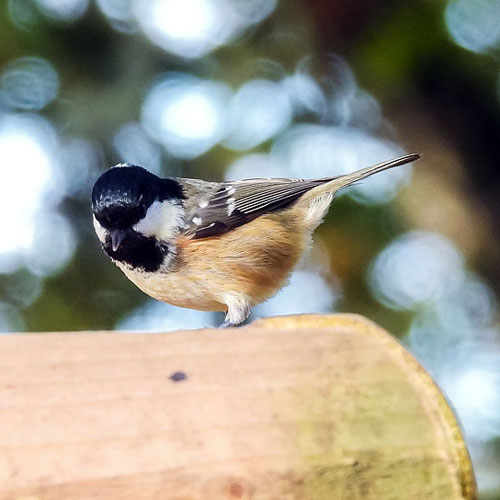 |
| Male
House Sparrow |
Female
House Sparrow |
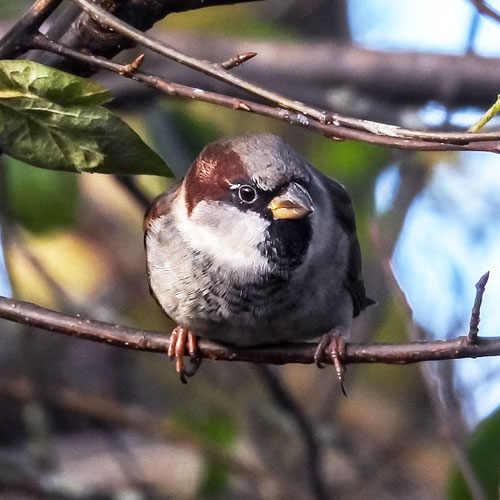 |
 |
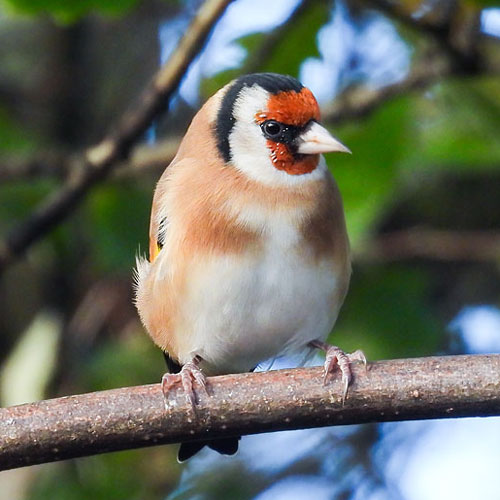
Also
raiding the feeder were some Chaffinches and Goldfinches. They seemed
more assertive, facing
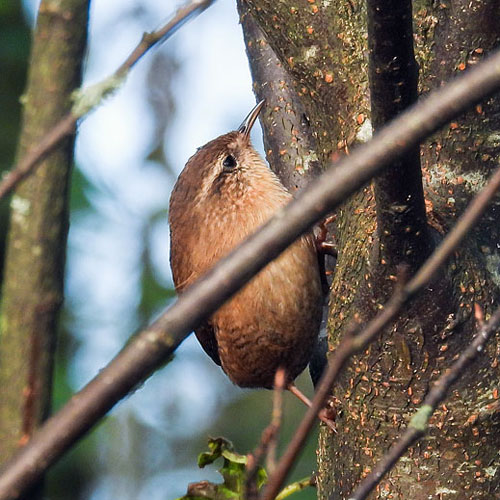
up to interlopers. Before I moved on from the visitor cabin, a tiny
Wren caught my attention
as it moved through the low branches of the trees.
| Male
Chaffinch |
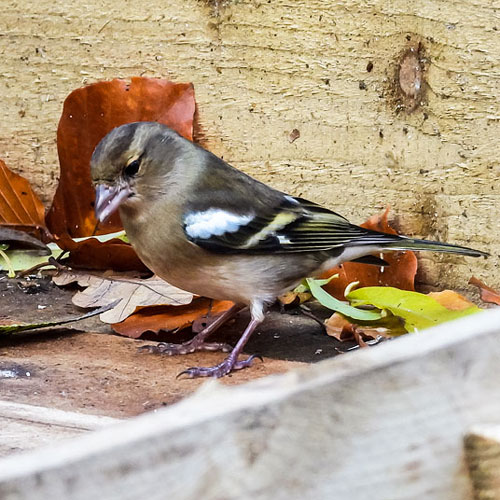
Female
Chaffinch |
 |
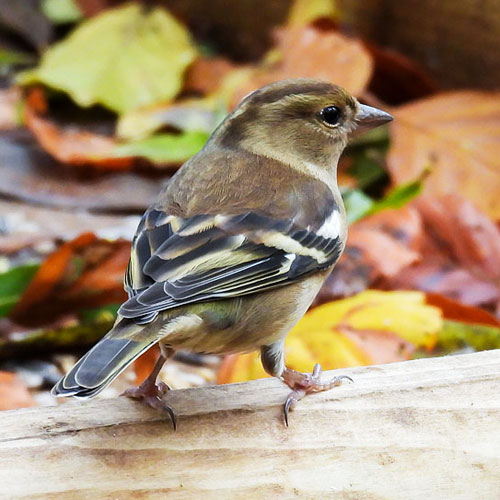 |
| Goldfinch |
Wren |
 |
 |
There
is another feeder about 50m into the Aird Meadow Trail trail. It is
beside a children’s play
area that seems to have grown with each passing visit. That feeder has
also been renewed and
was being well used as I approached the viewing screen.
The
species there were the same as on the previous hide, with Chaffinches
predominating. However
there was one bird I didn’t see at the last hide, a Nuthatch.
It made repeated
visits, even pausing on the table to eat some seeds - providing me with
nice photo-opportunities.
Also, there were far more Coal Tits at that hide, perhaps signs of big
broods.
| Male
Chaffinch |
Female
Chaffinch |
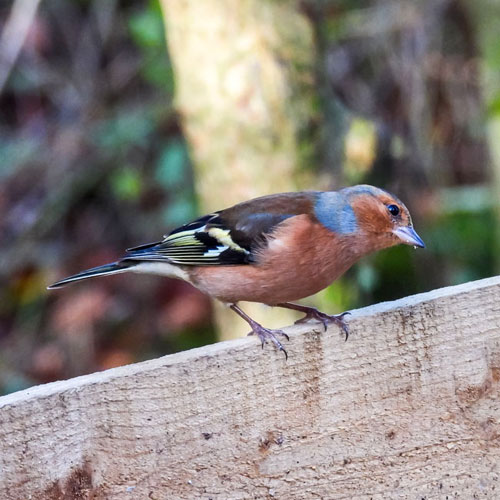 |
 |
| Nuthatch |
Coal
Tit |
 |
 |
I
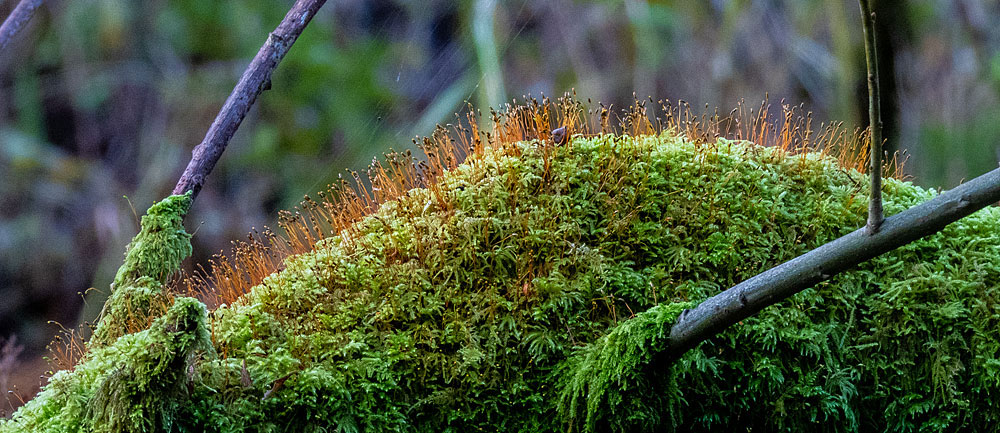
proceeded along the trail keeping my eyes open for fungi. However my
attention was first drawn
to moss that was covering branches of fallen trees. I am guessing that
it could be Hypnum
cupressiforme, Cypress-leaved
Plait Moss . Growing out of the green moss there are
many red stalks topped
with small capsules are called “sporophytes”. These
are part of the reproductive
system that produces spores which, when the capsules dry, are dispersed
by the wind. The spores
act like seeds in plants from which new moss can grow.
 |
I continued along the length of the Aird
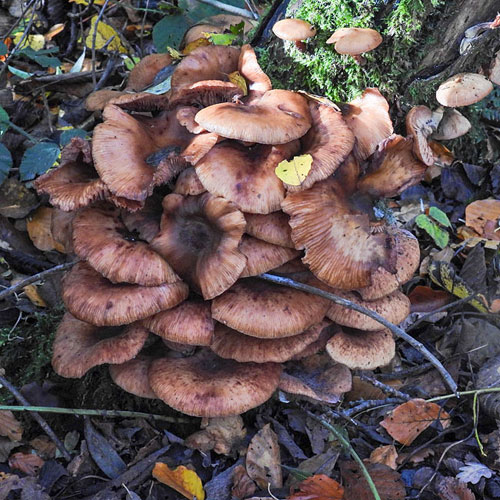
Meadow Trail trail but, sad to say, there were no birds to see. But I did find more fungi. Almost
every section of the trail had trees hosting Honey
Fungi, a
parasitic fungus that can do immense damage to forests; it attacks both
coniferous and
broad-leaf trees. By the time the mushrooms appear, the damage done to
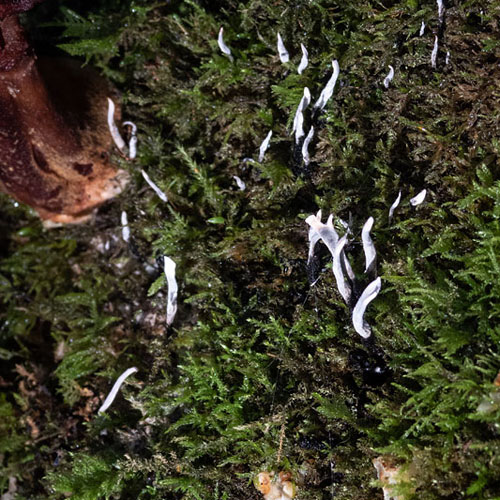
the tree is fatal. I also
found Candlesnuff,
which is small but has medical uses that include fighting viruses and is active against cancerous tumours. Another
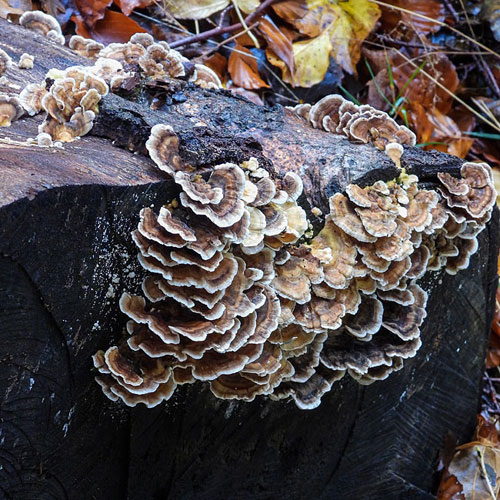
very common fungus I came across was Turkeytail. It has no apparent uses but can be very
nice to look at. Near the Channel hide I discovered a decaying log out of which were growing Peeling
Oysterling fungi, an inedible, and perhaps poisonous mushroom that used to be
called the Soft Slipper Mushroom due to its shape.
| Honey
Fungus |
Candlesnuff |
 |
 |
| Turkeytail |
Peeling
Oysterling |
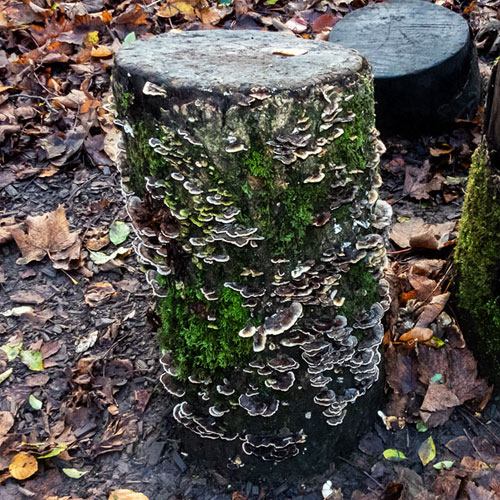 |
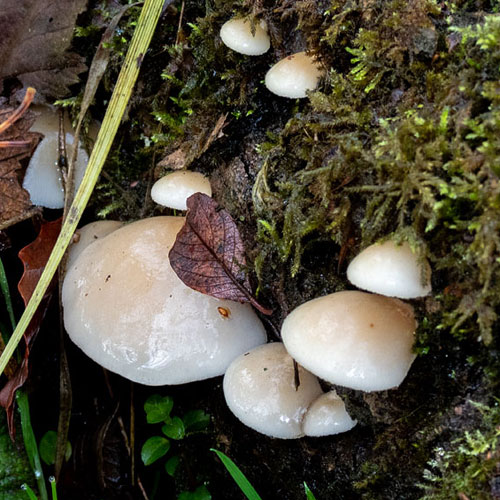 |
On my way back along the trail I popped into
the quite picturesque Fen Hide …..
….. but only found a feeding Coot
and, hiding in a pile of rotting cut-down branches, a small Conical
Brittlestem mushroom, ( a new addition ). These
mushrooms are “hygrophanous”, i.e. they change colour depending on whether they are wet or
dry. They are more vibrant when wet.
| Coot |
Conical
Brittlestem |
 |
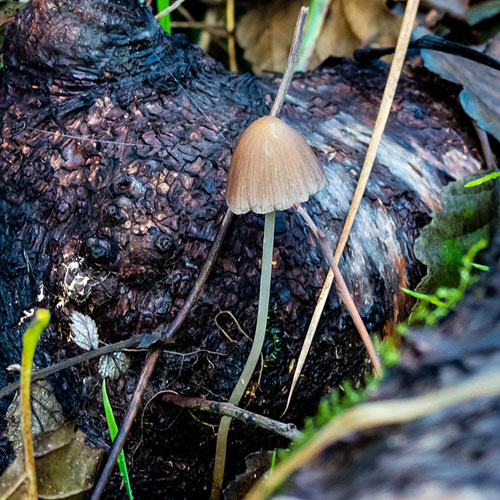 |
Thursday, 30th October:
Strathclyde Country Park
On Thursday I visited
Strathclyde Park and explored a route that followed the course of the
South Calder
river between the Calder Bridge at the south end of Bellshill
(Orbiston) and the Roman
Bridge. Locals call that route, “the nature trail”.
At the start of the trail I found a Shaggy
Inkcap fungus
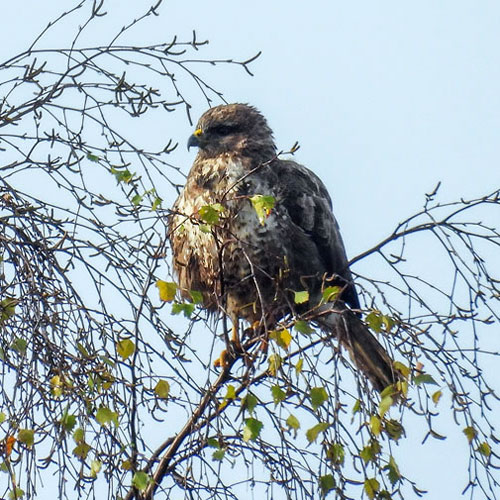
poking through tall grass. As the path passed Bellshill Golf Club there
was a Buzzard high on a
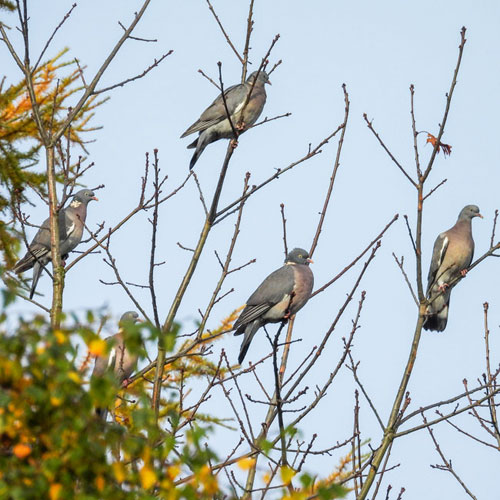
tall tree, watching me approach before flying off. Where the trail
passed alongside the
golf course I photographed a few Woodpigeons who were also keeping an
eye on my progress. I
noticed one of the was a juvenile (which has no distinctive white neck
patch) - another new addition.
| Shaggy
Inkcap |
Common
Buzzard |
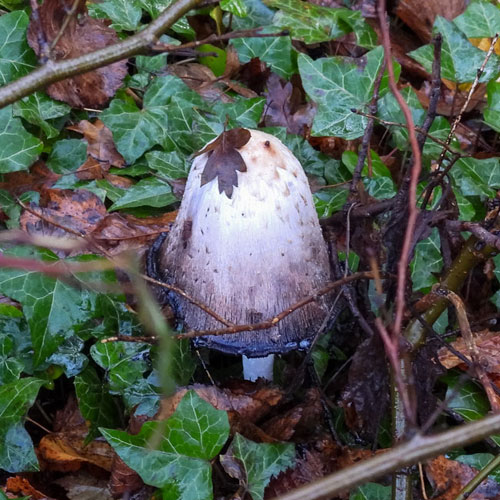 |
 |
| Wood
Pigeon... |
...Juvenile |
 |
 |
On the route down to the Roman Bridge I
passed several more fungi: Trooping Funnel, Clouded
Funnel and Turkeytail.
By
the road bridge near the old Roman Bridge, a female Goosander and a few
Mallards were foraging
around. I decided I needed a cuppa at M&D’s cafe and
walked there through the woods
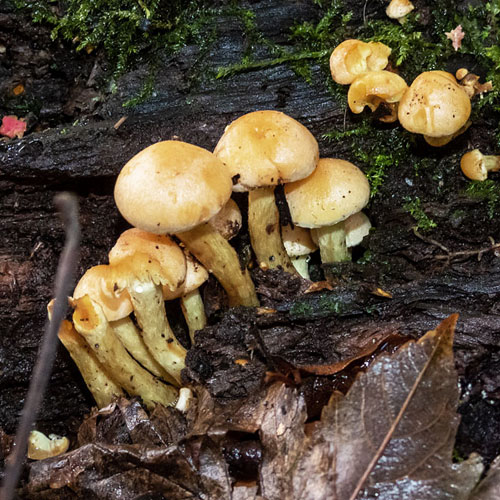
hoping to find more fungi. On an old tree stump under some bushes, Sulphur
Tuft
mushrooms were sprouting. These are sulphur-yellow in colour - hence
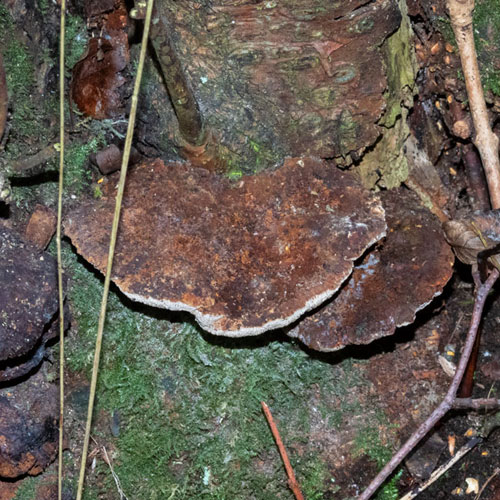
the name. Nearby there
was another fungus that is named after its colour - Blushing
Bracket , a rust-coloured fungus. My final fungus find was a Glistening
Inkcap , another hygrophanous mushroom that glistens when it is wet. After my tea
and biscuits I strolled back to the car passing a Grey Heron hunting in the moat at the starting
tower at the north end of the loch.
| Female
Goosander |
Mallard |
 |
 |
| Sulhphur
Tuft |
Blushing
Bracket |
 |
 |
| Glistening
Inkcap |
Grey
Heron |
 |
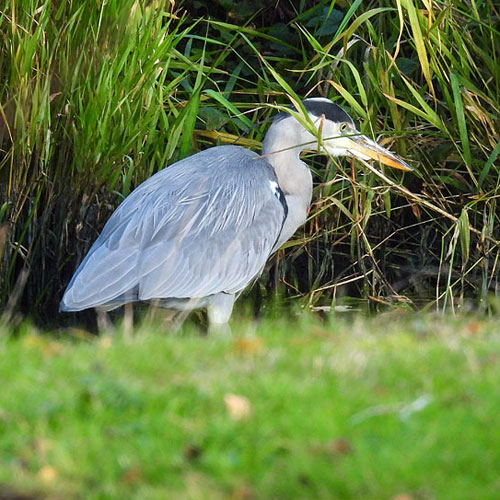 |
I paused to photograph a gathering on birds
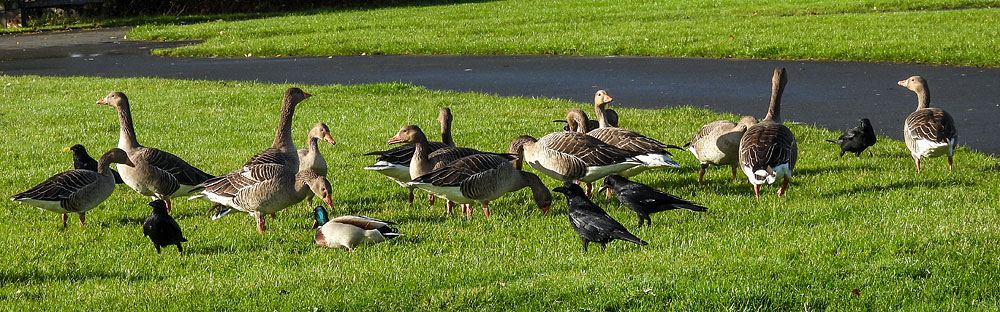
on the footpath. Someone must have thrown them bread since Greylags were there, with
Carrion Crows and Mallards also in attendance.
The couple of days I managed out with the
camera were very refreshing and reasonably successful, with 29 species photographed.
My favourites were the lovely Teals, Nuthatch and Greenfinch at Lochwinnoch. Of course
I’m fascinated by fungi so I also enjoyed every single
fungus. It seems that
the spell of changeable weather will continue next week, but surely
there’ll be
one nice day?
Back To Top
|